
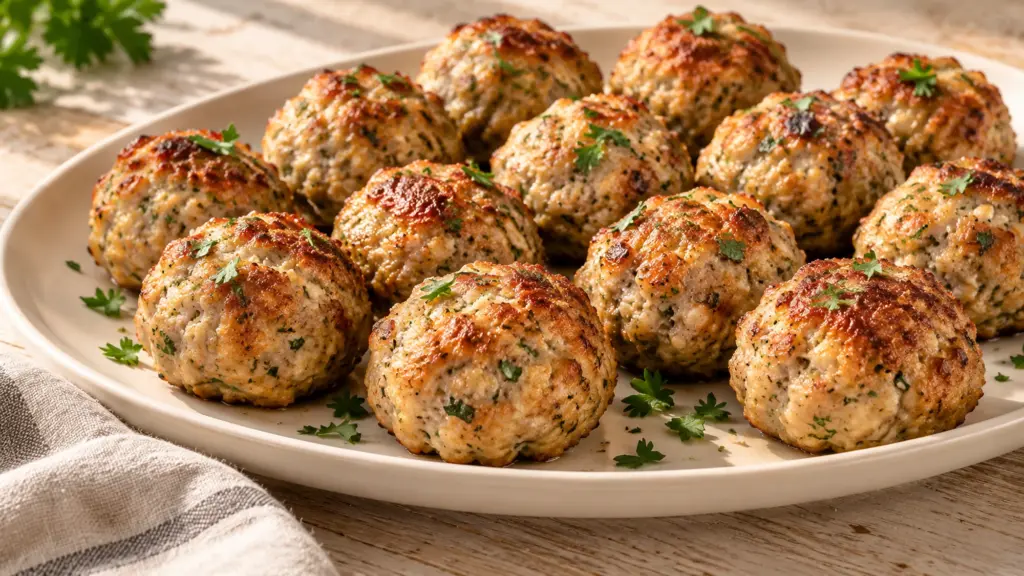
A tray of turkey meatballs can be dinner, tomorrow’s lunch, or the warm savory bite on a small gathering’s menu. These are baked rather than pan-fried, with garlic, parsley, and Parmesan mixed through the meat. They have lightly golden edges and a tender center, without needing a heavy sauce to make them interesting.
The small step worth keeping is soaking the panko in milk before adding the turkey. That soft mixture distributes moisture through the meatballs. Mix gently, portion them evenly, and use a thermometer to finish cooking without guessing from their color.
I would keep the first batch simple and serve sauces separately. That way, the same meatballs can go with mashed potatoes on a chilly evening or into a lunch bowl the next day. This recipe makes sixteen meatballs, enough for four main-dish servings when paired with sides.
Serving Suggestions for Turkey Meatballs
For a fall dinner, pair four meatballs with roasted squash and a spoonful of mashed potatoes. A crunchy cabbage salad adds a useful contrast to the soft textures. You can find more combinations in the side dish collection; choose a vegetable and something that makes the meal satisfying to you.
- For a pasta dinner, warm the cooked meatballs briefly in marinara and serve over your preferred pasta.
- For a lunch bowl, add cooked rice, roasted vegetables, and a little sauce in a separate container.
- For a gathering, offer smaller portions with toothpicks, but keep the serving platter replenished rather than leaving the full batch out.
The Parmesan already adds salt and savory depth, so taste your chosen sauce before adding extra seasoning to the plate. If serving a crowd, set aside a portion before anyone starts sharing utensils. Keep the meatballs hot for service or refrigerate promptly; a warm-looking platter is not a temperature check.
Let the sides set the mood: squash and potatoes feel cozy, while crisp vegetables make a lighter-textured plate. Sauces can stay optional.
Turkey Meatballs Variations
Small seasoning changes work better than a wholesale ingredient swap here. Very lean turkey breast can give a firmer result, while adding large amounts of wet vegetables can make the mixture difficult to shape. Start with the listed 93% lean ground turkey so the moisture balance stays predictable.
| Variation | Adjustment | Keep in mind |
|---|---|---|
| More herb flavor | Replace half the parsley with basil | Keep the total herb amount the same |
| A little heat | Add a pinch of red pepper flakes | Serve a mild sauce alongside |
| Gluten-free option | Use labeled gluten-free panko | Check every other packaged ingredient |
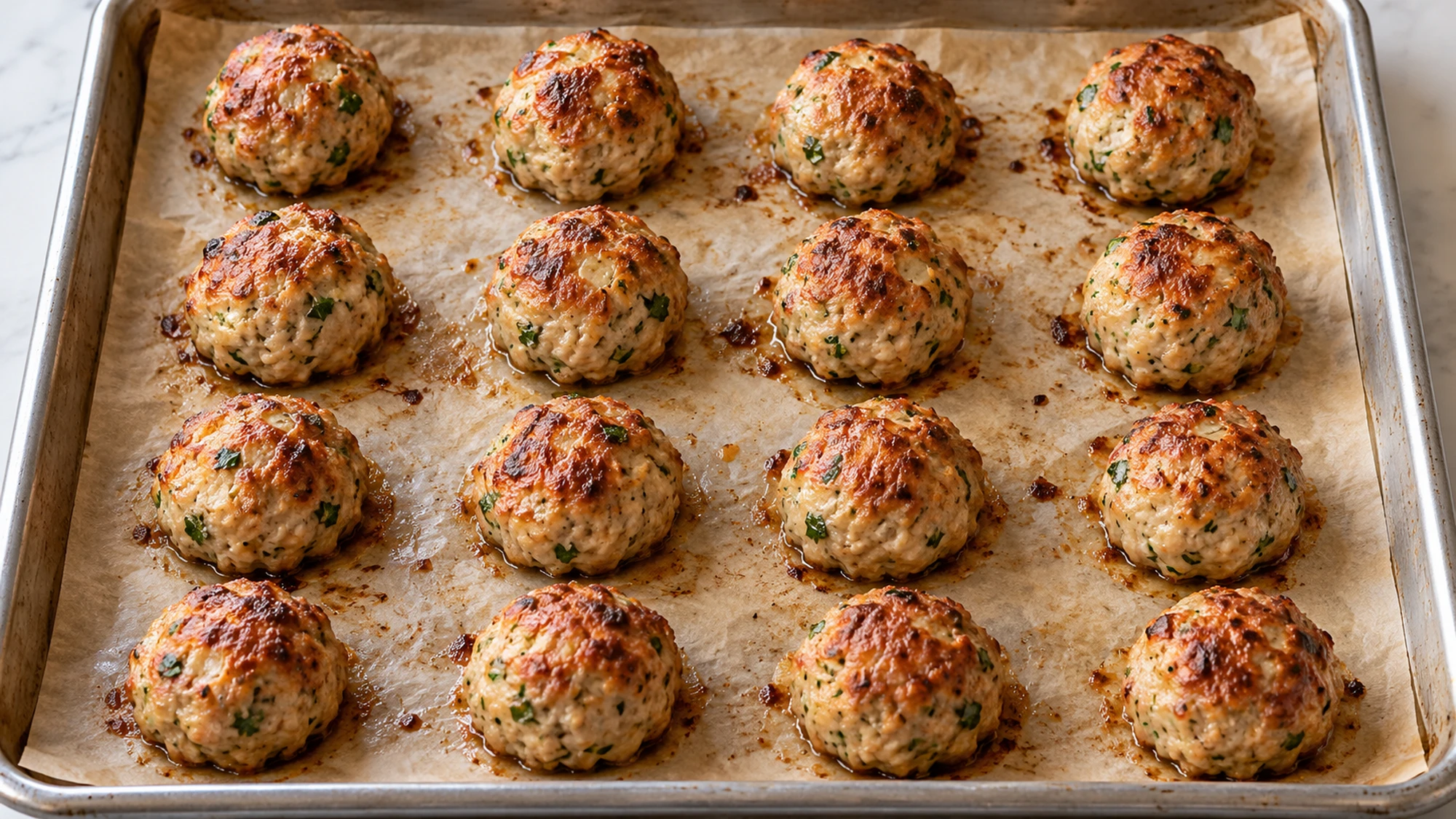
If the mixture feels sticky, lightly dampen your hands instead of packing in extra breadcrumbs. A scoop helps make equal portions, but roll them loosely rather than squeezing tightly. Leave space between the meatballs on the tray so hot air can reach the sides.
Keep the binder proportions steady and adjust the seasoning first. Gentle handling matters more than making every meatball perfectly round.
Health Benefits and Everyday Balance
- Turkey supplies protein, and the egg and Parmesan contribute more. The meatballs themselves offer little fiber, so vegetables, beans, or a whole grain are useful additions. These are not automatically a low-sodium choice: cheese, breadcrumbs, added salt, and any sauce all contribute to the final amount.
The nutrition estimate covers four meatballs without sauce or sides. Brand labels and portion sizes will change the numbers. Milk, wheat, and egg are included, and Parmesan adds another milk ingredient, so review dietary needs before offering them to guests.
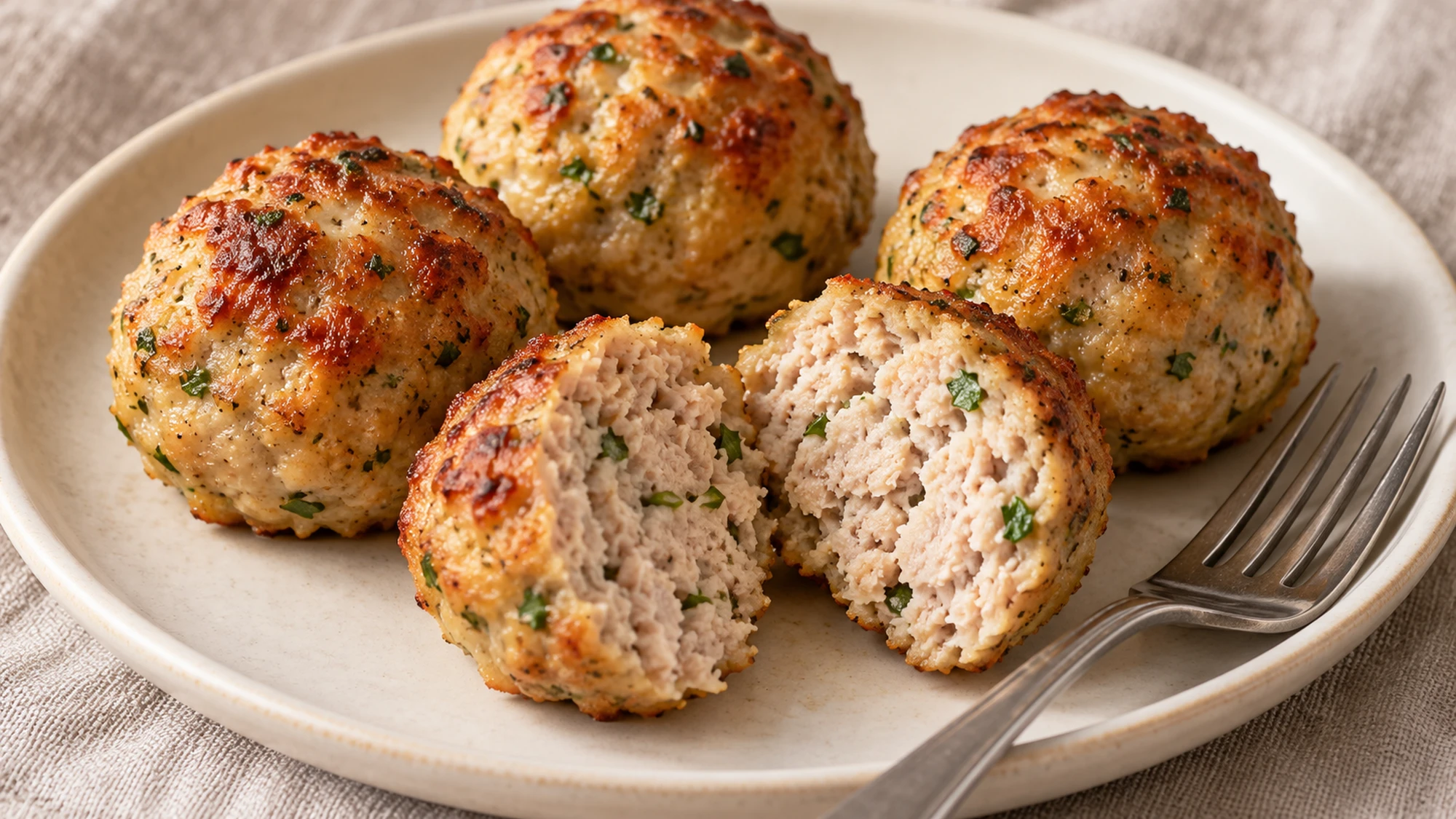
For food safety, follow the 165°F minimum for ground poultry. Insert an instant-read thermometer into the center of several meatballs, especially the largest ones. Browning and a pale interior cannot replace that measurement.
Build variety around the meatballs, and use the thermometer for doneness. A balanced plate and safe cooking are separate goals, both worth attention.
Bottom Line
These turkey meatballs are a flexible, savory starting point for a cold-weather meal. Refrigerate leftovers in shallow containers within two hours, or one hour above 90°F. The cold-storage chart recommends using cooked poultry within three to four refrigerated days. Reheat leftovers to 165°F.
Soften the crumbs, mix lightly, and stop cooking when the centers reach the safe temperature. Those three habits help keep this simple dinner tender rather than dense.
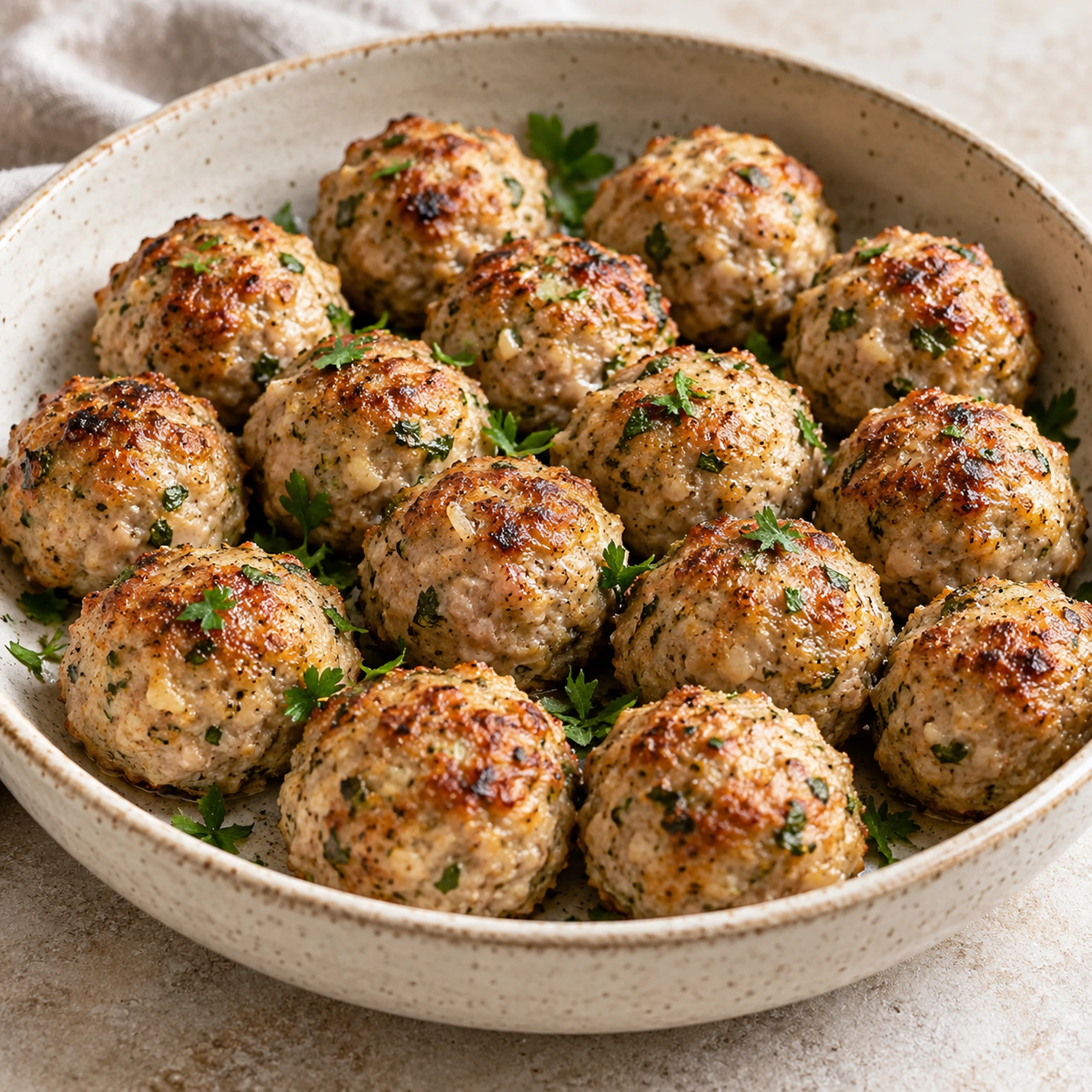

Turkey Meatballs Recipe
Ingredients
Equipment
Method
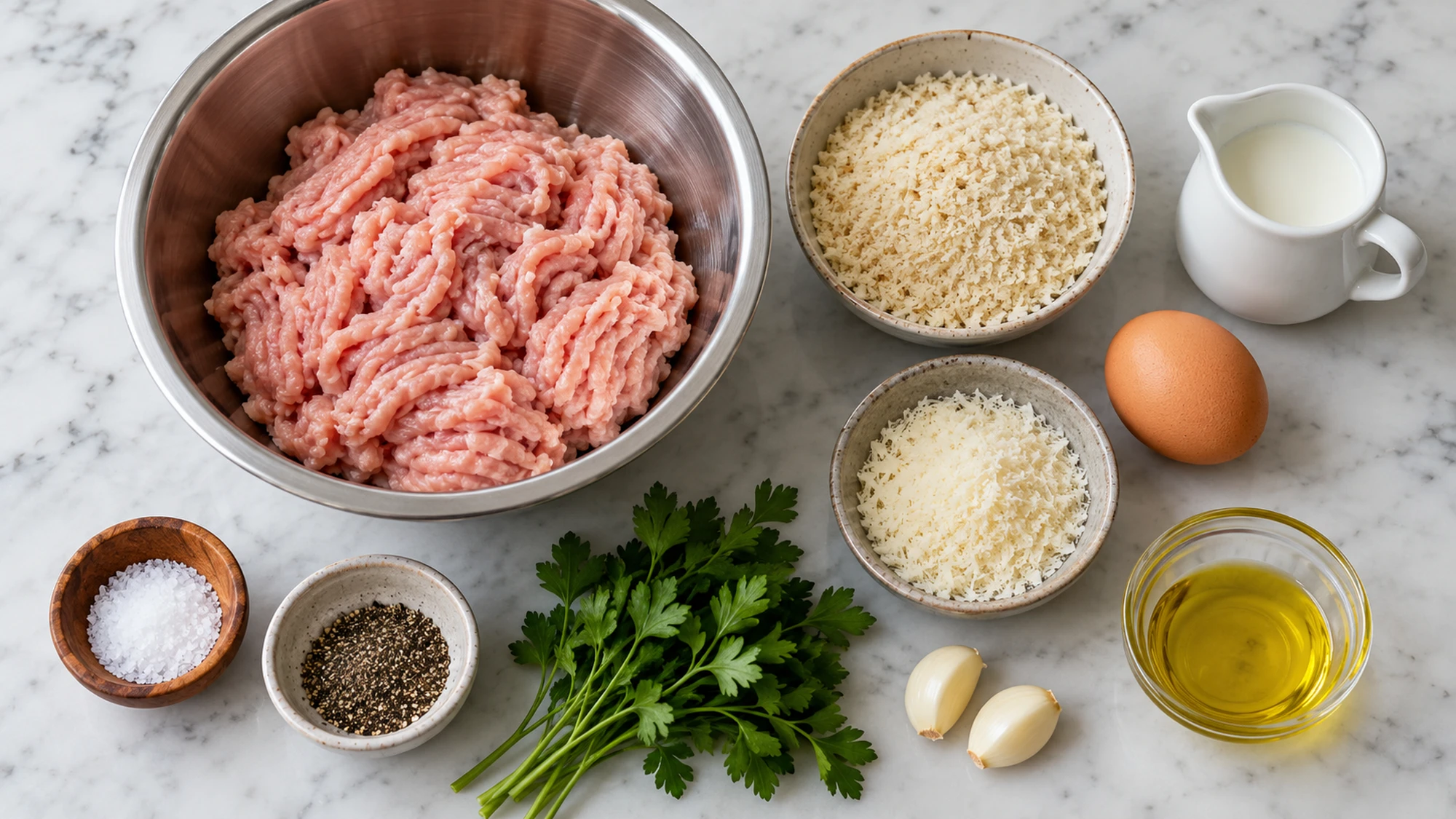
- Heat the oven to 400°F. Line a large rimmed baking sheet with oven-safe parchment. Brush it with half the olive oil.
- Combine the panko and milk in a large bowl. Let stand for 5 minutes while you mince the garlic and chop the parsley.
- Stir the egg, Parmesan, garlic, parsley, salt, and pepper into the soaked crumbs. Add the cold turkey and mix gently just until evenly combined.
- Divide into 16 equal portions and gently roll into balls, roughly 1 1/2 inches across. Arrange with space between them and lightly brush the tops with the remaining oil. Wash hands and clean surfaces that contacted raw poultry.
- Bake for about 18–22 minutes, checking early if your meatballs are smaller. Insert a thermometer into the center of several, including the largest; every checked meatball must reach at least 165°F. Continue baking as needed.
- Serve four meatballs per person with your chosen sides. Refrigerate leftovers in shallow containers within 2 hours, or 1 hour above 90°F. Use within 3–4 days and reheat to 165°F.