
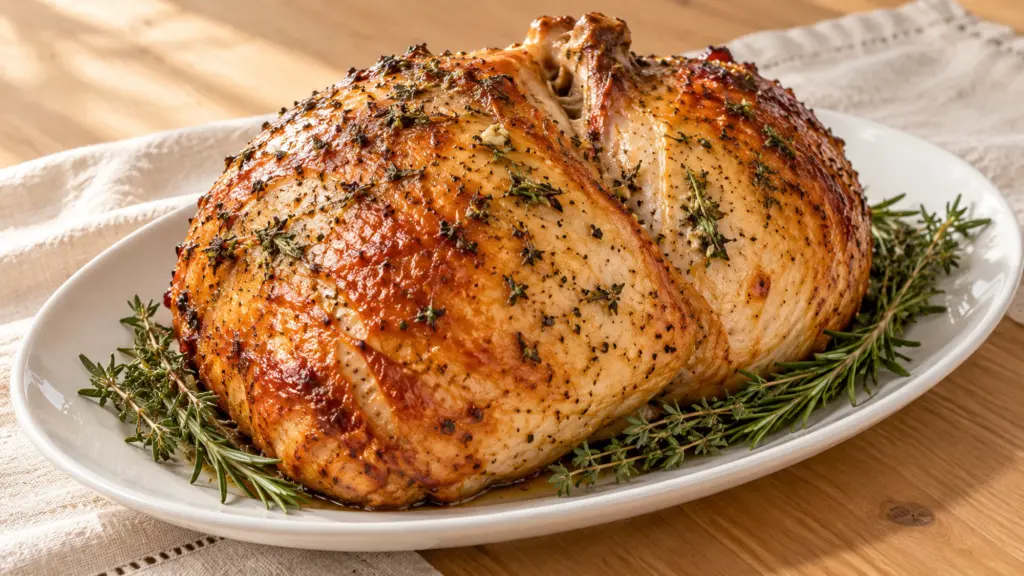
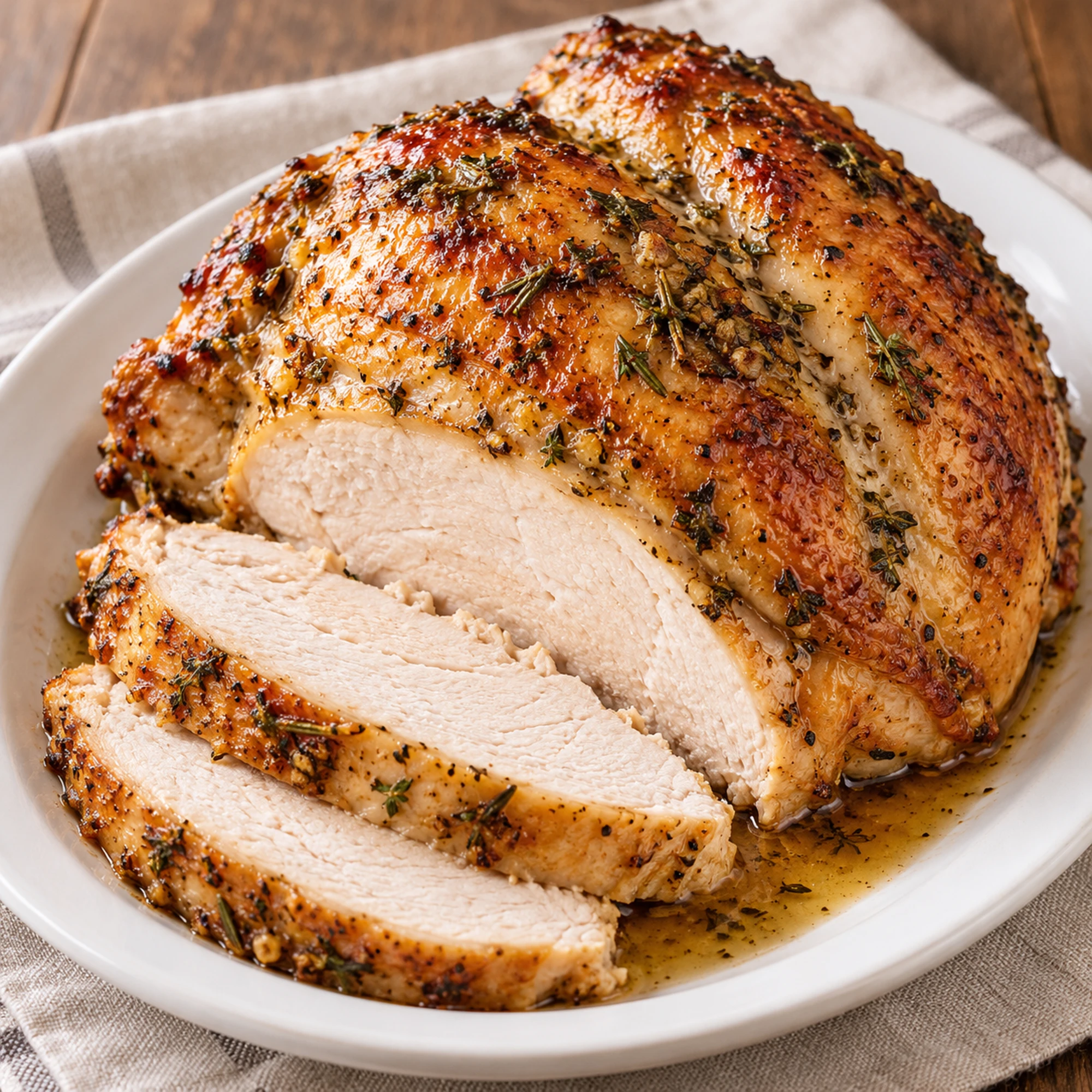
Roast turkey breast gives a smaller Thanksgiving table a proper centerpiece without committing to a whole bird. This bone-in version wears a thin coat of garlic, rosemary, and thyme butter, with golden skin above slices of white meat. It leaves the side dishes plenty of room to bring their own flavors.
Start with a fully thawed breast and use a thermometer, not the color of the skin, to decide when it is done. Roast at 325°F until the thickest part of both breast halves reaches 165°F, then rest before carving. The clock is a planning guide, not the final test.
I would choose this for a table that prefers white meat and a manageable carving job. A six-pound bone-in breast makes about eight moderate servings with sides, although bone size and appetites vary. Build a little flexibility into dinner time, especially if several dishes will share the oven.
Serving Suggestions for Roast Turkey Breast
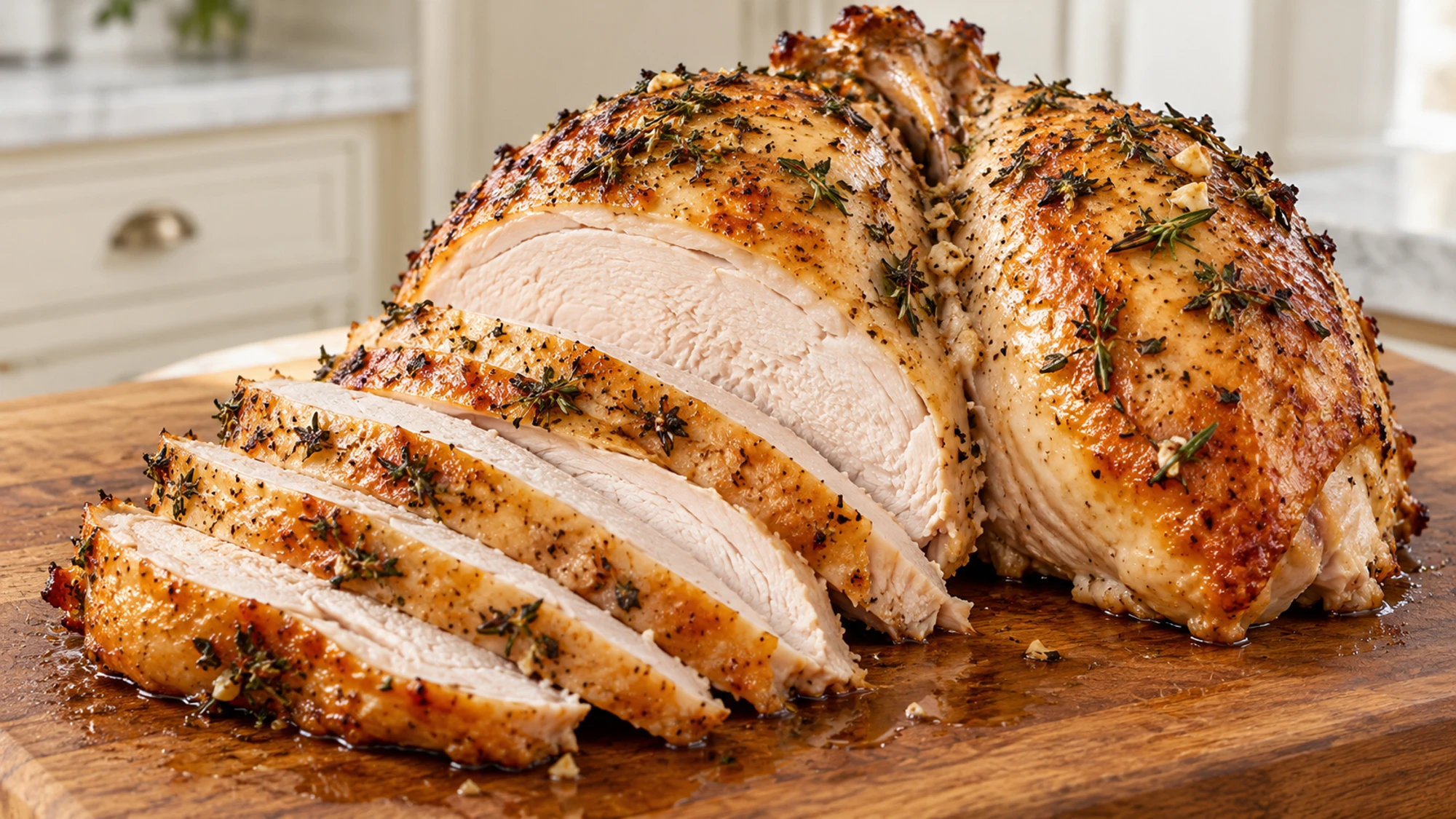
Serve slices on a warm platter with a little of the cooked pan liquid. Mashed potatoes, roasted Brussels sprouts, or a tart cranberry relish make useful companions. Choose two or three dishes from the side dish collection instead of trying to fit every holiday favorite into one meal.
- For a small Thanksgiving dinner, pair turkey with one vegetable, one starch, and a tart or crisp accompaniment.
- For a Sunday roast, keep it simple with potatoes and green beans; the garlic-herb seasoning does not need a holiday setting.
- For next-day sandwiches, refrigerate sliced portions promptly and add crunchy lettuce or cabbage when assembling.
Use the resting time to finish a stovetop side or warm serving plates. Remove each breast half from the bone before slicing across it; this is easier than trying to cut uniform pieces around the curved rib cage. A sharp knife helps keep the skin attached to the slices.
Let the turkey rest while the sides come together. A short, well-chosen menu makes the breast feel like a centerpiece without turning dinner into a crowded buffet.
Roast Turkey Breast Variations
The butter should be soft enough to spread, not melted into a puddle. Loosen the skin gently and distribute the mixture in a thin layer rather than leaving one large lump near the opening. Mince the garlic finely so its flavor is spread across the meat.
| Change | Adjustment | Watch for |
|---|---|---|
| Sage flavor | Replace half the rosemary with chopped sage | Keep total herbs unchanged |
| Dried herbs | Use 1 teaspoon each dried rosemary and thyme | Crush coarse rosemary first |
| Pre-seasoned turkey | Omit the added salt | Check the package for brine or added solution |
Do not apply the same timing to a boneless roast or a much larger breast. Shape, starting temperature, and oven accuracy all matter. If the skin darkens before the center is ready, shield it loosely with foil and continue cooking; reducing the required internal temperature is not the solution.
Change the herbs freely, but keep the cooking check unchanged. A bone-in breast needs temperature readings in both thick halves, away from the bone.
Health Benefits and Practical Balance
Turkey supplies protein, while the vegetables and grains you serve alongside can add fiber. Skin and butter contribute fat, including saturated fat. There is no need to describe a holiday main as a special health food: its role is one part of a varied, satisfying meal.
- The nutrition estimate includes the skin and all the butter, but actual portions and the amount of fat left in the pan will differ.
- Choose unsalted butter and check whether the turkey contains added salt before seasoning. Enhanced poultry can have substantially different sodium levels.
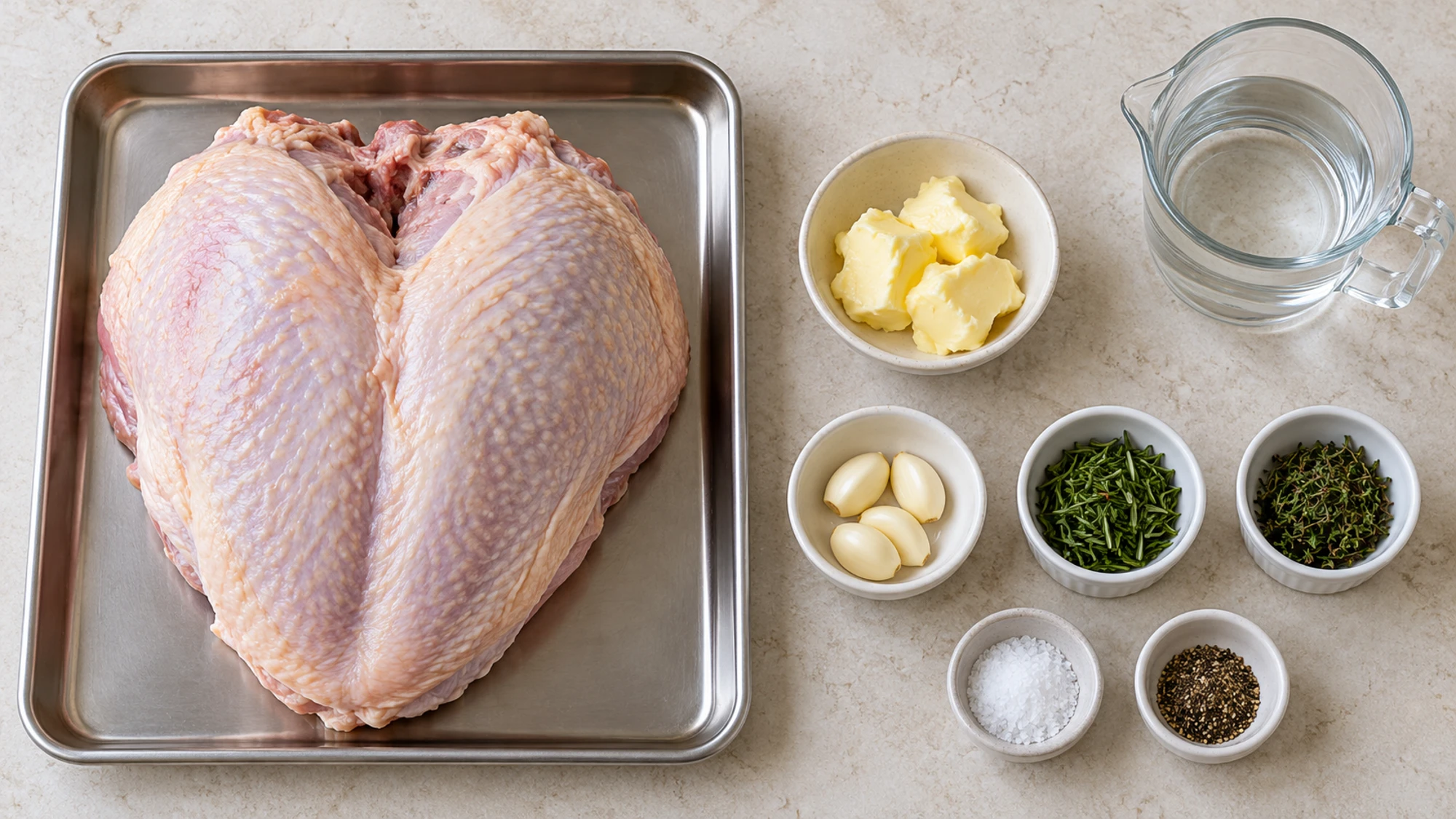
Food safety begins before roasting. The federal turkey roasting and thawing chart gives refrigerator-thawing guidance and emphasizes the 165°F endpoint. Keep the wrapped breast on a tray to catch leaks, and do not thaw it on the kitchen counter.
Think beyond the roast itself: sensible portions, satisfying sides, clean handling, and a thermometer matter more than a health claim attached to turkey.
Bottom Line
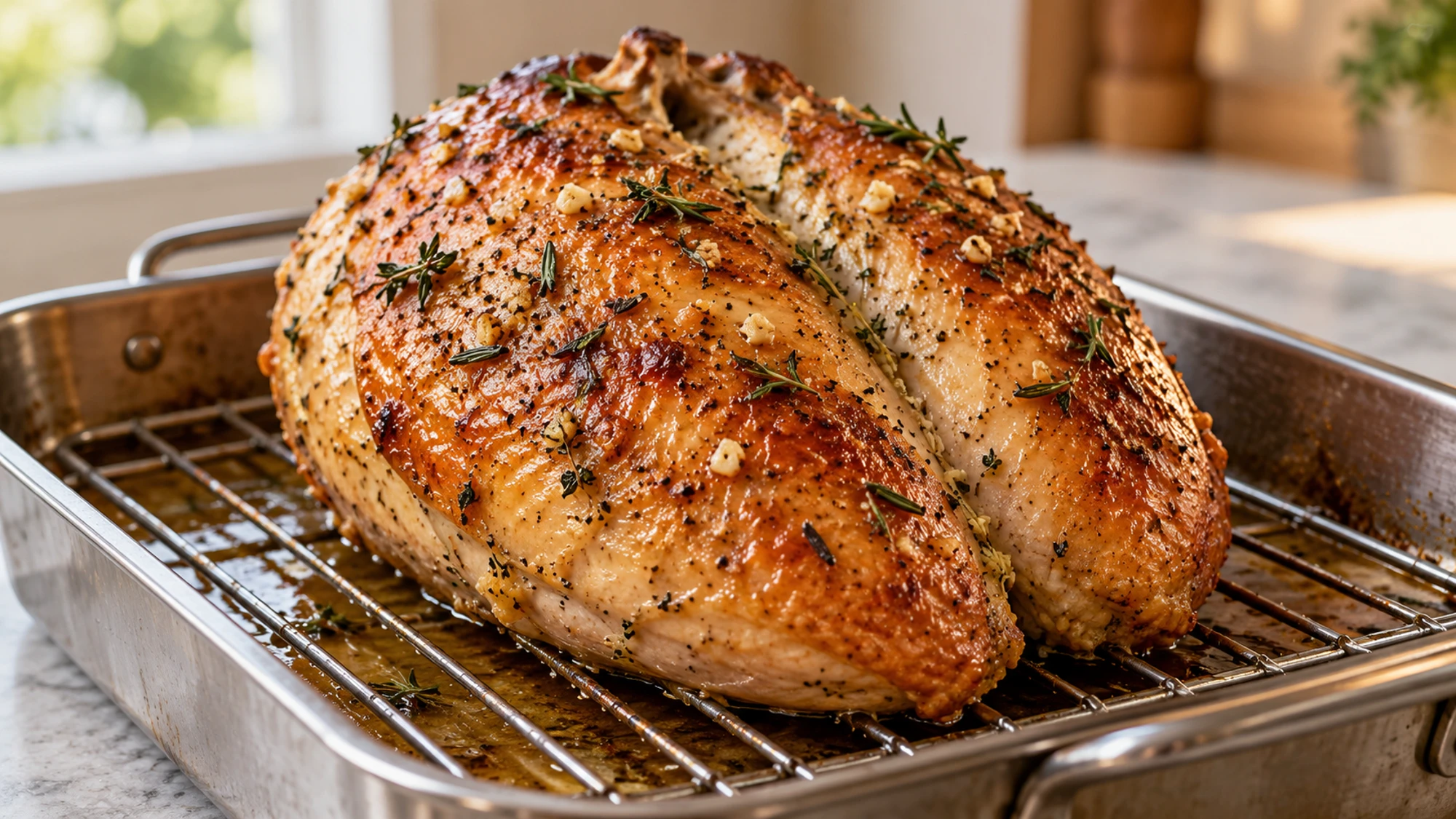
Roast turkey breast is a practical holiday option when white meat is the priority. Refrigerate carved leftovers in shallow containers within two hours, and follow the three-to-four-day storage limit for cooked poultry. Reheat portions to 165°F rather than repeatedly warming the entire batch.
Give the breast enough thawing time, spread the butter evenly, and check both sides before resting. Those details are more useful than chasing an exact minute on the timer.

Roast Turkey Breast Recipe
Ingredients
Equipment
Method
- Heat the oven to 325°F. Set a rack in a small roasting pan. Remove packaging and any gravy packet or giblets from the fully thawed turkey breast. Do not rinse raw poultry; pat the skin dry with paper towels and discard them.
- Mix butter, garlic, rosemary, thyme, salt, and pepper. Gently loosen the skin over both breast halves without removing it. Spread about half the mixture underneath and the rest in a thin layer over the outside. Clean hands, utensils, and surfaces that contacted raw turkey.
- Place the breast skin-side up on the rack and pour water into the pan beneath it. Roast uncovered. Begin checking the internal temperature at about 90 minutes; a six-pound breast commonly needs around 2 to 2 1/4 hours, but allow longer if necessary. Add a splash of water if the pan dries and loosely shield darkening skin with foil.
- Continue roasting until a thermometer inserted into the thickest part of EACH breast half, away from bone, reads at least 165°F. Do not remove at a lower temperature expecting resting to make it safe.
- Transfer to a clean board and rest for 20 minutes, loosely covered. Cut each breast half away from the bone, then slice crosswise. Serve with cooked pan juices and optional fresh herb sprigs.
- Refrigerate carved leftovers in shallow containers within 2 hours, or 1 hour above 90°F. Use within 3–4 days and reheat to 165°F.