
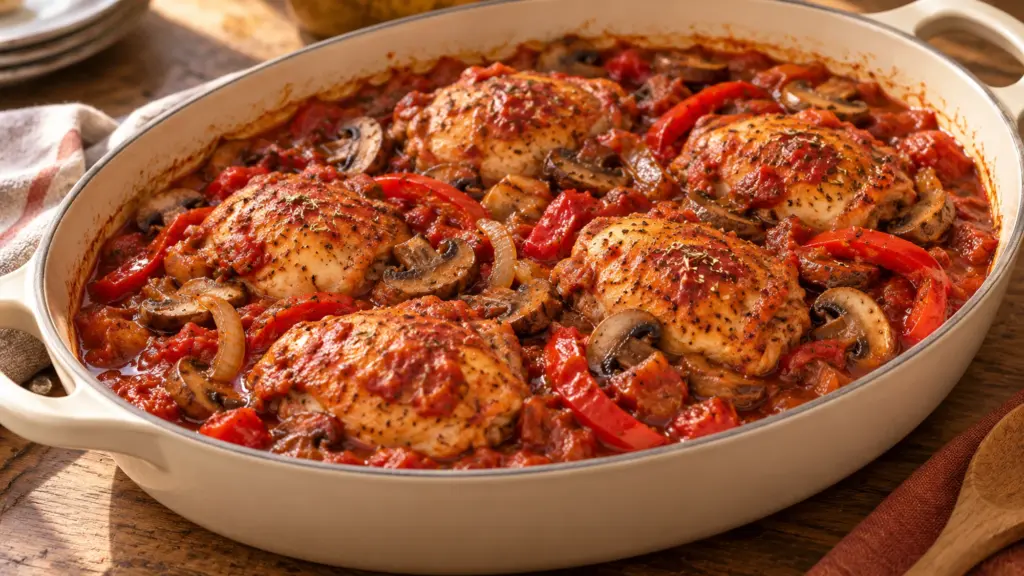
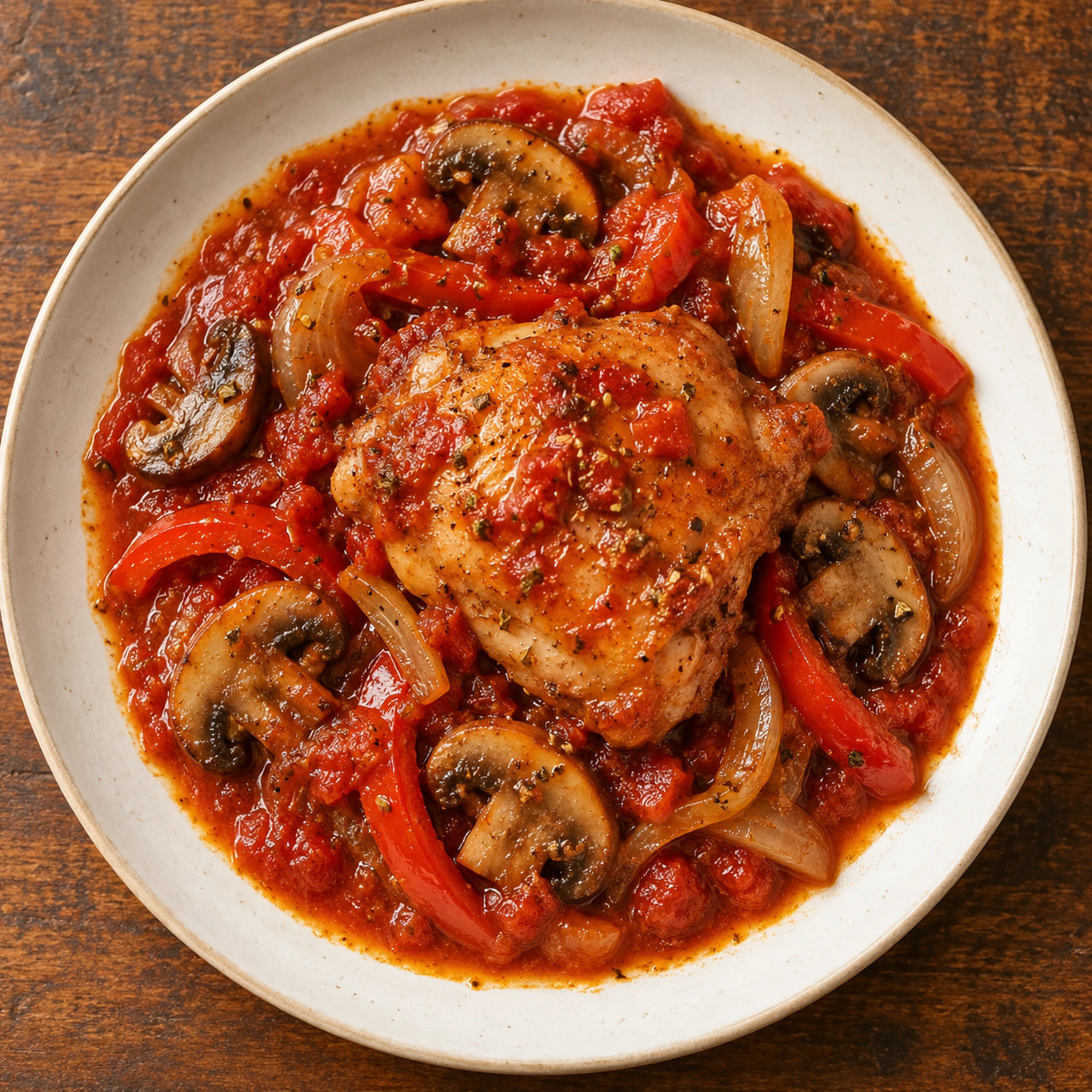
A generous spoonful of tomato sauce can turn a simple chicken thigh into a proper cold-weather dinner. Here, mushrooms, red pepper and onion soften around the chicken while the sauce picks up the browned bits from the pot. The result is hearty without a cream-based finish.
This chicken cacciatore uses boneless, skinless thighs and a wine-free tomato sauce. Brown the chicken first, soften the vegetables, then let everything simmer gently together. Allow about 70 minutes from chopping to serving, and use a thermometer rather than the clock to check the chicken.
I like a wide Dutch oven for this recipe because there is room to brown the thighs without stacking them. A deep, narrow saucepan can hold the ingredients, but it makes the first stage more awkward and encourages steaming instead of browning.
Serving Suggestions for Chicken Cacciatore
Give each person a thigh and a generous share of the vegetables and sauce. Soft polenta, cooked rice or pasta all give that sauce somewhere to go. Keep those accompaniments separate from the stated nutrition estimate, which covers the chicken and sauce only.
A simple green salad provides a cool, crisp contrast. If you want another cooked vegetable, choose a lightly seasoned option from our side dishes rather than a second tomato-heavy dish. The pan already brings plenty of flavor to the table.
| Pairing | Why it works | Serving tip |
|---|---|---|
| Soft polenta | Catches the vegetable sauce | Spoon chicken over a shallow bed |
| Cooked rice | Keeps the flavors distinct | Serve sauce alongside or over it |
| Short pasta | Holds small pieces of tomato | Add a little sauce before plating |
I would choose the starch based on what is already in the pantry. This is a sauce-led dinner, so an uncomplicated accompaniment is more useful than an elaborate second recipe.
Variations and Sauce Adjustments
Boneless thighs keep the timing manageable and are forgiving in a gentle braise. Bone-in pieces need a different cooking time, and chicken breasts can dry out more quickly. If changing the cut, check each piece with a thermometer and do not rely on the original minute range.
- White button mushrooms can replace cremini. Slice them evenly so they soften at the same pace, and let their released moisture cook down before adding the tomatoes.
- Plain no-salt-added diced tomatoes work in place of fire-roasted tomatoes. Their flavor will be less smoky, but the method stays the same. Do not drain the can.
- For a thicker sauce, move fully cooked chicken to a clean plate and simmer the sauce uncovered for a few minutes. Return the chicken briefly to warm through. For a thinner sauce, add a small splash of water.
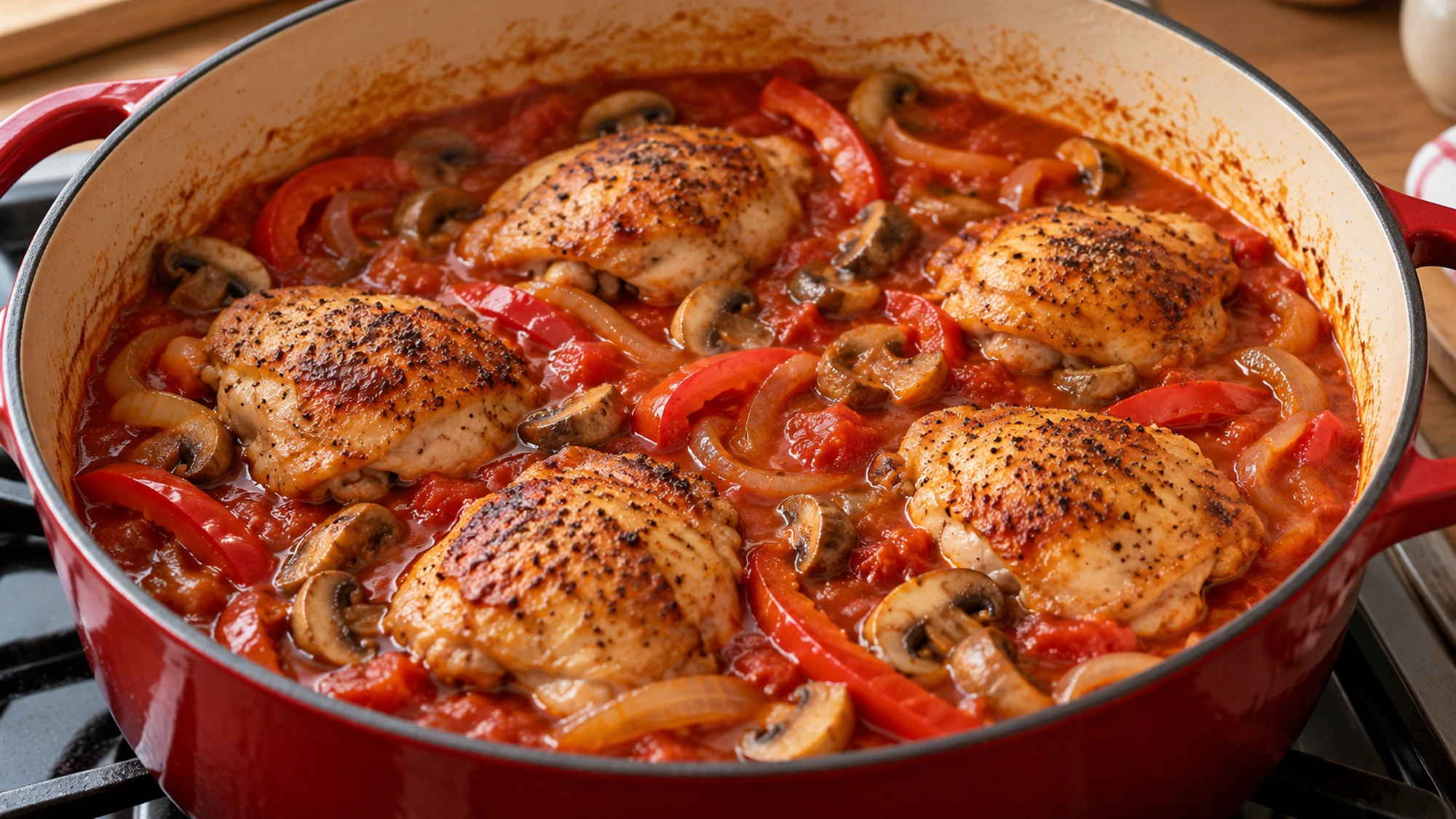
Keep the simmer gentle. Vigorous boiling is not a shortcut to tender chicken, and it can reduce the sauce faster than intended. Stir around the pieces occasionally so the bottom does not catch.
Health Benefits and Safe Cooking
Chicken contributes protein, while tomatoes, peppers, onions and mushrooms add vegetables to the main dish itself. The card gives estimated nutrition for one-sixth of the complete recipe. No-salt-added tomatoes and lower-sodium broth leave more control over seasoning, but the finished dish still contains sodium.
- Keep raw chicken and its juices away from ready-to-eat food. Use separate boards or wash equipment thoroughly between tasks, and put cooked chicken on a clean plate.
- Check the thickest part of each thigh for 165°F. FoodSafety.gov lists this minimum for all poultry; browned surfaces or opaque-looking meat do not replace a thermometer.
- Refrigerate leftovers in shallow containers within two hours, or one hour above 90°F. Keep at 40°F or below, use within 3–4 days and reheat throughout to 165°F.
The FDA’s handling guidance explains why separating raw foods and chilling promptly matter. Those steps are especially useful with a large, warm pot that would otherwise cool slowly.
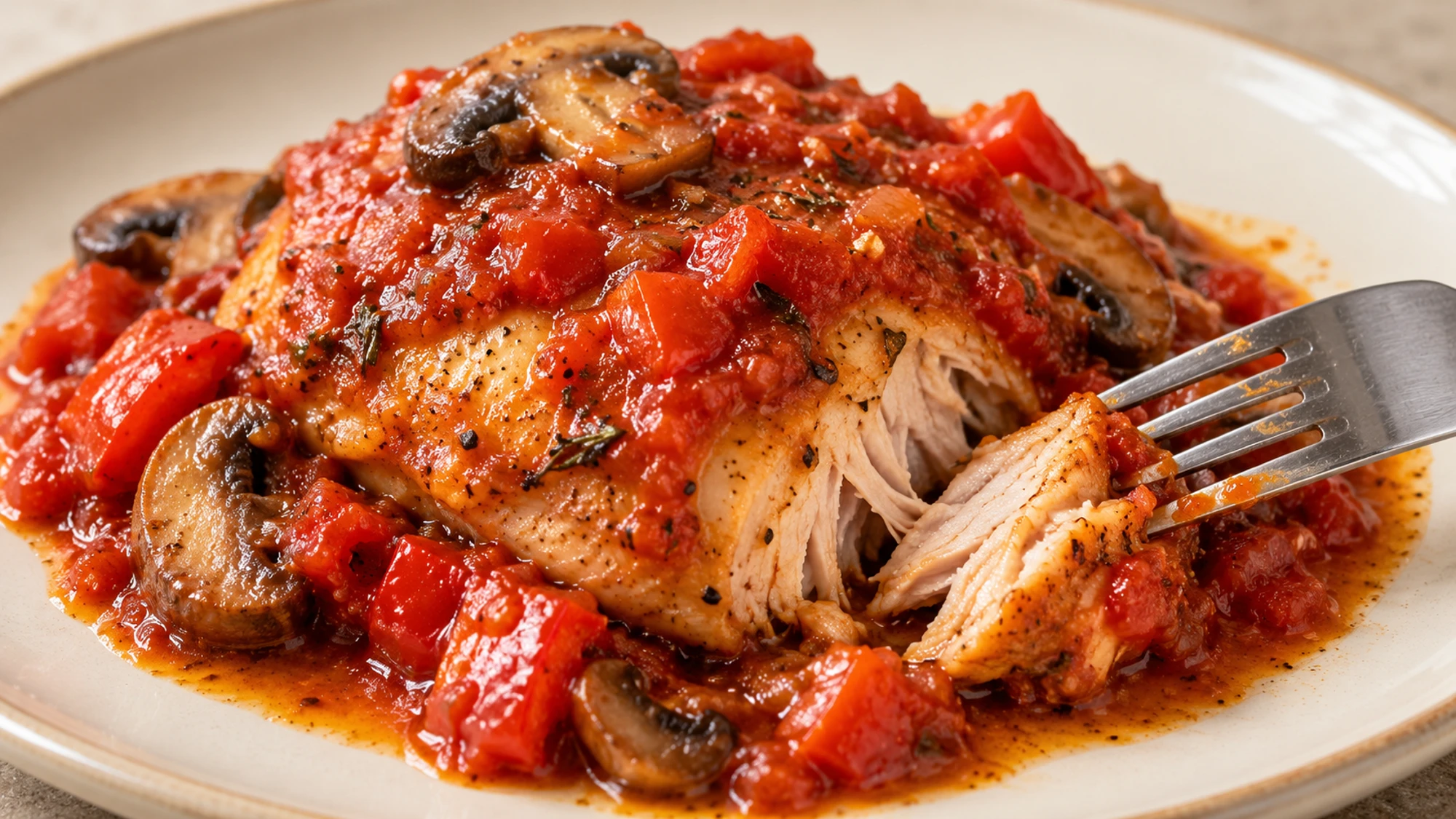
The practical goal is a flavorful meal handled safely, not a special health promise. Build the plate around the chicken, its vegetables and an accompaniment that suits your appetite.
Bottom Line
Chicken cacciatore needs steady heat more than complicated technique. Brown the thighs, soften the vegetables and give the tomato sauce time to come together. A thermometer, a wide pot and a simple side are the most useful helpers for this cozy dinner.

Chicken Cacciatore Recipe
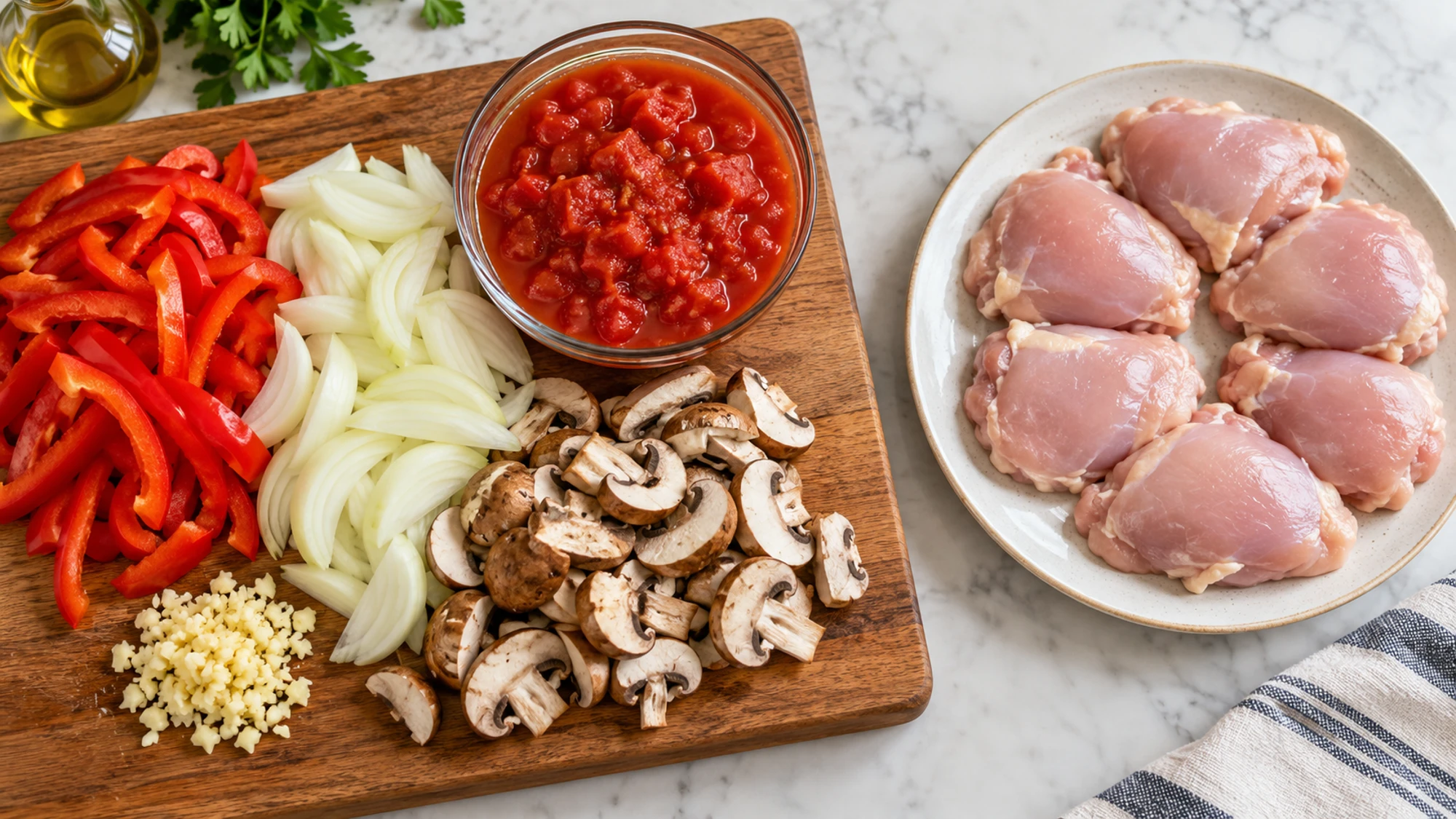
Ingredients
Equipment
Method
- Pat chicken dry with paper towels. Season with half the salt and the pepper. Heat 1 tablespoon oil in a wide Dutch oven over medium-high heat. Brown half the thighs for 3–4 minutes per side, then transfer to a plate. Repeat with remaining oil and chicken; it will finish cooking in the sauce.
- Add onion, pepper and mushrooms to the pot. Cook 8–10 minutes, stirring, until softened and mushroom moisture mostly evaporates. Stir in garlic and oregano for 30 seconds.
- Add tomatoes with juices, broth and remaining salt. Scrape up browned bits. Return chicken and accumulated juices, bring to a simmer, then reduce heat and partly cover. Simmer gently 20–25 minutes, checking each thigh for at least 165°F in its thickest part. Continue if needed.
- If sauce is too thin, transfer fully cooked chicken to a clean plate and simmer sauce uncovered for a few minutes; return chicken briefly to heat through. Divide chicken and sauce into six servings. Refrigerate leftovers promptly in shallow containers within 2 hours (1 hour above 90°F), keep at 40°F or below, use within 3–4 days and reheat throughout to 165°F.