
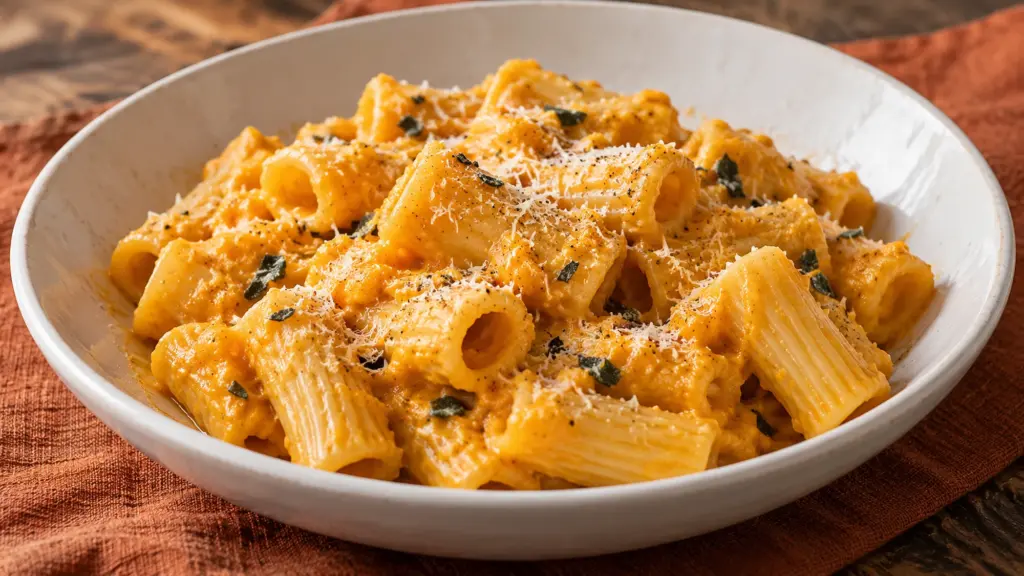
When a bowl of pasta sounds right but tomato sauce does not, butternut squash offers a different kind of comfort. Roasting brings out its mellow sweetness, and blending it with onion, garlic and pasta water turns those vegetables into a golden sauce that settles into every ridge.
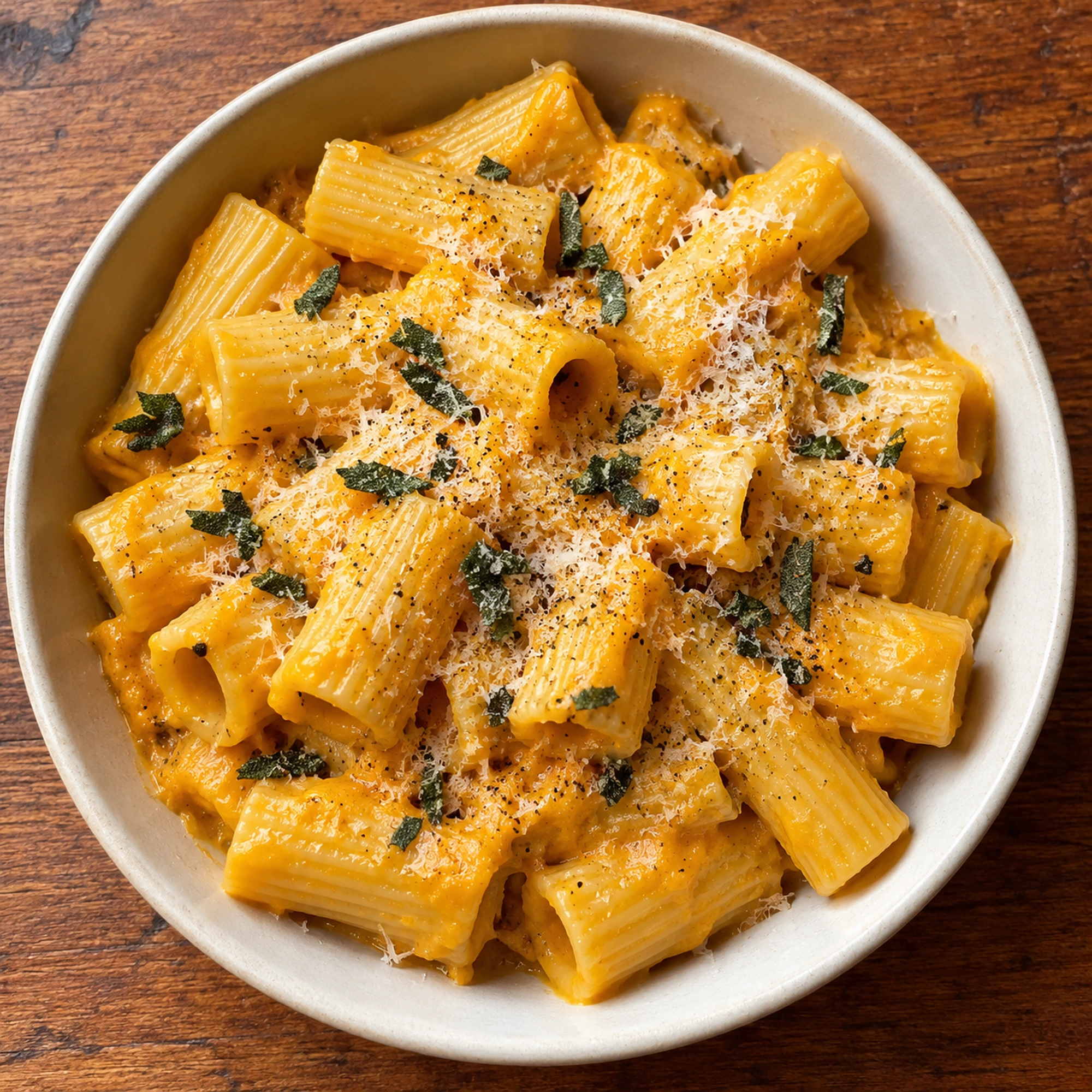
This butternut squash pasta pairs rigatoni with roasted squash, Parmesan, sage and a little lemon. The sauce gets its creamy texture from the vegetables rather than heavy cream. Allow about an hour, with the pasta cooking while the squash finishes roasting.
I like rigatoni because the sauce catches inside the tubes as well as on the outside. The important part is not a fancy blender or an elaborate garnish: roast the squash until completely tender, then loosen the sauce gradually instead of pouring in all the water at once.
If you are peeling a whole squash, trim the ends and make a stable flat base before cutting. Use a sturdy board and a sharp knife, working slowly. Buying prepared cubes is a sensible shortcut when handling a hard squash feels awkward.
Serving Suggestions for Butternut Squash Pasta
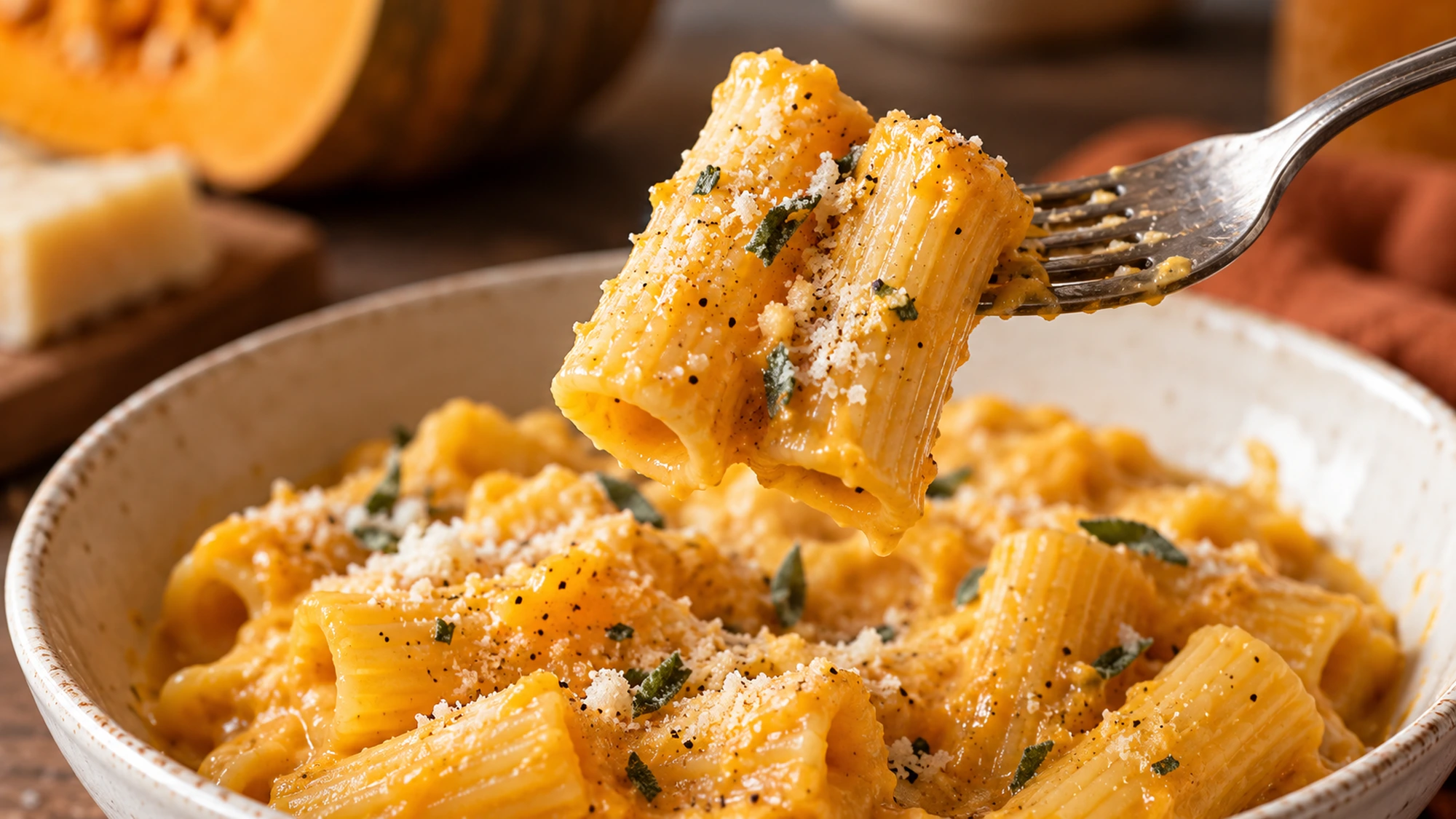
Serve this pasta in shallow bowls while the sauce is still loose and glossy. It thickens as it stands, so keep a little cooking water nearby until everyone is ready to eat. A final small sprinkle of the measured Parmesan gives the surface a savory finish.
A crisp green salad with a sharp dressing is my first choice alongside it. Roasted broccoli or green beans also work, especially if you want something warm. Choose a simple option from our side dish collection rather than another rich, creamy dish.
| Sauce cue | What to do | Why it helps |
|---|---|---|
| Stiff or pasty | Add pasta water a little at a time | Helps sauce coat the tubes |
| Too loose | Toss over gentle heat briefly | Evaporates excess liquid |
| Sweet but flat | Add the measured lemon and cheese | Balances squash sweetness |
The best serving plan is a simple one: finish the side first, toss the pasta last, and bring the bowls straight to the table.
Variations and Ingredient Choices
Penne or shells can stand in for rigatoni. Follow the cooking time on the package and taste a piece before draining. Whole-wheat pasta brings a nuttier flavor and changes the nutrition; it may also need more sauce-loosening water.
- Precut squash saves peeling time. Check that the cubes are reasonably similar in size, and trim any unusually large pieces. Frozen cubes release more moisture and may need extra roasting time, so judge by tenderness and surface color rather than the clock alone.
For a vegetarian version, use a Parmesan-style cheese explicitly made without animal rennet. For a dairy-free variation, leave out the cheese and finish with a little extra lemon to taste; expect a less salty, less rich sauce, and do not use the original nutrition estimate for that version.
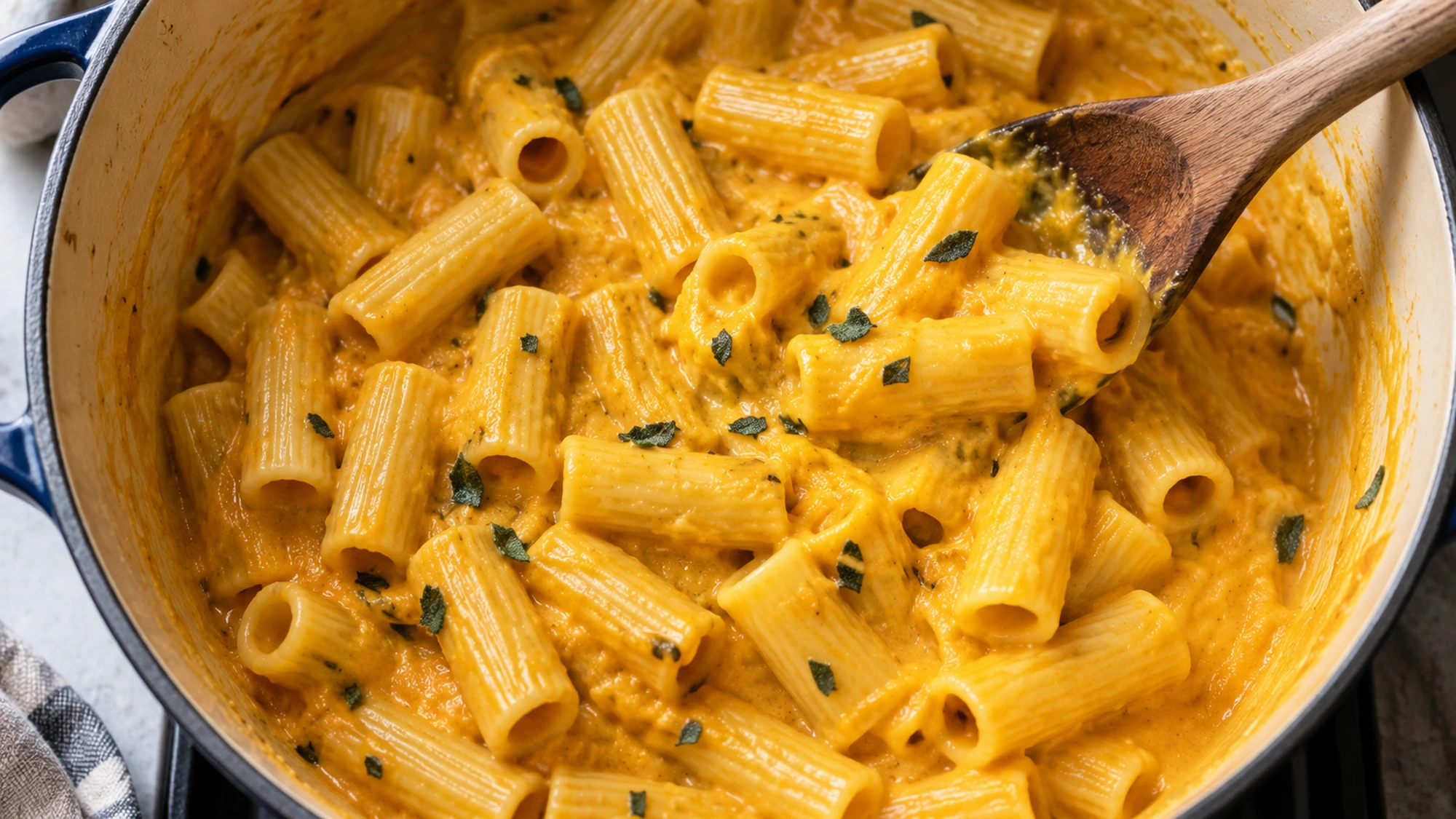
Sage is assertive, so start with the measured amount. I would rather taste the roasted squash clearly than turn the whole bowl into an herb sauce. Add more only after tasting the finished pasta.
Health Benefits Without Overselling the Bowl
Butternut squash contributes fiber and carotenoids, including beta-carotene. The body can convert certain carotenoids to vitamin A, which supports normal vision and other functions, as explained in the NIH vitamin A overview. That is a useful nutrient contribution, not a reason to promise a special health result from dinner.
- Winter squash also fits the season: the American Heart Association’s seasonal produce guide includes butternut among fall vegetables. Fresh availability varies by location, and precut or frozen squash can still be practical options.
Pasta, olive oil and Parmesan each contribute to the finished meal. A vegetable-based sauce does not make portions irrelevant or remove the wheat and milk allergens. The card’s estimates cover four equal servings with the measured cheese, not extra toppings or sides.
Keep the emphasis on variety and enjoyment: a generous vegetable sauce, a portion that suits your appetite, and a contrasting side make a more useful plan than labeling pasta good or bad.
Bottom Line
Butternut squash pasta works because a few ordinary ingredients do different jobs: roasted vegetables build the sauce, pasta water adjusts it, and lemon and Parmesan balance the sweetness. Roast until tender, blend carefully, and keep the sauce a little looser than you think before serving.

Butternut Squash Pasta Recipe
Ingredients
Equipment
Method
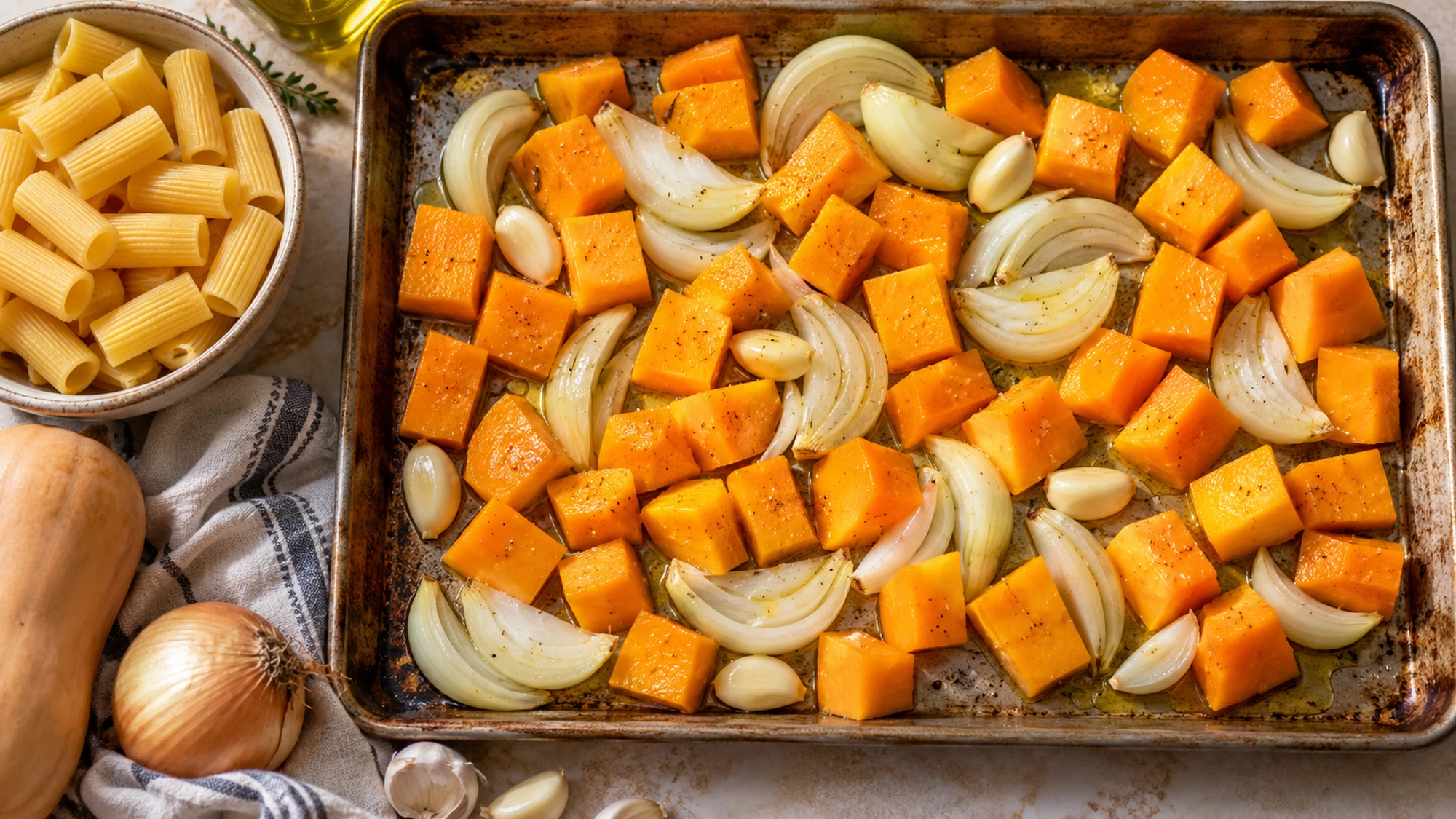
- Heat oven to 425°F. Toss squash, onion and garlic with olive oil on a large rimmed baking sheet. Spread in one layer. Roast 25–35 minutes, stirring halfway, until squash is easily pierced and lightly golden. Remove garlic earlier if it begins to darken.
- While vegetables roast, cook rigatoni in unsalted boiling water according to package directions until just tender with a firm bite. Reserve 1 1/2 cups cooking water before draining.
- Transfer roasted vegetables and any oil to a deep pot. Add sage, salt, pepper and 3/4 cup reserved pasta water. Blend with an immersion blender, keeping the head submerged to avoid hot splashes. If using a countertop blender instead, cool slightly and follow its hot-liquid instructions; never seal hot liquid in a personal blender.
- Add drained pasta to the sauce over low heat. Stir in 45 g Parmesan and lemon juice. Toss, adding more pasta water a few tablespoons at a time until the sauce coats the pasta smoothly. Divide into four bowls and finish with the remaining 15 g cheese.
- Refrigerate leftovers in shallow containers within 2 hours, or 1 hour above 90°F. Keep at 40°F or below for 3–4 days. Reheat to 165°F, stirring in a splash of water to loosen the sauce.