
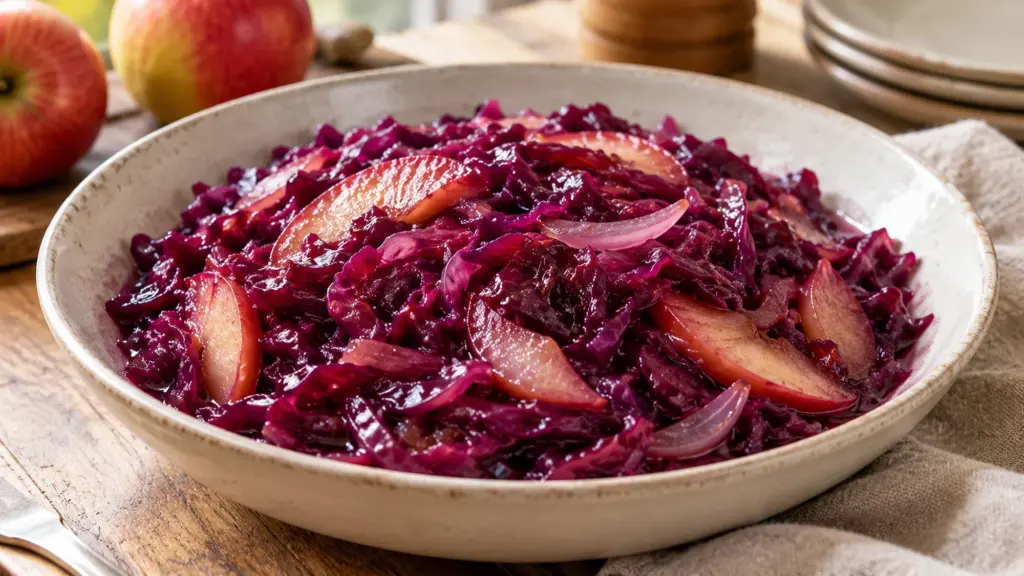
Braised red cabbage brings something a holiday plate often needs: a little tartness between the rich, buttery bites. Thin purple ribbons soften alongside apple and onion, with cider vinegar keeping the flavor lively. It is a stovetop side, too, which matters when the oven already has a turkey and two casseroles waiting their turn.
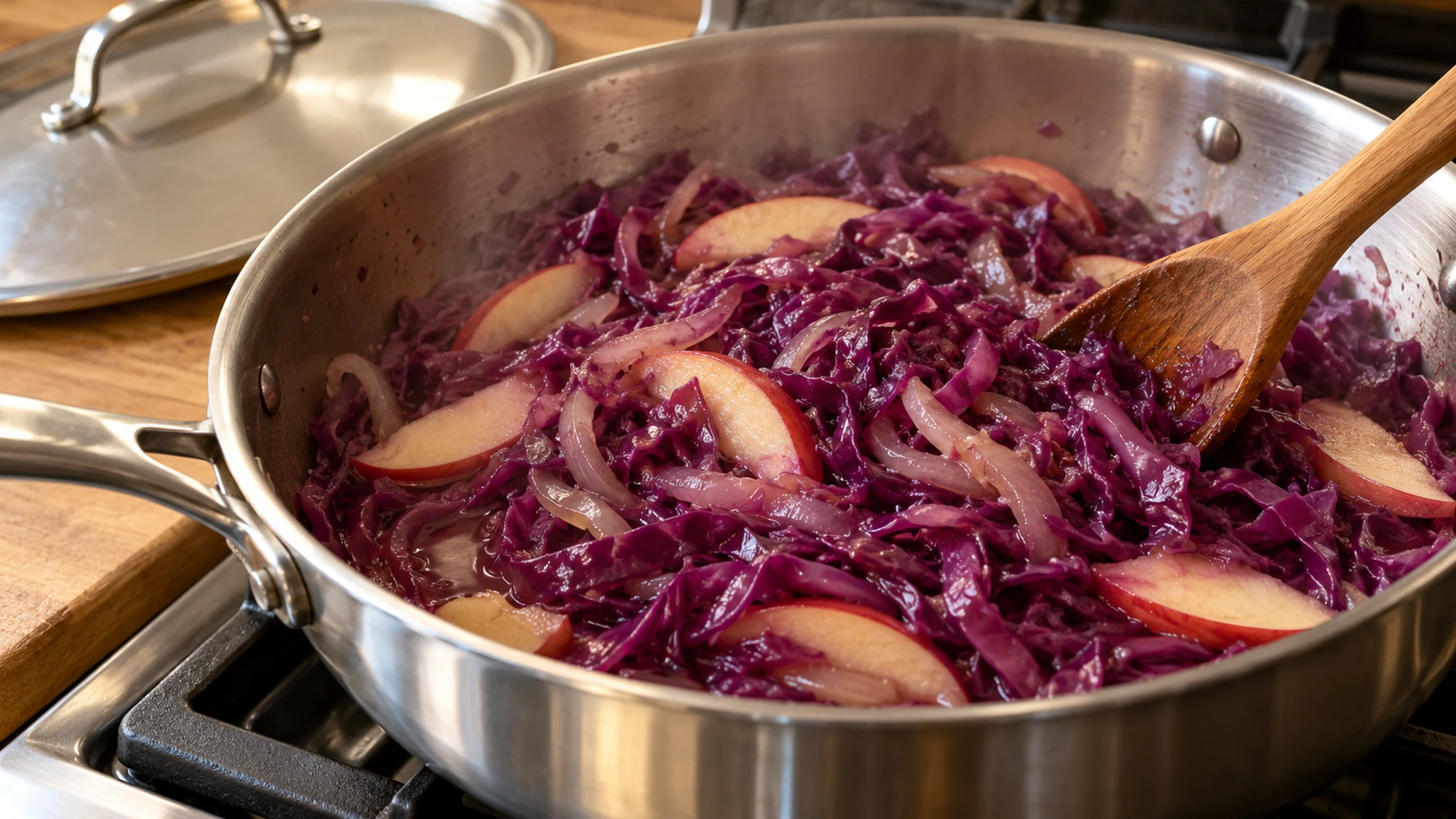
The key to tender braised red cabbage is a covered pan, thin slices, and gentle heat. Apple supplies sweetness, cider vinegar adds a tangy edge, and a small amount of water keeps the cabbage moist while it softens. Check the pan occasionally rather than letting it cook dry.
I prefer this version on the tart side, not candy-sweet. A spoonful of brown sugar rounds out the vinegar without turning the cabbage into dessert. The finished ribbons should bend easily but still look like cabbage, with soft apple slices tucked between them.
Serving Suggestions for Braised Red Cabbage
Serve six side portions with roast pork, turkey, chicken, or a savory bean dish. Mashed potatoes make a soft, mild companion, while the cabbage supplies color and acidity. Keep any gravy on the main dish so its flavor does not disappear into the cabbage juices.
- Spoon the cabbage into a shallow bowl with a slotted spoon if there is more liquid than you want on the plate.
- For a vegetarian dinner, pair it with lentils and roasted potatoes rather than treating the cabbage alone as a complete meal.
- At a holiday buffet, offer modest portions first. Its tangy flavor works as a contrast to other sides, not necessarily as the largest item on the plate.
My choice would be this cabbage beside something savory and simply seasoned, leaving room for the apple to come through. Browse the side dish collection for another vegetable or potato dish that suits your menu.
Think of braised cabbage as the bright, tart part of the meal. It can balance a rich plate without needing extra butter, cream, or a complicated finishing sauce.
Variations and Tips for Braised Red Cabbage
Braising means cooking gently with a small amount of liquid, usually under a lid. The University of Maine’s braised cabbage demonstration uses the same useful combination of cabbage, apple, onion, vinegar, and water. This version changes the proportions for a cabbage-forward, tangier result.
| What you notice | What to do |
|---|---|
| Cabbage is firm and pan is dry | Add a tablespoon of water, cover, and continue gently. |
| Cabbage is tender but soupy | Uncover briefly to reduce excess liquid. |
| Thick pieces lag behind | Slice more evenly next time; give them a little longer now. |
| Apple slices are disappearing | Stir gently and stop once the cabbage is tender. |
A firm apple holds its shape better than one that breaks down quickly. Leave the skin on for texture, or peel it if you prefer softer bites. Use a stainless-steel or other nonreactive pan, and keep the burner low enough that the liquid simmers rather than boils hard.
- Green cabbage can replace red, though the finished color will be different.
- A pinch of caraway adds a distinctive flavor if you enjoy it; leave it out for a simpler apple-and-vinegar profile.
- Avoid packing a doubled batch into a small pan. Use a larger pot and allow extra time for the cabbage to soften evenly.
Watch the moisture as closely as the clock. A little liquid helps the cabbage soften; too much leaves a watery side, while too little risks a scorched bottom.
Health Benefits and Nutrition of Braised Red Cabbage
Cabbage, apple, and onion contribute fiber to this vegetable side. The estimate includes all measured oil, sugar, and salt, divided into six portions. It is an ingredient-based estimate, not a laboratory measurement, and does not establish a particular health outcome.
- Before slicing, follow FDA produce guidance: remove the cabbage’s outer leaves and rinse produce under running water without soap.
- The vinegar here is a flavor ingredient, not a preservation method. This is a cooked side dish that needs refrigeration, not a shelf-stable pickle.
- Following FoodSafety.gov chilling guidance, refrigerate within two hours, or one hour above 90°F (32°C). Use within three to four days and reheat to 165°F (74°C).
Keep the nutrition claims simple: this is a fiber-containing vegetable side with measured oil and seasoning. Safe cooling and sensible portions matter more than assigning special powers to its purple color.
Bottom Line
Braised red cabbage needs thin cuts, gentle heat, and enough moisture to soften without scorching. Apple and onion mellow its flavor, while cider vinegar keeps each forkful lively. Serve it where a rich meal could use a tart, colorful companion.
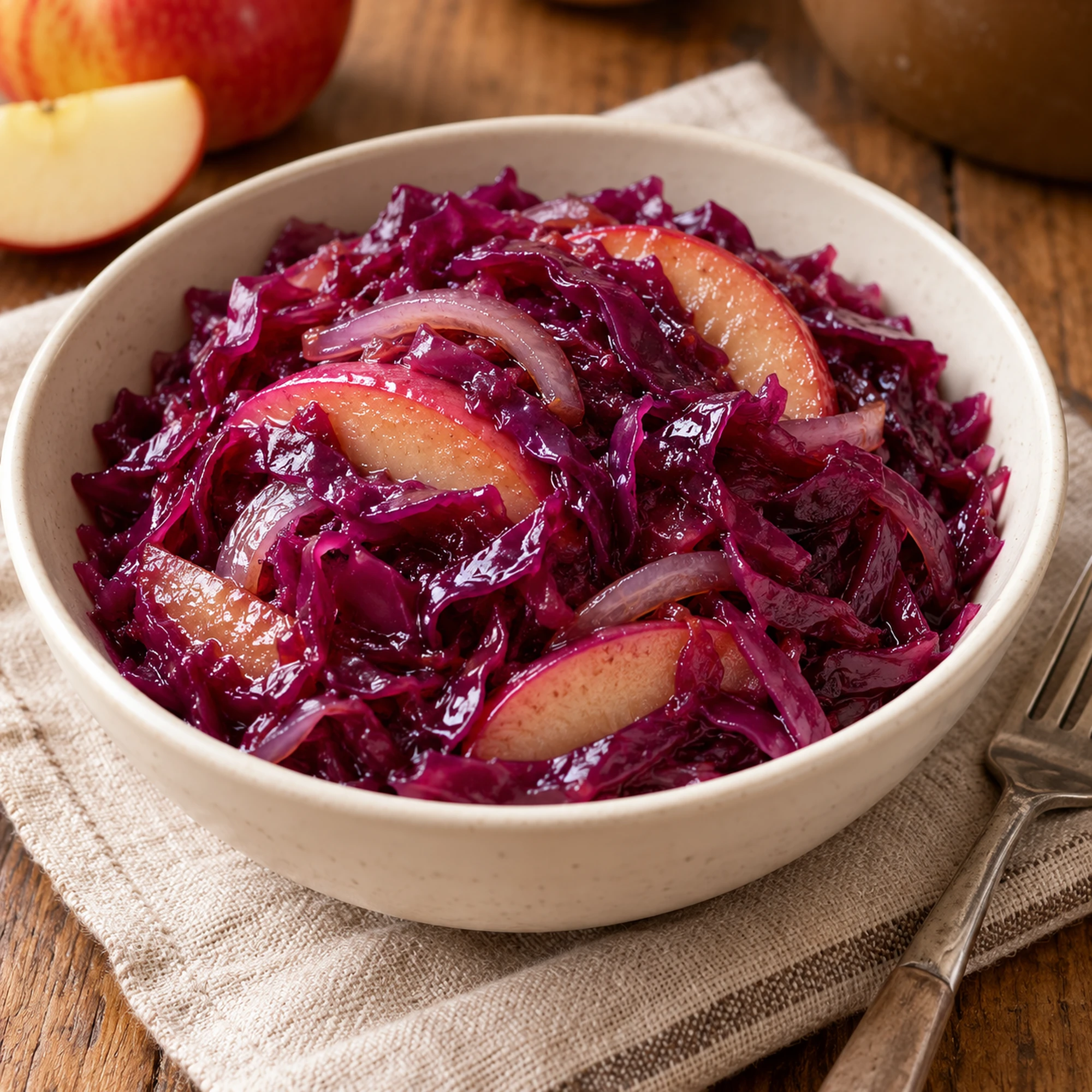

Braised Red Cabbage Recipe
Ingredients
Equipment
Method
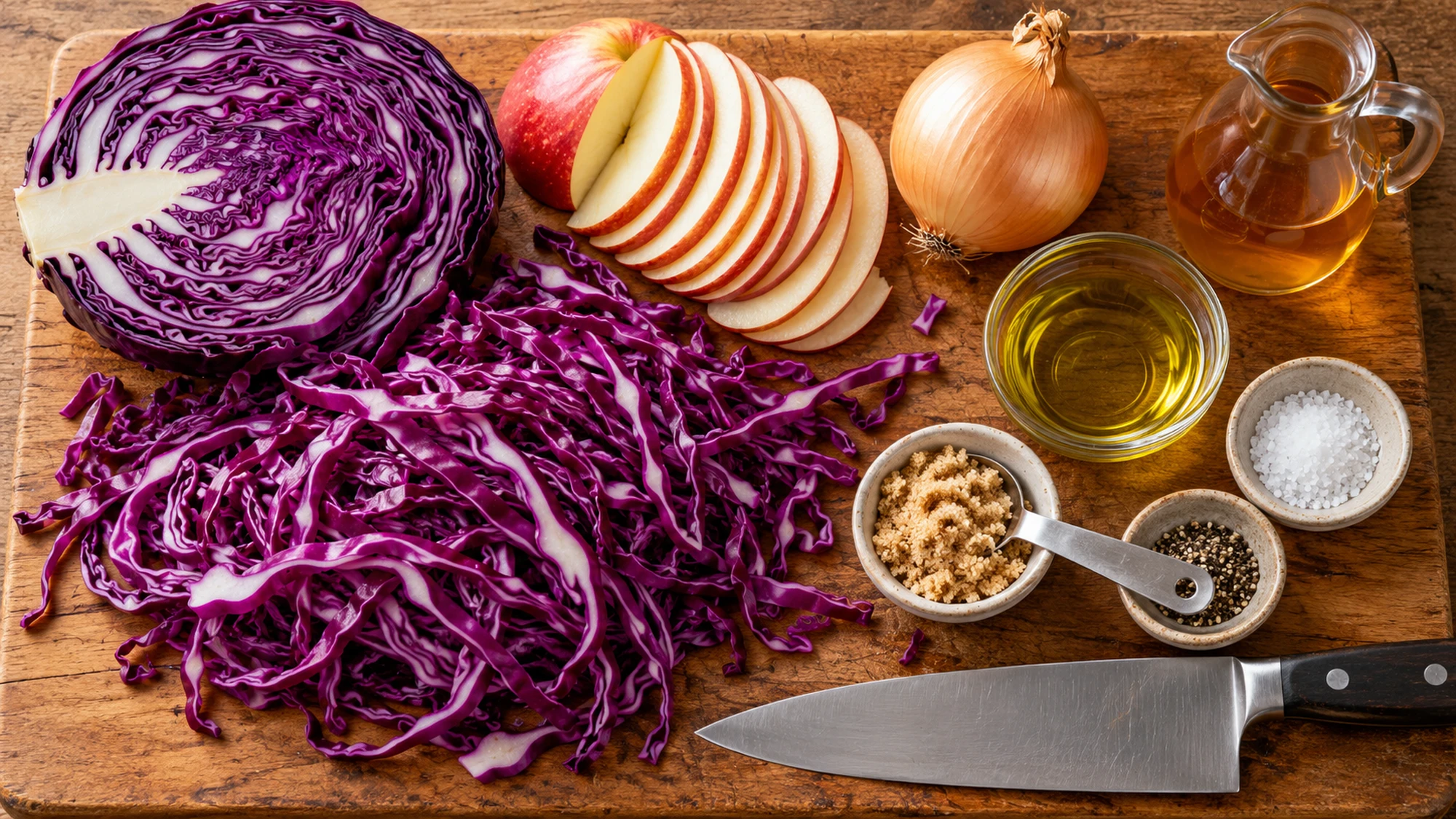
- Remove the outer cabbage leaves, rinse the produce, and core and thinly slice the cabbage. Core and thinly slice the apple; thinly slice the onion.
- Heat the oil in a large stainless-steel sauté pan or Dutch oven over medium heat. Add onion and cook 5 minutes, stirring, until beginning to soften. Add cabbage and apple and cook 5 minutes, turning gently.
- Stir in vinegar, brown sugar, salt, pepper, and water. Bring to a gentle simmer, cover, and reduce heat to low. Cook about 25 minutes, stirring every 5 minutes. Add a tablespoon of water if the bottom becomes dry.
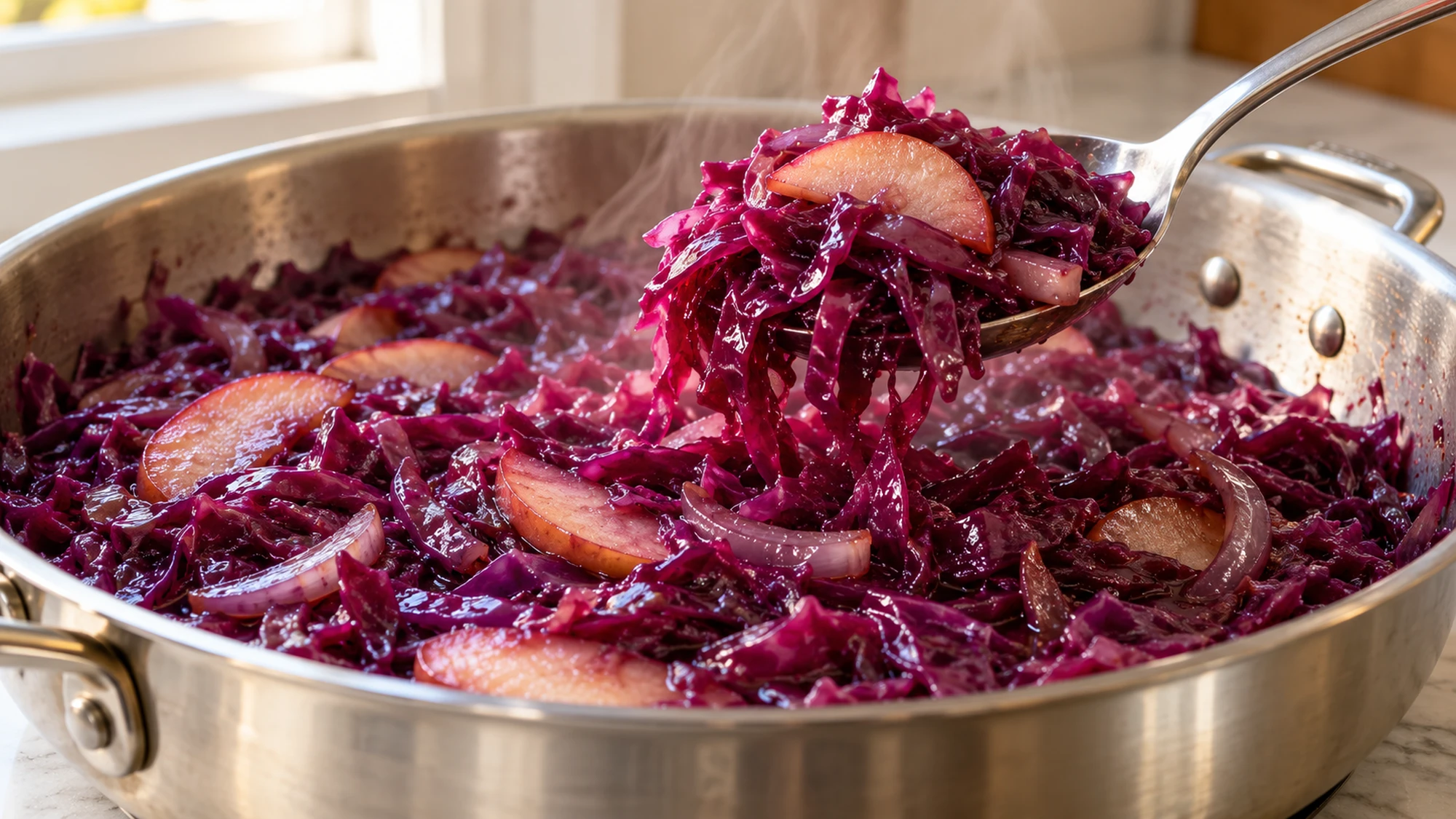
- When cabbage is nearly tender, uncover and cook about 5 minutes more to finish softening and reduce excess liquid. If still firm, cover and cook longer as needed. Serve in six side portions.
- Refrigerate leftovers within two hours, or one hour above 90°F (32°C). Use within 3–4 days and reheat to 165°F (74°C).