
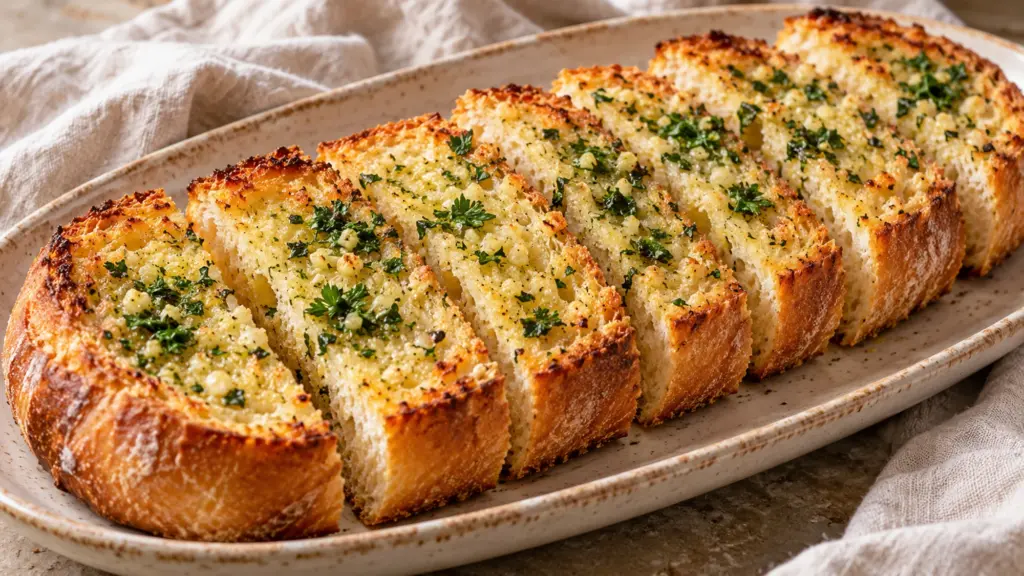
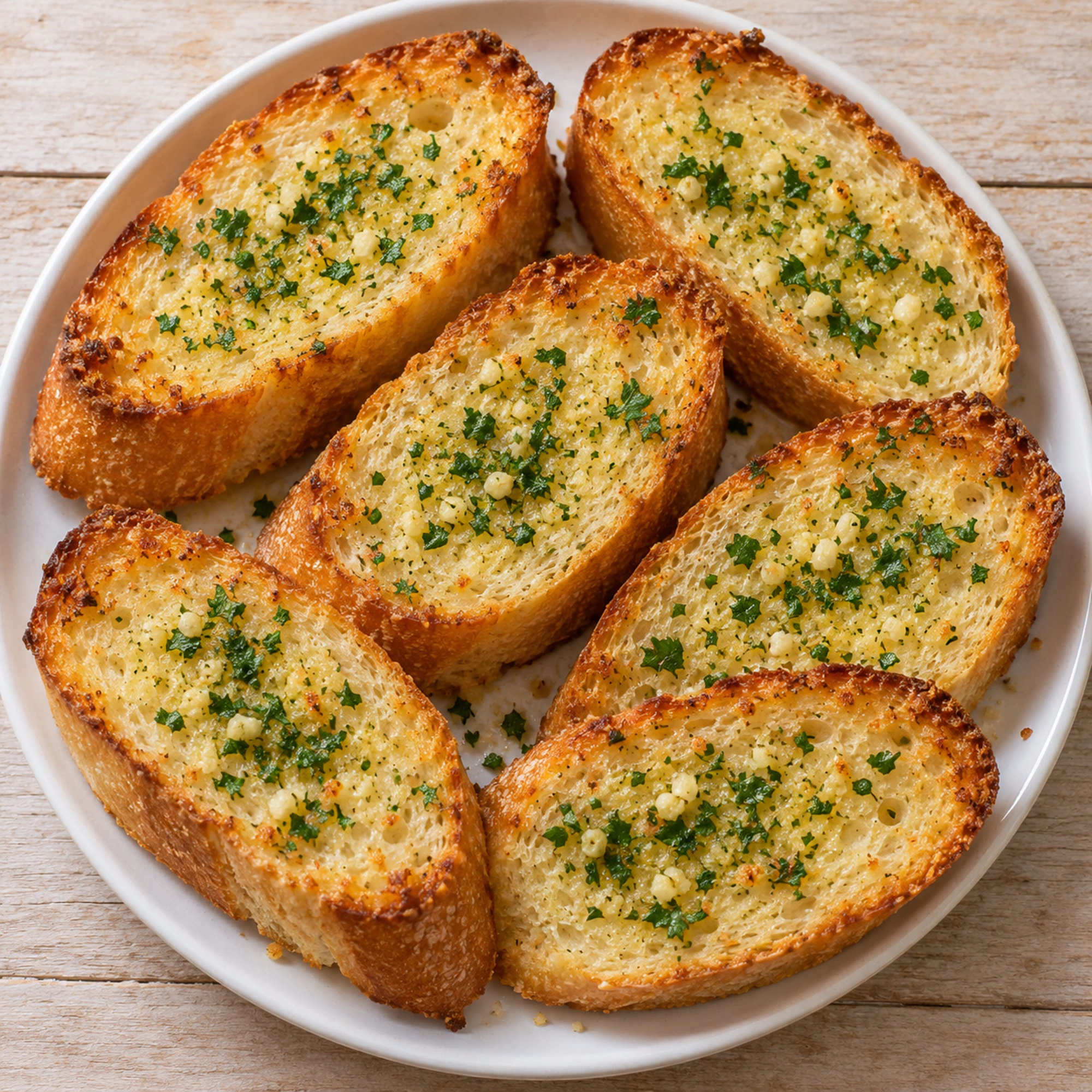
A pot of soup can be perfectly good and still need something crunchy beside it. Garlic bread answers that small dinner problem with a golden crust, a soft center, and enough fresh garlic to announce itself before the plate reaches the table. You do not need cheese or a complicated spread to make it satisfying.
This garlic bread uses a split French loaf, softened butter, fresh garlic, and parsley. Baking the halves open-faced lets the surface toast while the thicker interior stays tender. Allow about 27 minutes, including preparation, and slice the loaf after baking for eight generous side portions.
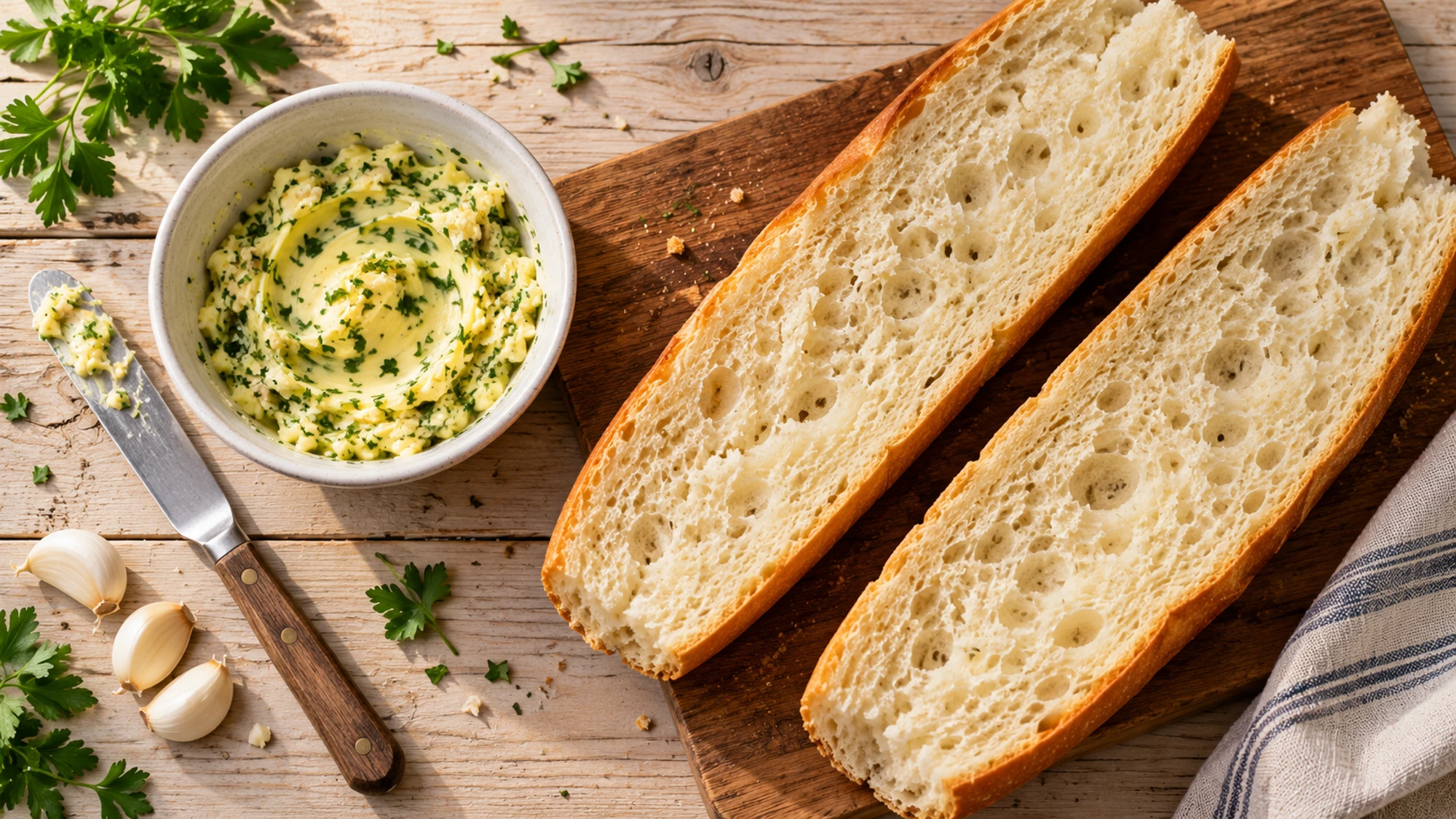
I prefer finely minced garlic here rather than thin slices: little pieces spread more evenly and leave fewer sharply flavored pockets. Choose a loaf with a tender middle and a crust that is firm, not rock-hard. The bread has already been baked once; this trip through the oven is about warming, seasoning, and browning.
Serving Suggestions for Garlic Bread
Plan to bring the bread out near the end of dinner preparation. It is most appealing while the butter is warm and the surface still has that delicate crunch. A serrated knife helps you cut through the crust without flattening the soft middle.
- With soup: pair a warm slice with tomato, white bean, or vegetable soup, leaving part of the bread dry for contrast.
- With pasta: serve alongside a tomato-based sauce rather than covering the toasted bread with sauce before it reaches the table.
- With a lighter plate: add a crisp green salad and beans, eggs, or another protein you enjoy.
- For a shared table: cut each of the eight portions in half for smaller bites, keeping the total recipe yield unchanged.
For more ideas to round out dinner, browse the side dishes. If the bread needs to wait a few minutes, leave it loosely uncovered rather than trapping steam under a tight lid.
Serve the bread last, slice it just before eating, and let the crisp surface stay uncovered. Those small choices protect the contrast between crunchy edges and a tender center.
Variations and Texture Choices
The loaf matters as much as the topping. A narrow baguette toasts faster than a broad French loaf, while a dense sourdough keeps a chewier bite. I would choose the softer French loaf for people who want crispness without a serious jaw workout.
| Change | What to expect |
|---|---|
| Baguette | More crust; check earlier for browning |
| Whole-grain loaf | Nuttier flavor; compare fiber on the label |
| Salted butter | Skip the added salt, then taste after baking |
| Chopped chives | Milder onion flavor in place of parsley |
- For a softer result, loosely cover the bread with foil for the first part of baking, then uncover to finish.
- For dairy-free bread, use a suitable plant-based butter and check the loaf label; the nutrition estimate will change.
- For less garlic intensity, reduce the cloves rather than leaving large chunks in the spread.
Change one feature at a time, and watch the bread rather than relying only on a timer. Golden edges are the goal; dark, bitter garlic is not.
Health Benefits and Nutrition Context
Bread supplies carbohydrate, while butter contributes fat and richness. This is a flavorful side, not a complete meal or a treatment for any condition. The small amounts of garlic and parsley are primarily there for taste; they do not turn buttered bread into a nutritional shortcut.
- Compare loaf labels: sodium and fiber vary considerably between brands and bread styles.
- Consider the whole plate: vegetables and a protein source add variety alongside the bread.
- Match portions to your meal: the recipe estimate assumes one eighth of the loaf and its topping.
The FDA explains how to compare Nutrition Facts labels, including serving sizes. Store leftovers promptly following safe chilling guidance; do not leave the prepared garlic-butter bread sitting out overnight.
Enjoy the buttery flavor for what it is, and use the rest of the meal to bring balance. Ingredient labels and your actual portion are more useful than a broad “healthy” label.
Bottom Line
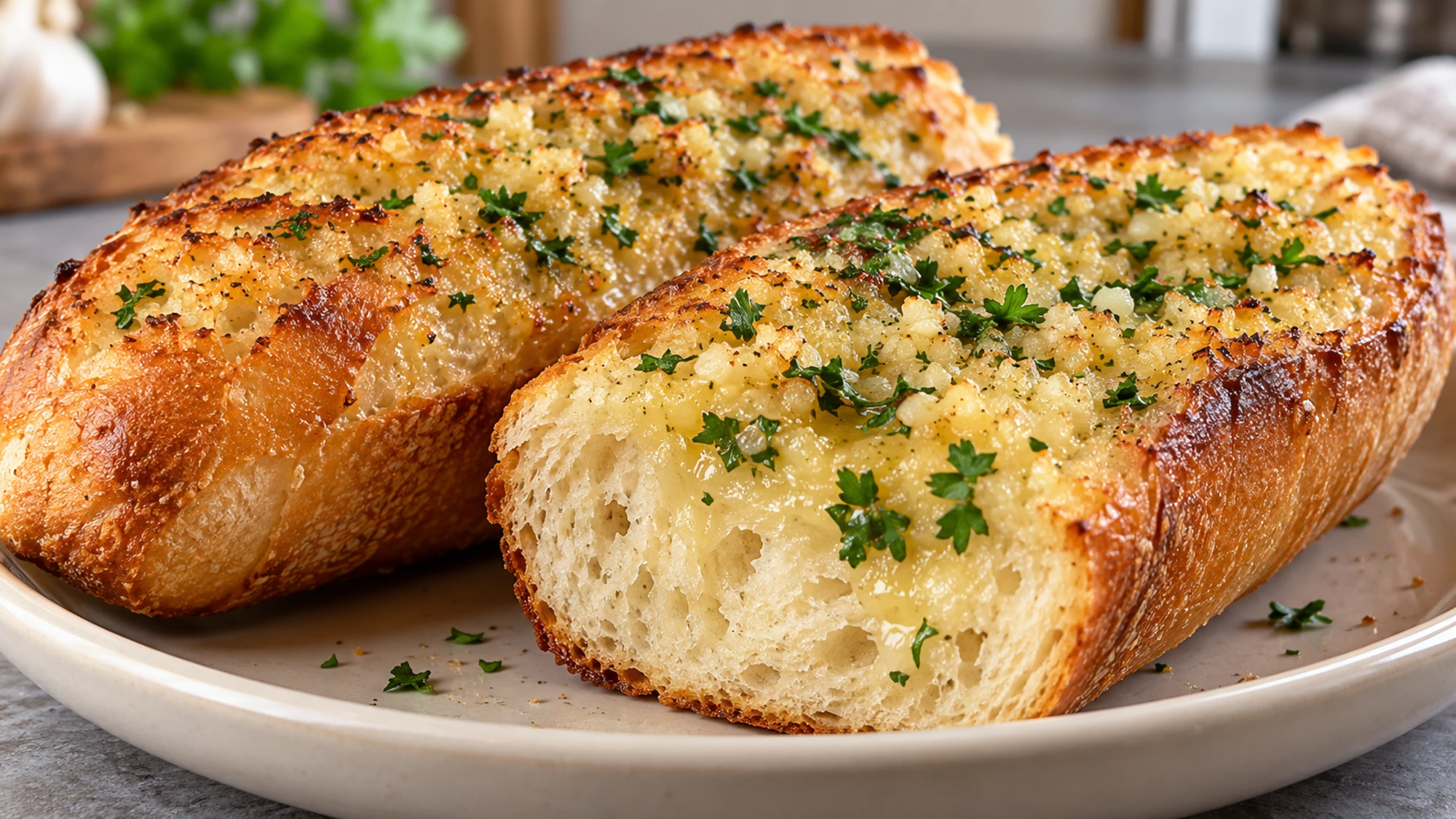
Good garlic bread depends on an even layer of softened garlic butter and enough oven time for golden edges. Keep the topping simple, watch for browning, and serve promptly. A warm slice should be crisp at the edge, tender underneath, and easy to enjoy alongside dinner.

Garlic Bread Recipe
Ingredients
Equipment
Method
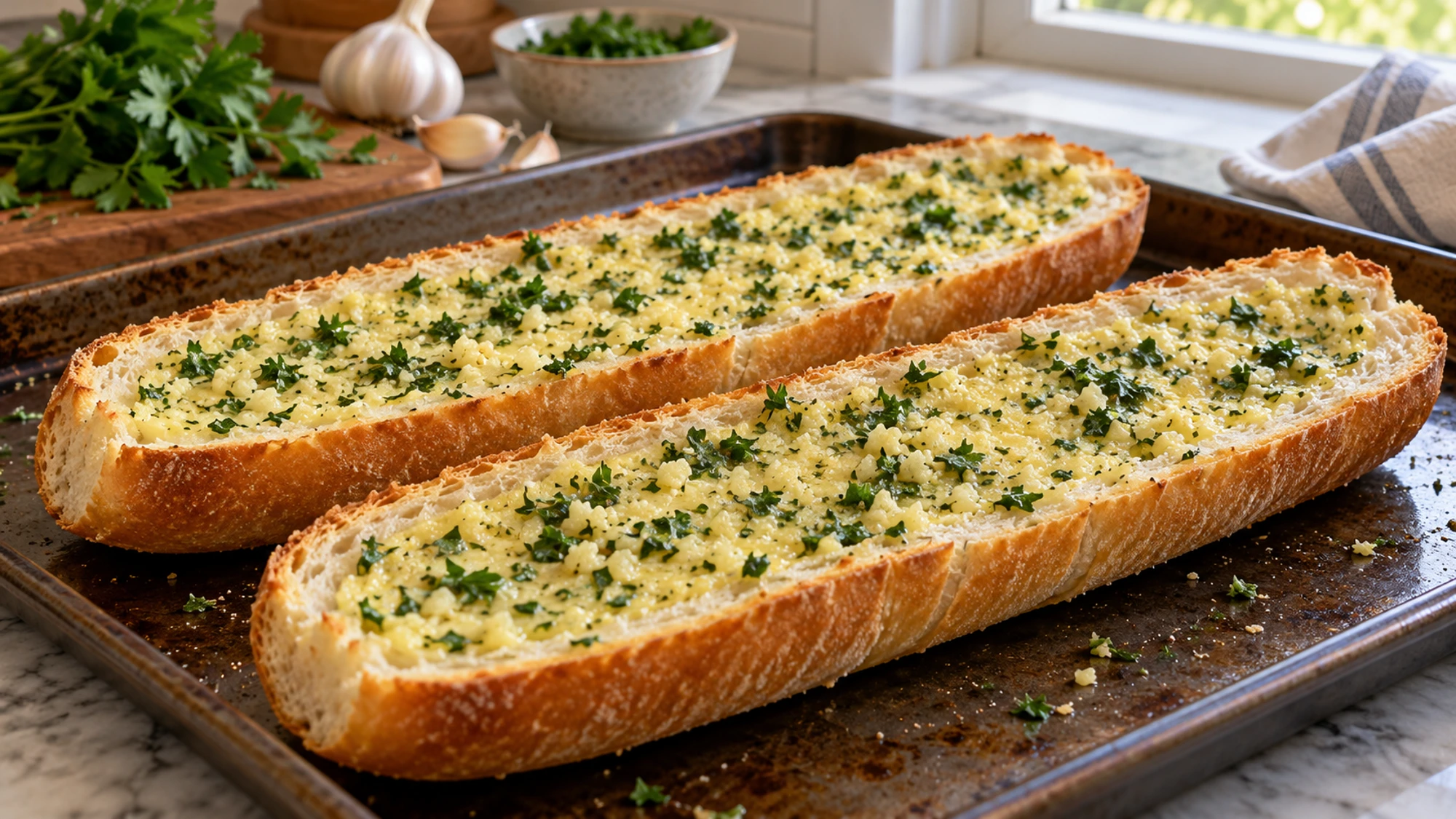
- Heat the oven to 400°F. Set a rack in the middle. Split the loaf lengthwise and place both halves cut-side up on a rimmed baking sheet.
- Mix the softened butter, garlic, parsley, and salt until evenly combined. Spread over both cut surfaces, reaching close to the edges.
- Bake for 12–15 minutes, checking at 10 minutes, until the bread is heated through and the edges are golden. If the garlic browns too quickly, loosely shield the top with foil.
- Rest for 2 minutes, then cut each half into 4 portions with a serrated knife. Serve warm.