
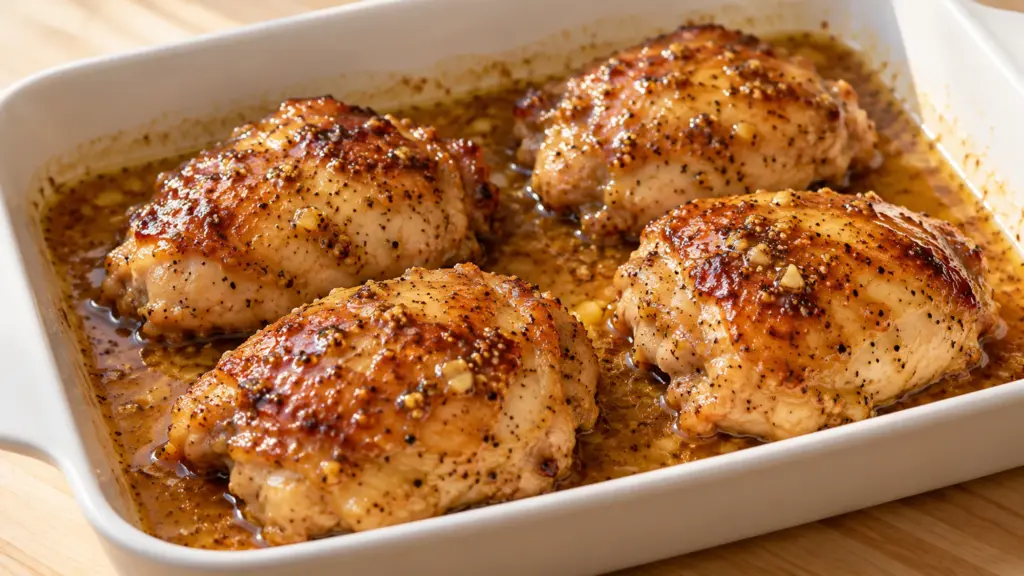
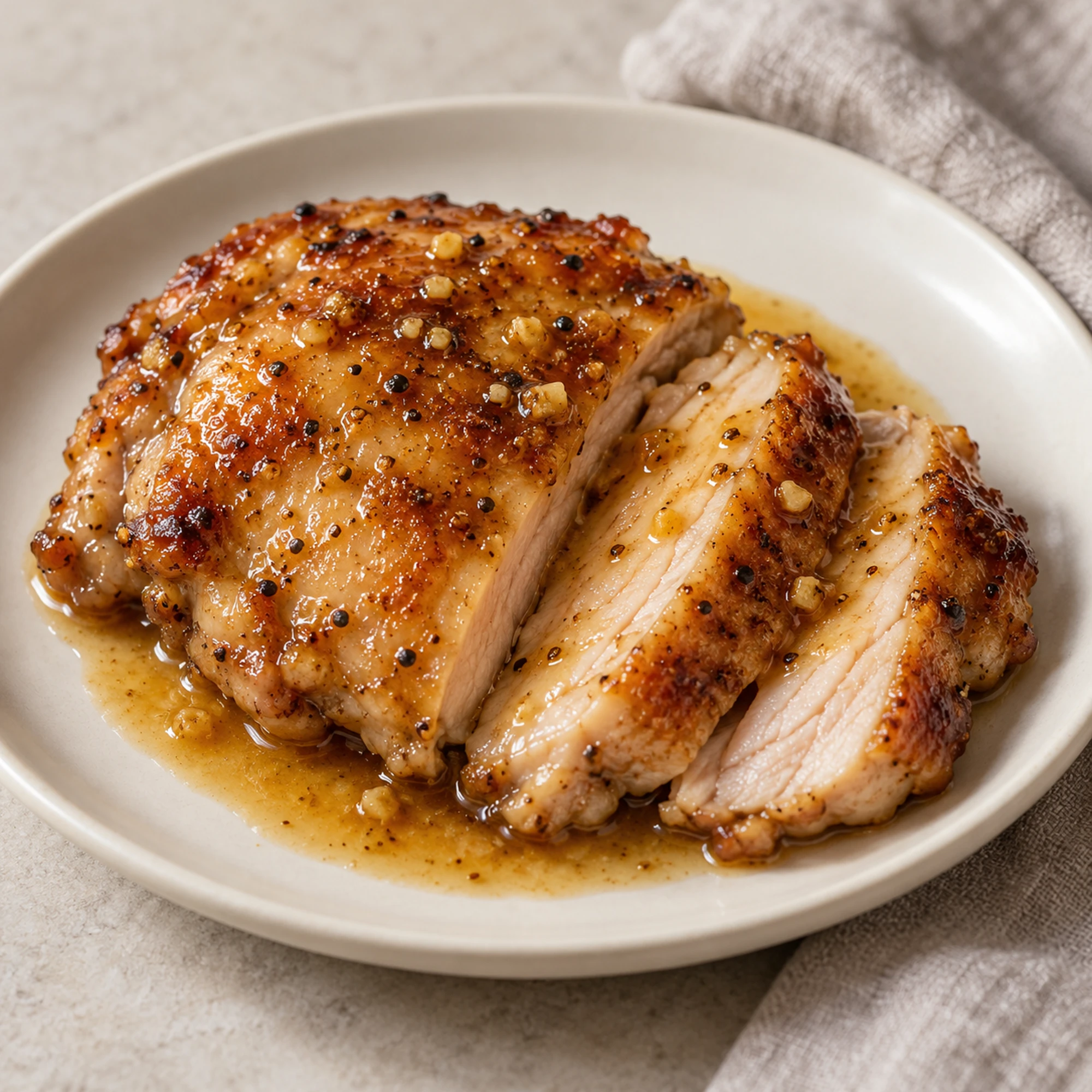
Maple mustard chicken is useful when dinner needs a sauce but you do not want another pan on the stove. Dijon, maple syrup, and cider vinegar whisk together quickly, then coat boneless thighs as they bake. The result is tangy first, gently sweet second, with enough pan juices to spoon over the finished chicken.
Make maple mustard chicken with boneless, skinless thighs and a simple whisked sauce. Spread the pieces in one layer, bake at 400°F (204°C), and check each thickest part with a thermometer. The chicken must reach 165°F (74°C); a browned glaze alone does not tell you it is safely cooked.
I prefer keeping the maple restrained so the mustard still has a voice. Garlic adds a savory base, while a little vinegar keeps the sauce from feeling heavy. There is no long marinade here, which makes the recipe easier to fit into an ordinary evening.
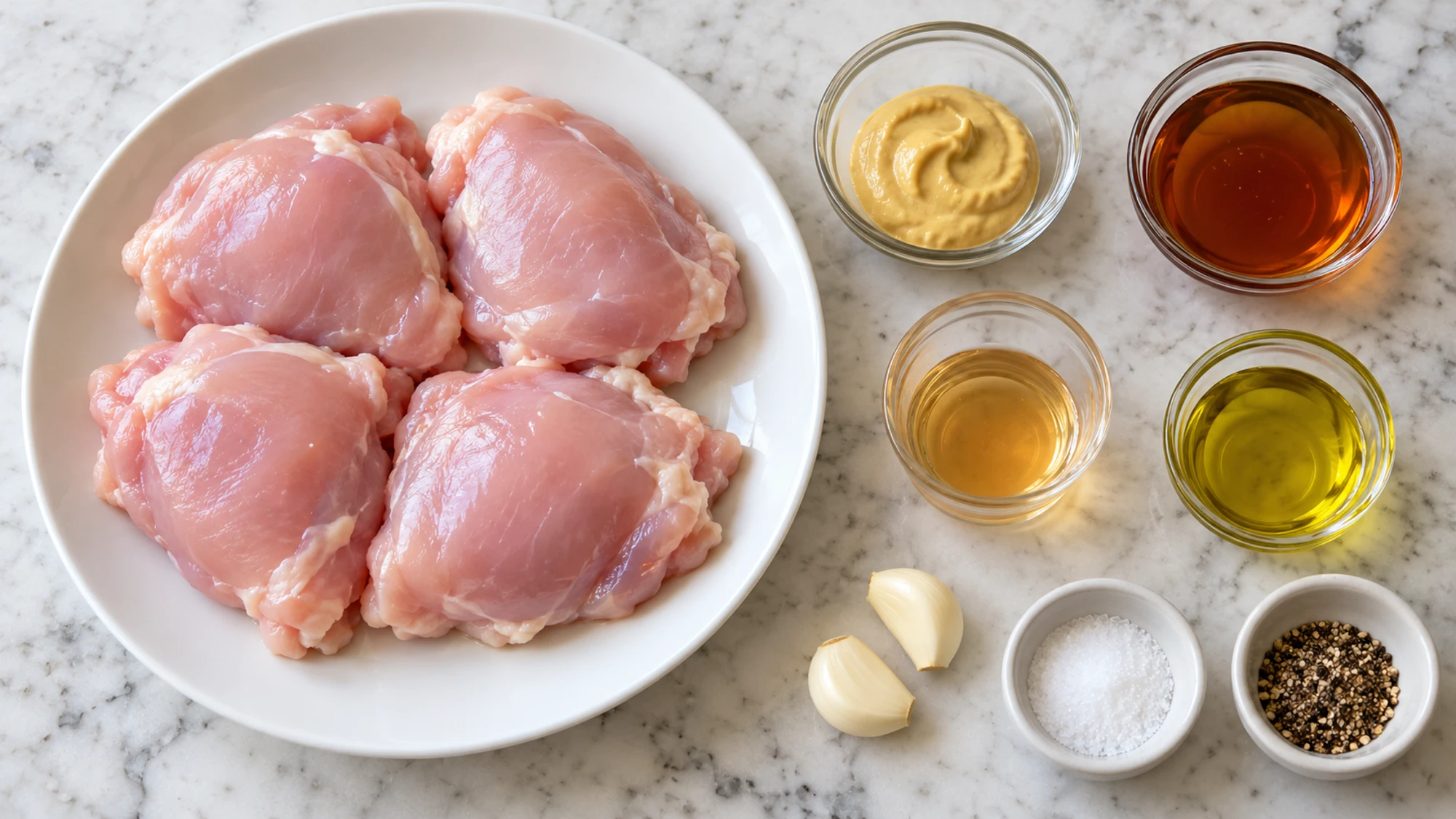
Serving Suggestions for Maple Mustard Chicken
Serve four portions with rice, mashed potatoes, or another plain starch that can catch the cooked sauce. Add green beans, broccoli, or a crisp salad for a different texture. Because the chicken already has a sweet-tangy coating, heavily glazed vegetables can make the meal feel repetitive.
- Spoon the cooked pan juices over the chicken just before serving instead of pouring them across the whole plate.
- If the thighs vary in size, slice and divide the cooked meat evenly rather than assuming one piece always equals one portion.
- For lunch the next day, pack the chicken and sauce together and keep any salad in a separate container.
My choice would be rice and a green vegetable with no extra sweetener. The sauce has enough flavor to carry that simple combination. Browse the main dish collection when you want another straightforward dinner with a different flavor profile.
Let the chicken sauce do the seasoning work. A mild starch and a fresh or green vegetable make practical companions without adding another elaborate recipe.
Variations and Tips for Maple Mustard Chicken
Use thighs of roughly similar thickness and unfold any tightly tucked pieces before placing them in the dish. A very crowded pan traps more liquid around the meat, while an oversized pan can let the sauce dry at the edges. A modest baking dish with a little room between pieces works well.
| Ingredient choice | What changes |
|---|---|
| Boneless, skinless thighs | The cut used for the listed timing and nutrition. |
| Chicken breast | Often cooks differently; check early and use temperature. |
| Bone-in thighs | Need a different cooking schedule, not a direct swap. |
| Whole-grain mustard | Adds visible seeds and a coarser sauce texture. |
Taste the sauce before it touches raw chicken if you want to understand the balance. After contact, do not use it as an uncooked finishing drizzle. Keep any desired extra serving sauce separate from the start, or use only the sauce that has cooked thoroughly with the chicken.
- Pure maple syrup supplies the intended flavor; pancake syrup may behave and taste differently.
- If the glaze is darkening before the meat is ready, cover the dish loosely with foil and continue cooking.
- Follow CDC chicken-handling guidance: do not wash raw chicken, and keep its juices away from salads and other ready-to-eat foods.
The sauce is simple, but raw-chicken handling still matters. Mix it first, avoid cross-contamination, and use a clean spoon for serving the cooked dish.
Health Benefits and Nutrition of Maple Mustard Chicken
Chicken contributes protein, while the sauce adds oil, maple syrup, and mustard. The estimate uses the raw weight of skinless thigh meat and includes all sauce ingredients. It does not include rice, potatoes, or vegetables served alongside, so those additions change the complete meal’s nutrition.
- Mustard brands differ in sodium. The calculation uses a specific Dijon label, so check your jar if that detail matters to you.
- The FoodSafety.gov temperature chart lists 165°F (74°C) for poultry and reheated leftovers. Test the thickest part, away from the baking dish.
- Following FoodSafety.gov chilling guidance, refrigerate within two hours, or one hour above 90°F (32°C). Store three to four days and reheat thoroughly.
Think of this as a protein-centered main with a measured sauce, not a special-purpose health food. Add the sides that suit your meal and keep the temperature checks nonnegotiable.
Bottom Line
Maple mustard chicken brings a lot of flavor from a short sauce mixture. Keep the thighs in one layer, watch the glaze, and let the thermometer decide when dinner is ready. A five-minute rest gives you time to plate the sides and bring everything to the table.

Maple Mustard Chicken Recipe
Ingredients
Equipment
Method
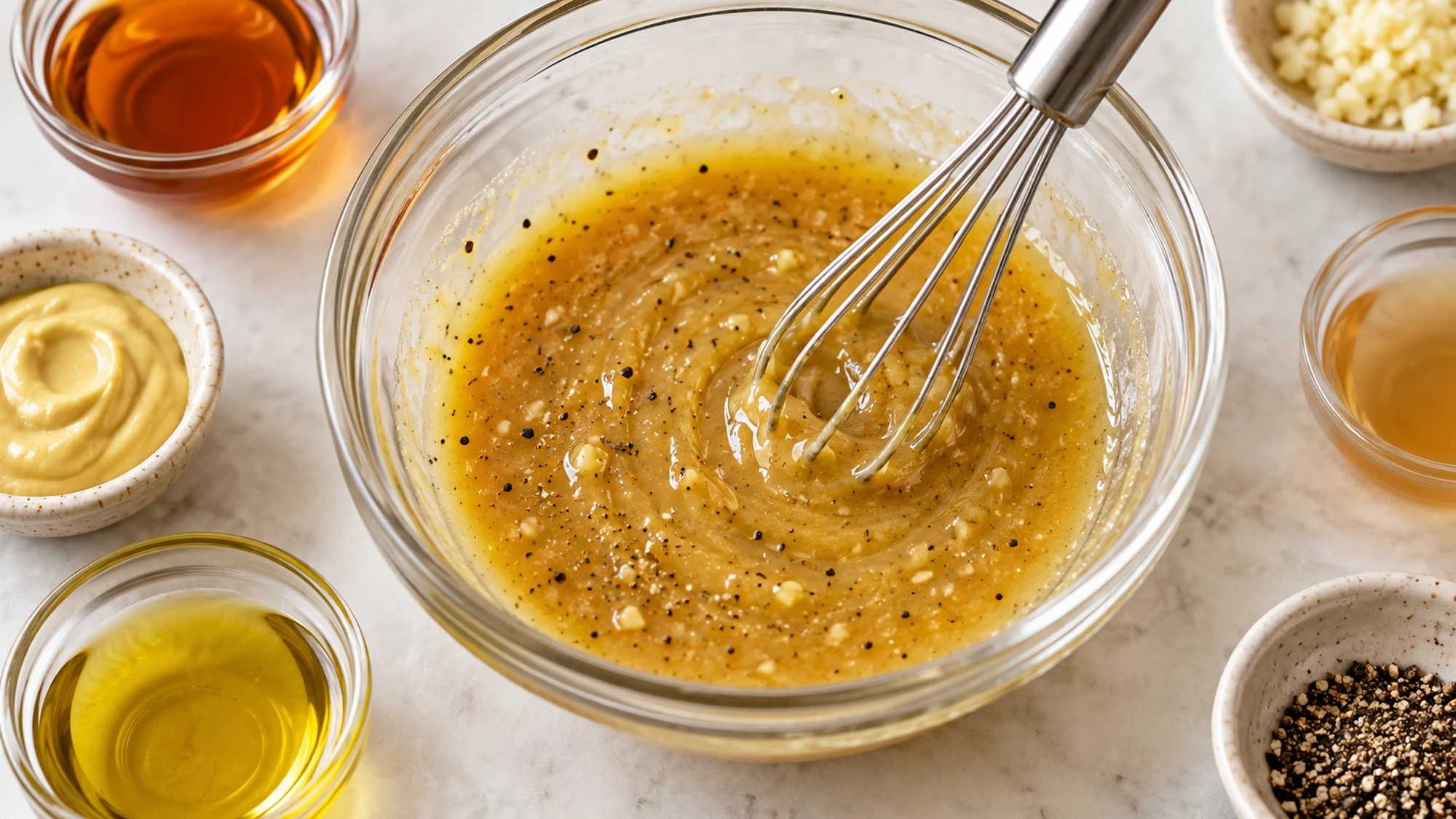
- Heat oven to 400°F (204°C). Whisk Dijon mustard, maple syrup, vinegar, olive oil, garlic, salt, and pepper in a bowl before handling chicken.
- Do not wash the chicken. Pat dry with disposable paper towels and unfold the thighs. Place in a baking dish in one layer, leaving a little space. Coat with all the sauce. Wash hands and any surfaces or utensils that contacted raw chicken.
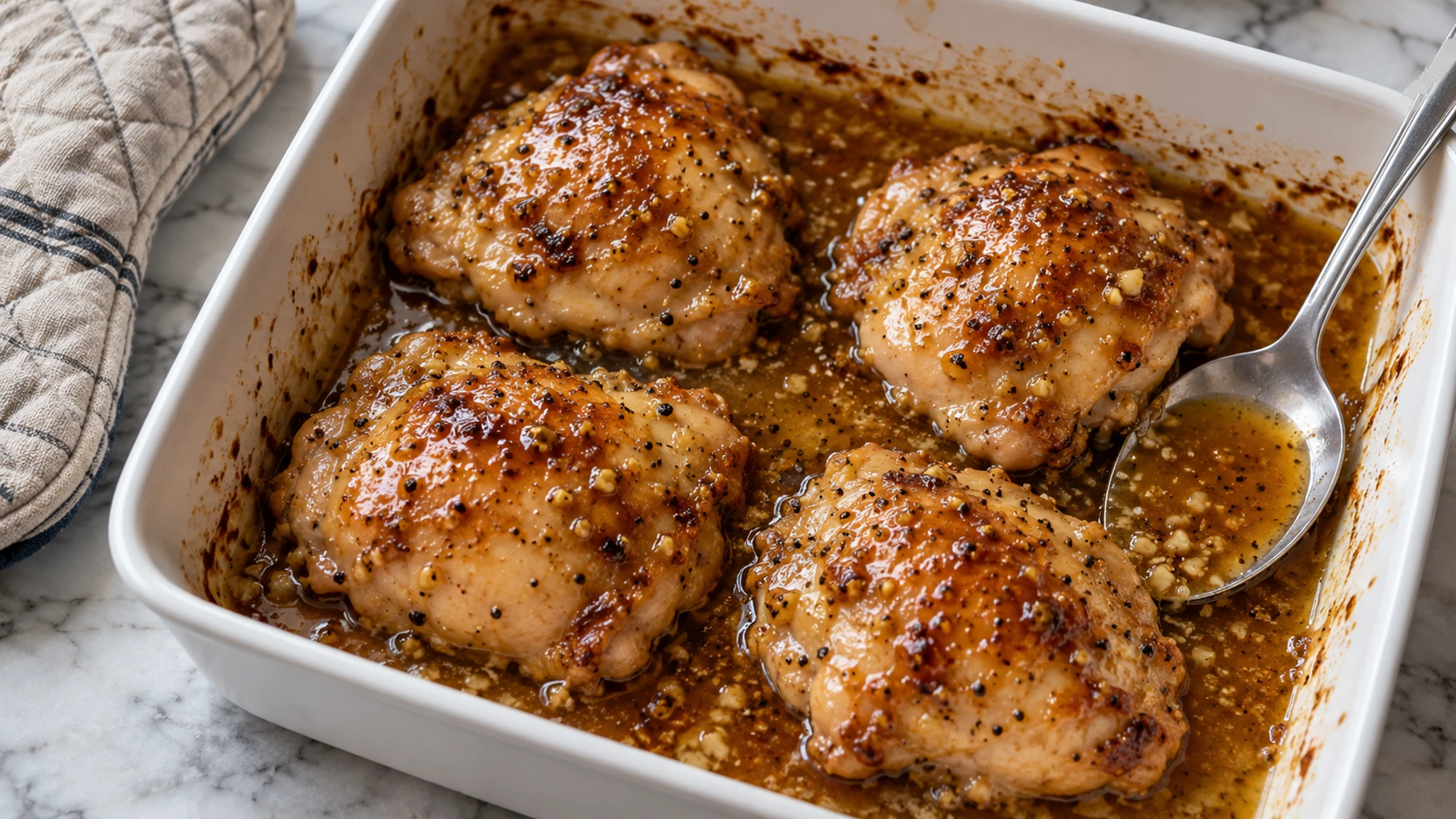
- Bake 20–25 minutes, checking the thickest part of each piece with a thermometer. Continue as needed until every piece reaches at least 165°F (74°C). Cover loosely with foil if the glaze darkens too quickly. Do not judge doneness by color alone.
- Rest 5 minutes. Use clean utensils to spoon the thoroughly cooked pan sauce over the chicken and divide into four portions.
- Refrigerate leftovers within two hours, or one hour above 90°F (32°C). Use within 3–4 days and reheat to 165°F (74°C).