
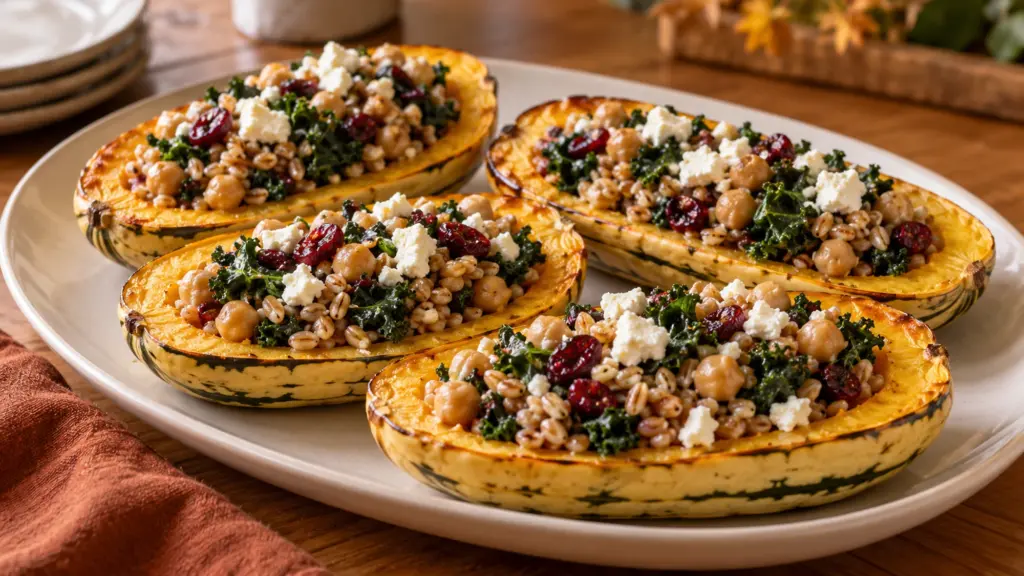
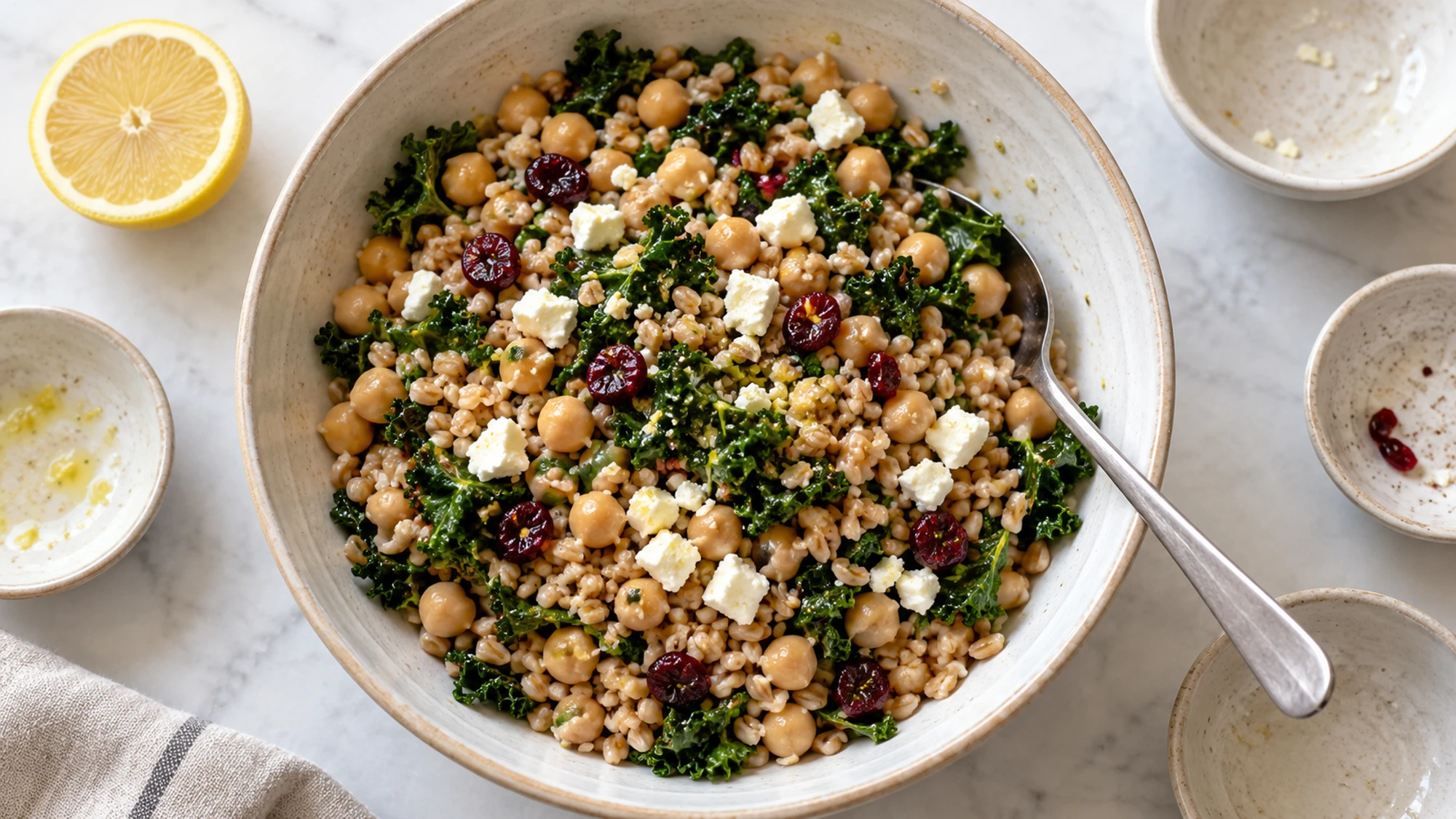
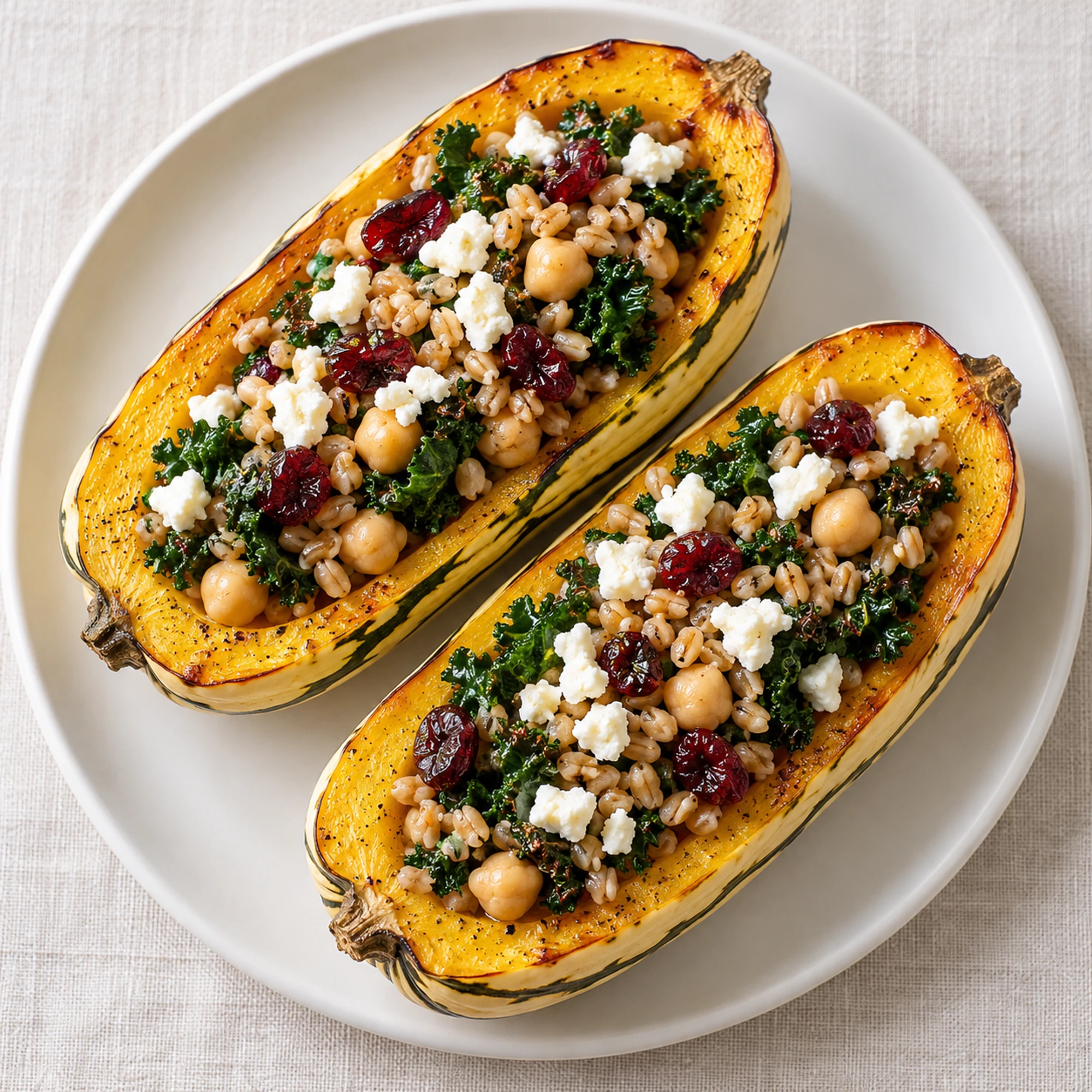
Stuffed delicata squash makes a fall dinner feel special without requiring a pastry crust or a complicated sauce. The striped halves become tender, edible bowls for chewy farro, chickpeas, kale, cranberries, and salty feta. Lemon keeps the filling lively against the squash’s naturally sweet flesh.
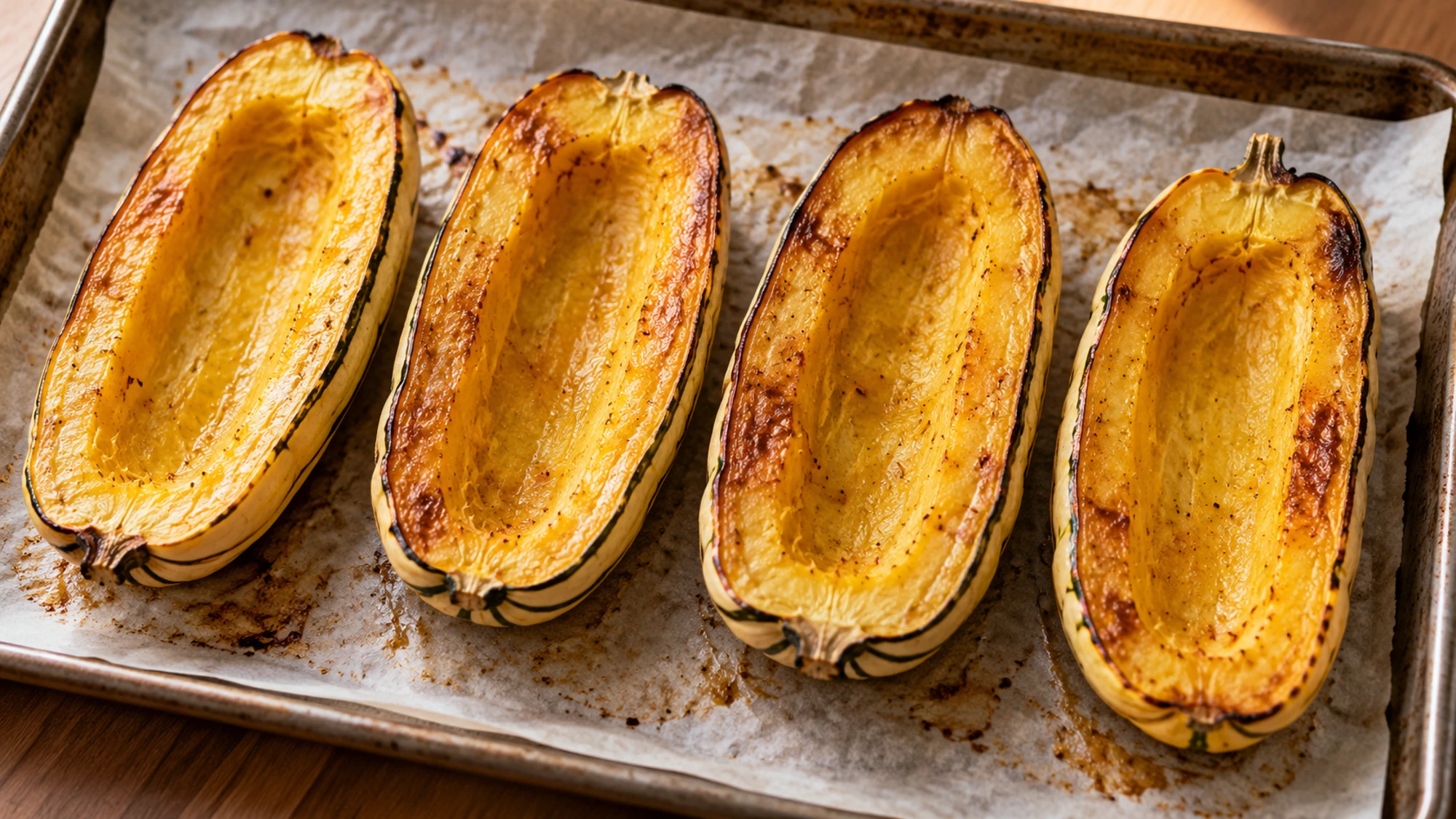
Roast the squash until tender before adding the filling. Cook the farro alongside it, then give the assembled halves a short second bake so the centers heat through without drying out the grains.
I like this combination for a meatless autumn supper because every spoonful has something different: soft squash, a little chew, a creamy chickpea, and the occasional tart-sweet cranberry. The boats also make portions easy to see, which is helpful when a platter is sharing space with several holiday sides.
Serving Suggestions for Stuffed Delicata Squash
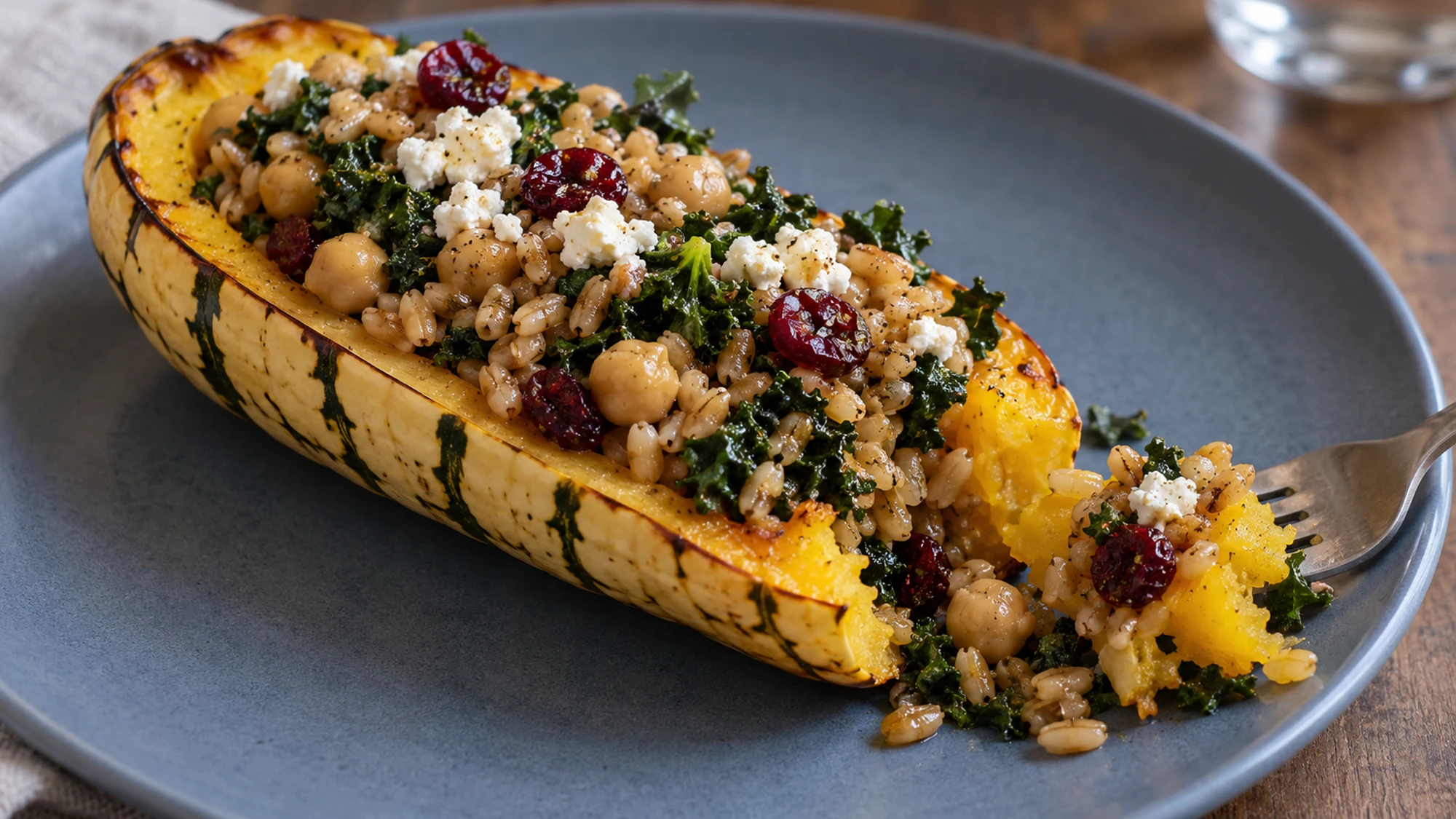
One filled half is a modest, satisfying main-course serving. Put a crisp green salad alongside it, or choose a vegetable from the side dish collection. At a larger holiday meal, cut the cooked halves crosswise into smaller portions with a sharp, sturdy knife, supporting the filling with a wide spatula.
- Serve any filling that will not fit beside the squash rather than packing it into a tall mound.
- Let diners know the skin is edible, but leave the stem ends behind.
- Offer water or an unsweetened drink; the cranberries already add a sweet note.
Choose squash of similar size so the halves finish at roughly the same time. Their seed cavities are not identical, so an exact cup of filling per boat is less useful than a shallow, stable mound. I would rather serve a little extra farro mixture alongside than watch half the topping slide onto the baking sheet.
Keep the sides fresh and simple. These squash boats already bring vegetables, grains, beans, and a little cheese to the plate.
Stuffed Delicata Squash Variations
The thin rind is part of delicata’s appeal. Illinois Extension explains that its skin can be eaten, so there is no peeling step. Scrub the squash under running water before cutting, and use a stable board; a damp towel underneath helps keep the board from moving.
| Change | How to use it | What changes |
|---|---|---|
| Cooked quinoa | Replace cooked farro by volume | Softer texture; use verified gluten-free ingredients |
| Baby spinach | Wilt and drain before mixing | Milder flavor than kale |
| Raisins | Use the same weight as cranberries | Sweeter, less tart filling |
For a dairy-free version, omit the feta and add a little extra lemon after tasting. That change reduces the salty contrast, so do not expect an identical result. Use vegetarian-rennet feta if that matters to your household. Keep the cooked grain well drained; excess water can collect inside the squash instead of keeping the filling pleasantly moist.
Change one component for a clear reason, and preserve the balance of tender squash, chewy filling, and a bright finish. Substitutions also change the nutrition estimate.
Health Benefits and Ingredient Balance
Chickpeas contribute plant protein and fiber, while squash and kale add vegetables to a grain-based dinner. Feta supplies flavor in a relatively small measured amount. This is not a low-carbohydrate recipe, and the sweetness comes from both squash and the sweetened dried cranberries.
- Farro is wheat and contains gluten; it is not suitable for a gluten-free diet.
- Pearled farro is not the same as an intact whole grain, although it still contributes fiber.
- No-salt-added chickpeas give more control over seasoning than a heavily salted can.
The estimate counts all the olive oil, cheese, and dried fruit. Squash varieties differ, so the calculation uses a general winter-squash reference rather than pretending every delicata has identical nutrient values. Serve all the filling across four portions for the most useful comparison with the card.
Think of this as a vegetable-forward meal with grains and beans, not a nutritional shortcut. Portions and the rest of the plate still matter.
Bottom Line
Refrigerate leftovers in shallow containers within two hours and use them within three to four days. Reheat covered until the center reaches 165°F, adding a small splash of water if the grains look dry.
Tender squash first, flavorful filling second: that simple order makes a colorful fall dinner without turning the grain mixture into a dry crust.

Stuffed Delicata Squash Recipe
Ingredients
Equipment
Method
- Heat oven to 400°F. Scrub squash under running water, dry, halve lengthwise, and scoop out seeds. Brush cut surfaces with 1 tablespoon oil and season with half the salt and the pepper. Set cut-side down on a parchment-lined rimmed sheet pan. Roast 25–35 minutes, until a fork easily pierces the flesh. Turn cut-side up.
- Meanwhile, cook farro in a saucepan of unsalted boiling water according to its package, usually 25–30 minutes for pearled farro, until tender but chewy. Drain thoroughly. You should have roughly 1 1/2 cups cooked; use the full cooked batch.
- Warm remaining tablespoon oil in a skillet over medium heat. Stir garlic for 30 seconds. Add kale and 2 tablespoons water; cook 3–5 minutes, stirring, until wilted and tender. Stir in chickpeas and remaining salt and warm through for 2 minutes.
- Mix cooked farro, kale mixture, cranberries, feta, and lemon juice in a bowl. Divide among roasted squash halves in shallow mounds. If filling exceeds the cavities, place extra in a small covered ovenproof dish alongside the pan.
- Bake filled squash and any extra filling 10–15 minutes, until the centers reach 165°F. Serve one half per person, dividing extra filling equally. Leave the stem ends uneaten.
- Refrigerate leftovers in shallow containers within 2 hours, or 1 hour above 90°F. Use within 3–4 days. Reheat covered with a splash of water until the center reaches 165°F.