
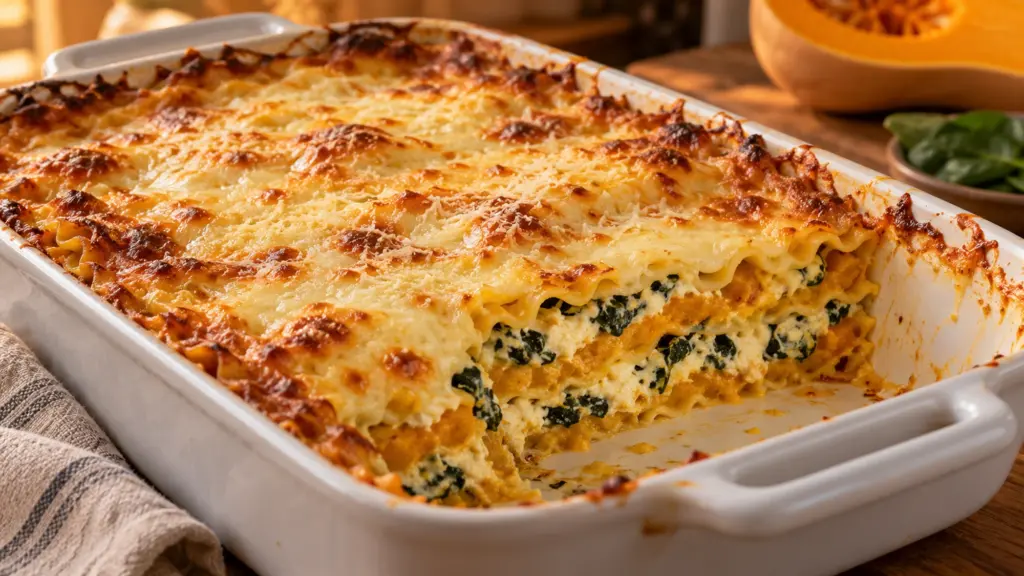
Butternut squash lasagna takes the familiar comfort of a bubbling pasta bake in a sweeter, earthier direction. Roasted squash becomes a smooth orange sauce, spinach runs through the ricotta, and mozzarella turns golden on top. There is no tomato sauce here, so the squash has room to taste like itself.
For layers that hold together, squeeze the thawed spinach dry, cook regular lasagna noodles before assembly, and rest the baked dish for 15 minutes. Those small decisions matter more than making every layer look perfect.
I would choose this for a cool-weather weekend dinner rather than squeeze it into a rushed evening. The roasting and baking take time, but the filling is straightforward and there is no separate béchamel to whisk. While the squash roasts, you can handle the noodles and ricotta mixture.
Serving Suggestions for Butternut Squash Lasagna
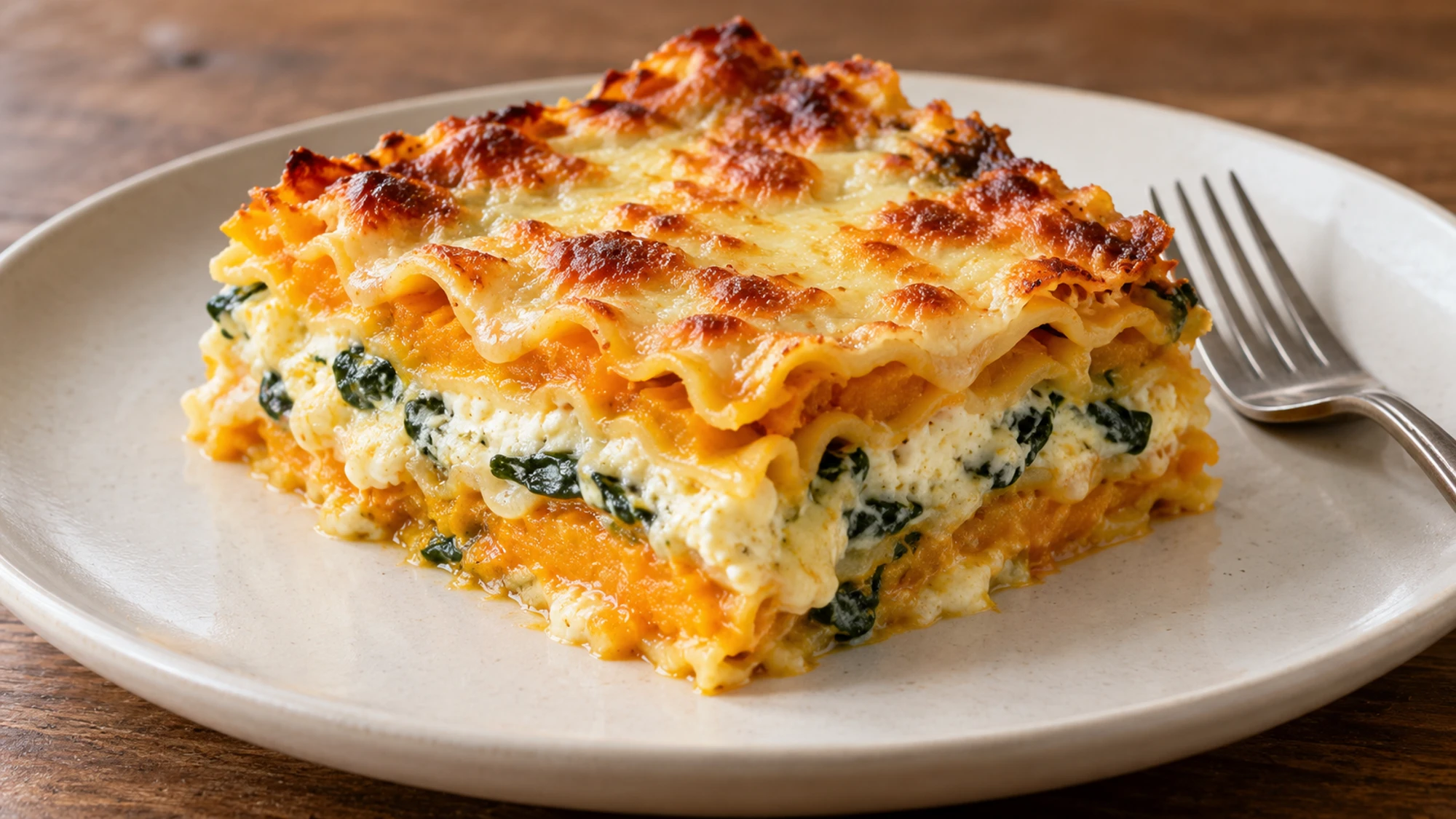
Cut the pan into eight portions after its short rest. A wide spatula makes lifting the first piece easier, though the first corner may still be a little untidy. A crisp salad with a tart dressing balances the creamy layers; browse the side dish collection for another vegetable to put alongside.
- Serve on warm plates so the cheese stays soft while everyone gets seated.
- Keep garlic bread optional; the noodles already provide the meal’s grain component.
- For a holiday table, offer smaller squares alongside other dishes rather than doubling the cheese topping.
I prefer a lightly browned top to a dark, brittle crust. If the cheese colors before the middle is hot, loosely cover the dish again. A bubbling edge is encouraging, but it cannot tell you whether the center has finished heating; the thermometer belongs in the middle of the casserole.
Give the lasagna its brief rest and pair it with something crisp. You will keep the creamy layers as the focus without making the whole plate feel heavy.
Butternut Squash Lasagna Variations and Texture Tips
Use ordinary boil-first lasagna noodles for this recipe. Barilla’s wavy lasagna directions call for boiling before baking; oven-ready sheets are a different product. Swapping them without adjusting liquid and cooking time can leave hard pasta edges or an unevenly hydrated center.
| Ingredient | Useful adjustment | Watch for |
|---|---|---|
| Very thick squash purée | Add water a tablespoon at a time | Spreadable, not soupy |
| Wet thawed spinach | Squeeze in a clean towel | No puddle in the ricotta bowl |
| Whole-wheat noodles | Follow their boiling directions | A firmer bite and different nutrition |
Precut fresh squash saves peeling time, but use the same prepared weight. Cut unusually large pieces smaller before roasting so their centers soften. For a milder filling, omit the sage rather than adding extra cheese. A tiny amount of nutmeg is enough; the goal is a savory dinner, not a pasta-shaped pumpkin-spice dessert.
Moisture control is the useful thread through every variation. Tender pasta, drained spinach, and a spreadable squash sauce work together to make coherent slices.
Health Benefits and Portion Balance
Squash and spinach add vegetables, while ricotta, mozzarella, milk, and egg contribute protein. Illinois Extension highlights winter squash’s fiber and vitamins A and C. Roasting changes moisture and some vitamin levels, so the finished casserole is not nutritionally identical to raw squash.
- Part-skim cheeses keep the filling creamy but still contain saturated fat.
- The recipe contains wheat, milk, and egg; it is not suitable for those allergies without substantial changes.
- Choose vegetarian-rennet cheeses if a strictly vegetarian meal is important.
The estimate divides the whole pan into eight equal servings and counts all measured oil and cheese. Added bread, dressing, or extra Parmesan are not included. Different noodle sizes and cheese brands can shift the numbers, so weighing the main ingredients is more reliable than assuming every scoop or sheet is identical.
Enjoy the vegetables and protein in the casserole while keeping its cheese and pasta in perspective. A satisfying portion does not need an oversized mound of extra toppings.
Bottom Line
Refrigerate leftover portions promptly in shallow containers within two hours, then use them within three to four days. Reheat covered until the center reaches 165°F, adding a small splash of water if needed to keep the exposed pasta from drying.
Roast the squash, drain the spinach, and let the pan settle before slicing. The result is a cozy fall lasagna with creamy layers and a gently golden top.
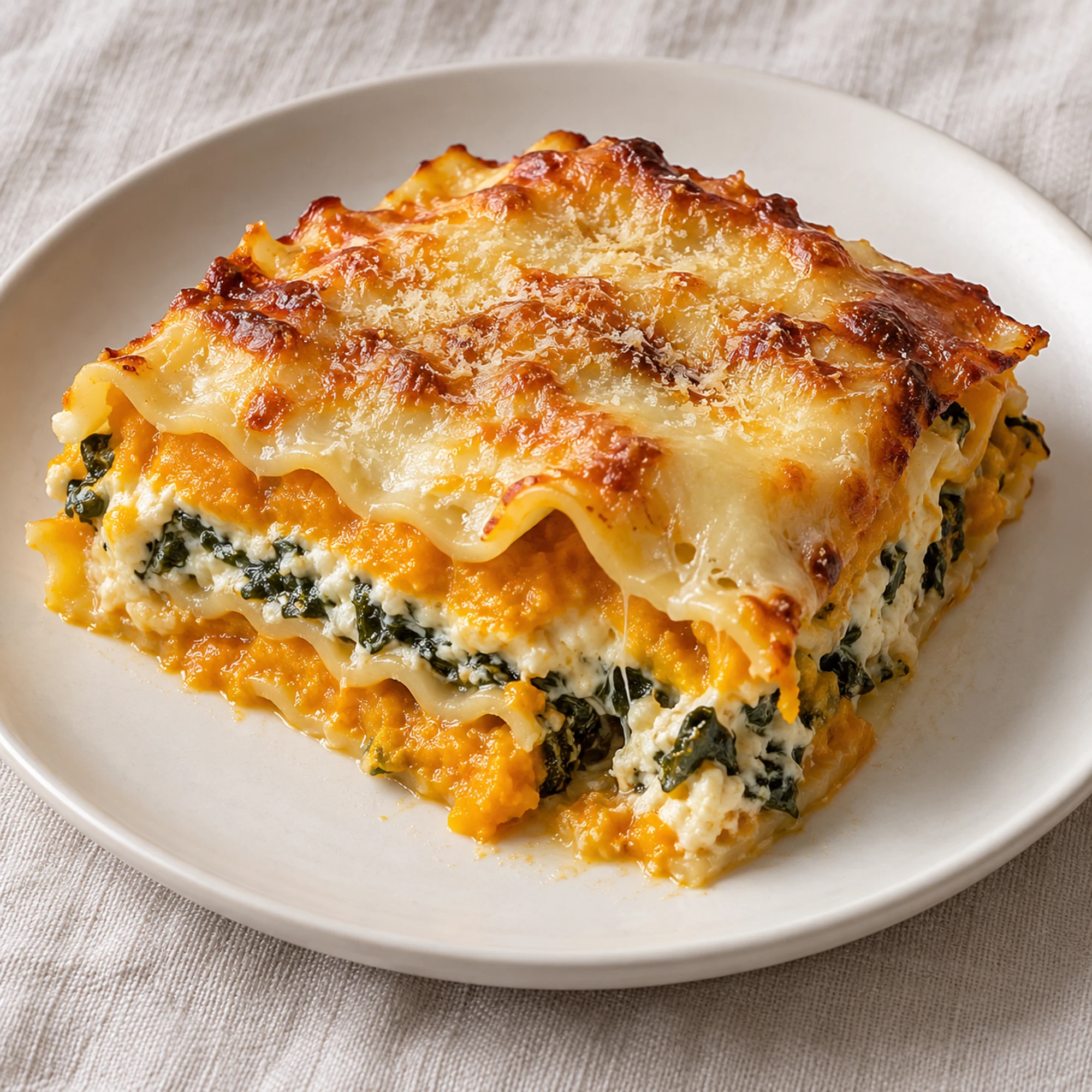

Butternut Squash Lasagna Recipe
Ingredients
Equipment
Method
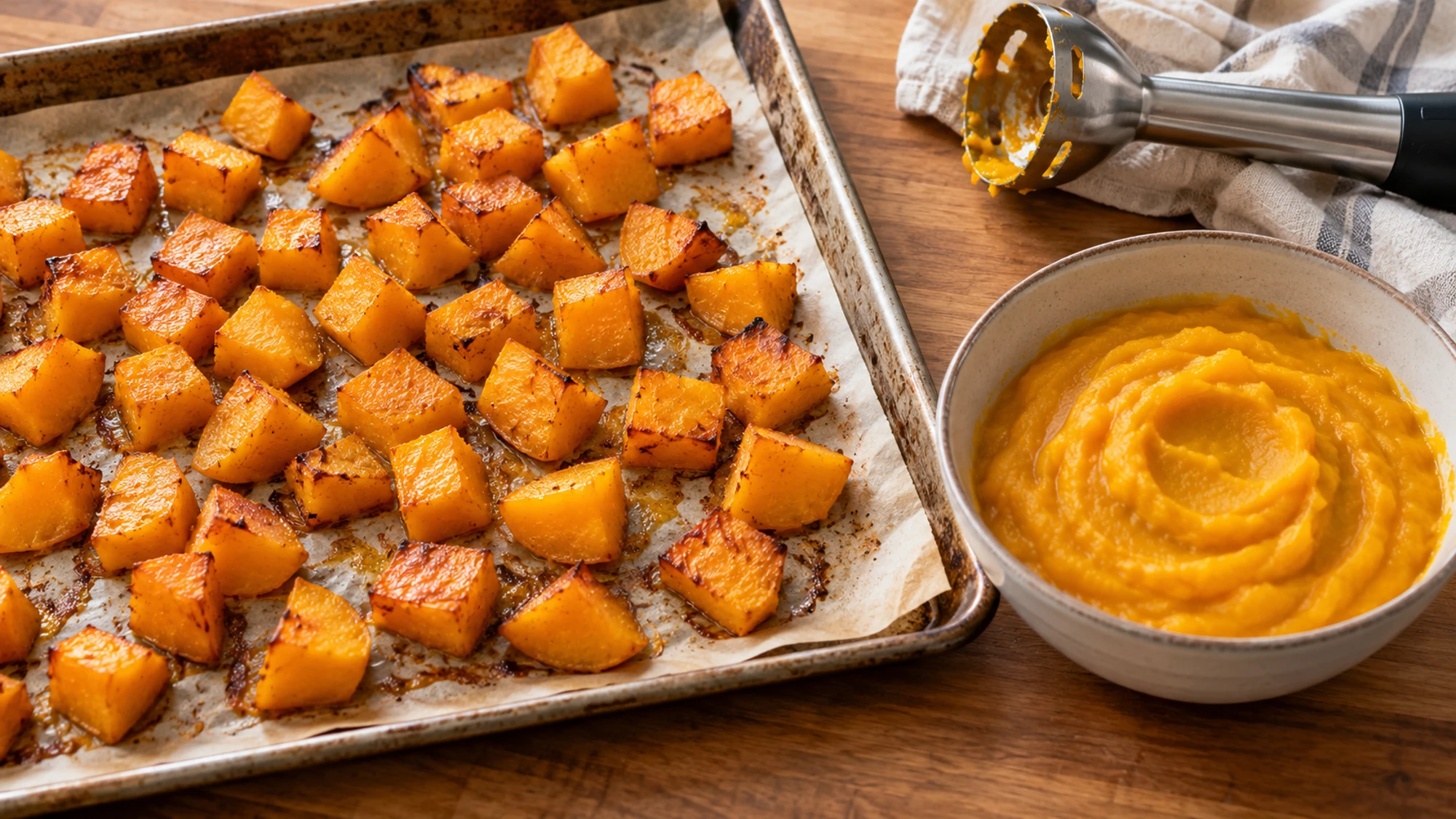
- Heat oven to 400°F. Toss squash with 1 tablespoon oil, half the salt, and the pepper on a rimmed sheet pan. Roast 30–40 minutes, turning once, until very tender. Reduce oven to 375°F.
- Meanwhile, boil noodles in unsalted water according to package directions for lasagna, generally about 8 minutes, leaving them slightly firm. Drain and lay flat without stacking. Squeeze thawed spinach very dry in a clean towel.
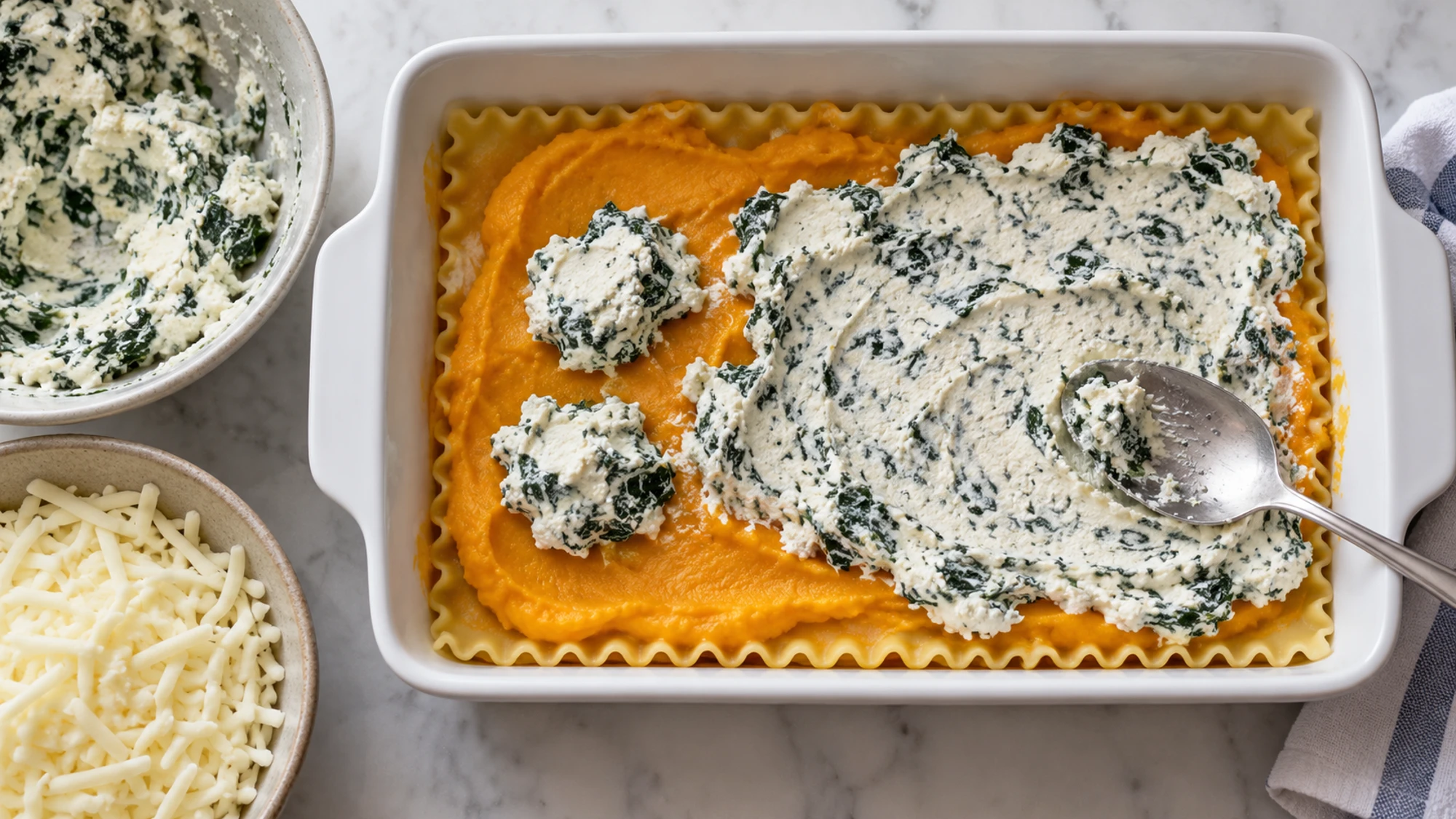
- Mix ricotta, spinach, egg, garlic, nutmeg, and remaining salt in a bowl. Cool roasted squash for 5 minutes, then blend with milk and sage using an immersion blender in a deep bowl. Add water by the tablespoon only if needed for a smooth, easily spreadable purée.
- Brush a 9-by-13-inch baking dish with remaining tablespoon oil. Spread 1/2 cup squash purée on the bottom. Add 3 noodles, trimming to fit if necessary. Spread one third of remaining purée, half the spinach ricotta, and 1/2 cup mozzarella. Repeat with 3 noodles, another third of purée, remaining ricotta, and 1/2 cup mozzarella. Finish with 3 noodles, remaining purée, remaining 1/2 cup mozzarella, and Parmesan. Cover with foil tented above the cheese.
- Bake at 375°F for 25 minutes covered, then 15–20 minutes uncovered, until bubbling, lightly golden, and at least 165°F in the center. If the top browns too quickly, cover again and continue heating. Rest 15 minutes, then cut into 8 servings.
- Refrigerate leftover portions in shallow containers within 2 hours, or 1 hour above 90°F. Use within 3–4 days. Reheat covered until the center reaches 165°F.