
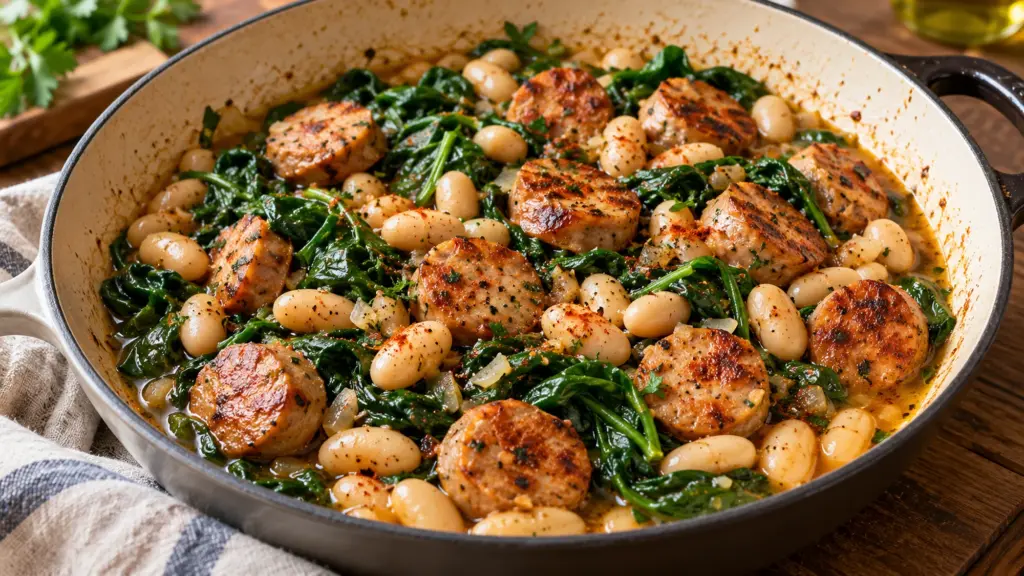
A can of beans and a package of chicken sausage can become more than a quick pantry compromise. This chicken sausage white bean skillet gives both a little attention: the sausage browns first, the beans simmer with onion and broth, and a handful of spinach turns the pan into a complete-looking dinner.
The sauce is deliberately light, not creamy. A few broken beans give the broth body while most stay whole, so you get a spoonable meal without adding cream or making a separate sauce. Keep the ingredients ready before you start; the cooking moves quickly once the sausage is browned.
Serving Suggestions for Chicken Sausage White Bean Skillet
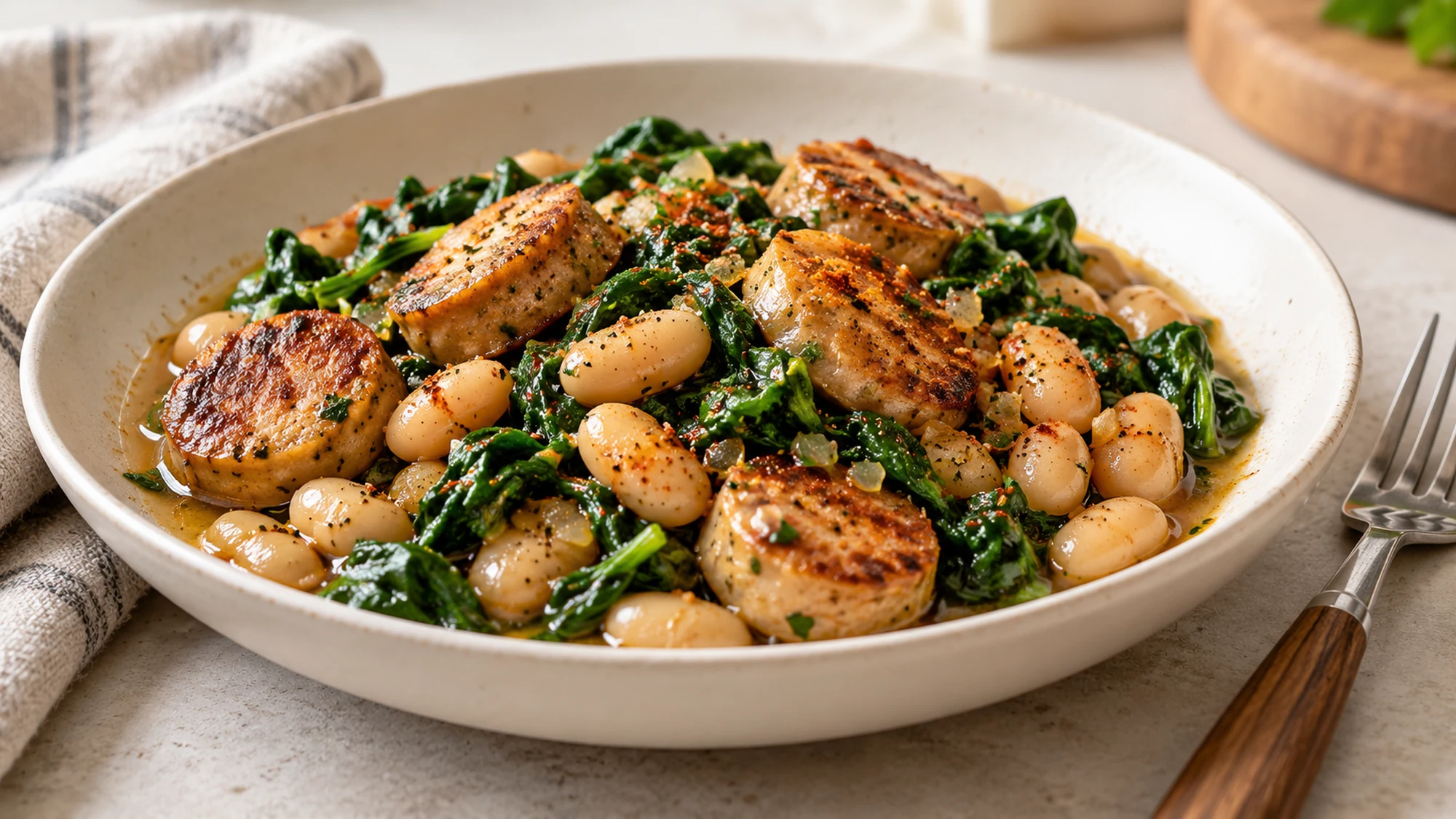
Serve the skillet in bowls so the light broth stays with the beans. A squeeze of lemon can brighten an individual portion, while bread is useful for catching the juices. Keep optional accompaniments separate from the stated four-serving yield and its nutrition estimate.
- Let the leftovers go into shallow containers promptly rather than leaving the whole skillet on the stove. Refrigerate within two hours, or one hour above 90°F, and keep at 40°F or below.
- Use within three to four days and reheat to 165°F, stirring so the beans and sausage heat evenly.
The beans absorb some broth as they sit. A tablespoon or two of water during reheating restores the spoonable texture without making a second batch of sauce. Heat only the portion you plan to eat, and keep any bread separate so it does not turn soggy in the container.
I prefer keeping the broth light and the accompaniment simple, so the beans and sausage stay the focus.
Variations
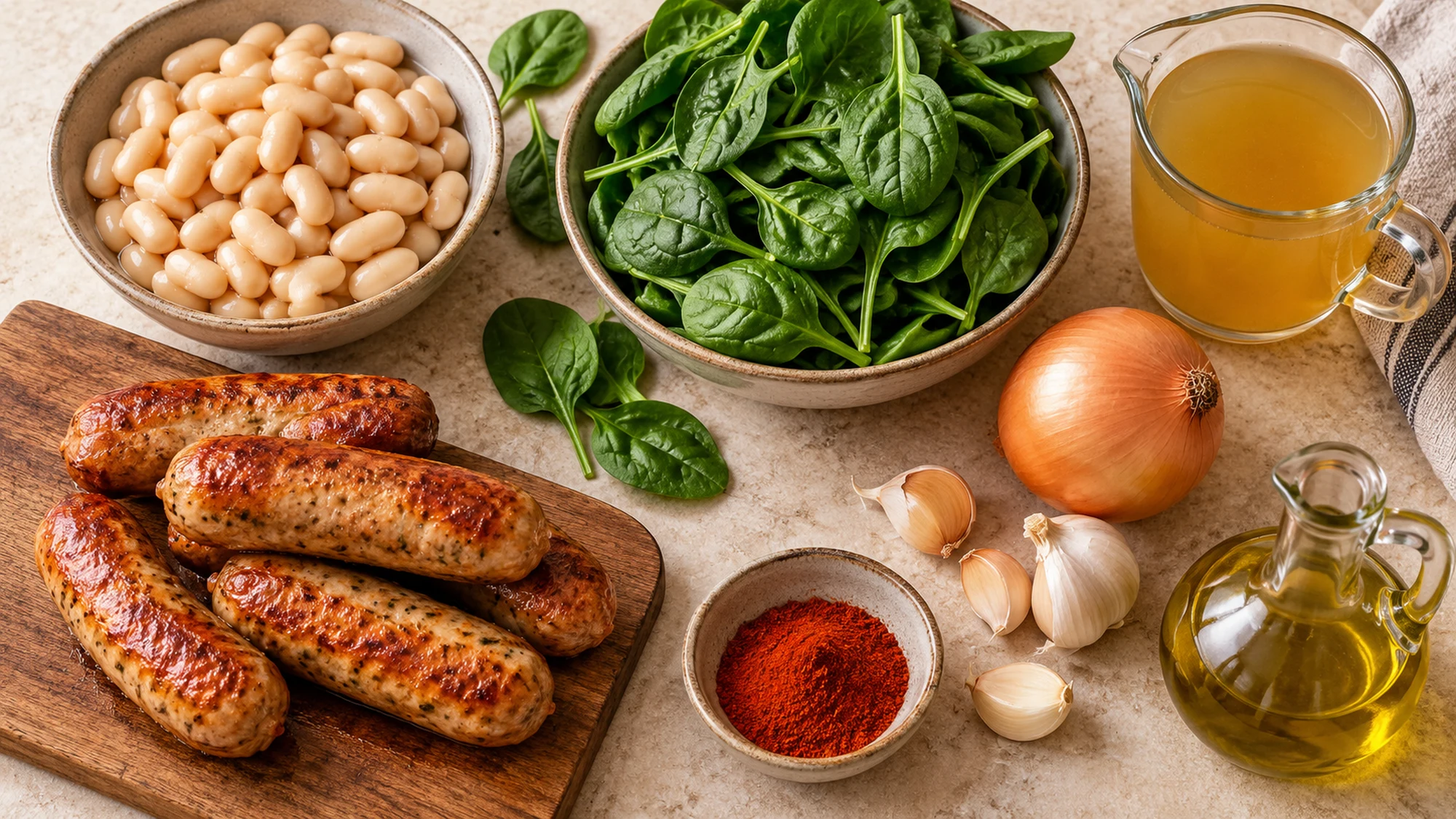
Choose fully cooked chicken sausage, not raw links. The written timing is designed for a product that only needs thorough heating according to its package directions. A mild garlic or herb variety lets the smoked paprika show through; a strongly seasoned sausage will make the whole dish taste different.
- Drain the cannellini beans and aim for about five hundred grams total. Can sizes do not tell you the drained weight, so a kitchen scale is useful if you have one.
- The beans are already cooked; they need a gentle simmer rather than vigorous boiling, which can strip away their skins.
- Sausage, canned beans and broth can each contribute a considerable amount of sodium. Their brands vary enough that a fixed extra spoonful of salt is not helpful here.
- Taste the finished skillet first. If you prefer a less salty result, choose lower-sodium beans and broth and compare sausage labels before cooking.
- A squeeze of lemon can brighten an individual bowl, but it is optional rather than part of the measured recipe. Bread makes an easy accompaniment for the broth.
- If you serve rice or another grain, keep the skillet a little looser so there is enough sauce to spoon over it.
The related video in the recipe card uses an apple-and-Gouda chicken sausage and includes tomatoes. It demonstrates the same general sausage-and-white-bean approach, not this exact ingredient list. Follow the written paprika-and-spinach version below, especially if a flavored sausage introduces milk or other allergens you need to avoid.
| Ingredient choice | Why it matters |
|---|---|
| Fully cooked sausage | Matches the quick heating method in this recipe. |
| Drained cannellini beans | Keeps the broth from becoming overly thick or salty. |
| Fresh chopped spinach | Wilts quickly without a separate cooking step. |
I would change one ingredient at a time and keep the written method intact, so the result is easier to judge.
Health Benefits
White beans contribute protein and fiber, and chicken sausage adds another source of protein. The word chicken does not by itself tell you how much fat or sodium a sausage contains. I would compare labels rather than assume every poultry sausage is nutritionally interchangeable or that this one skillet has a special health effect.
- The estimate uses generic poultry-sausage and broth data, which may differ from the actual products in your kitchen. Flavored sausage can contain milk or other allergens, and broth ingredients vary.
- Read those labels before serving someone with a dietary restriction, especially when a product name emphasizes flavor rather than its complete ingredient list.
The card estimates 365 calories and 20.7 grams of protein per one of 4 portions. Its carbohydrate convention is available carbohydrate, excluding fiber. Optional sides are excluded.
Use the estimate as context for the stated portion, not as a promise about a particular brand or a health outcome.
Bottom Line
Brown the sausage, simmer the beans gently and add the spinach near the end. Those three stages keep this quick skillet from tasting like everything was simply warmed together, while leaving you with a practical dinner and very little washing up.
References: recipe technique; ingredient nutrition.
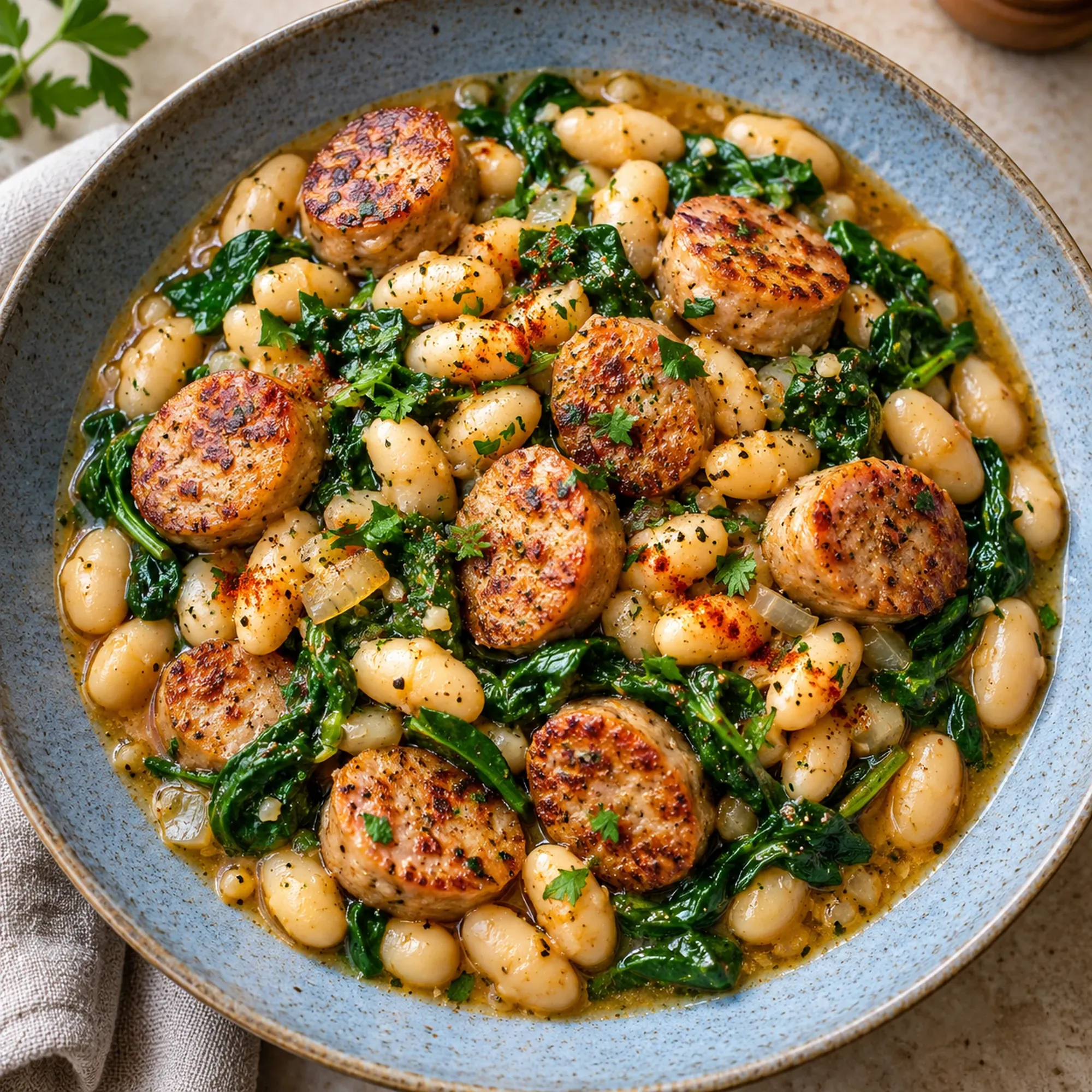

Chicken Sausage White Bean Skillet Recipe
Ingredients
Equipment
Method
- Slice the fully cooked sausage into 1/2-inch rounds. Drain the beans and prepare the onion, garlic and spinach.
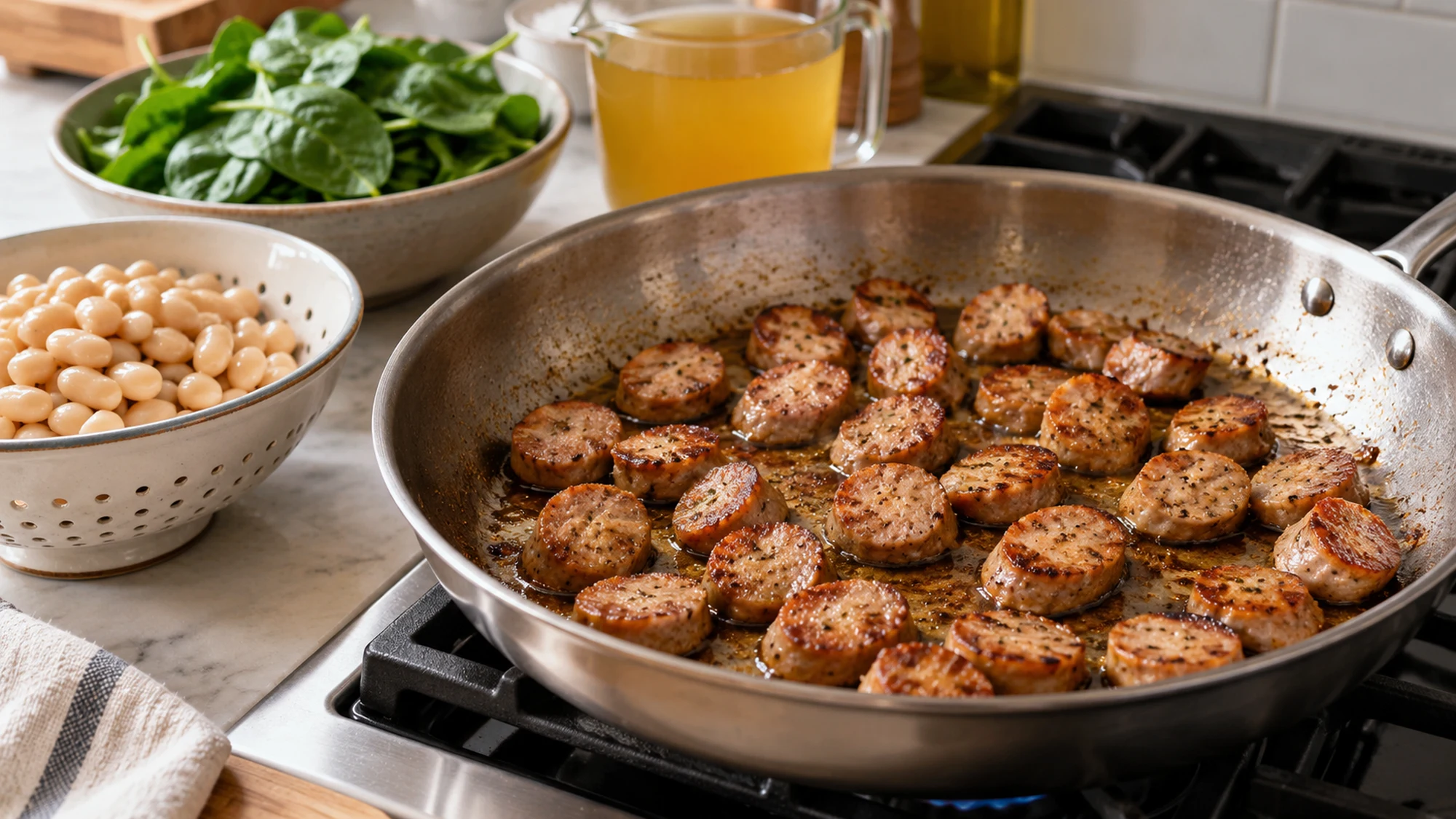
- Warm the oil in a large skillet over medium heat. Brown the sausage 2–3 minutes per side, then transfer it to a clean plate.
- Soften the onion in the same pan for 4 minutes, then stir in garlic, paprika and oregano for 30 seconds. Add the beans and broth, scraping up the browned bits.
- Simmer uncovered 5–7 minutes. Fold in the spinach and return the sausage. Cook another 2–3 minutes, until spinach wilts and sausage is thoroughly hot according to package directions.
- Add pepper and taste before considering extra salt. Spoon the brothy beans and sausage into four bowls, adding a tablespoon of hot water if the pan has become dry.