
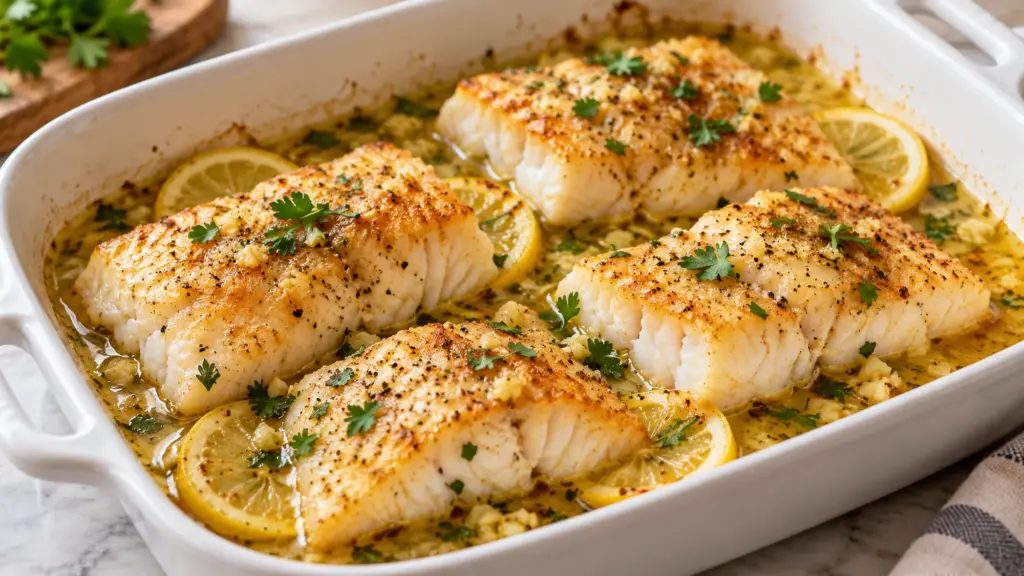
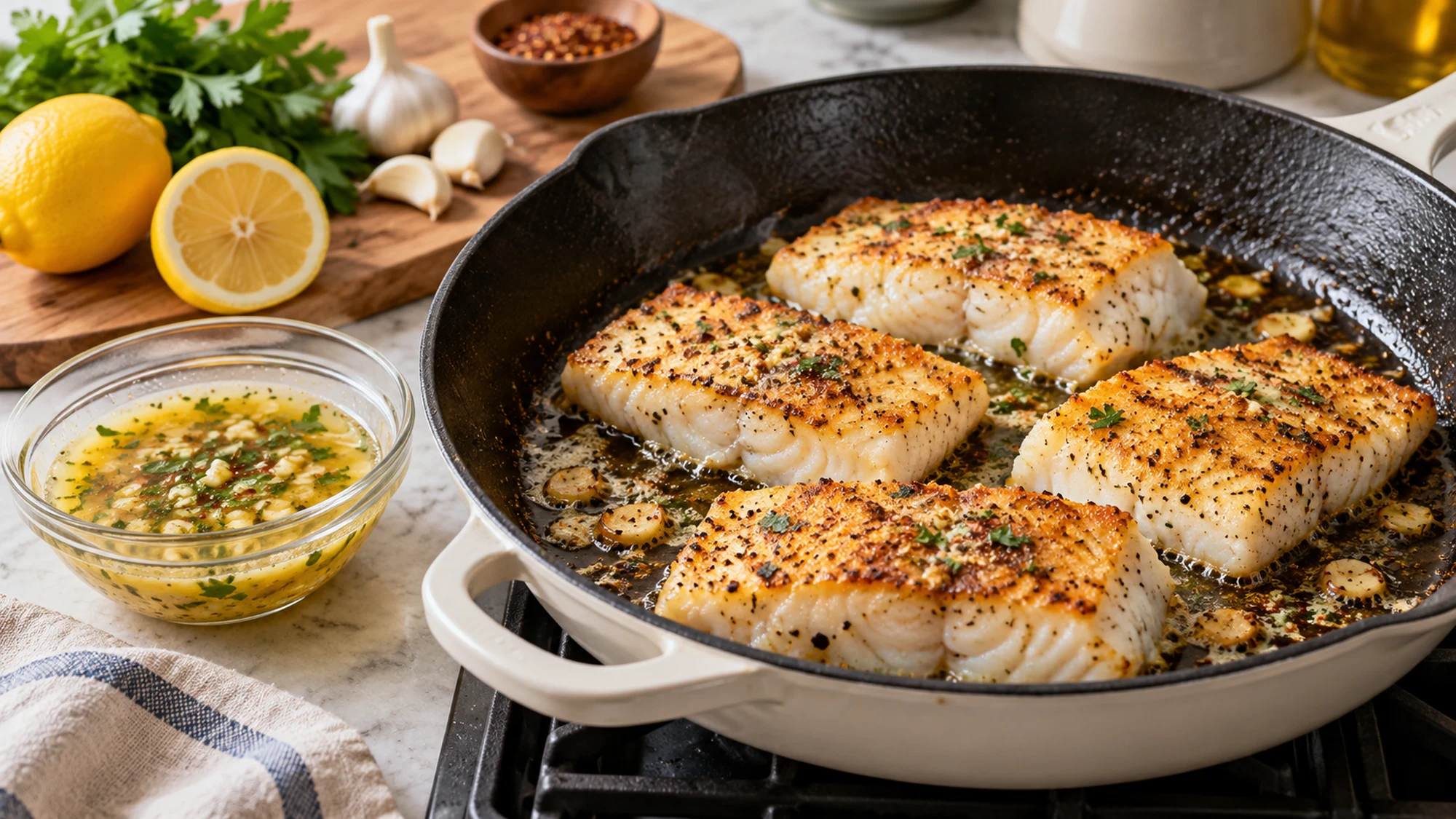
A pale fish fillet can make an easy dinner feel a little unfinished. This lemon garlic baked cod solves that with a thin, seasoned flour coating, a brief sear and a bright lemon-butter finish in the oven. The coating is delicate rather than crunchy, and the garlic stays in the sauce instead of burning against the hot skillet.
The most useful choice happens at the fish counter: pick four pieces of similar thickness. They will cook more evenly, so you can concentrate on the sauce rather than rescuing a thin tail while a thick center is still underdone. Allow about thirty minutes once the fish is thawed.
Serving Suggestions for Lemon Garlic Baked Cod
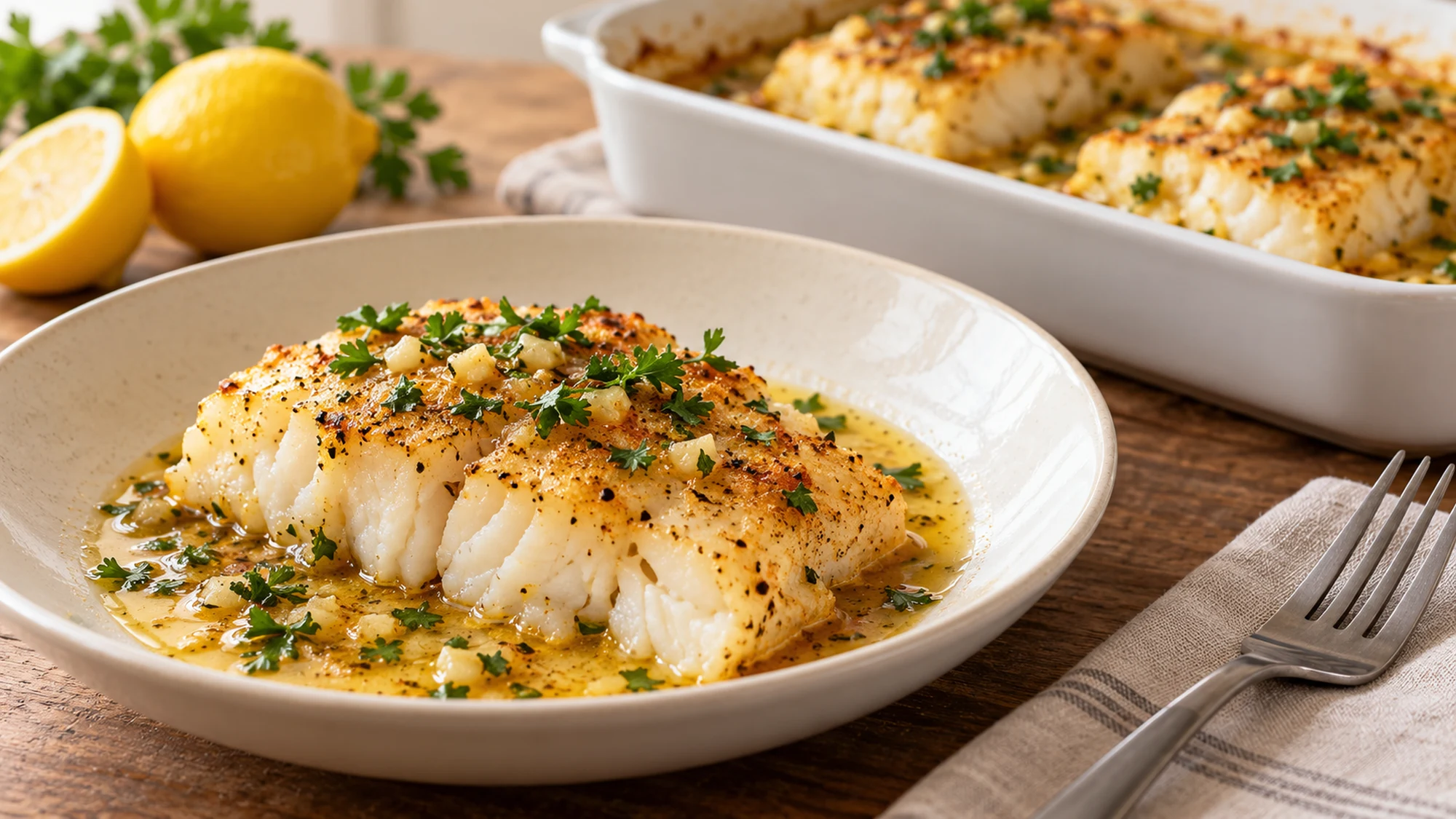
Spoon a little pan sauce over each portion and finish with chopped parsley. Rice, couscous or boiled potatoes can catch the lemony juices, while green beans or a crisp salad bring another texture. Side dishes and optional lemon slices are not included in the card’s nutrition estimate.
- Thaw frozen fish in the refrigerator, following its package instructions. Remove vacuum-packed fish completely from its reduced-oxygen packaging before refrigerator thawing.
- Keep raw fish and its utensils separate from salad ingredients and other foods that will not be cooked.
- Refrigerate cooked leftovers in shallow containers within two hours, or one hour above 90°F. Store at 40°F or below for no more than three to four days, and reheat to 165°F.
- Cod can dry during reheating, so cover it and add a little water rather than repeatedly warming it.
For a separate side, consider wild rice pilaf; its ingredients are outside this recipe’s estimate.
I prefer a mild side with this fish, leaving the lemon-garlic sauce to provide the brighter flavor.
Variations
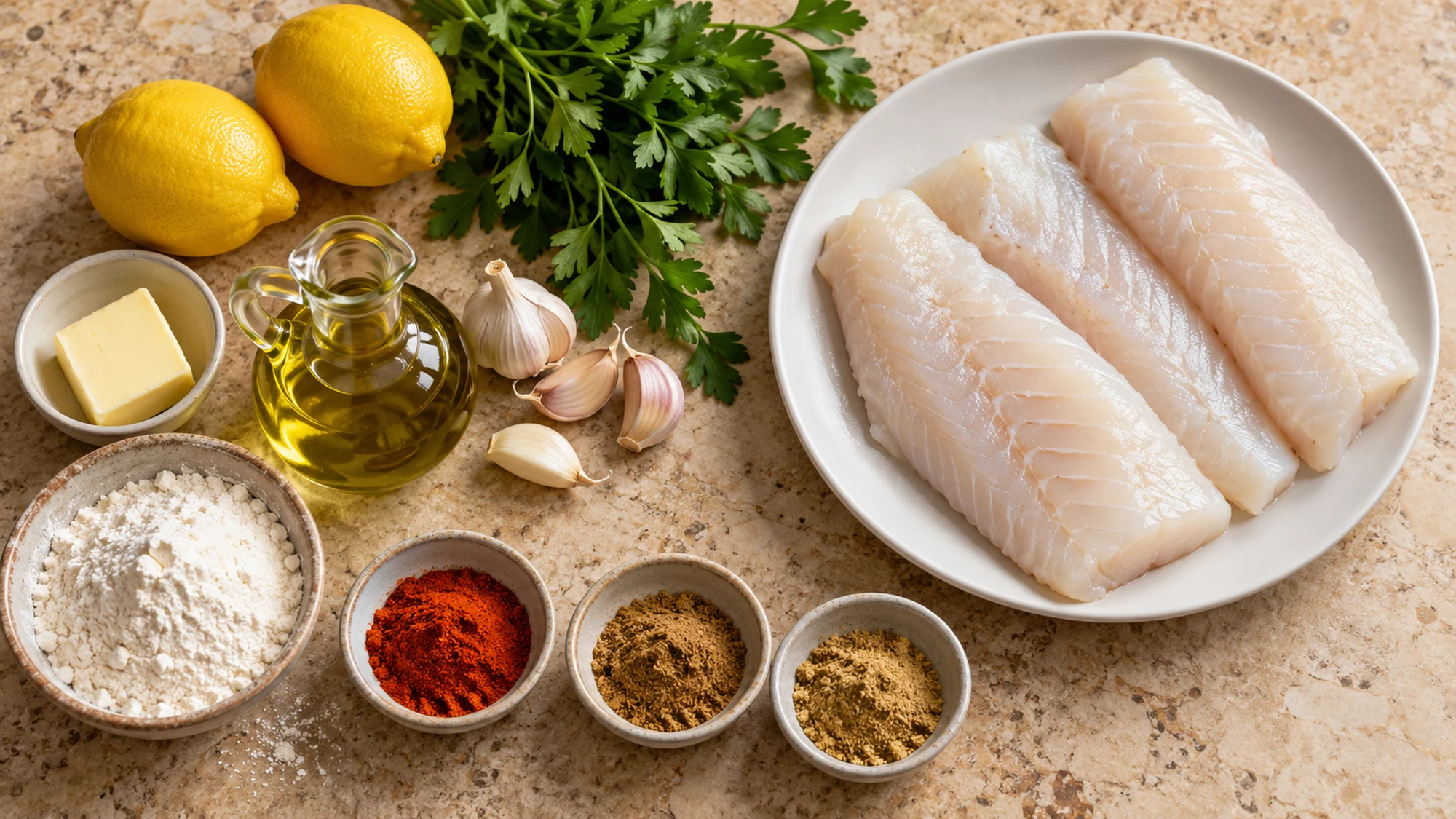
Cod works well because its mild flavor leaves room for lemon, coriander and paprika. Pat the thawed fillets thoroughly dry with paper towels before coating them. Excess surface water turns the flour pasty and makes the fish more likely to stick, especially when you try to move it too soon.
- Keep the lemon sauce in its own bowl. Stir together the melted butter, lemon juice, garlic and part of the olive oil, then set it aside away from the raw fish.
- The flour mixture belongs in a separate shallow dish. This arrangement is a small but useful safeguard against carrying raw fish juices onto ready-to-use ingredients.
- If your lemon is especially sharp, serve the sauce lightly at first rather than adding sugar to the entire pan. More butter is not necessary to make the dish work.
- Taste a cooked bite of fish with its sauce before deciding whether to add anything else.
The related Mediterranean Dish video in the recipe card shows the same broad sear-then-bake approach. Follow this written version’s quantities and its separate-sauce setup. Its flour coating contains wheat, and the sauce contains milk from butter; an allergy-friendly adaptation needs suitable ingredients rather than simply removing the label.
| Checkpoint | Useful cue |
|---|---|
| Before coating | Dry surfaces and similarly thick portions. |
| After searing | Light golden patches, not a fully cooked center. |
| After baking | 145°F in the thickest part; flesh separates into flakes. |
I would change one ingredient at a time and keep the written method intact, so the result is easier to judge.
Health Benefits
Cod contributes protein, while the measured oil, butter and flour also count toward the meal’s energy. A fish-based dinner is not automatically a light dinner, and extra sauce or sides change the portion. I would enjoy the bright lemon flavor without turning one recipe into a claim about disease prevention or a guaranteed health outcome.
- The recipe contains fish, wheat and milk. Removing one visible ingredient after cooking is not a reliable allergy adaptation.
- The nutrition estimate includes all measured flour and sauce even though some coating may remain behind, so it is an ingredient-based estimate rather than a laboratory measurement of the finished plate.
The card estimates 289 calories and 31.9 grams of protein per one of 4 portions. Its carbohydrate convention is available carbohydrate, excluding fiber. The source notes explain ingredient proxies and missing values; optional accompaniments are not included.
Use the estimate as context for the stated portion, not as a promise about a particular brand or a health outcome.
Bottom Line
Dry fish, a light coating and an early temperature check are the details worth keeping. Let the lemon-garlic sauce do the flavor work, and take the cod out as soon as it is properly cooked for a dinner that stays bright and uncomplicated.
References: recipe technique; ingredient nutrition.
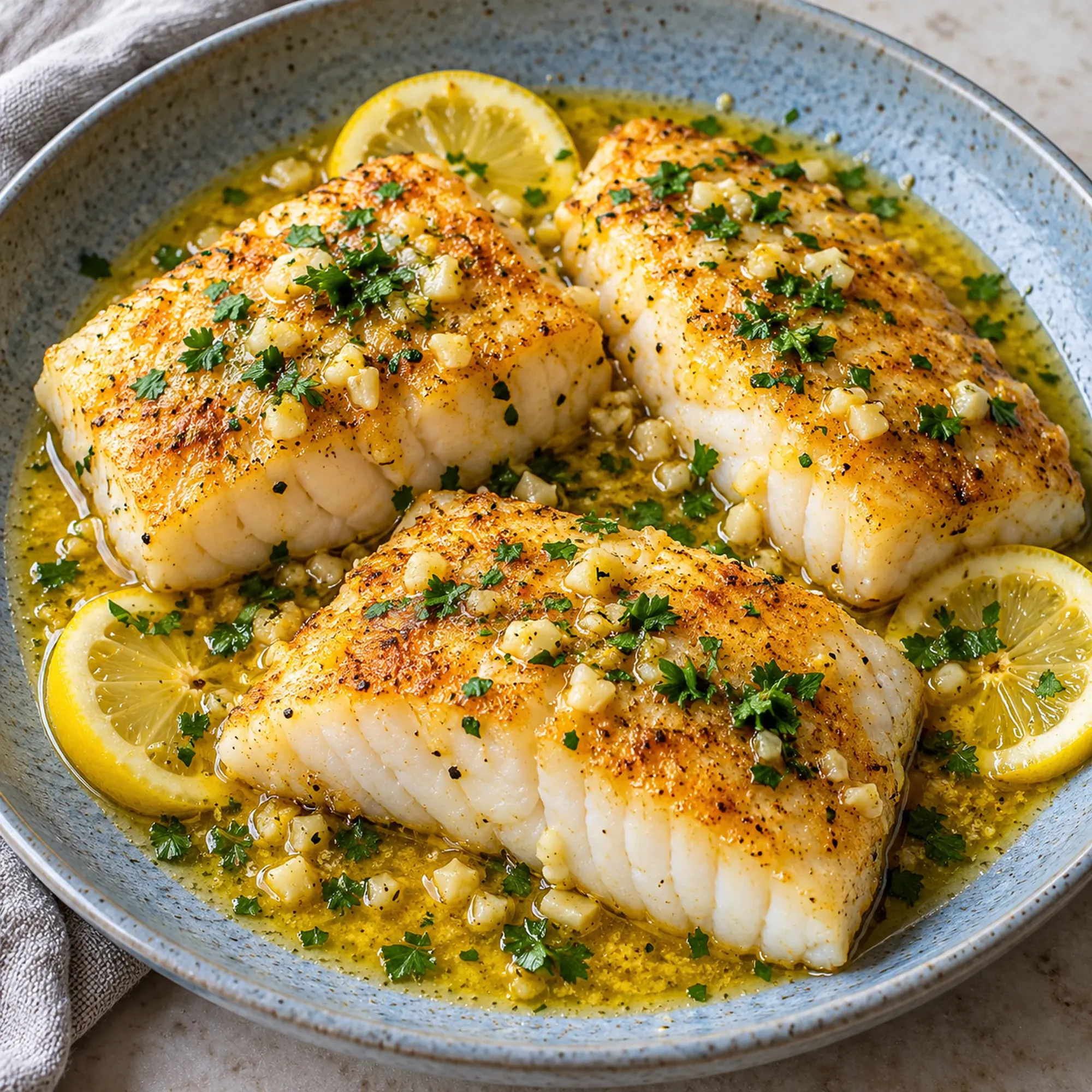

Lemon Garlic Baked Cod Recipe
Ingredients
Equipment
Method
- Heat the oven to 400°F. Pat thawed cod thoroughly dry. Mix 2 tablespoons olive oil with the butter, lemon juice and garlic in a clean bowl; reserve this sauce without dipping raw fish into it.
- Combine flour, coriander, paprika, cumin, salt and pepper in a shallow bowl. Lightly coat each fillet, shaking off excess. Discard flour that has contacted raw fish.
- Heat the remaining tablespoon oil in an oven-safe skillet over medium-high heat. Sear the fillets for about 2 minutes per side, turning once with a fish spatula; reduce the heat if the coating darkens too quickly.
- Take the skillet off the heat and spoon the reserved lemon sauce around the fillets. Bake 7–10 minutes, checking the thickest part; fish must reach 145°F. Thickness determines the exact time.
- Remove with an oven mitt, sprinkle parsley over the fish and divide among four plates. Spoon cooked pan sauce over the servings. Optional lemon wedges for serving are not included in nutrition.