
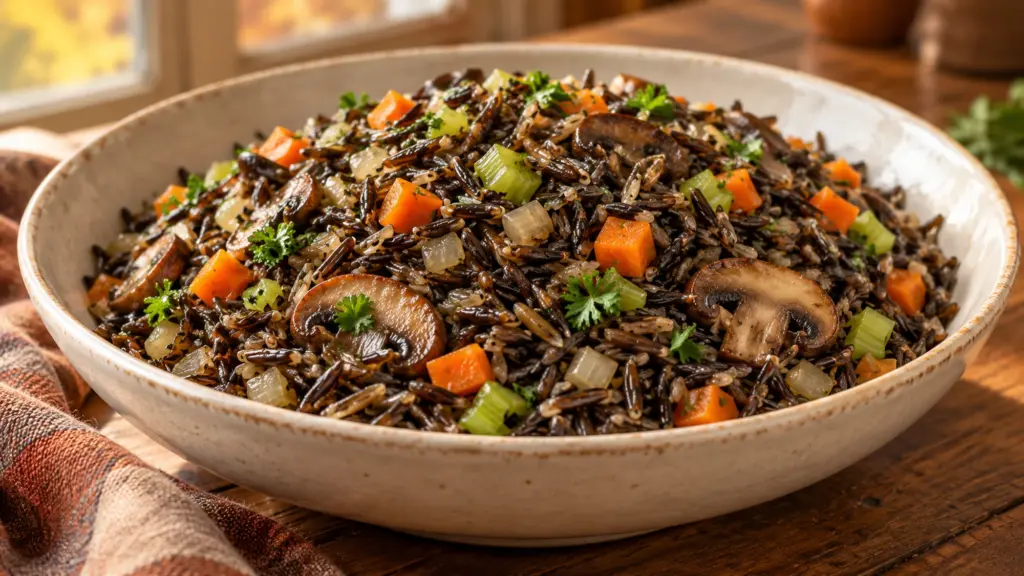
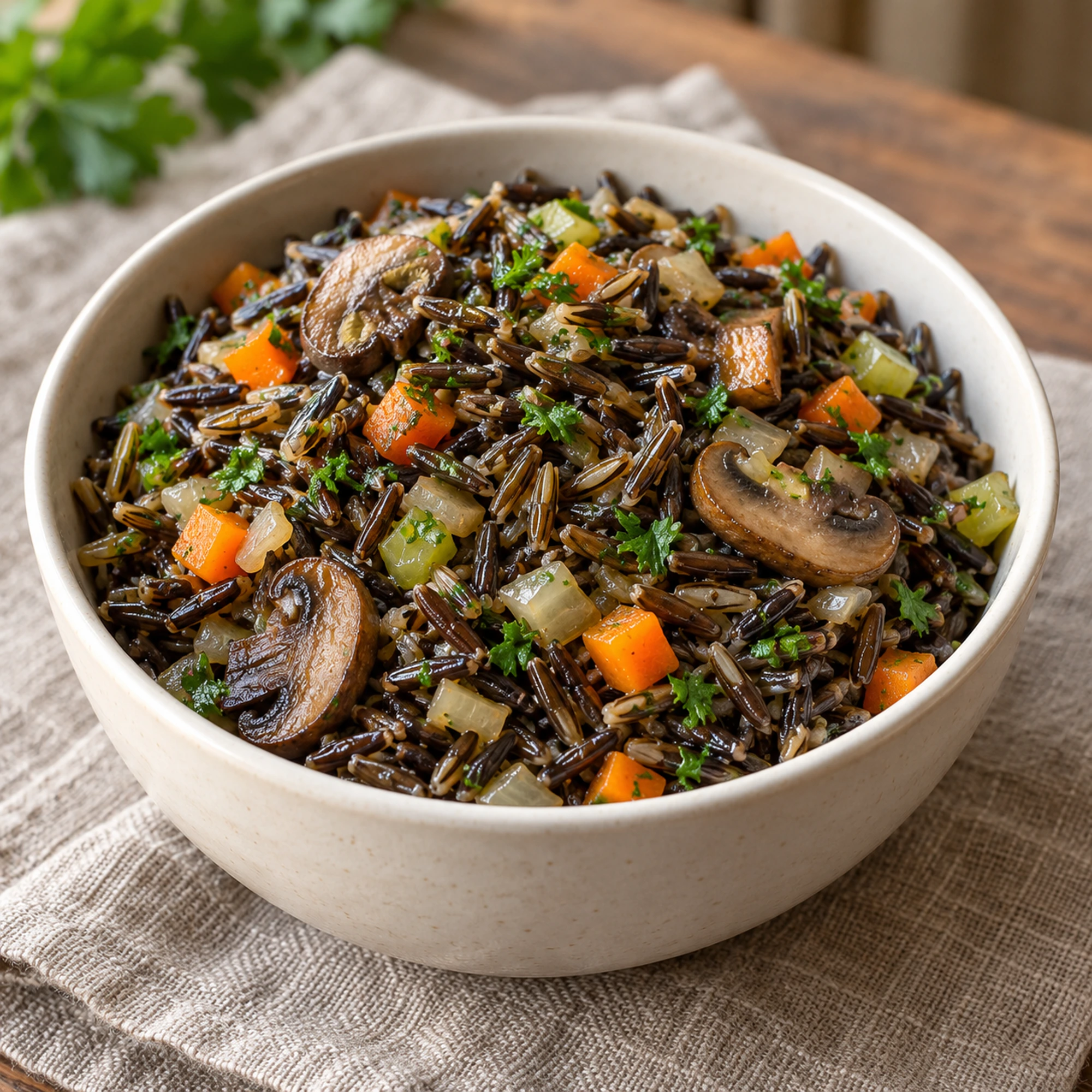
Wild rice pilaf brings a pleasantly chewy texture to a fall dinner without leaning on a creamy sauce. Browned mushrooms, little pieces of carrot and celery, and fresh parsley make the dark grains feel right at home beside a roast. This version uses pure wild rice rather than a packaged rice blend.
The simplest way to manage this wild rice pilaf is to cook the rice separately while you sauté the vegetables. Drain the tender grains, fold them into the mushroom mixture, and finish with parsley. Separate cooking keeps the vegetables from becoming soft while you wait for the rice to open.
I like this approach because wild rice does not always follow a tidy timer. Some grains soften quickly; others need longer. Start tasting near the package’s suggested cooking time and look for a tender center with a little chew, not a hard kernel hidden beneath a pretty split surface.
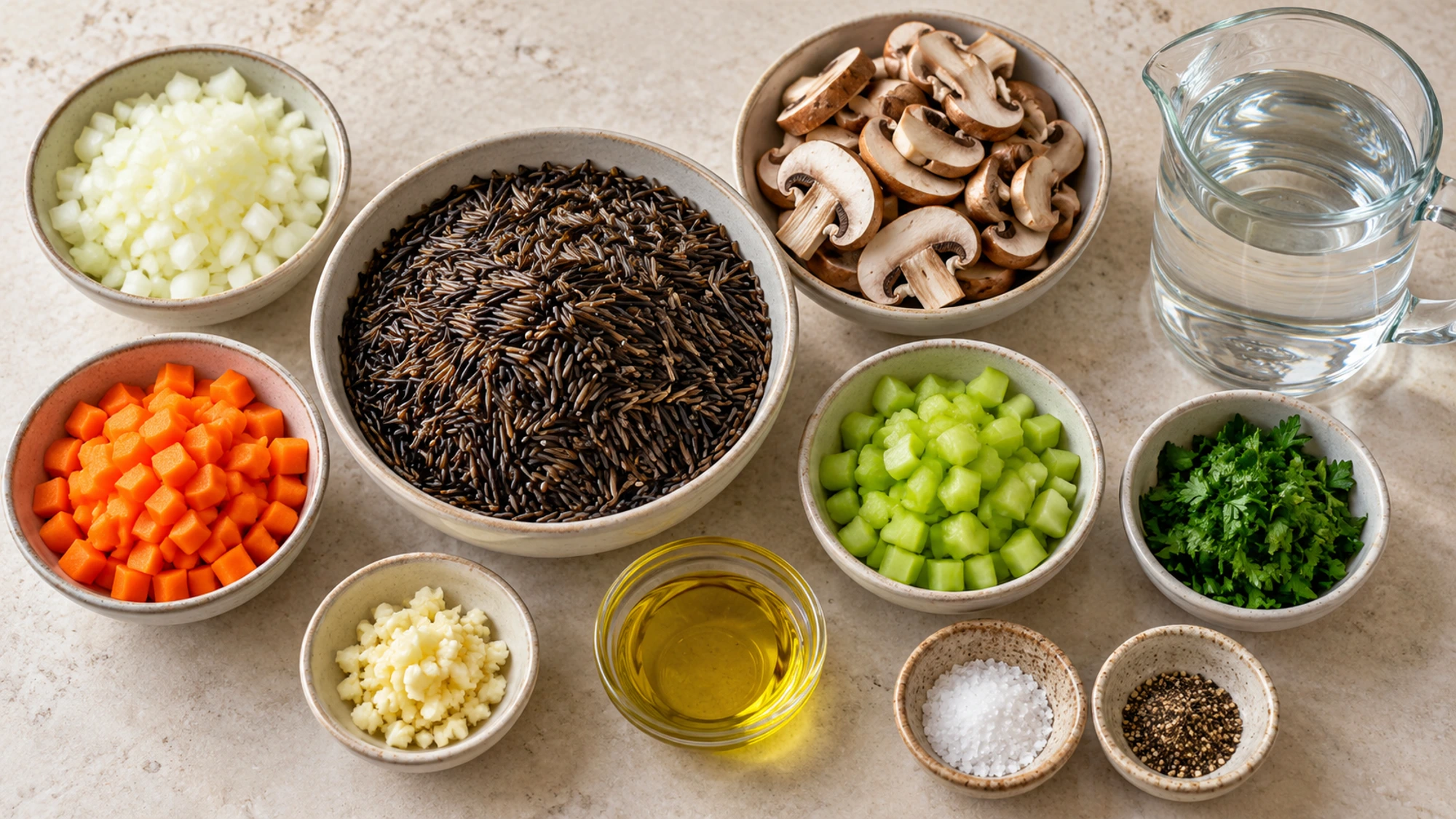
Serving Suggestions for Wild Rice Pilaf
A warm bowl suits roast chicken, turkey, or baked fish, especially when dinner needs a side beyond potatoes. For a plant-based plate, add roasted chickpeas or white beans and a bright vegetable salad. The pilaf itself is a side, not a complete high-protein meal.
- At a holiday table, offer six moderate portions alongside other dishes; a smaller crowd can save individual portions promptly.
- For a meat-free dinner, spoon it beside roasted winter squash and a bean-based main rather than treating mushrooms as a protein replacement.
- For contrast, choose a lemony salad or simply cooked green beans instead of adding a second mushroom sauce.
My preference is to serve it in a shallow warmed bowl so the vegetables remain visible rather than disappear under a mound of rice. Find more companions in the side dish collection, and leave room for something fresh on the plate.
Treat this pilaf as the chewy, savory part of the meal. Pair it with a clear protein source and a contrasting vegetable instead of adding extra richness.
Variations and Tips for Wild Rice Pilaf
Check the bag before starting. Pure wild rice, wild rice blends, and quick-cooking wild rice are different products with different timing. University of Minnesota Extension’s cooking guidance uses three cups of water per cup of wild rice and notes that hand-parched rice can cook much faster.
| Situation | Useful adjustment |
|---|---|
| Rice is firm and water is low | Add a little hot water and continue simmering. |
| Rice is tender with liquid remaining | Drain it before adding to the skillet. |
| Mushrooms release a puddle | Keep cooking until moisture evaporates and browning begins. |
| You only have white mushrooms | Use the same weight and brown them well. |
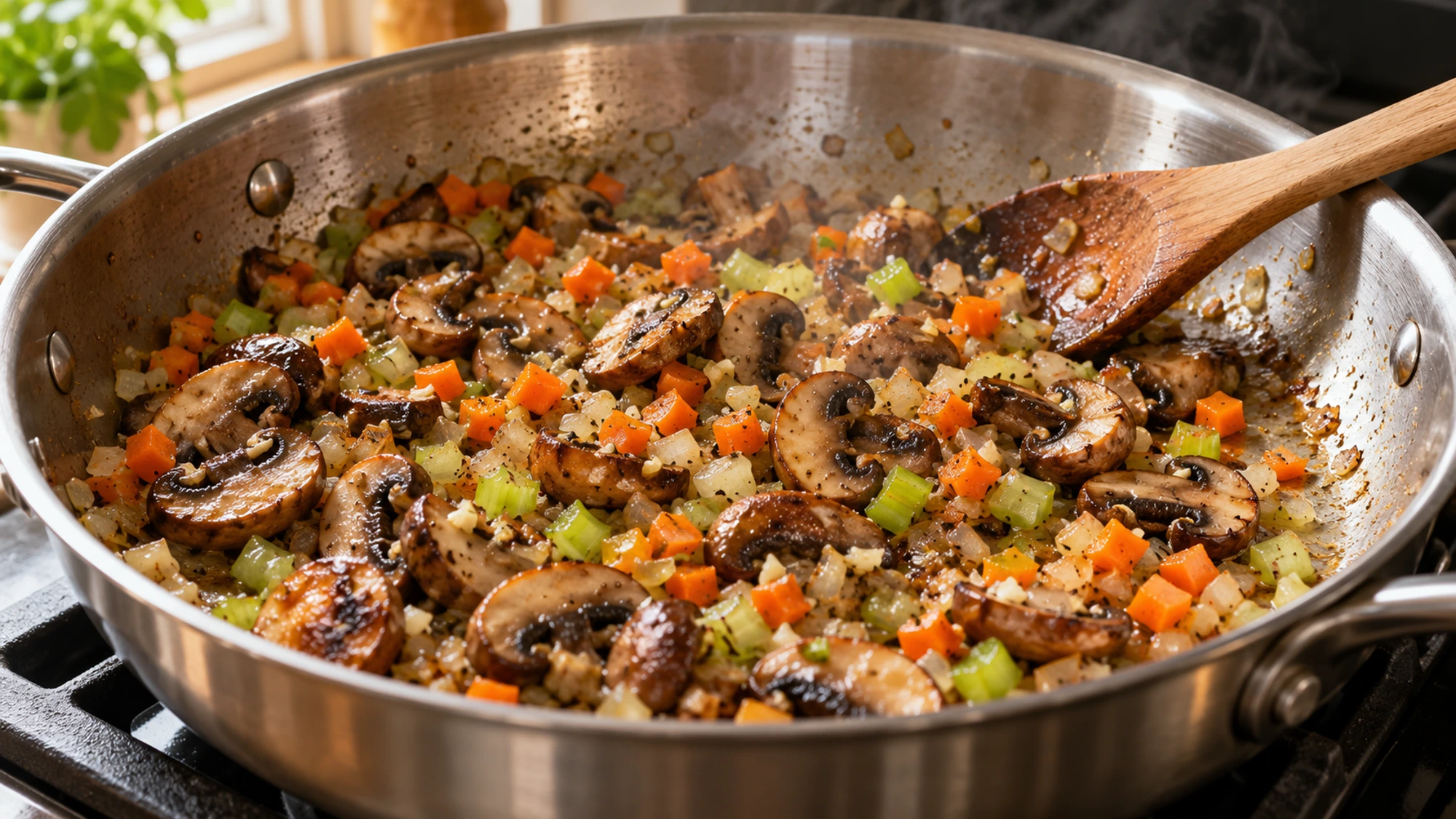
Slice the mushrooms evenly and give them a broad pan; crowding delays browning. Add the garlic toward the end of the vegetable cooking so it does not scorch. A splash of water can loosen browned bits, but the final skillet should not contain a pool of liquid.
- For an herbal variation, add a small pinch of dried thyme with the garlic, keeping the parsley finish.
- For a richer variation, replace one tablespoon of olive oil with butter; this changes the dairy-free version and nutrition.
- Do not substitute a rice blend without following its own water ratio and timing. Cook it separately, then combine.
Let the grain package guide the clock, and let tenderness guide the finish. Drain excess liquid and brown the mushrooms before bringing everything together.
Health Benefits and Nutrition of Wild Rice Pilaf
Wild rice contributes fiber and some plant protein, while carrots, celery, and mushrooms add variety. Olive oil supplies most of the added fat here. There is no need to label the dish a detox, immunity booster, or guaranteed weight-loss food to appreciate a satisfying bowl of grains and vegetables.
The nutrition estimate covers one-sixth of the written recipe, with no optional butter or additions. Water is used instead of broth, which makes the added salt easier to measure. If you choose broth, compare sodium labels and reduce the added salt accordingly; the published estimate will no longer match exactly.
- Cool leftovers promptly in shallow portions, ideally refrigerating within one hour. The Food Standards Agency’s rice guidance recommends using refrigerated rice within 24 hours and reheating only once. Reheat this pilaf until steaming throughout and 165°F; do not leave the pot on the counter to cool overnight.
A measured portion and prompt chilling are more useful than sweeping health claims. Keep the ingredients varied and handle leftover grains with care.
Bottom Line
Wild rice pilaf rewards a little patience with distinct grains, browned mushrooms, and an uncomplicated savory finish. Cook the rice to tenderness, keep the vegetables separate until ready, and add parsley at the end. It is a flexible fall side that leaves room for the rest of dinner.

Wild Rice Pilaf Recipe
Ingredients
Equipment
Method
- Rinse the wild rice in a fine-mesh sieve. Bring 3 cups water to a boil in a saucepan. Add the rice, return to a simmer, cover, and cook gently for 35–55 minutes, or according to the package, until tender with a slight chew and many grains have split. Add hot water if the pan becomes dry before the grains are tender. Drain excess liquid.
- While the rice cooks, heat 1 tablespoon olive oil in a wide skillet over medium-high heat. Add the mushrooms and cook for 7–9 minutes, stirring occasionally, until their liquid evaporates and they develop brown patches. Transfer to a plate.
- Add the remaining oil, onion, carrot, and celery to the skillet. Cook over medium heat for 7–9 minutes, stirring, until the vegetables soften. Add garlic, salt, and pepper and cook for 1 minute.
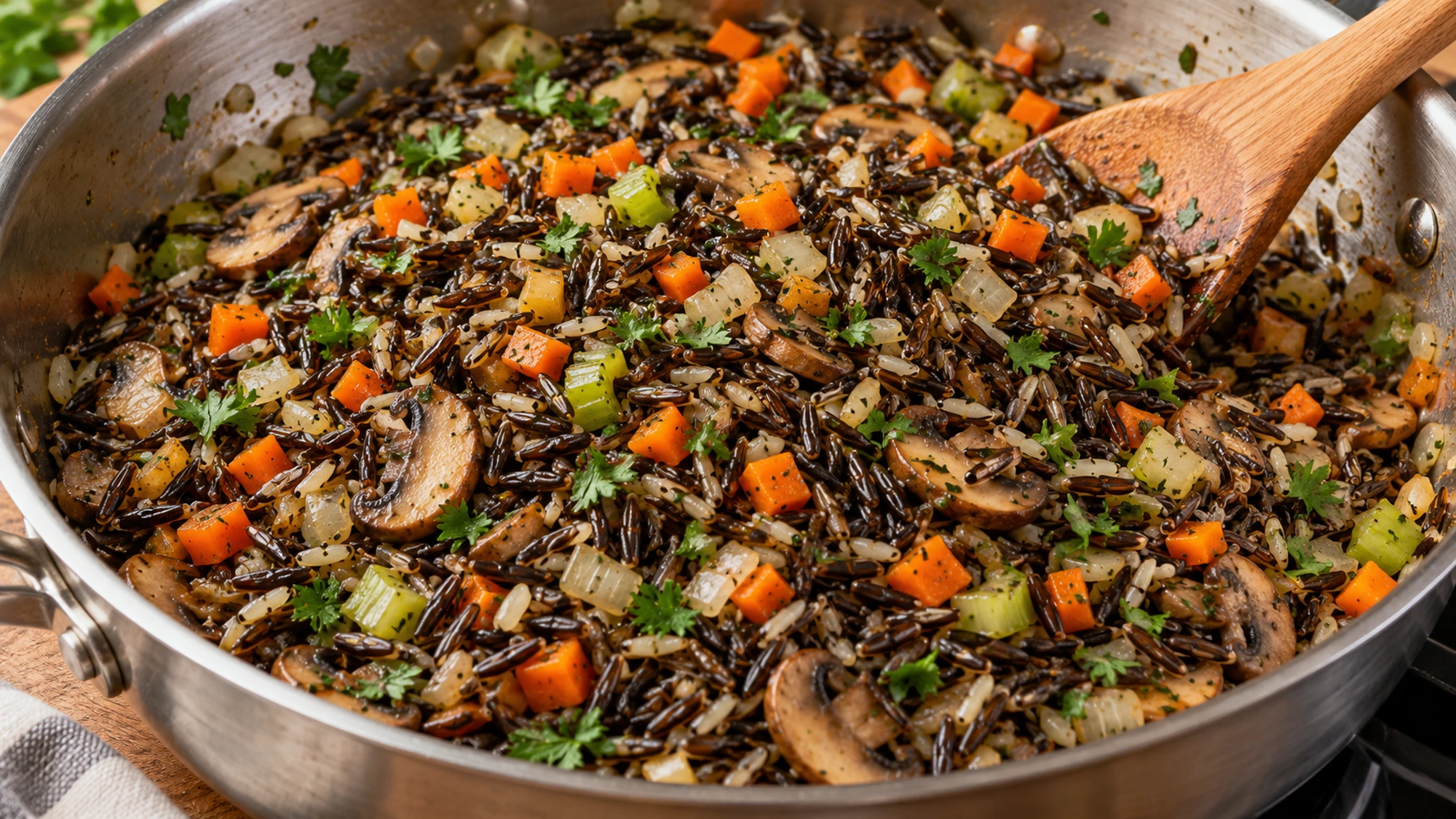
- Return the mushrooms to the skillet. Fold in the drained cooked wild rice and stir over medium-low heat for 2–3 minutes until hot throughout. Remove from heat and fold in parsley. Divide into six servings.
- Refrigerate leftovers promptly in shallow portions, ideally within one hour. Use within 24 hours or freeze promptly. Reheat only once until steaming hot throughout and 165°F.