
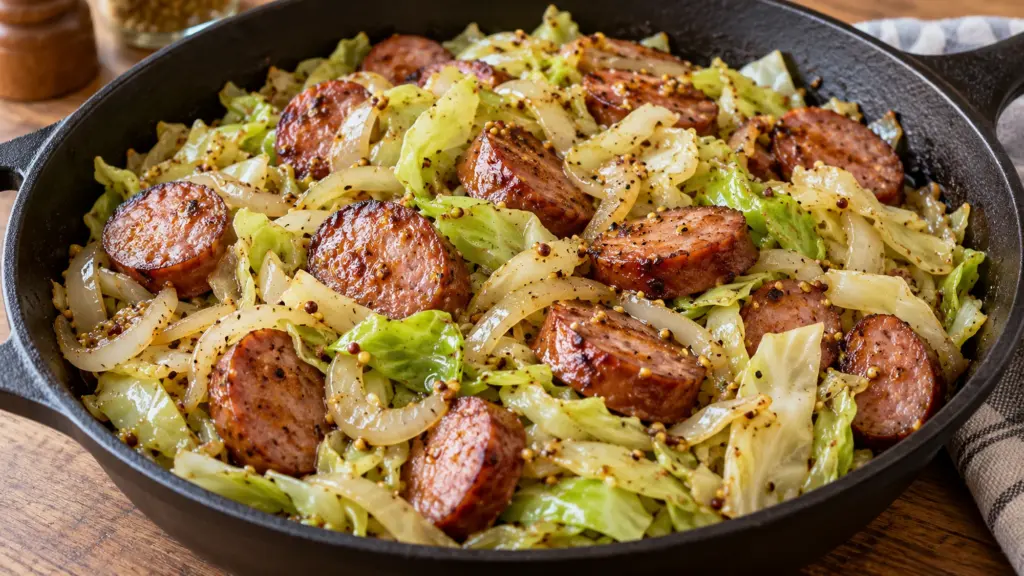
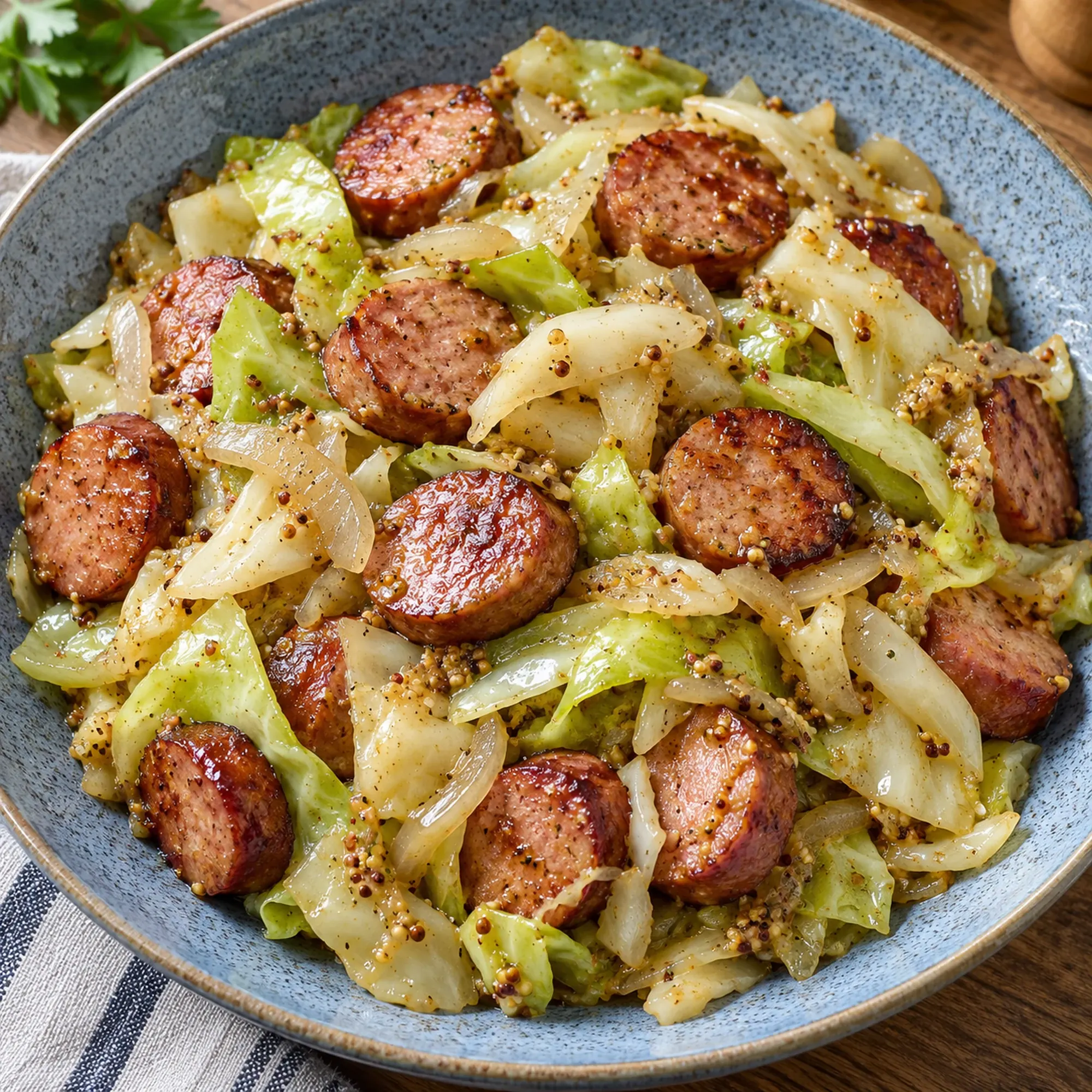
Some dinners need a sauce; this kielbasa and cabbage skillet needs a sharp little finish. Browned sausage brings smoky, savory edges, while a generous pile of cabbage softens in the same pan. A mustard-and-vinegar dressing goes in at the end, keeping the vegetables lively rather than letting everything settle into one salty note.
The useful trick is to give the sausage its own time in the pan, then take it out while the cabbage cooks. That small pause makes room for the vegetables and keeps their released moisture from washing away all the browning. Dinner takes about forty minutes, with ordinary ingredients and one wide skillet.
Serving Suggestions for Kielbasa And Cabbage Skillet
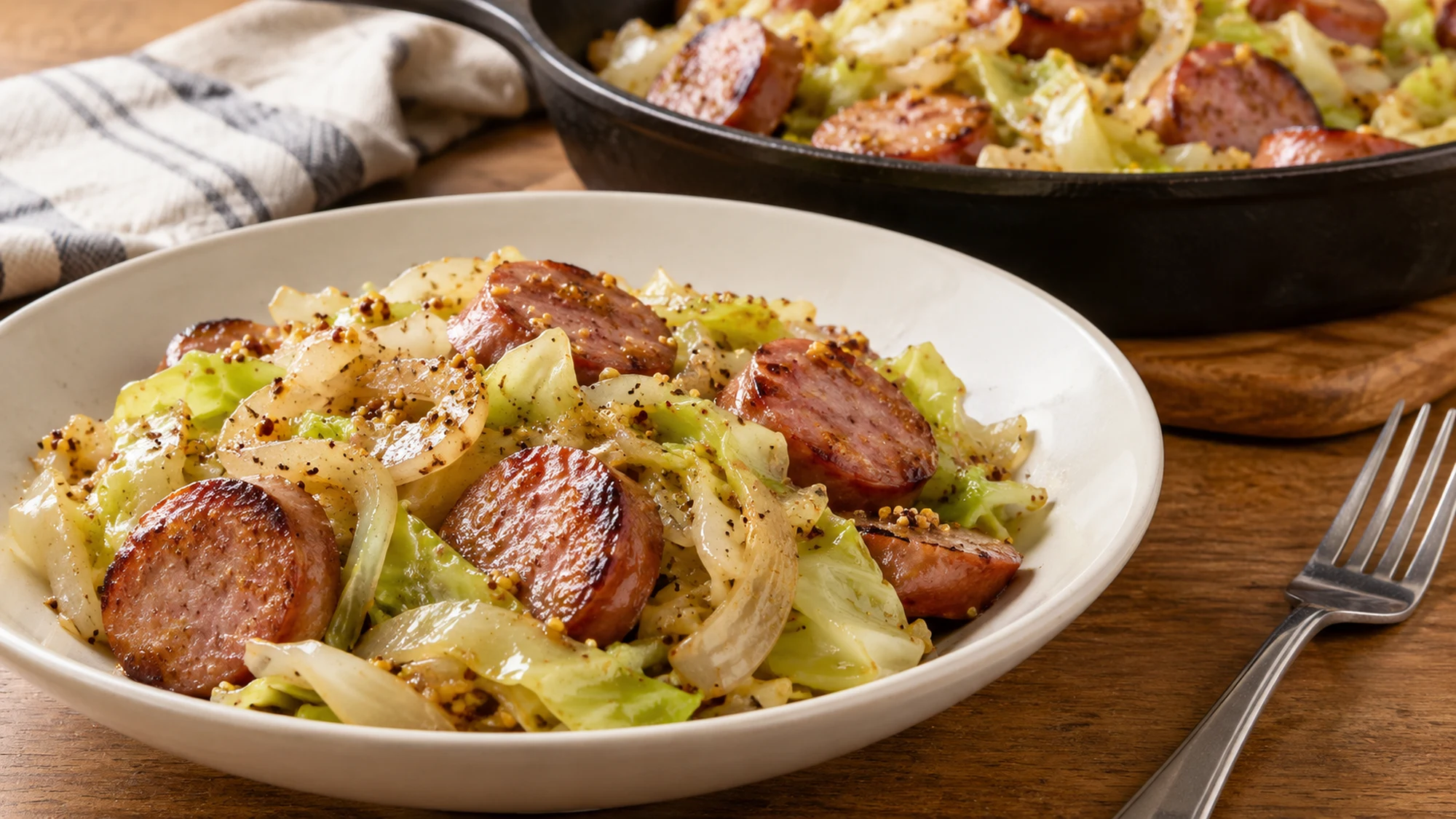
This skillet can be served on its own in four portions, or with boiled potatoes, rye bread or a simple grain. Those additions are not included in the recipe’s nutrition estimate. A crisp apple on the side is another easy way to contrast the warm cabbage without adding a second cooked dish.
- Transfer leftovers to shallow containers and refrigerate within two hours, or within one hour if the room is above 90°F. Keep them at 40°F or below and use within three to four days.
- Reheat to 165°F, adding only a small splash of water if the skillet looks dry.
- Expect softer cabbage after reheating. Keep accompaniments separate and taste before adding more vinegar.
- The eight-dollar ingredient allowance is illustrative, not a local price quote.
For a separate side, consider roasted garlic mashed potatoes; its ingredients are outside this recipe’s estimate.
I would keep the accompaniment plain so the smoky sausage and mustard finish remain the main flavors.
Variations
Use fully cooked kielbasa for the timing here. Fresh sausage needs a different cooking process and cannot simply take its place.
- Slice the cooked sausage into even rounds or half-moons, and cut the cabbage ribs thin enough that they will soften alongside the leaves. Keep the core out of the pan.
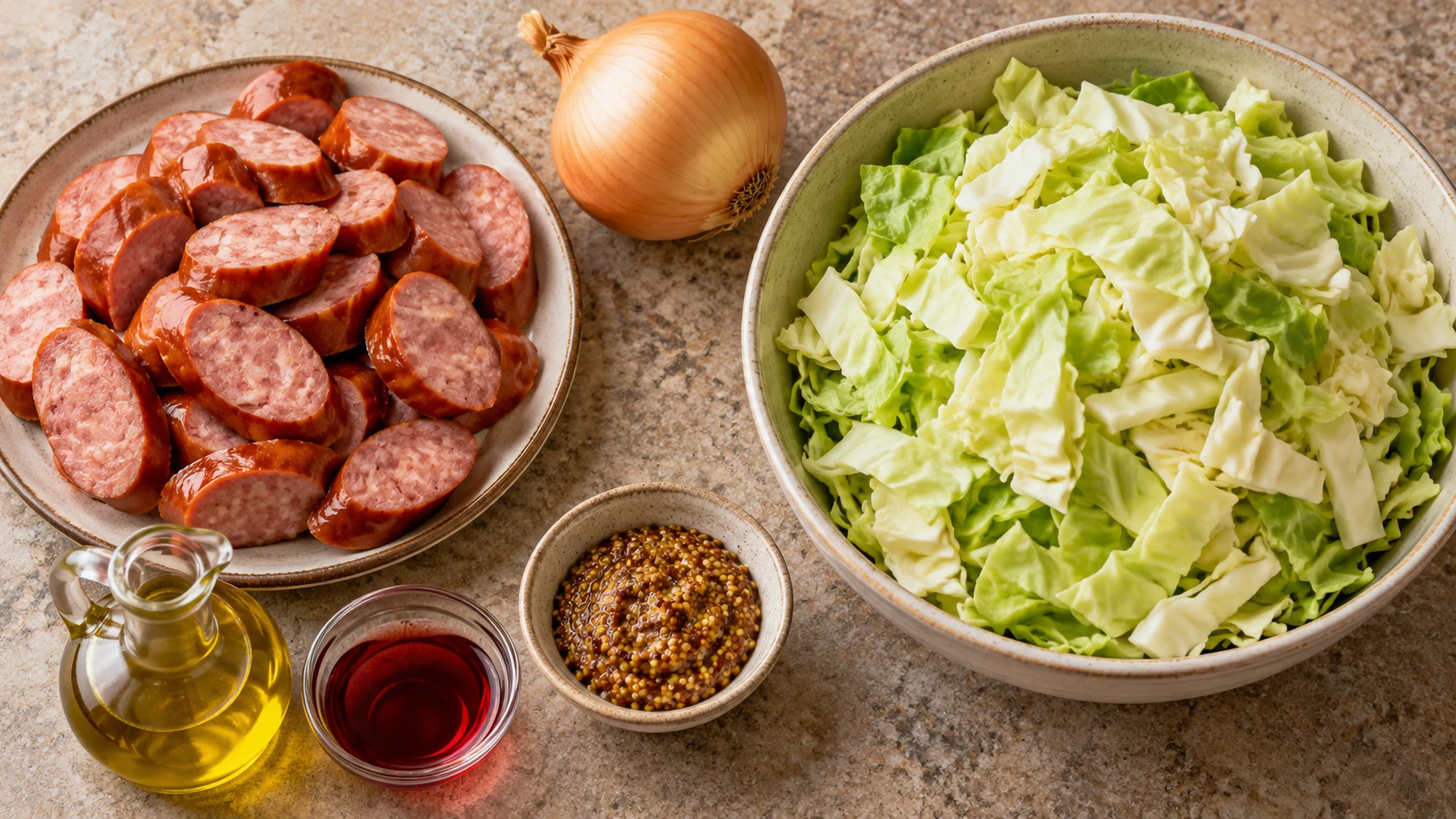
- Wholegrain mustard gives the finish little pops of texture. Red wine vinegar supplies the clean, tart edge.
- Neither ingredient needs to be expensive, but both should taste pleasant before they go into your dinner. The sausage and mustard already bring salt, so wait until the finished skillet is mixed before deciding whether it needs any more.
- Keep substitutions modest the first time. Smooth Dijon works instead of wholegrain mustard, though the finish loses its seedy texture.
- Red cabbage takes longer to soften and colors the whole pan, so it is not an identical swap. If you enjoy heat, add a small pinch of chile flakes when the garlic goes in.
- The recipe card includes a related Mary’s Nest demonstration. That version offers optional bacon; this written recipe does not need it.
Follow the measured ingredients below rather than combining both ingredient lists. Check the sausage and mustard labels for allergens if you are cooking for someone with dietary restrictions.
| What you notice | What to do |
|---|---|
| Pale sausage | Give the pieces more space and a little undisturbed time. |
| Firm cabbage ribs | Cover briefly with a small splash of water. |
| A puddle in the pan | Uncover and cook off moisture before dressing. |
I would change one ingredient at a time and keep the written method intact, so the result is easier to judge.
Health Benefits
Cabbage adds vegetables and some fiber to a meal whose sausage supplies much of the protein, fat and sodium. There is no reason to turn that combination into a health claim. I would use the four-portion yield as a starting point and decide separately whether the meal needs bread or another side.
- Fully cooked kielbasa brands differ substantially. The estimate uses a specific representative sausage label, so a leaner, fattier or differently seasoned product will not have identical numbers.
- Mustard can also be an allergen, and some sausages contain milk or other ingredients that are not obvious from their appearance.
The card estimates 450 calories and 15.6 grams of protein per one of 4 portions. Its carbohydrate convention is available carbohydrate, excluding fiber. The source notes explain ingredient proxies and missing values; optional accompaniments are not included.
Use the estimate as context for the stated portion, not as a promise about a particular brand or a health outcome.
Bottom Line
A roomy skillet, a short covered cook and an off-heat mustard finish make this dinner work. Let the cabbage become tender without turning it to mush, then bring back the browned sausage for a simple meal with enough tang to keep every forkful interesting.
References: recipe technique; ingredient nutrition.

Kielbasa And Cabbage Skillet Recipe
Ingredients
Equipment
Method
- Slice the sausage into rounds or half-moons and cut out the cabbage core. Slice the cabbage into ribbons roughly 1/2 inch wide so the thick ribs are not much larger than the leaves.
- Warm 1 tablespoon oil in a wide skillet over medium heat. Brown the fully cooked sausage for 5–6 minutes, turning occasionally, then transfer it to a clean plate.
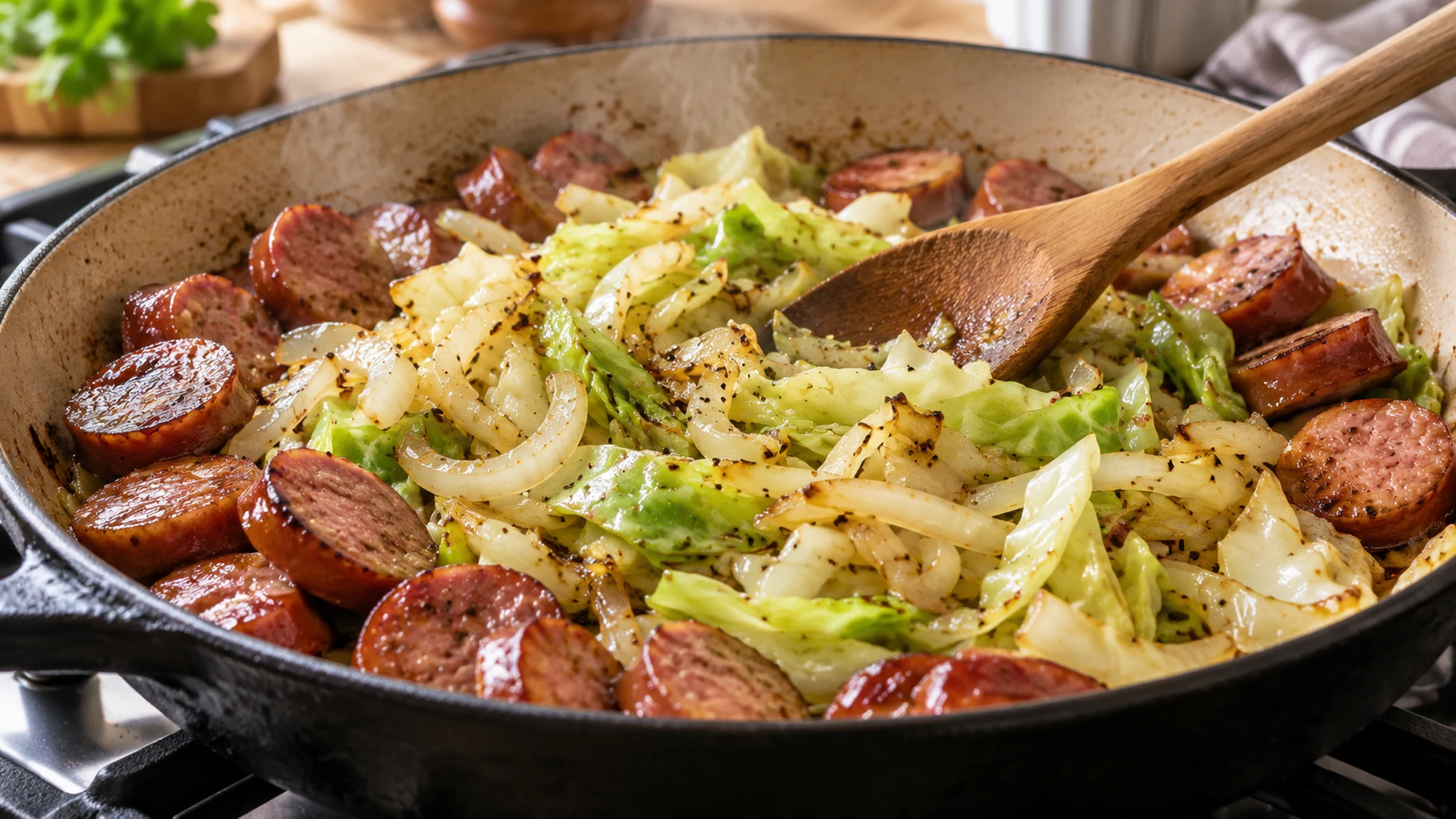
- Add the onion to the same pan and cook 4 minutes. Stir in the garlic for 30 seconds. Add the cabbage and 2 tablespoons water, cover and cook 5 minutes; uncover and stir for another 5–8 minutes until the thick ribs are tender.
- Whisk the remaining oil with vinegar, mustard and pepper. Return the sausage to the pan and heat thoroughly according to its package directions.
- Remove from the heat and toss with the mustard mixture. Taste before adding any extra salt; the sausage and mustard already contain it. Serve in four portions.