
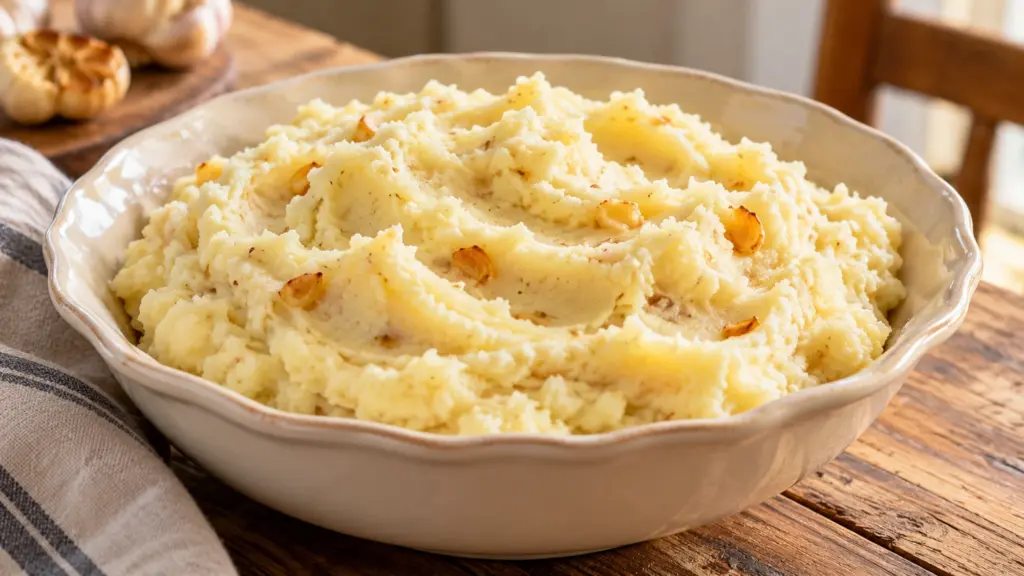
A spoonful of mashed potatoes should settle into soft folds, not stretch like glue. Roasted garlic adds a mellow, savory sweetness to that familiar side, and the most useful technique is restraint: cook the potatoes until tender, drain them well and stop mashing once the texture looks right.
These roasted garlic mashed potatoes combine yellow potatoes, a whole roasted garlic bulb, butter and warm milk. The garlic roasts while you prepare and boil the potatoes, making the timing manageable for a holiday meal or a weekend roast.
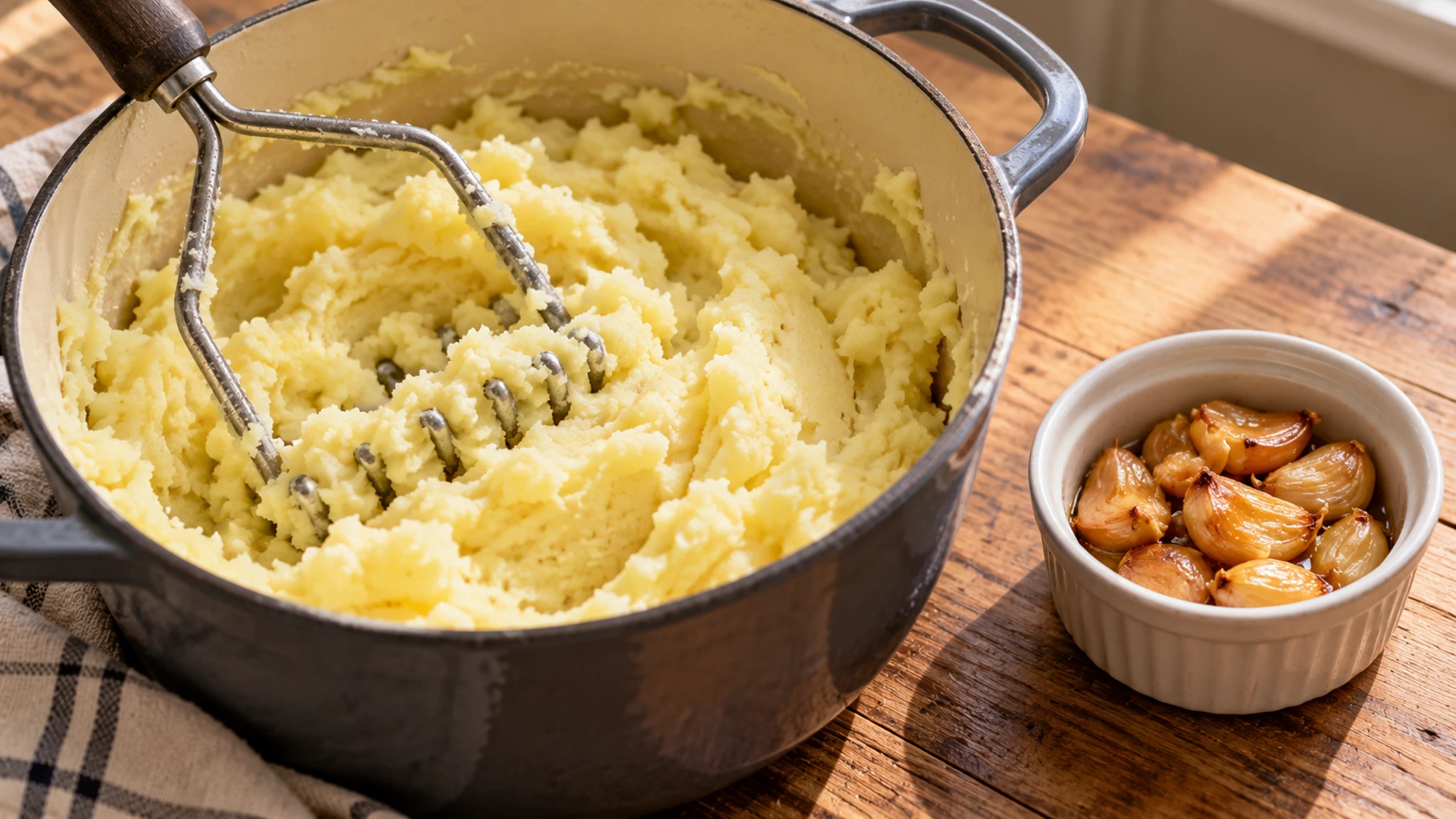
I prefer a hand masher here because a few small potato pieces are more appealing than an overworked puree. A ricer is a good choice for a smoother finish. Either way, leave the blender out of this particular conversation.
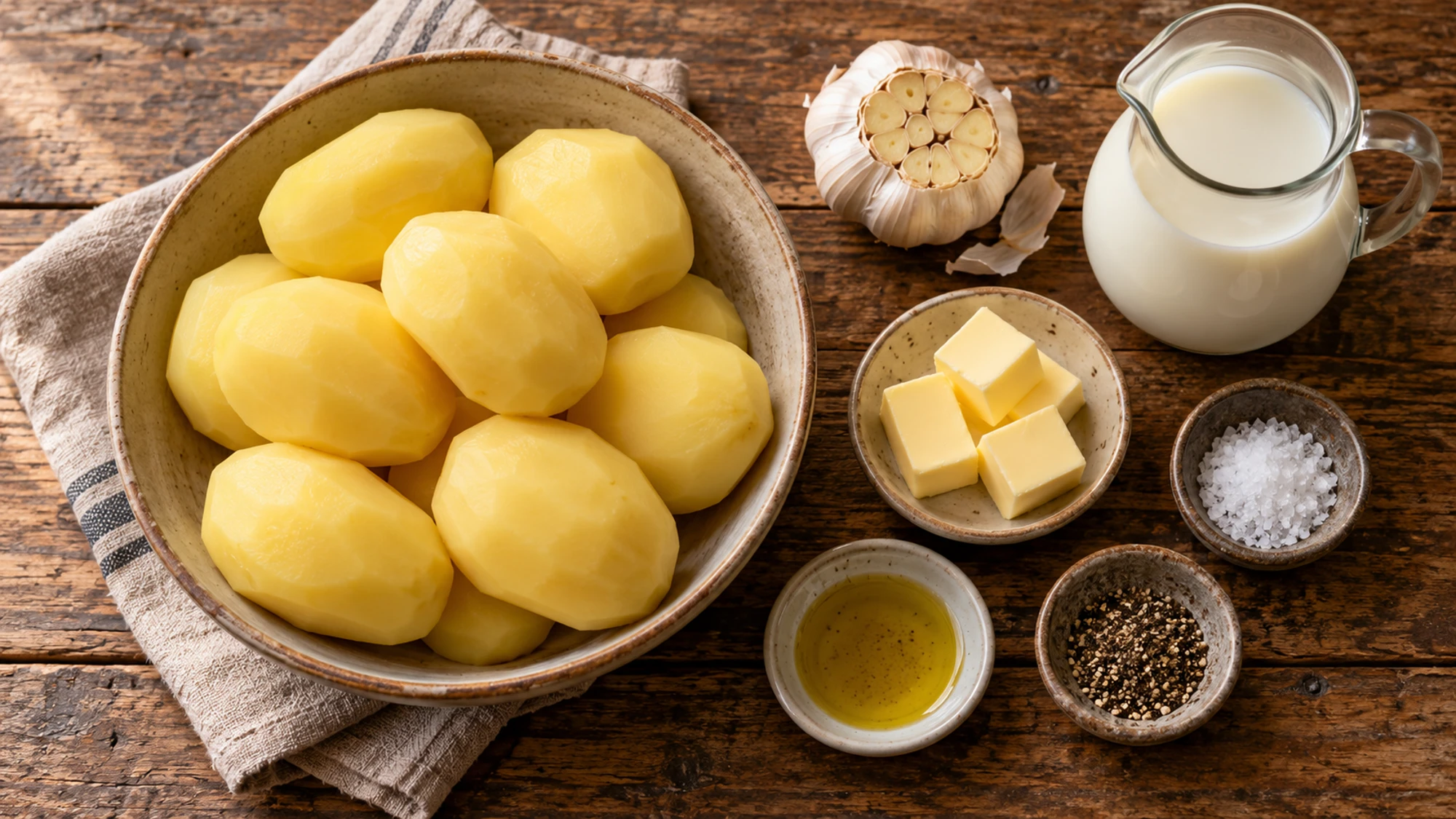
Serving Suggestions for Roasted Garlic Mashed Potatoes
Spoon the potatoes into a warm serving bowl and make shallow ridges with the back of a spoon. A few bits of the measured roasted garlic can sit on top if you like; there is no need to add another pool of butter just to make the bowl look inviting.
Pair them with roast turkey, chicken, a mushroom main or simply cooked beans and a green vegetable. The potatoes already bring a creamy texture, so I would choose something crisp or lightly dressed alongside them. Our main dishes offer a starting point for the rest of the plate.
| Tool | Texture | Best approach |
|---|---|---|
| Hand masher | Soft with small pieces | Stop when evenly mashed |
| Potato ricer | Fine and smooth | Rice while potatoes are hot |
| Blender | Can become gluey | Avoid for this recipe |
Serve the mash warm and loosely spoonable, not packed tightly into the bowl. Gravy is welcome at the table, but it is separate from this recipe and its nutrition estimate.
Variations and a Better Potato Texture
Yellow potatoes give a naturally creamy-looking mash. Russets also work but can need a different amount of liquid; start cautiously rather than pouring everything in at once. The garlic should be soft enough to squeeze from its skin, with golden cloves rather than dark, dried-out edges.
- Cut the potatoes into similar chunks so they soften together. Start them in cold water, then keep the boil gentle enough that the outside does not break apart long before the center is ready.
- Drain thoroughly, then return the potatoes briefly to the warm pot over low heat. Let visible surface moisture evaporate without browning the bottom.
- Warm the milk before folding it in. Add it gradually and stop when the mash is soft; potato varieties differ, and you can reserve a little rather than forcing the texture.
- For a dairy-free variation, use a suitable unsalted plant-based butter and plain unsweetened milk alternative. Flavor, allergens and nutrition will change, so check both labels.
- Avoid adding raw garlic as a direct substitute for the roasted bulb. Its sharper flavor changes the balance and will not give the same mellow result.
The best repair is often prevention: tender potatoes, good draining and gentle mixing. Extra milk can loosen a stiff mash, but it will not undo potatoes that have already become sticky from overworking.
Health Benefits and Safe Make-Ahead Handling
Potatoes contribute carbohydrate, while milk adds some protein. Butter and milk also contribute saturated fat, which is included in the estimate. This is a satisfying side rather than a complete meal; add a protein food and another vegetable for a more varied plate.
- This recipe contains milk. Its nutrition is an estimate using generic potato data; peeled yellow potatoes may contain less fiber than the reference potato with skin.
- Refrigerate within two hours, or one hour above 90°F, in shallow containers at 40°F or below. Use within 3–4 days and reheat throughout to 165°F.
Follow the FDA’s food handling guidance when making the dish ahead. If roasting garlic separately, refrigerate it promptly too; Oregon State Extension explains why homemade garlic in oil must not sit at room temperature.
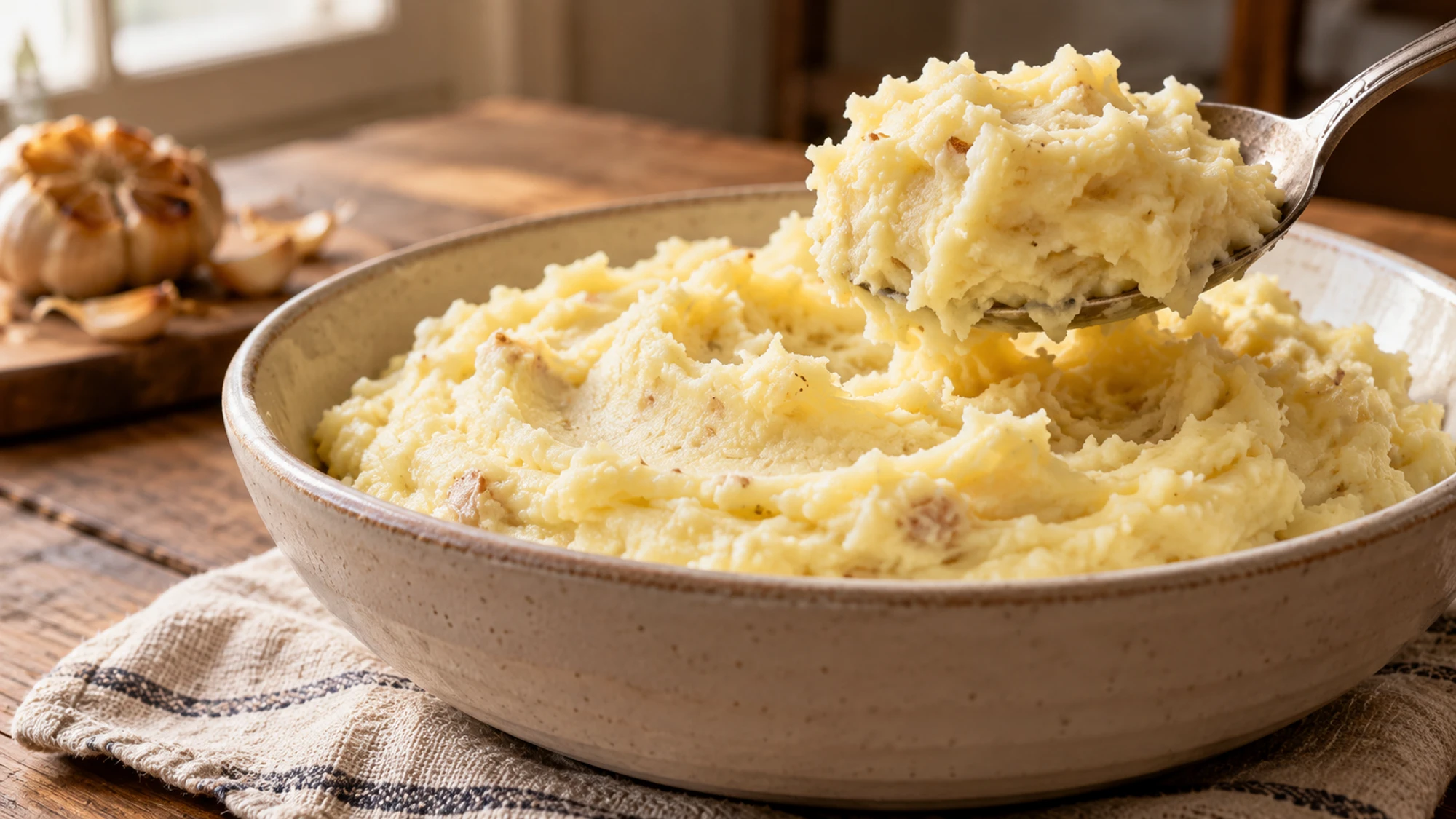
Make-ahead convenience depends on prompt cooling and thorough reheating, not leaving the bowl beside the stove until dinner is ready.
Bottom Line
Roasted garlic gives these mashed potatoes depth without a long seasoning list. Keep the potatoes tender, the milk warm and the mixing gentle, then bring the bowl to the table while the texture is soft and welcoming.
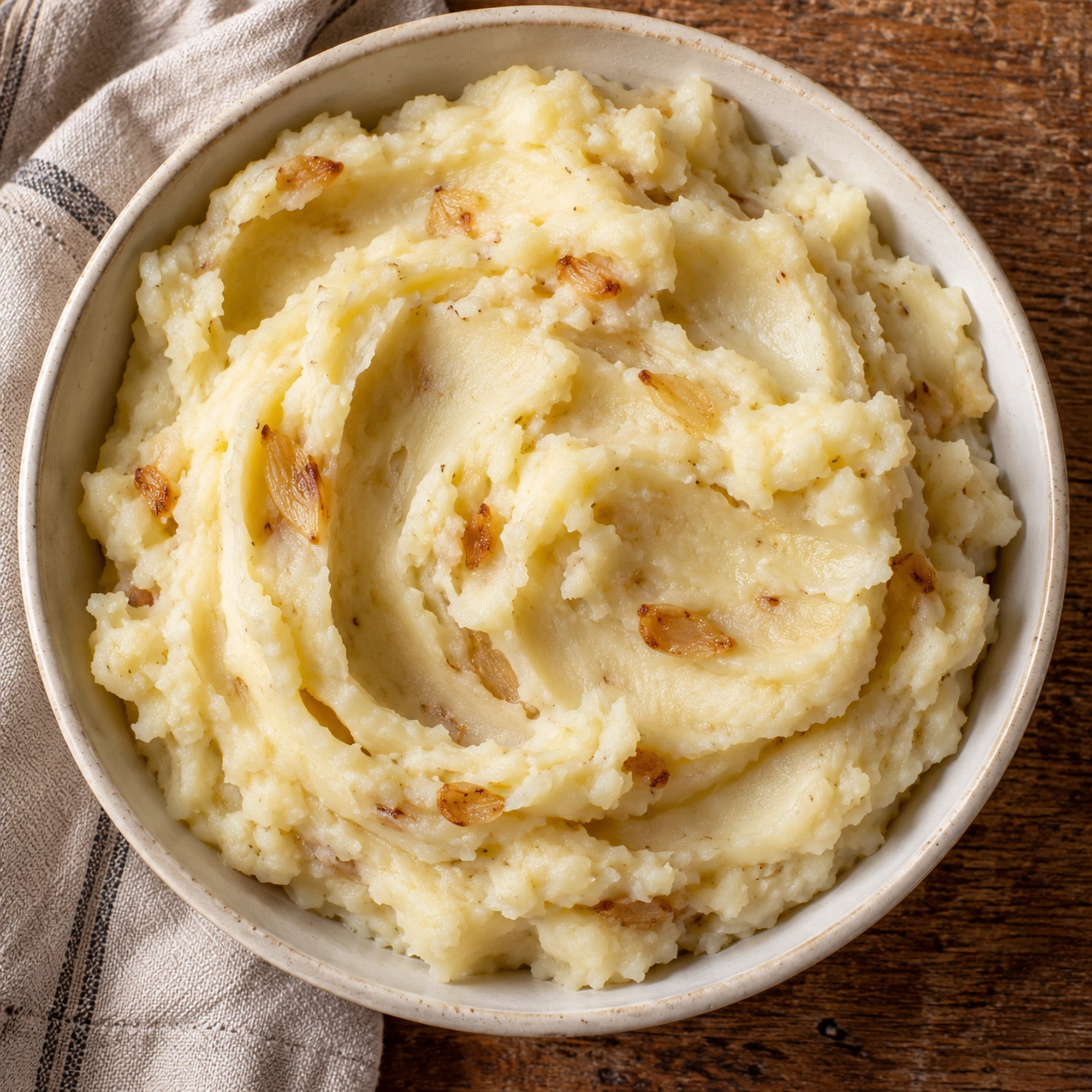

Roasted Garlic Mashed Potatoes Recipe
Ingredients
Equipment
Method
- Heat oven to 400°F (205°C). Slice just enough off the garlic bulb to expose the clove tops. Drizzle with olive oil, wrap in foil and place in a small baking dish. Roast 40–50 minutes until cloves are soft and golden; cool just enough to handle.
- While garlic roasts, put peeled potato chunks in a large pot and cover with cold unsalted water by 1 inch. Bring to a gentle boil, then cook 15–20 minutes after boiling, until a fork slides through the centers easily.
- Drain thoroughly. Return potatoes to the pot over low heat for 1–2 minutes, shaking gently, to evaporate surface water without browning. Remove from heat.
- Squeeze roasted garlic from the skins and mash it with a fork; reserve a few small pieces for the top if desired. Mash potatoes with a hand masher or pass through a ricer. Fold in garlic and butter, then gradually add warm milk, salt and pepper. Stop when soft and creamy; do not blend or overwork.
- Serve warm with any reserved measured garlic. Refrigerate leftovers promptly in shallow containers within 2 hours, or 1 hour above 90°F, at 40°F or below. Use within 3–4 days and reheat to 165°F, adding a little milk if needed.