
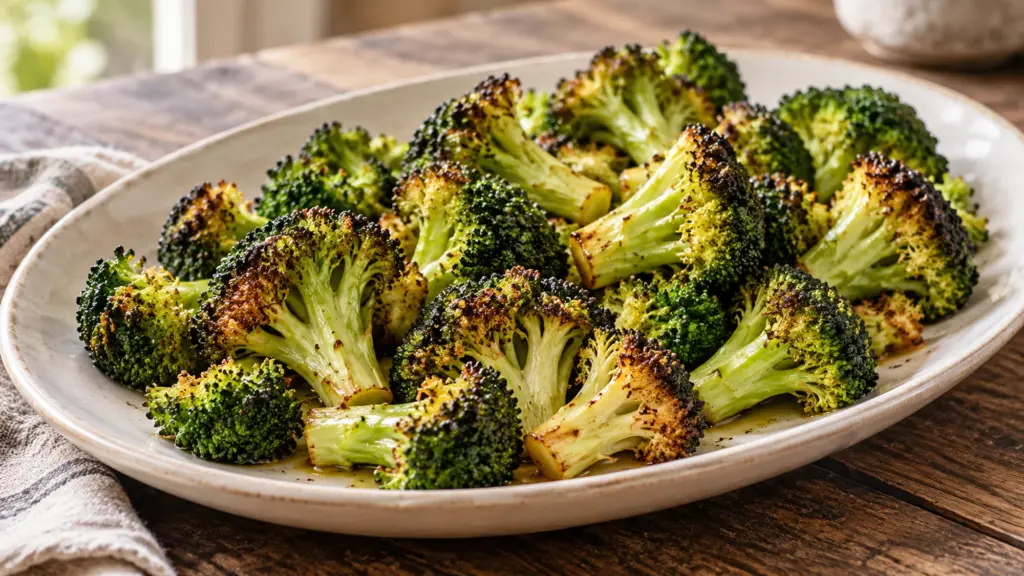
Broccoli changes character when its edges meet a hot sheet pan. The tiny buds turn crisp and nutty, while the thicker stems stay tender enough for a fork. A little oil and a squeeze of lemon are enough to make it a useful side for everything from roast chicken to a bowl of beans.
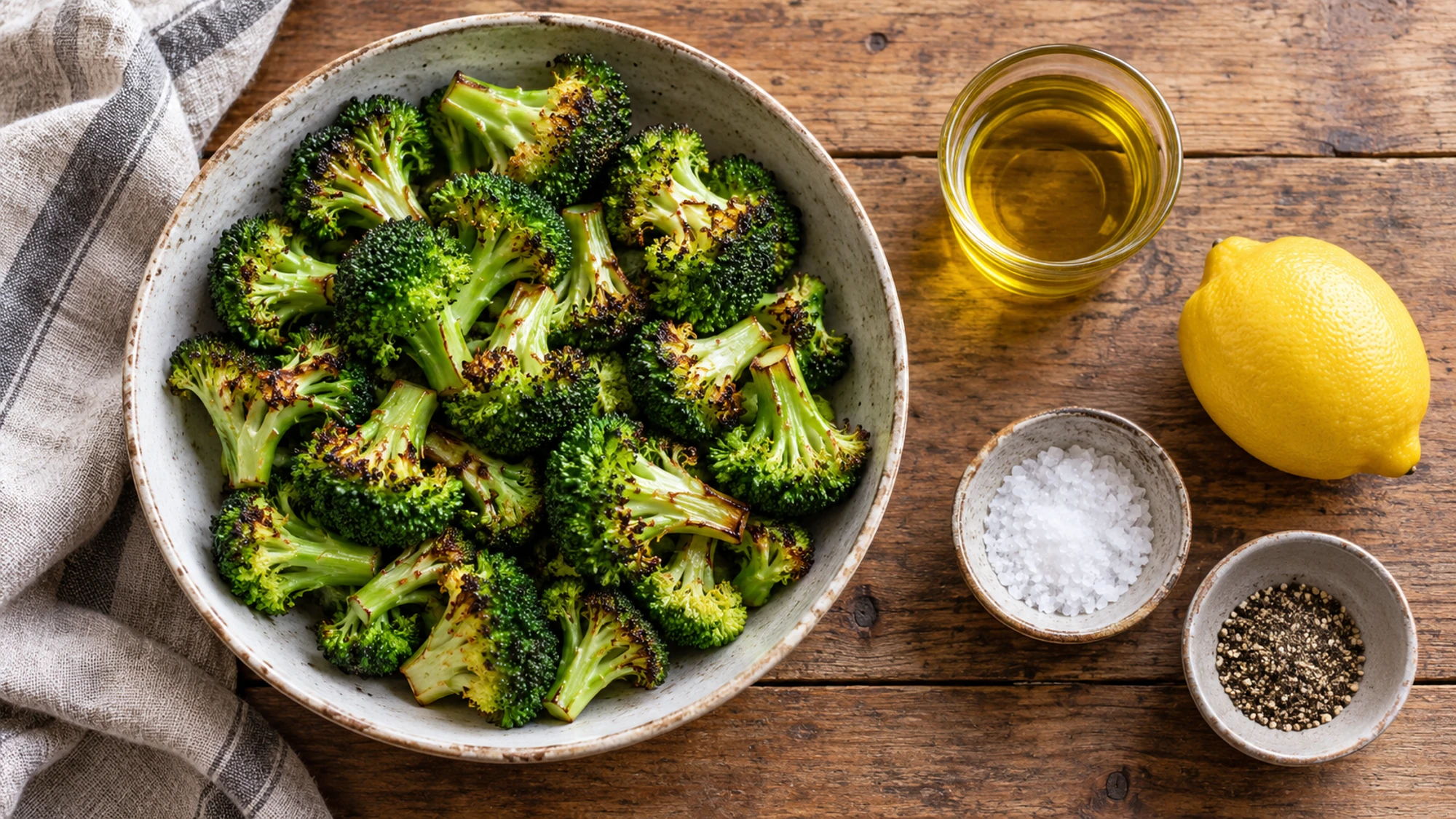
This roasted broccoli uses fresh florets, olive oil, salt and pepper, with lemon juice added after roasting. Dry the broccoli well, spread it in one layer and let the cut sides touch the pan. Those small details matter more than a long seasoning list.
I prefer a few deeply golden tips to uniformly soft florets, but not blackened, bitter ones. Check the tray toward the end, especially if your pieces are small. The goal is browned edges and tender stems, not a contest to see how dark they can get.
Serving Suggestions for Roasted Broccoli
Bring the broccoli to the table soon after roasting, while the tips still have some crispness. A wide platter works better than a deep covered bowl, which traps steam and softens the edges. Add the measured lemon juice just before serving rather than soaking the broccoli in it ahead of time.
This is a flexible side for baked fish, chicken, tofu or a bean-based dinner. I would use it beside a creamy main when the plate needs something with more bite. Browse our main dishes for an easy pairing without making the side more complicated.
| Meal | How broccoli helps | Serving tip |
|---|---|---|
| Creamy pasta | Adds browned texture | Keep it beside the sauce |
| Baked fish | Shares a lemony finish | Serve both while hot |
| Grain and bean bowl | Adds a green vegetable | Add after reheating the base |
Roasted broccoli is happiest as a last-minute side. Have the rest of dinner nearly ready before the tray comes out, rather than holding it covered for a long stretch.
Variations and Avoiding a Steamed Tray
Start with firm florets and trim away tough, woody stem ends. The University of Minnesota’s broccoli guide offers useful selection and preparation advice. Tender stem sections can go on the tray too; peel a thick outer layer and slice them thinner than the florets.
- After washing, dry thoroughly with a clean towel. Water clinging between the buds works against browning, especially when the tray is crowded.
- Cut large florets through the stem to create a flat side. Keep pieces reasonably similar in size so tiny tips do not burn while thick stems remain hard.
- If doubling the recipe, use two pans rather than a taller pile. Rotate their oven positions and allow extra time if needed; more food can slow browning.
- Add chili flakes or a little grated Parmesan after roasting if you want a variation. Cheese changes the allergens and nutrition, and the plain version does not require it.
- Frozen broccoli can be roasted, but this timing is written for fresh florets. Expect more moisture and a softer result rather than assuming the two behave identically.
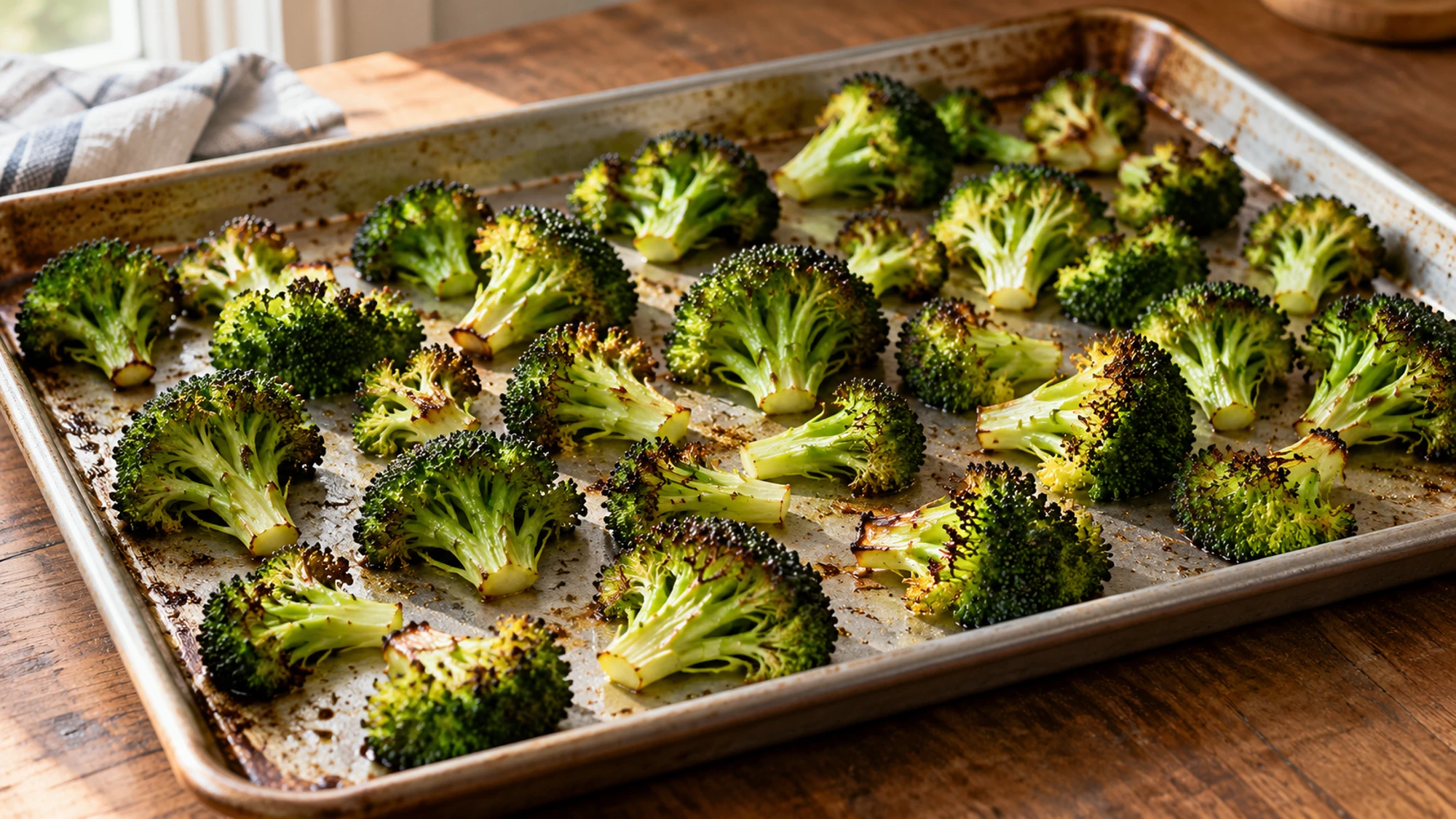
A little space around the pieces is part of the method. If your broccoli cannot fit comfortably on one large pan, give it a second pan instead of forcing it.
Health Benefits and Leftover Storage
Broccoli contributes fiber, and the measured olive oil helps coat the uneven surfaces without turning the dish into a heavy sauce. The estimate includes all the oil and salt. Cooking changes the vegetable’s water content, so the raw ingredient weight is more useful for this calculation than guessing a cooked cup size.
- The base recipe contains no dairy or wheat ingredients. Check optional seasonings and toppings if you are cooking for someone with an allergy.
- Refrigerate leftovers within two hours, or one hour above 90°F, in a shallow container at 40°F or below. Use within 3–4 days.
- Reheat to 165°F throughout. An oven or skillet can improve the texture, but leftovers will usually be softer than the freshly roasted tray.
The FDA’s safe handling guidance covers cooked vegetables too. Prompt chilling matters more than trying to preserve every crisp tip.
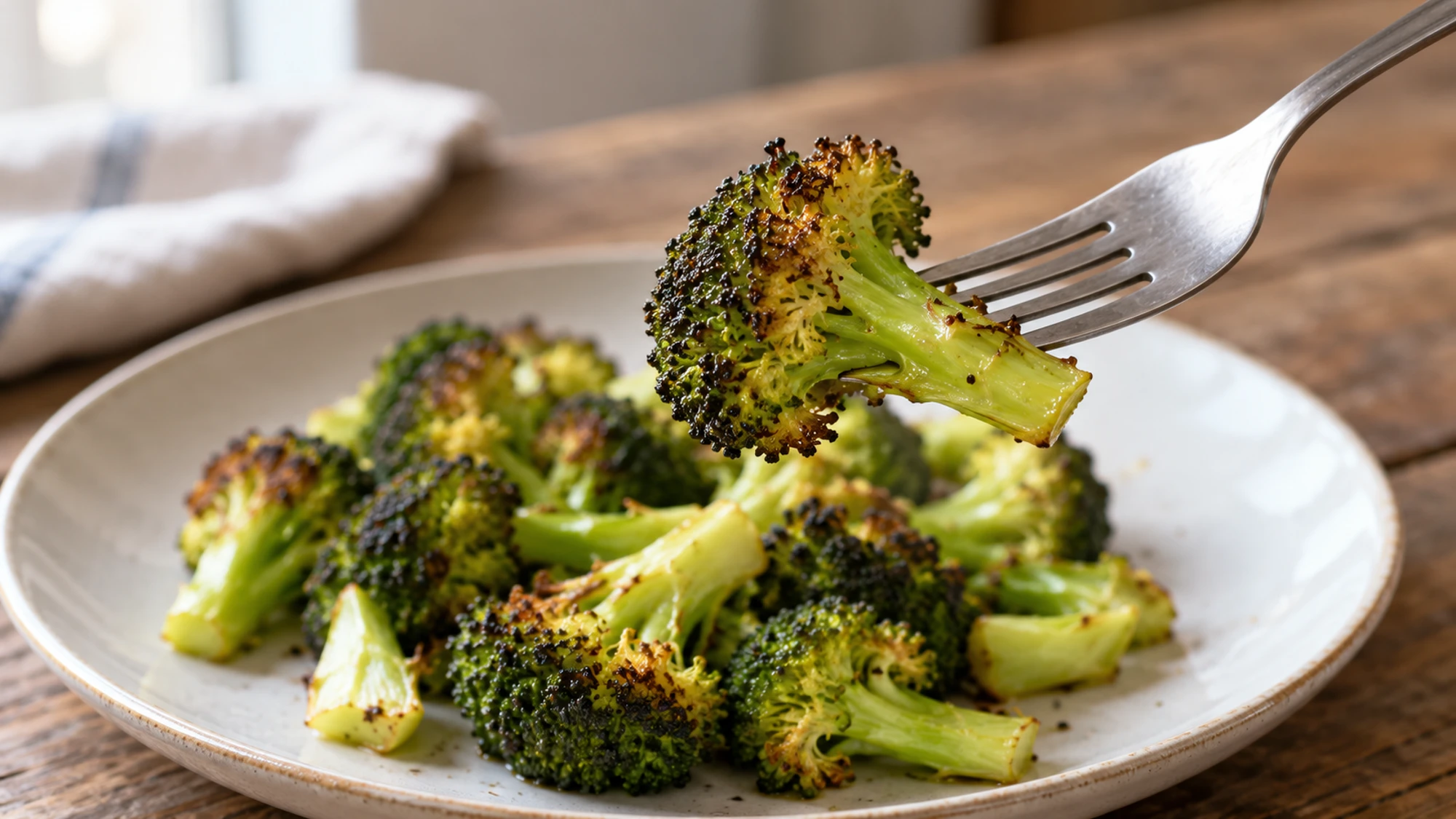
The practical benefit is simple: a vegetable side with enough flavor and texture to earn its place on the plate, without exaggerated promises about what one food can do.
Bottom Line
For better roasted broccoli, dry it well, keep the pieces similar and leave space on the pan. Finish with lemon after roasting, then serve while the stems are tender and the browned tips still have some bite.
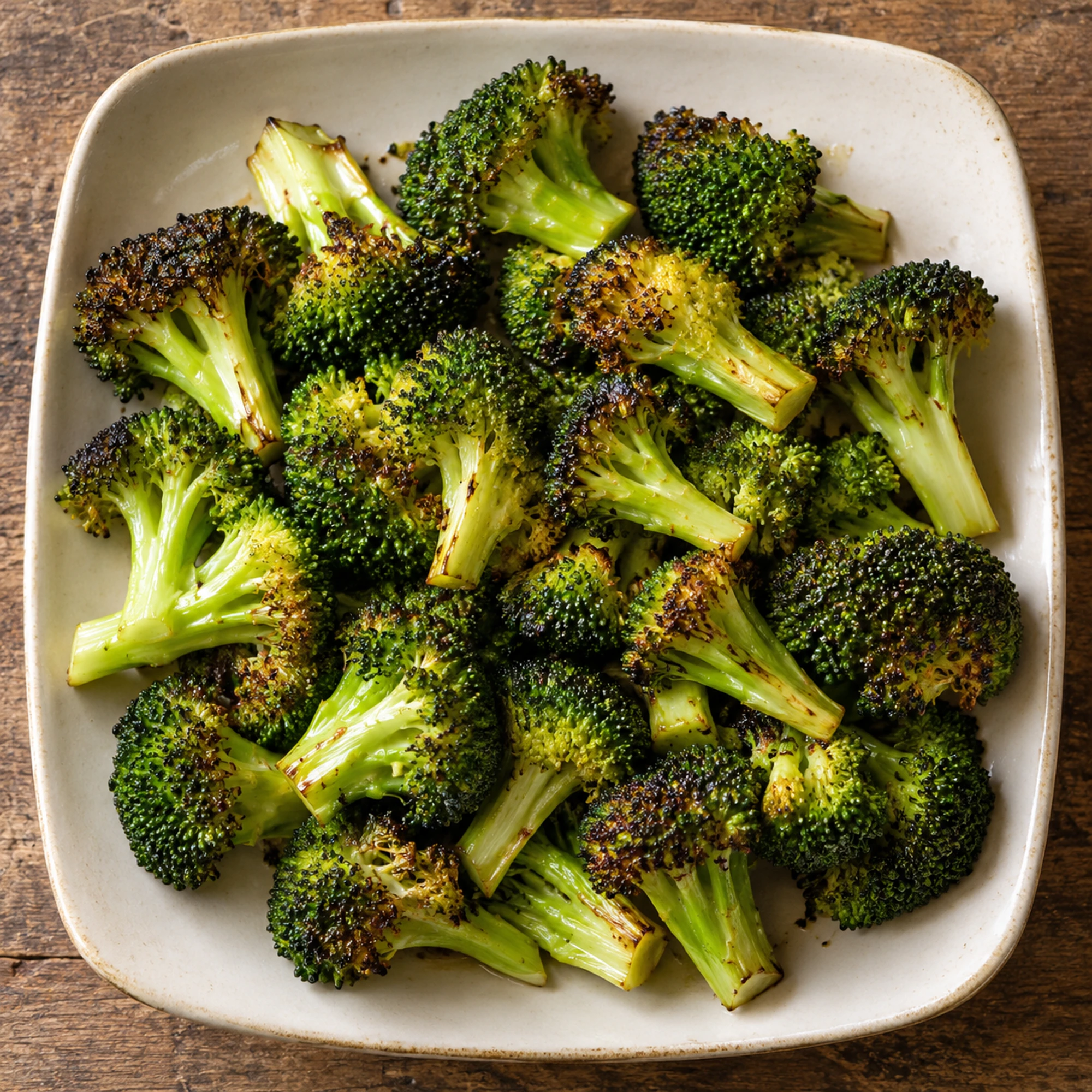

Roasted Broccoli Recipe
Ingredients
Equipment
Method
- Heat oven to 425°F. Wash broccoli and dry very thoroughly. Trim tough stem ends; halve larger florets through the stem so they have a flat side.
- Toss broccoli with oil, salt and pepper in a large bowl. Spread on a large rimmed sheet pan in one layer, with space between pieces and cut sides against the pan. Use a second pan if needed.
- Roast for 20–25 minutes, turning once around halfway, until stems are fork-tender and edges are browned but not blackened. Check early if florets are small.
- Transfer to a wide serving plate, toss with lemon juice and serve promptly. Refrigerate leftovers within 2 hours, or 1 hour above 90°F, at 40°F or below; use within 3–4 days and reheat to 165°F.