
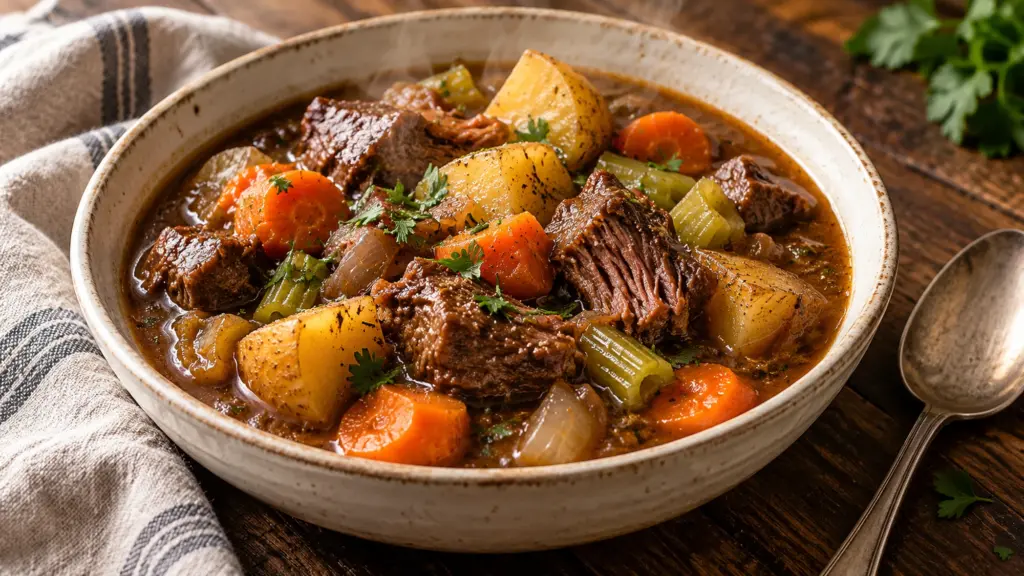
Beef stew rewards the kind of cooking that cannot be rushed. Browned chuck, potatoes, carrots, and celery settle into a savory broth that gradually becomes a light gravy. The beef should yield easily to a fork, while the vegetables stay recognizable instead of dissolving into the pot.
Brown the beef in batches, simmer it gently, and add the potatoes and carrots later. That staggered timing gives the meat a head start without asking the vegetables to survive the entire long cook.
I would put this on the stove on a cool afternoon when there is time to check the pot occasionally. It is not a quick weeknight recipe disguised by a short prep time. The ingredient list is familiar, though: no wine, specialty stock, or complicated garnish is needed.
Serving Suggestions for Beef Stew
Serve the stew in shallow bowls so the beef and vegetables are easy to reach. Because potatoes are already in the pot, bread is optional rather than essential. A simple green salad or lightly cooked green vegetable can add freshness; the side dish collection offers more ideas for a balanced plate.
- Ladle from the bottom of the pot to distribute meat and vegetables fairly.
- Scatter the measured parsley over the bowls just before serving.
- Keep extra bread separate so diners can decide how much they want for the gravy.
I prefer a gravy that coats the ingredients but still moves easily around them. If the stew reduces too far, add hot water in small splashes. If it is thin once everything is tender, uncover it briefly and simmer while stirring gently, rather than crushing the potatoes to force them into a thickener.
Let the stew be the centerpiece. One fresh side and a little parsley are enough to give the rich, slow-cooked flavors some contrast.
Beef Stew Variations and Texture Tips
Chuck suits slow cooking better than a lean steak intended for a quick sear. The Beef Checkoff’s stewing guide describes browning, covered simmering, and the fork-tender endpoint. A rolling boil will not make the waiting disappear; keep the liquid bubbling gently and check that the bottom is not catching.
| What you notice | Likely next step | Avoid |
|---|---|---|
| Beef still resists a fork | Continue the gentle simmer | Serving only because the timer rang |
| Liquid gets too low | Add a little hot water | Letting the flour-thickened base scorch |
| Vegetables are already tender | Lift them out while beef finishes | Boiling them into fragments |
Red potatoes can replace yellow potatoes in similar-size chunks. Leaving thin skins on saves a step and helps the pieces keep their shape, but wash them well first. A small splash of balsamic vinegar at the end adds balance without making this a vinegar-flavored stew; taste before deciding that the whole pot needs more salt.
Choose substitutions for how they cook, not just how they look. Even pieces, enough liquid, and a patient simmer are the useful constants.
Health Benefits and Portion Balance
Beef contributes protein, iron, zinc, and vitamin B12, while potatoes and vegetables bring carbohydrates and some fiber. This is still a red-meat dish, not a reason to ignore portion size. The six-serving yield spreads the beef across bowls with vegetables rather than treating the potatoes as a decorative extra.
- Trim obvious hard fat before weighing the beef for the recipe.
- Use unsalted broth to leave room for deliberate seasoning.
- Remember that bread, butter, and other sides are outside the nutrition estimate.
The nutrition calculation uses a USDA entry for trimmed chuck stew meat, so a fattier roast can raise calories and saturated fat considerably. All measured cooking oil is counted. Skimming visible fat may change the result, but the card does not assume an exact amount disappears during cooking.
Enjoy the protein and vegetables in the bowl while keeping the estimate in perspective. The cut of beef and the serving size make a real difference.
Bottom Line
Cool leftovers promptly in shallow containers rather than leaving a large pot on the counter. Refrigerate within two hours and use within three to four days. Reheat, stirring, until the entire portion reaches 165°F, the safe endpoint for leftovers; a hot edge does not guarantee a hot center.
Brown well, simmer gently, and add the sturdy vegetables after the beef has had time to soften. Fork-tender meat is worth giving the pot the time it actually needs.
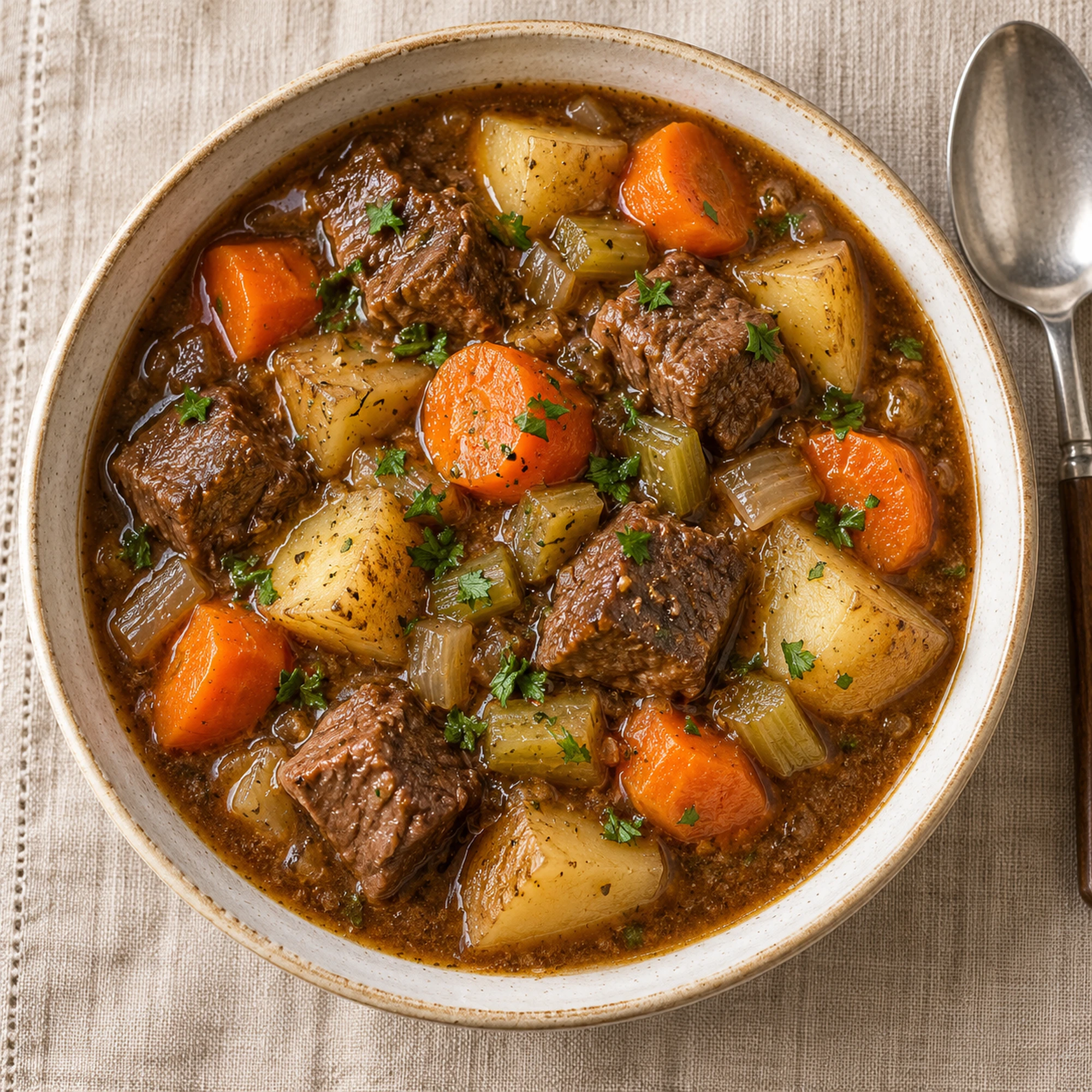

Beef Stew Recipe
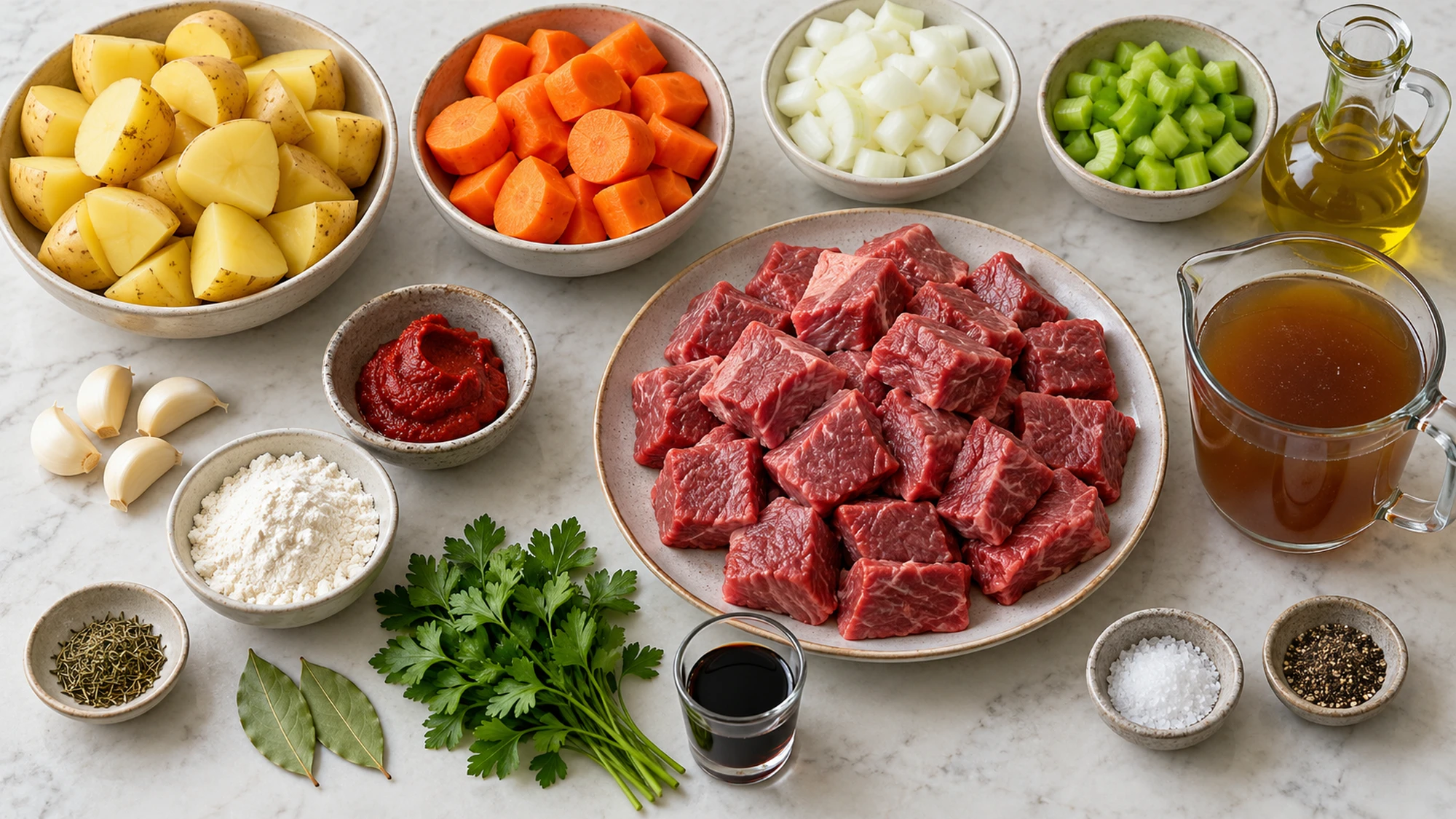
Ingredients
Equipment
Method
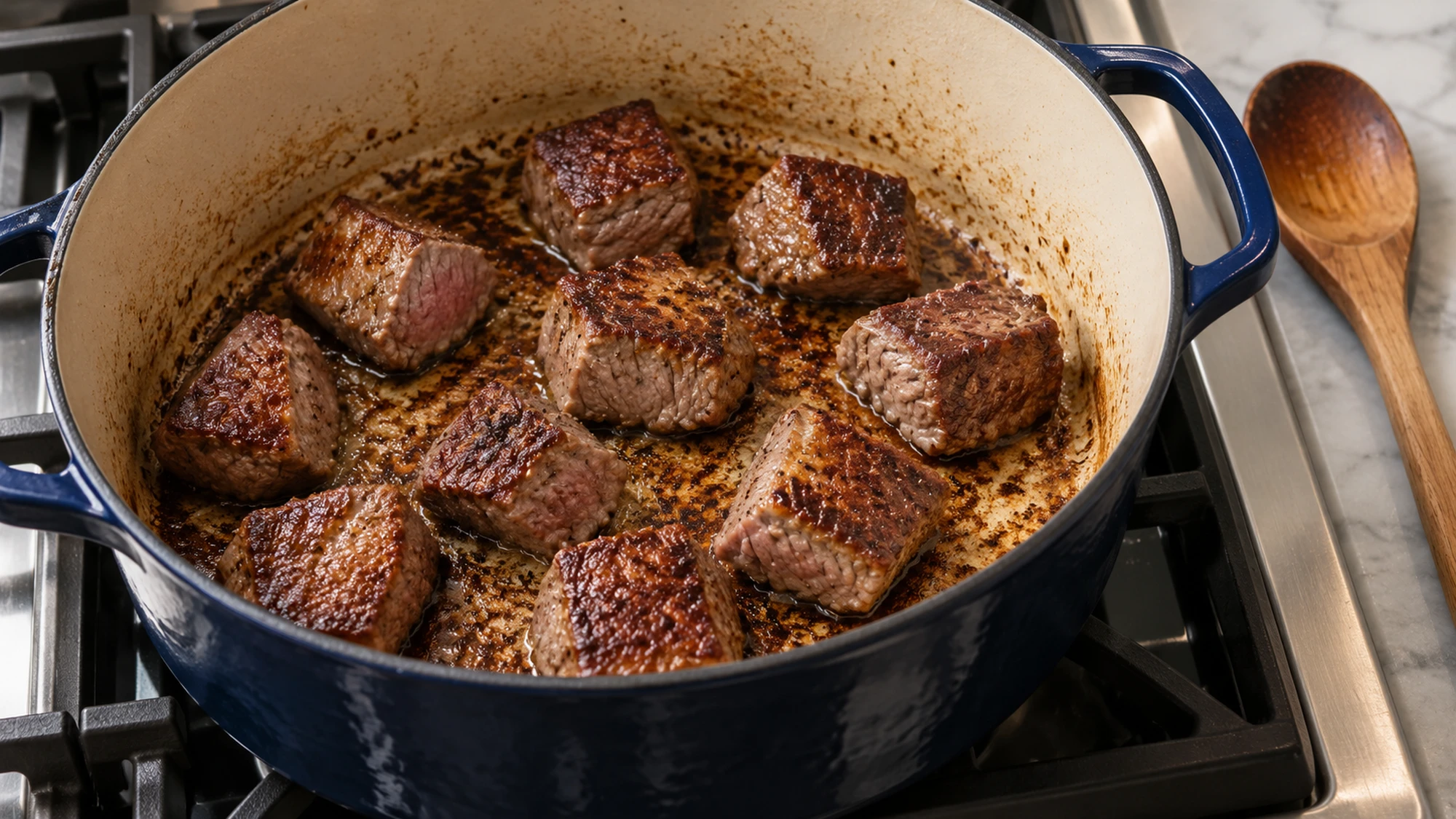
- Pat trimmed beef dry and season with half the salt and the pepper. Heat 1 tablespoon oil in a heavy 5- to 6-quart pot over medium-high heat. Brown beef in 2–3 uncrowded batches, adding the second tablespoon oil as needed, about 15 minutes total. Transfer browned beef to a plate; it is not cooked through yet.
- Reduce heat to medium. Cook onion and celery in the pot for 5 minutes. Add garlic and tomato paste and stir for 1 minute. Stir in flour and cook 1 minute. Slowly add broth while scraping up brown, not black, bits from the bottom.
- Return beef and juices to the pot. Add thyme, bay leaves, and remaining salt. Add enough hot water if necessary to just cover the beef. Bring to a simmer, cover, and reduce heat to low. Simmer gently for 1 1/2 to 2 hours, stirring occasionally and adding hot water if the liquid gets low, until beef is beginning to soften.
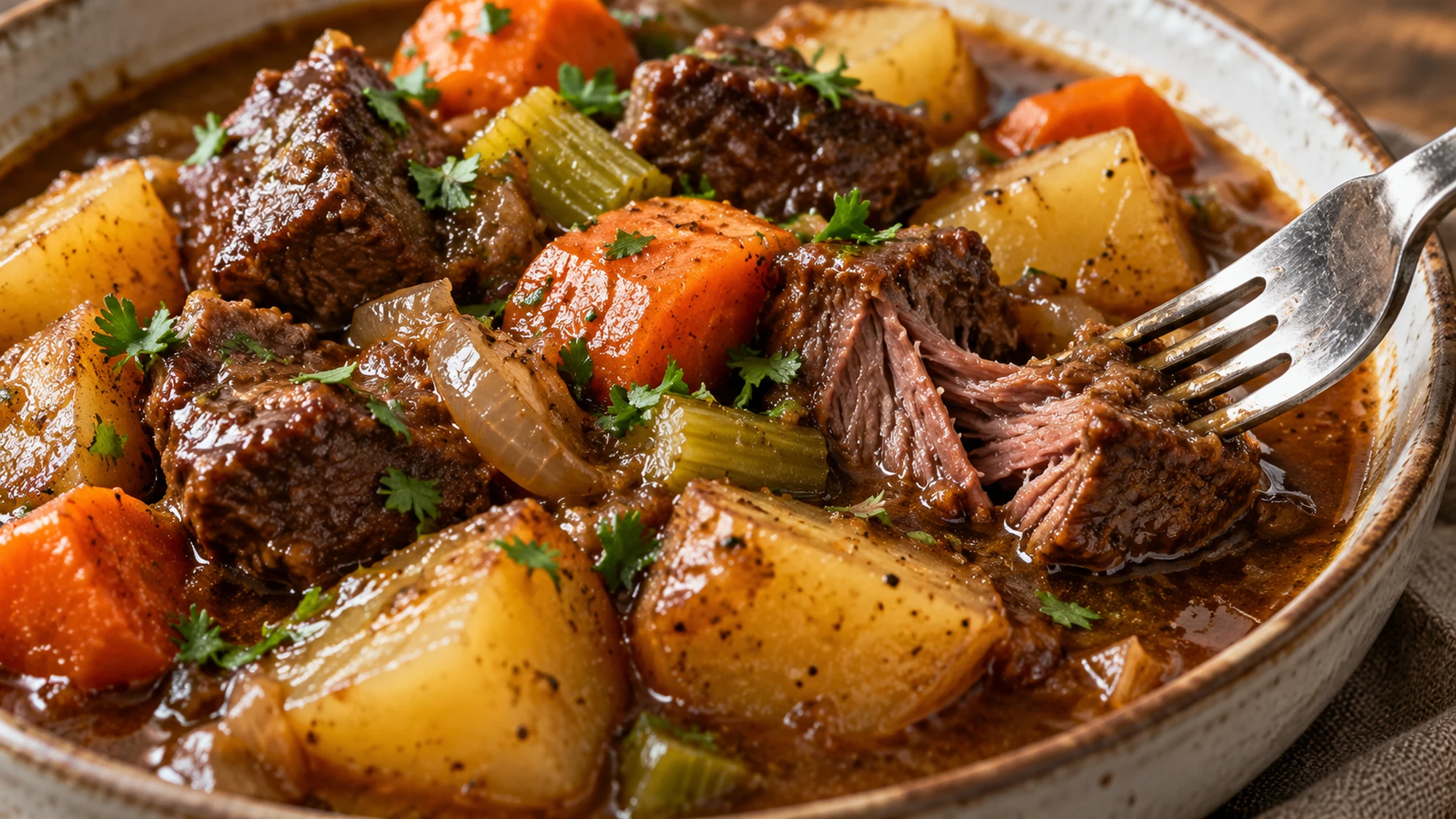
- Add potatoes and carrots. Cover and simmer another 35–50 minutes, until the vegetables are tender and the beef yields easily to a fork. If beef still resists, continue cooking; lift out tender vegetables temporarily if needed. Do not stop at the timer if the meat is tough.
- Remove bay leaves. Stir in balsamic vinegar. If too thick, add a little hot water; if thin, simmer uncovered for 5–10 minutes, stirring gently. Divide into six servings and garnish with parsley.
- Refrigerate leftovers in shallow containers within 2 hours, or 1 hour above 90°F. Use within 3–4 days. Reheat while stirring until all of the portion reaches 165°F.