

Coconut butternut squash curry brings roasted squash, chickpeas, and spinach together in a golden sauce scented with ginger and cumin. Roasting the squash separately gives the cubes browned edges while keeping them distinct in the finished pan. The coconut milk softens the spices, and a squeeze of lemon keeps the last spoonful from feeling too rich.
This version makes four servings in about 55 minutes. The oven and stovetop work at the same time, so you are not waiting for one component before starting the next. It is a flexible vegetarian dinner rather than a claim to any one regional curry tradition.
Serving Suggestions for Coconut Butternut Squash Curry
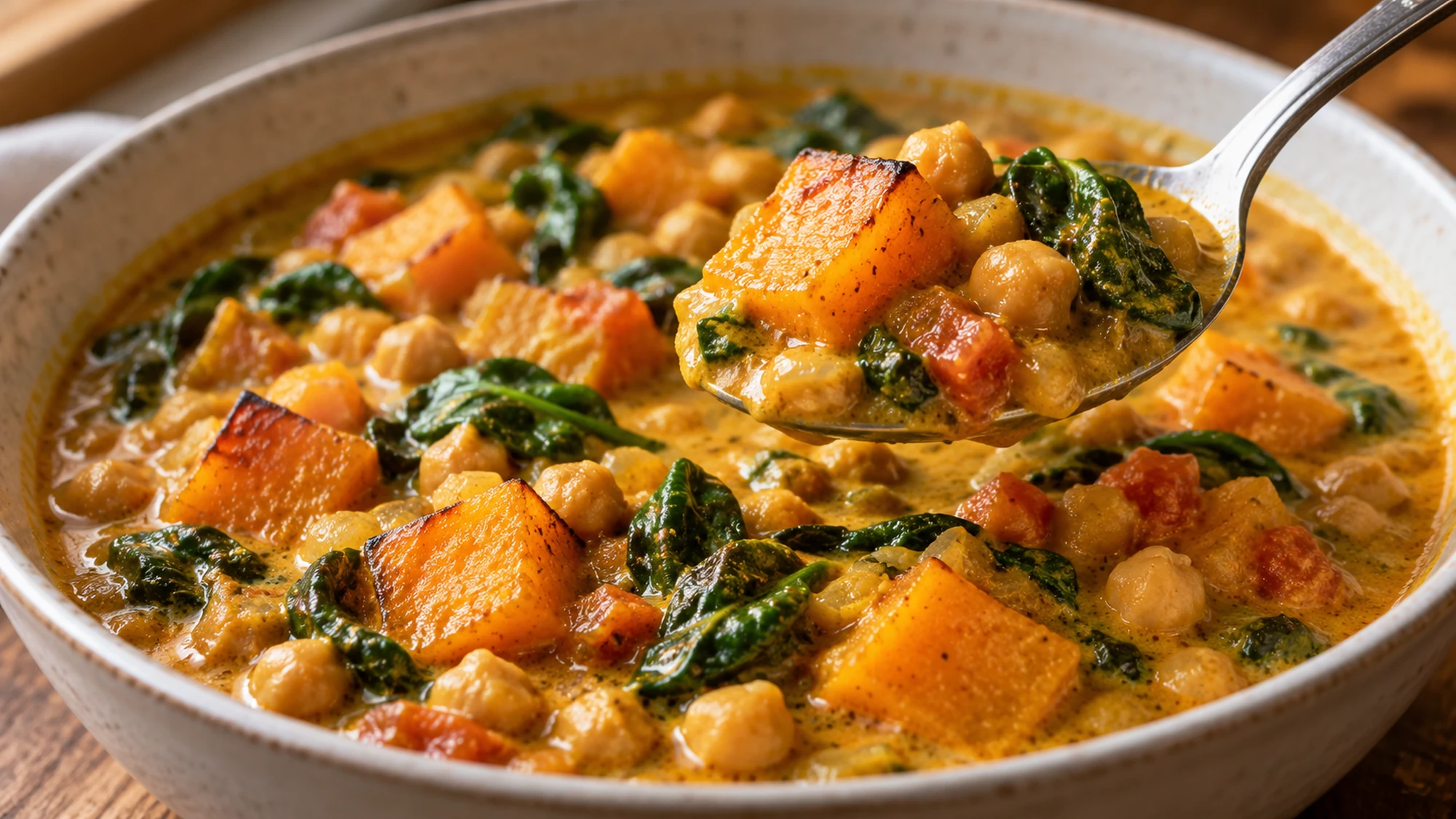
I prefer a shallow bowl here, where the sauce can settle around the squash without hiding it. Rice or warm flatbread can stretch the meal, but the chickpeas make it substantial enough to serve on its own. Those optional sides are not included in the nutrition estimate; portion them separately if you are tracking a meal.
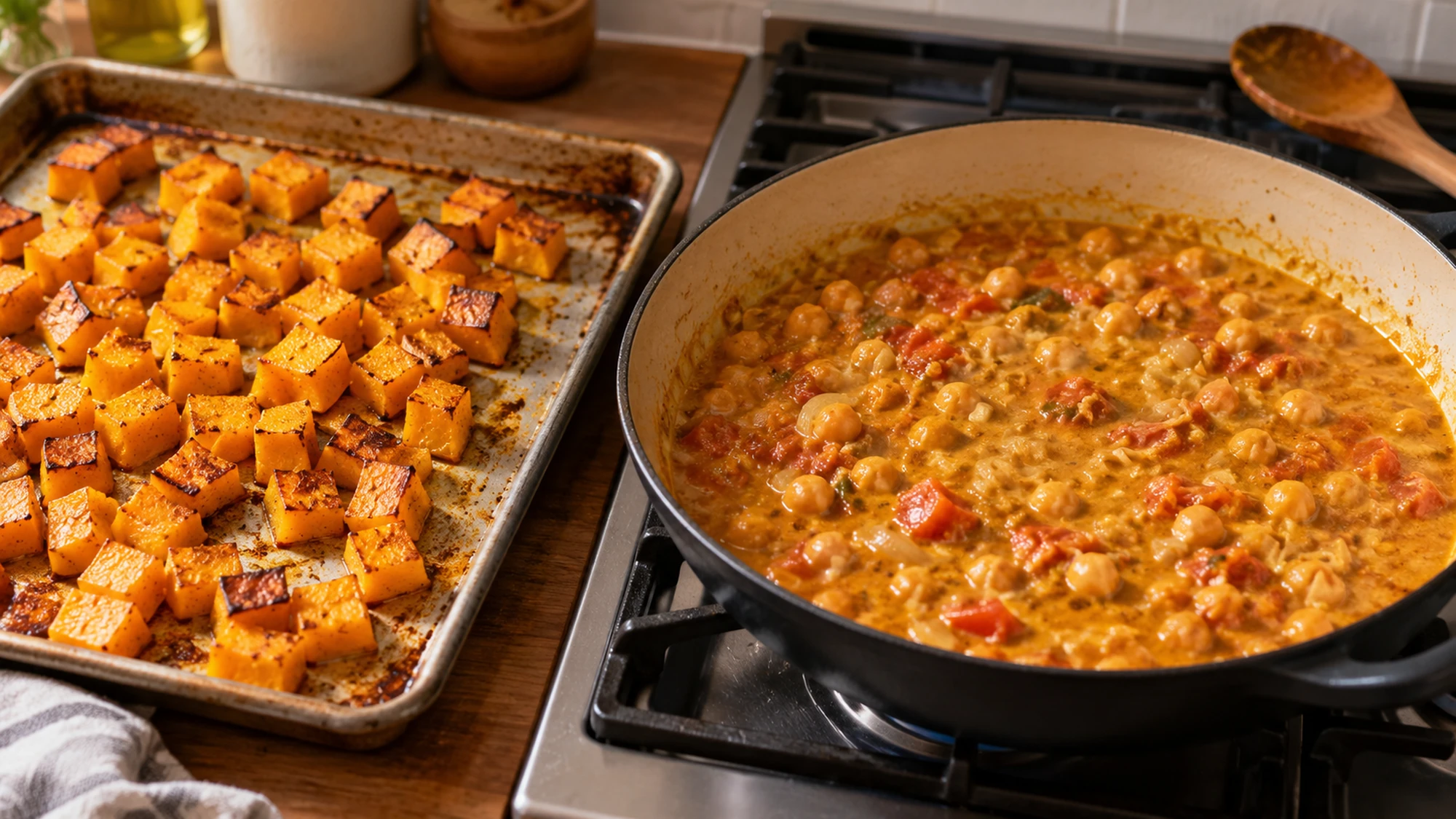
Keep the squash cubes close to the same size and give them room on the sheet pan. Crowded pieces steam more than they brown. Fold them into the sauce gently instead of stirring vigorously, especially once their centers are soft. A few mashed edges will thicken the sauce, but the aim is to keep recognizable pieces. If the pan looks dry before the squash is tender, check that the cubes are not unusually large. A dark tray can brown the edges faster, so use tenderness through the center, not color alone, as your signal to move on.
- For a relaxed dinner, carry the finished pan to the table and divide the chickpeas, vegetables, and sauce evenly among four bowls.
- For lunch later in the week, portion the curry into shallow containers. Add a small splash of water when reheating if the coconut sauce has thickened.
- For a brighter plate, offer a simple crisp salad alongside the curry rather than adding extra cream or rich toppings.
Let the roasted squash keep its shape, and choose a simple side that leaves room for the sauce.
Variations and Ingredient Choices
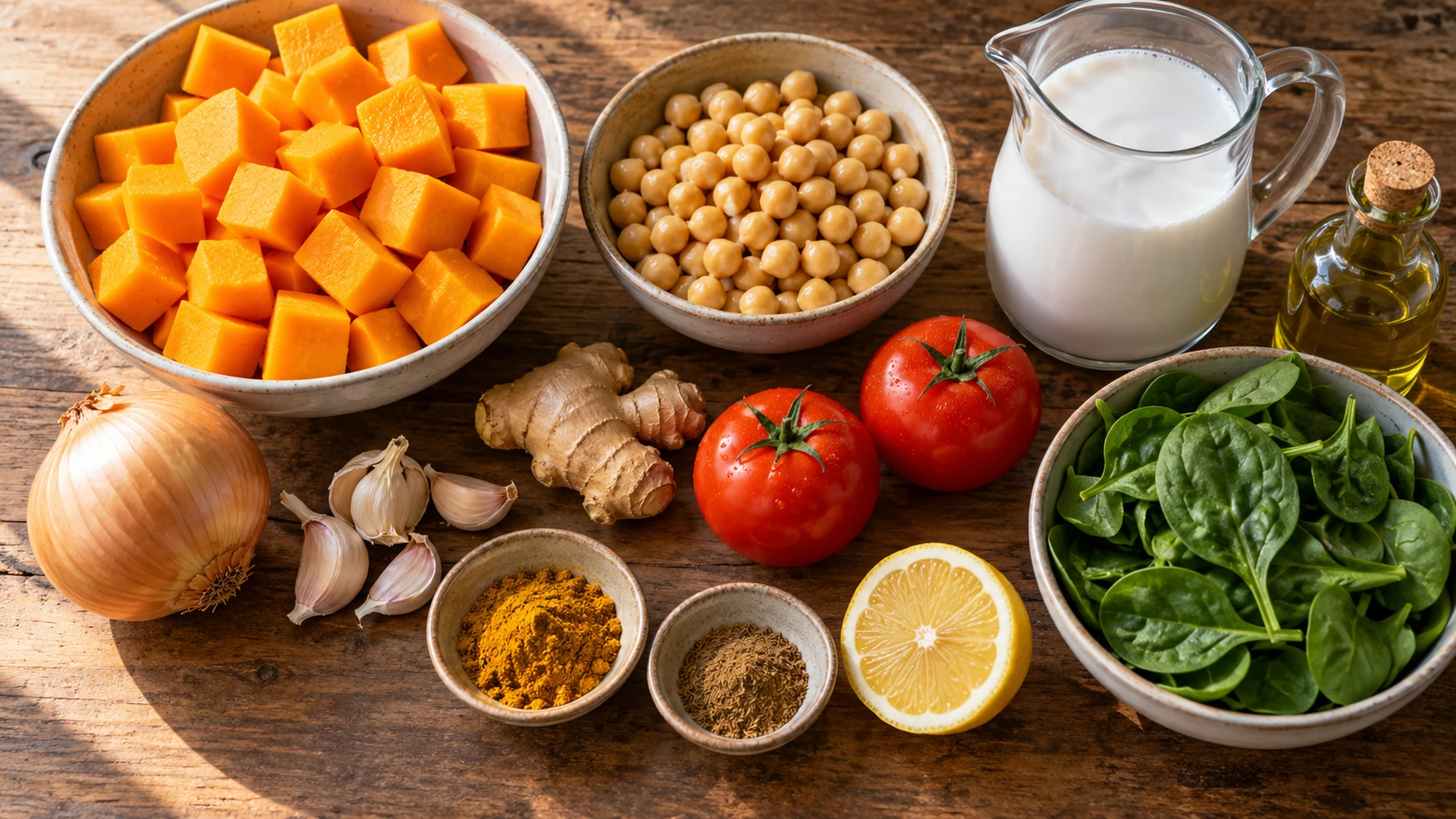
Use unsweetened canned coconut milk, not a refrigerated coconut beverage or sweetened cream of coconut. Stir the can thoroughly before weighing it because the thick cream may have separated. Already cooked, unsalted chickpeas keep the recipe straightforward. If you use drained canned chickpeas instead, their sodium and weight can differ from the calculation.
| Ingredient or step | Why it matters |
|---|---|
| Squash size | Cut peeled squash into roughly 3/4-inch cubes for even roasting. |
| Curry powder | Choose a mild blend for a gentle curry; heat varies by brand. |
| Fresh tomatoes | Dice them finely so they soften into the sauce rather than remaining large chunks. |
| Spinach | Add at the end and fold just until wilted to avoid prolonged cooking. |
I would start with the listed spice amount before adding more. Curry powder blends vary considerably, and a second teaspoon of a hot blend can change the whole pan. For a thinner sauce, add water a tablespoon at a time. Light coconut milk is an option, but it makes a less rich sauce and changes the nutrition.
Keep the cooked chickpeas and roasted squash as the foundation, then adjust the heat and thickness gradually.
Health Benefits in Perspective
Squash contributes carotenoids, and spinach adds another vegetable to the meal. The NIH explains that the body converts some plant carotenoids into vitamin A. Chickpeas contribute plant protein. These ingredients can be part of a varied eating pattern, but this curry does not need detox language or promises about a particular health outcome.
Full-fat coconut milk supplies much of this recipe’s richness and saturated fat. The FDA identifies saturated fat as a nutrient to limit. This is not a low-fat recipe simply because it contains vegetables. Consider the portion and what else you serve with it, and compare coconut milk labels if you choose a different product.
Enjoy the vegetables and chickpeas while recognizing that the creamy coconut sauce is a rich part of the meal.
Bottom Line
Cool leftovers promptly in shallow containers, refrigerate within two hours, and reheat thoroughly. The FoodSafety.gov chart gives soups and stews three to four refrigerated days. The squash may soften further after reheating, so handle it gently. For more savory options, browse the main dish collection.
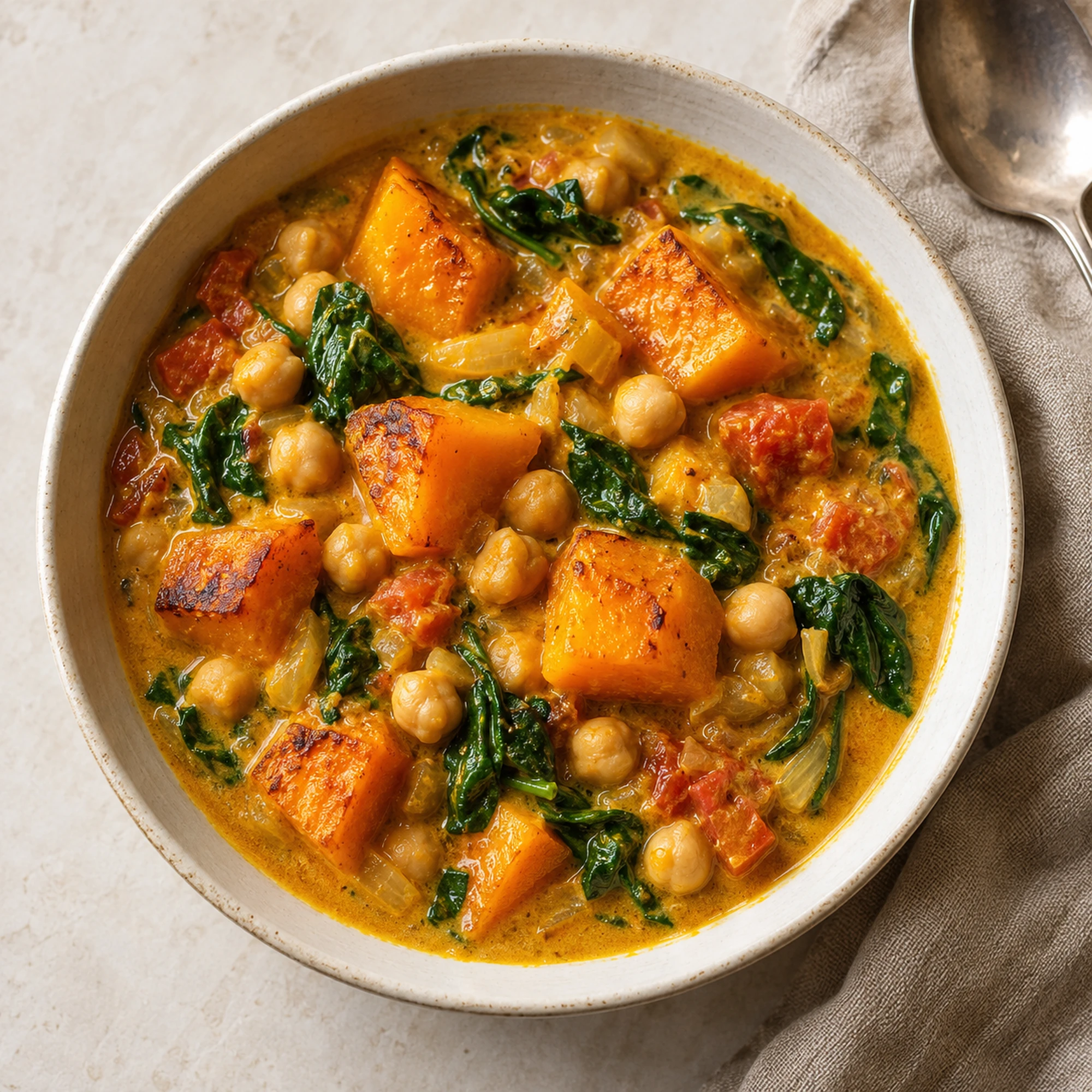
Roasted squash, a gently spiced coconut sauce, and a fresh lemon finish make a practical dinner with plenty of texture.

Coconut Butternut Squash Curry Recipe
Ingredients
Equipment
Method
- Heat the oven to 425°F while preparing the ingredients. Toss the squash on a large rimmed sheet pan with 1 tablespoon oil and 1/4 teaspoon salt. Spread in one layer. Roast for 25–30 minutes, turning once, until browned at the edges and easily pierced through the center with a fork.
- While the squash roasts, heat the remaining 1 tablespoon oil in a wide, deep 12-inch skillet over medium heat. Cook the onion for 6 minutes until softened. Add garlic and ginger and cook for 1 minute. Stir in curry powder and cumin for 30 seconds.
- Add the diced tomatoes and cook for 4 minutes, stirring, until softened. Add coconut milk, cooked chickpeas, water, and the remaining 1/4 teaspoon salt. Bring to a gentle simmer and cook for 10 minutes, stirring occasionally. Reduce the heat if the sauce boils hard.
- Gently fold in the tender roasted squash and spinach. Cook for 2–3 minutes, just until the spinach wilts and everything is hot. If the squash needs longer in the oven, keep the sauce over very low heat until it is ready.
- Remove from the heat and stir in lemon juice. Thin with small splashes of water if needed. Divide evenly into 4 servings. Rice or bread is optional and not included in nutrition.
- Cool leftovers in shallow containers and refrigerate within 2 hours. Use within 3–4 days or freeze for up to 3 months for best quality. Thaw in the refrigerator, then reheat to 165°F, stirring gently and adding a splash of water if needed.