
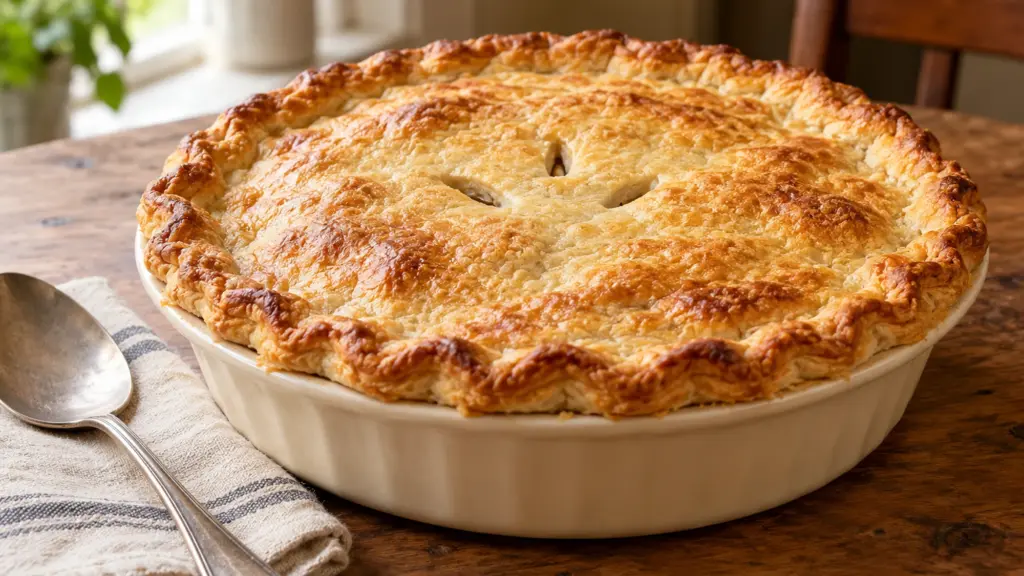
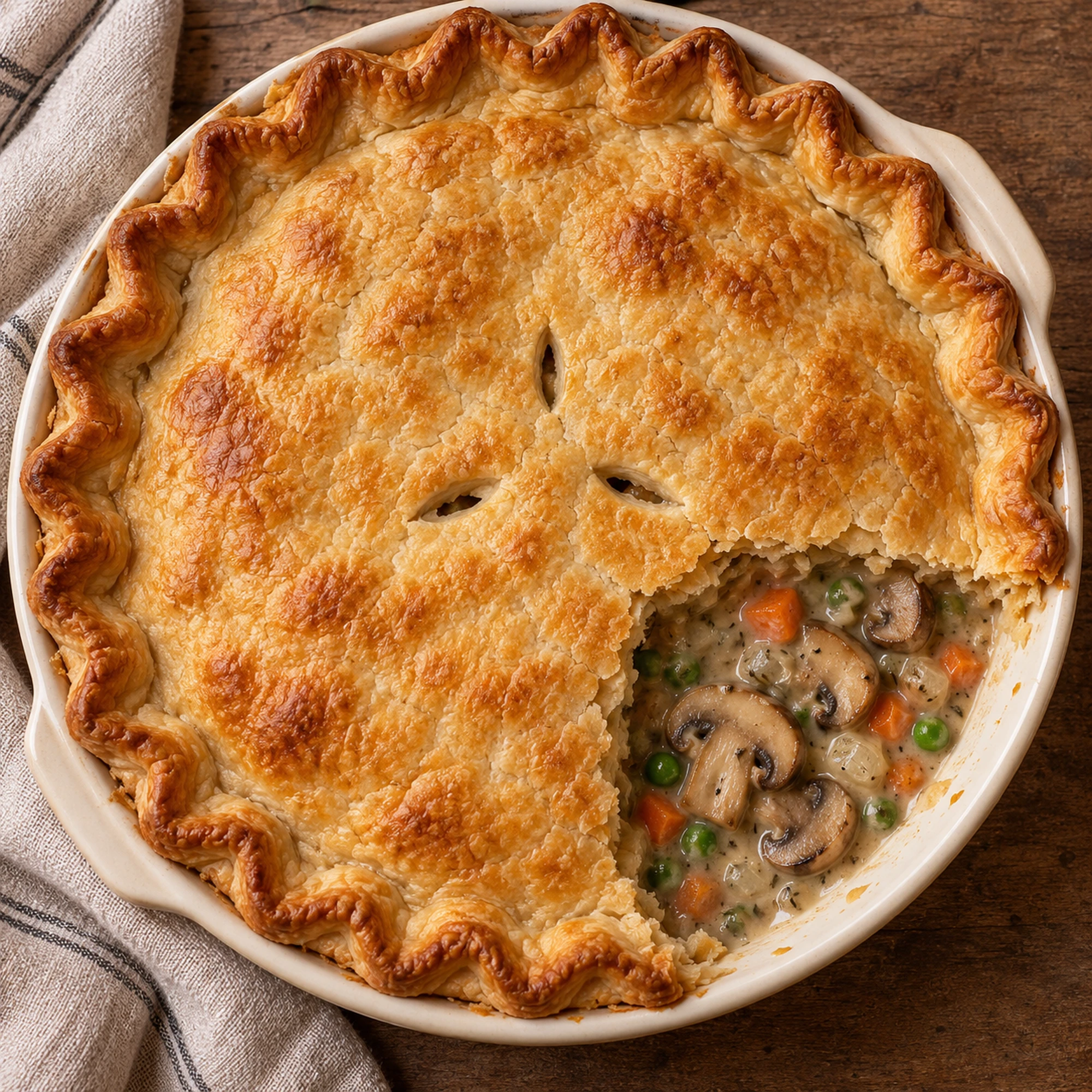
Mushroom pot pie pairs a golden, crimped pastry lid with a creamy filling of browned mushrooms, carrots, and peas. This version has no bottom crust, so you can focus on getting the vegetables flavorful and the top properly baked. The filling stays spoonable rather than setting into a firm slice, which is part of its appeal.
Plan on about two hours and forty minutes from starting the dough to serving, with cooling and baking built into that time. The homemade butter pastry is simple, but it needs chilling, and the filling should stop steaming before the lid goes on. This is a leisurely dinner, not a last-minute shortcut.
Serving Suggestions for Mushroom Pot Pie
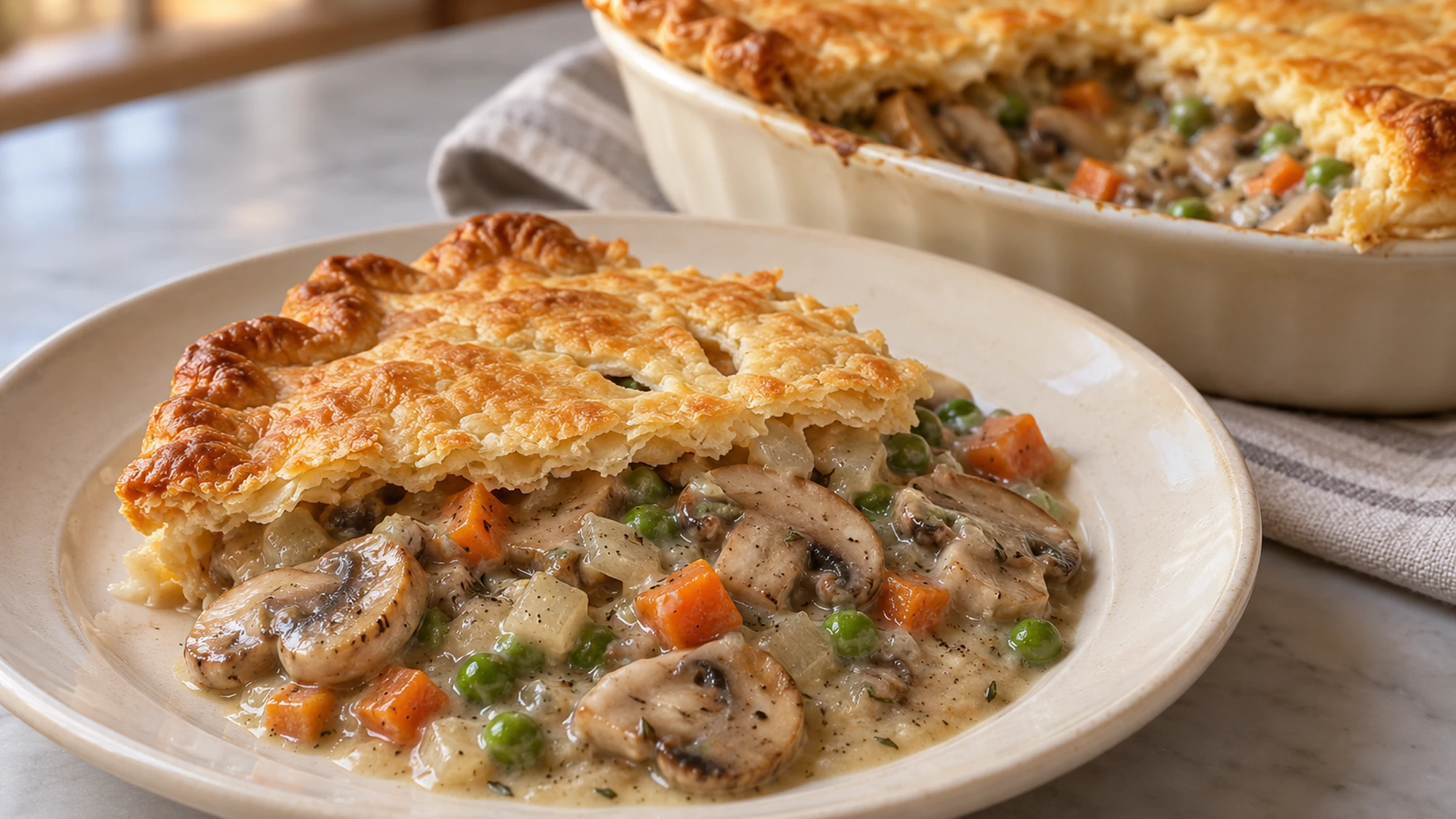
I like a sharp green salad beside a creamy pot pie. Something crisp and simply dressed gives the plate contrast without adding another heavy element. Divide the pastry into six portions, then scoop a similar amount of filling beneath each one. A little gravy spreading across the plate is expected; this is not a pie meant to stand upright.
The fifteen-minute rest after baking matters. It gives the bubbling sauce time to settle and makes serving less messy, although the center remains hot. Use a broad serving spoon, cut through the pastry first, and lift the crust with the vegetables beneath it. Keep children away from the hot dish and escaping steam.
- For dinner, serve one-sixth of the pie with a salad or steamed green vegetables; optional sides are not included in the card’s nutrition.
- For smaller appetites, divide it into eight servings instead of six. The nutrition per serving changes with that yield.
- For leftovers, reheat a portion in an oven-safe dish with loose foil over the top, then uncover briefly to restore some crispness.
Serve this as a spoonable pot pie, with a simple fresh side and enough resting time for the sauce to settle.
Variations and Ingredient Choices
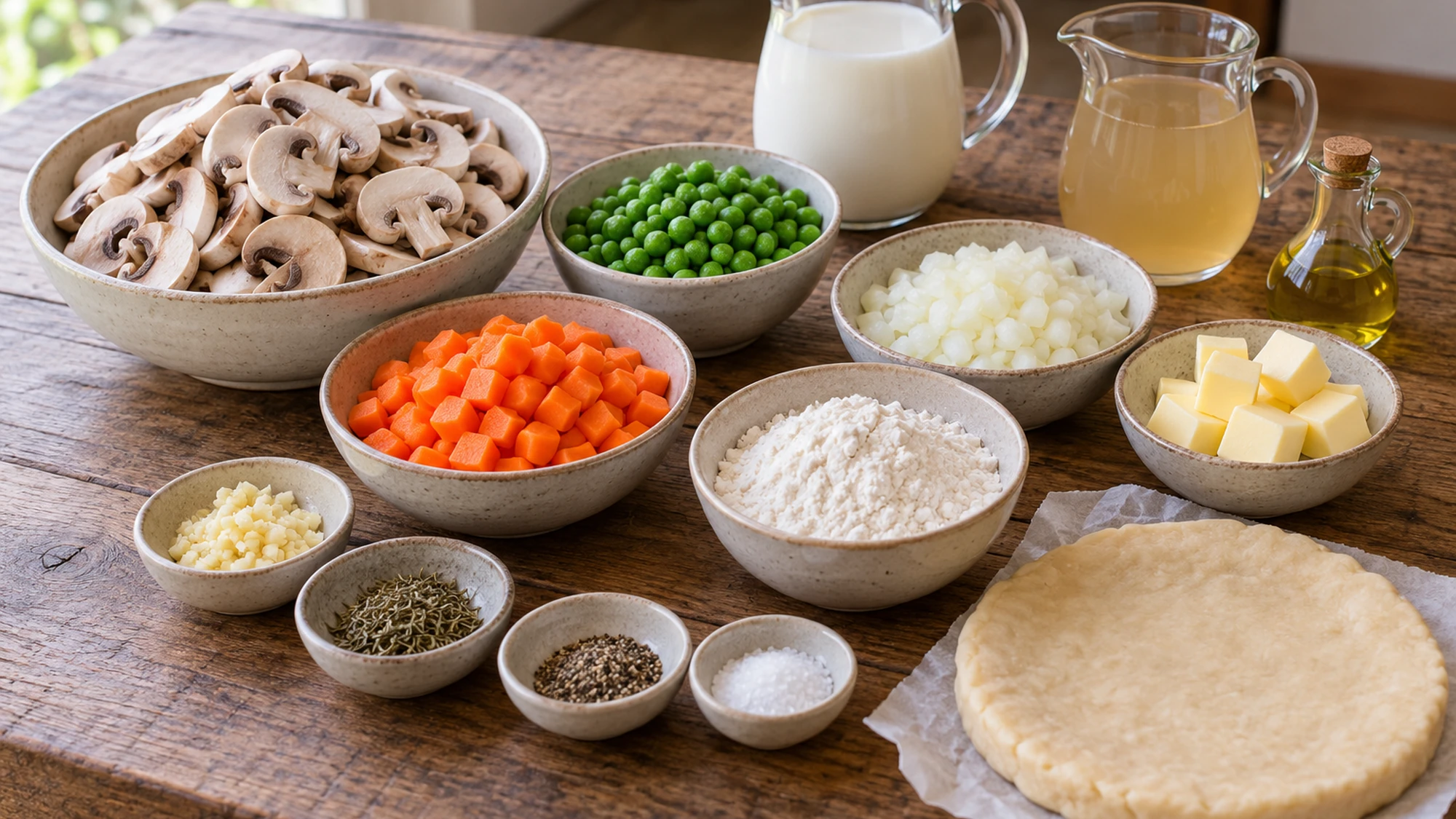
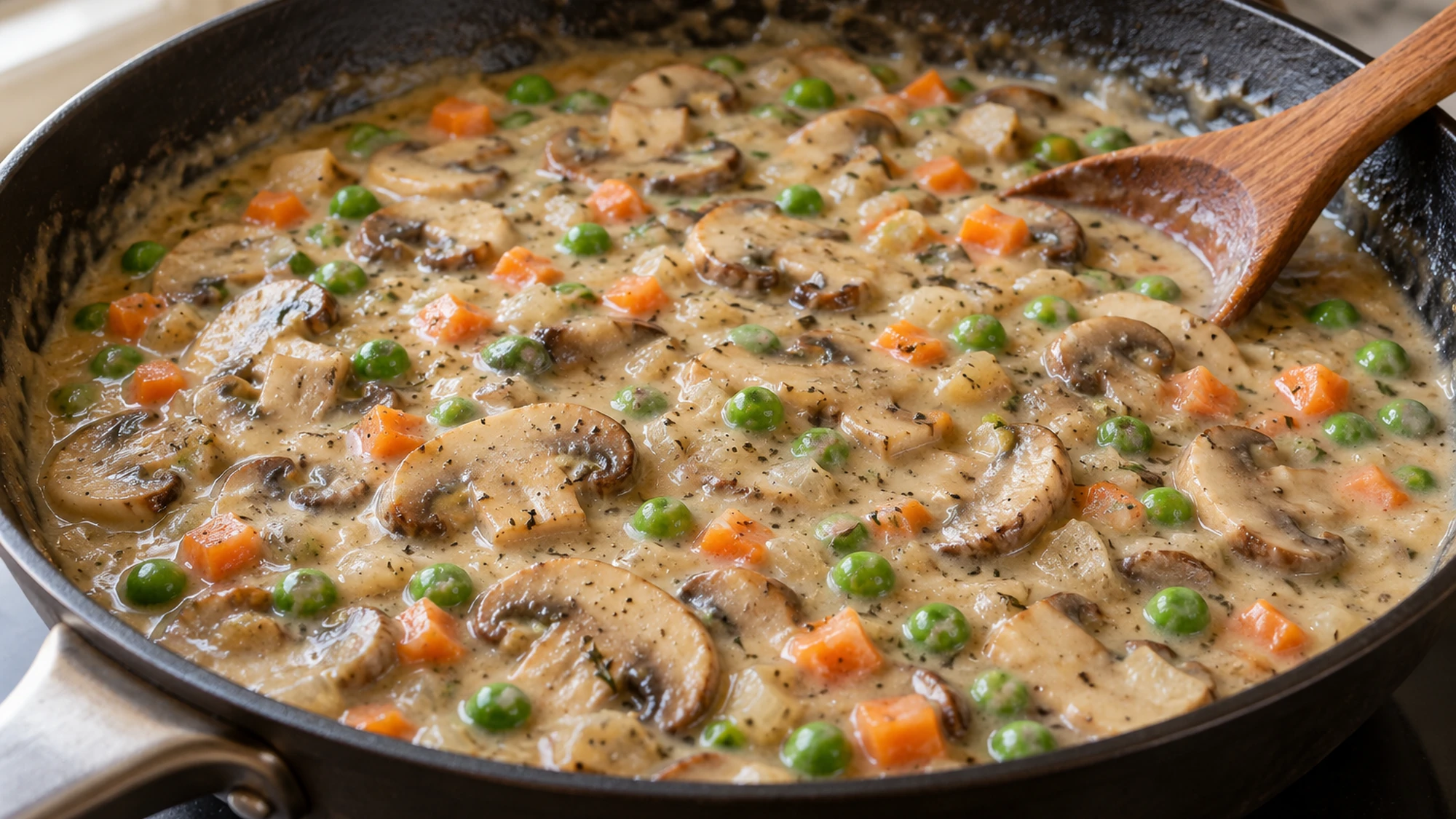
White button mushrooms work well here and match the nutrition calculation. Wipe or briefly rinse them, dry thoroughly, and slice evenly. Brown them in two batches rather than packing the skillet full. The moisture needs time to evaporate before their edges can color; adding flour while the pan is watery makes the sauce harder to control.
| Ingredient or step | Why it matters |
|---|---|
| Cold butter | Leave small pieces in the dough instead of blending it into a smooth paste. |
| Cooked filling | Let it cool before adding pastry so the butter does not melt too early. |
| Milk and broth | Add gradually while stirring to make an even sauce without dry flour pockets. |
| Steam vents | Cut three short slits through the top so steam can escape during baking. |
Cremini mushrooms can replace the white mushrooms for a slightly darker filling, though the nutrition will differ. I would keep the carrot pieces small rather than increasing their size for a chunkier look, because they need to soften before baking. Avoid adding extra milk until the sauce has simmered and you can judge its thickness. If the cold dough cracks as you begin rolling, let it sit for a few minutes, then try again. It should bend without becoming greasy; return soft dough to the refrigerator before continuing.
Give the mushrooms space to brown and the filling time to cool; those steps are more useful than adding extra ingredients.
Health Benefits in Perspective
The vegetables contribute fiber and a range of nutrients, but a buttery pastry dinner is not automatically light because it contains no meat. Peas add some plant protein, while the milk contributes protein too. This recipe contains dairy and wheat and is vegetarian, not vegan or gluten-free. Check your broth label for additional allergens.
Butter supplies much of the saturated fat. The FDA recommends limiting saturated fat, so serving size and the rest of the meal matter. Also remember that raw flour and dough should not be tasted, even though this pastry has no egg.
Enjoy the vegetables and homemade crust without turning a comforting pie into a health claim it cannot support.
Bottom Line
Bake until the pastry is golden and cooked through and the filling is bubbling and reaches 165°F in the center. FoodSafety.gov lists 165°F for meatless casseroles and leftovers. Refrigerate portions promptly rather than leaving the whole dish out all evening. Find more savory ideas in the main dish collection.
Browned mushrooms, a smooth sauce, and a crisp pastry lid are the details that make this simple vegetarian pot pie satisfying.

Mushroom Pot Pie Recipe
Ingredients
Equipment
Method
- Make the pastry: stir 190 g flour and 1/4 teaspoon salt in a bowl. Cut or rub in 113 g cold butter until the mixture has pea-size butter pieces. Add 4 tablespoons ice water, tossing with a fork until the dough holds when pressed; add more water only a teaspoon at a time if dry. Form a disk, wrap, and refrigerate at least 30 minutes while making the filling. Do not taste raw dough.
- Heat the oil in a large 12-inch skillet over medium-high heat. Brown the mushrooms in 2 batches, allowing 8–10 minutes per batch and stirring occasionally until released water evaporates. Transfer each batch to a bowl.
- Reduce the heat to medium. Melt 28 g butter in the skillet. Add onion and carrots; cook for 8–10 minutes until softened. Add garlic, thyme, and pepper and cook for 1 minute. Sprinkle over 30 g flour and stir for 2 minutes.
- Gradually stir in broth, then the 1 cup milk, scraping up browned bits. Bring to a gentle simmer and cook for 5 minutes, stirring until the sauce coats a spoon. Return mushrooms and their juices, then stir in peas and the remaining 1/4 teaspoon salt. Simmer for 2 minutes.
- Transfer the filling to a round 9-inch baking dish with a 2-quart capacity. Leave at least 1/2 inch of headspace. Cool for about 30 minutes until no longer steaming; keep the dough refrigerated. Heat the oven to 400°F during this cooling time.
- Roll the dough between sheets of parchment into a 12-inch circle, about 1/8 inch thick. Remove the top paper, invert the dough over the cooled filling, then peel away the other paper. Tuck the overhang under itself at the rim and crimp. Cut 3 short steam vents and brush with the reserved tablespoon milk. There is no bottom crust.
- Set the dish on a rimmed baking sheet. Bake for 40–45 minutes, until the pastry is golden and baked through and the filling bubbles and reaches 165°F at the center. Shield the rim loosely with foil if it browns early. Rest for 15 minutes before dividing into 6 servings.
- Refrigerate leftovers in shallow covered containers within 2 hours and use within 3–4 days. Reheat portions to 165°F. The crust softens in storage; brief uncovered oven reheating can improve its texture.