
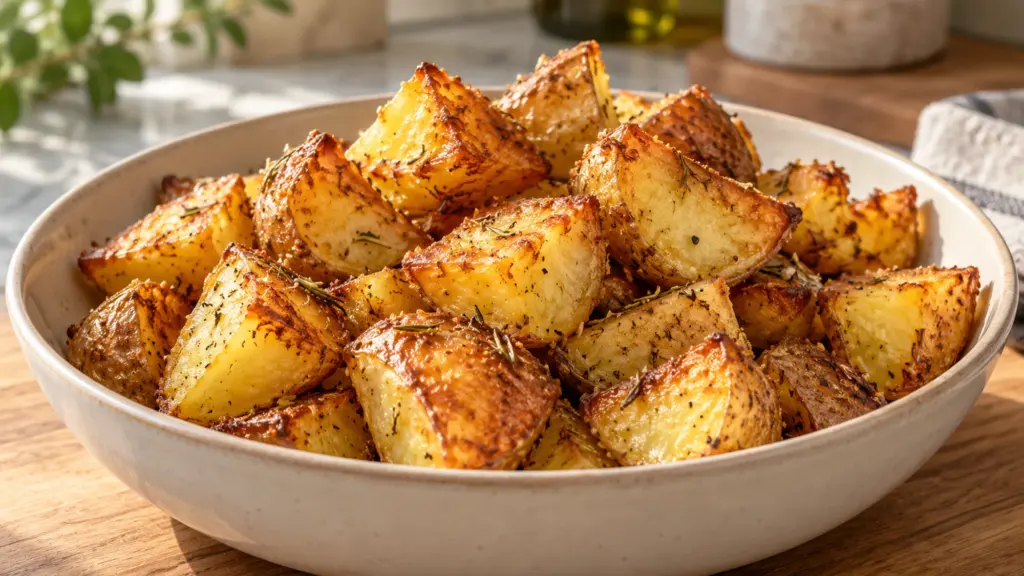
The disappointing roast potato is often pale, firm in the middle and stuck to the pan. A short simmer before roasting changes the starting point: the centers begin to soften, and the cut surfaces become easier to rough up. Once those surfaces meet oil and a hot oven, they have a better chance of turning golden.
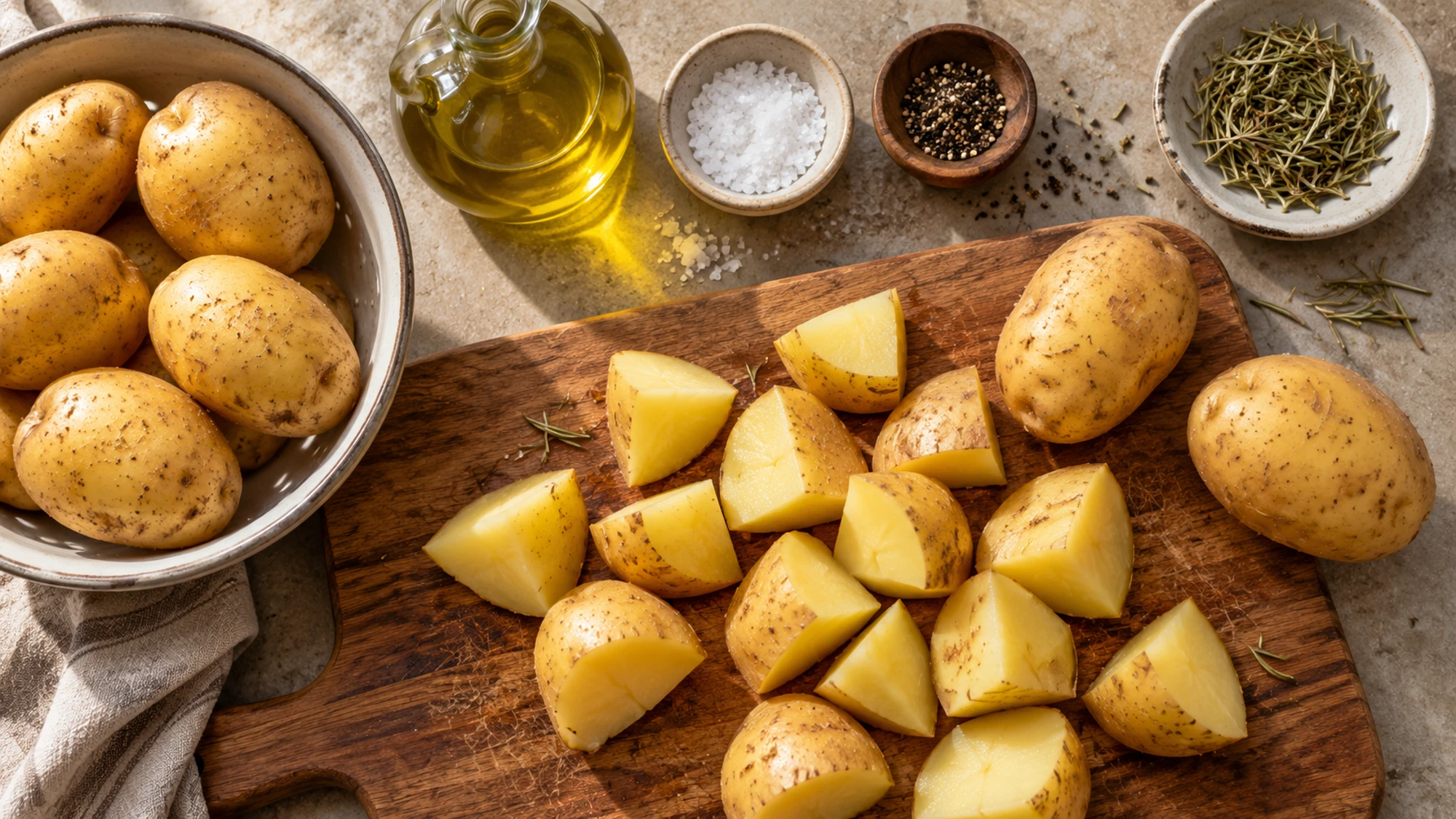
These crispy roasted potatoes use skin-on yellow potatoes, olive oil and crushed dried rosemary. Parboil them briefly, let the steam escape, then roast in a roomy single layer. The reward is a browned outside with a tender center, without deep-frying.
I would rather give the tray another few minutes than keep stirring it every time I pass the oven. Potatoes need steady contact with the pan to develop a crust. A little patience is an ingredient here, even if it does not get its own measuring spoon.
Serving Suggestions for Crispy Roasted Potatoes
Bring these potatoes to the table soon after roasting, preferably on a wide platter. A deep bowl with a tight cover traps steam and softens the crust you just worked to create. Keep gravy or other sauces on the side so people can add them to individual portions.
They suit roast chicken, fish, bean patties or a vegetable-and-protein dinner. For breakfast, a smaller portion can sit beside eggs and tomatoes. Our main dishes offer more pairing ideas, but the potatoes do not need a complicated main to feel useful.
| Stage | What to look for | Why it matters |
|---|---|---|
| After simmering | Edges soft, centers still firm | Chunks hold their shape |
| After draining | Surface steam has eased | Less water enters the oven |
| Before turning | Golden underside | Crust can release more easily |
For the clearest contrast between crisp crust and soft center, serve promptly and keep wet toppings separate. The platter should be the last thing to arrive, not the first thing waiting under foil.
Variations and Getting the Pan Right
Yellow potatoes hold together well while developing creamy centers. Russets can give a fluffier interior but may break apart more readily after boiling. The University of Minnesota’s potato guide is useful for choosing firm potatoes and storing them away from light.
- Leave the skins on after scrubbing, but use sound potatoes without extensive greening or decay. Cut the chunks to a similar size so one batch does not contain both tiny crisp bits and large underdone pieces.
- Drain in a colander, then shake gently once or twice. You want slightly roughed-up cut surfaces, not a pot of broken potato crumbs.
- Use a sturdy metal sheet pan rather than a deep casserole dish. Spread the chunks with a flat cut side against the metal and leave visible space between them.
- Crush dried rosemary between your fingers before adding it. Large needles can feel woody, and a small amount is enough to perfume the potatoes.
- For a different flavor, use dried thyme instead of rosemary. If adding finely minced fresh garlic, wait until the final few minutes and watch closely so it does not burn.
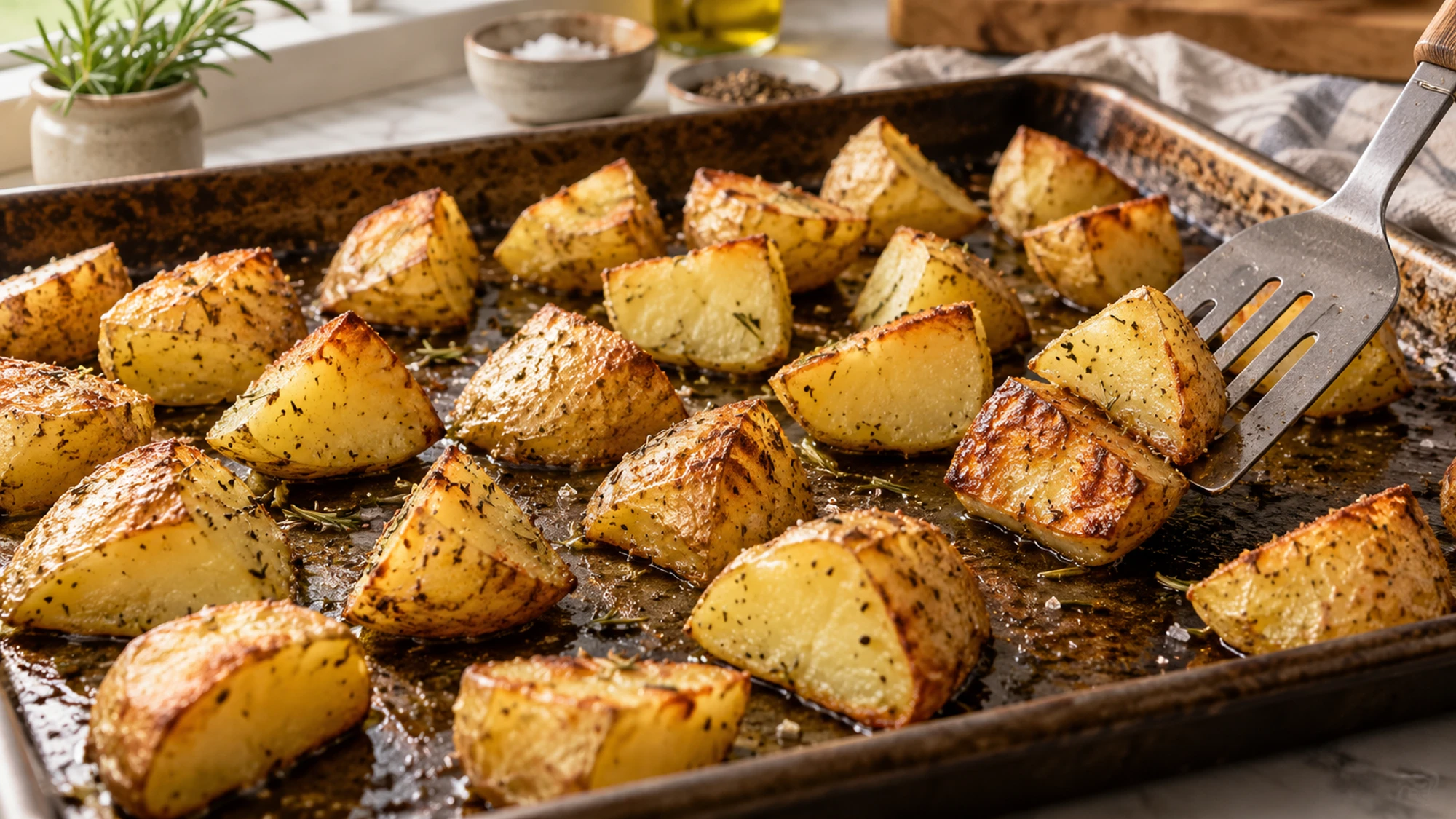
A crowded tray is not fixed by turning the oven hotter. Split a doubled batch between two pans, rotate their positions and allow the potatoes enough time to become golden.
Health Benefits and Storing Leftovers
Potatoes supply carbohydrate, and keeping the skin contributes fiber. The estimate counts all measured olive oil and salt, rather than assuming some disappears on the tray. This is a side serving, so combine it with a protein food and another vegetable instead of expecting it to cover every part of dinner.
- The base recipe contains no dairy or wheat ingredients. Check added seasoning blends if allergies are relevant.
- Cool leftovers promptly in a shallow container. Refrigerate within two hours, or one hour above 90°F, at 40°F or below and use within 3–4 days.
- Reheat to 165°F throughout. A hot oven can restore some crispness; a microwave warms the potatoes but leaves a softer exterior.
The FDA’s safe handling guidance applies to cooked side dishes as well as the main course. Do not leave the tray out all afternoon while deciding what to do with the leftovers.
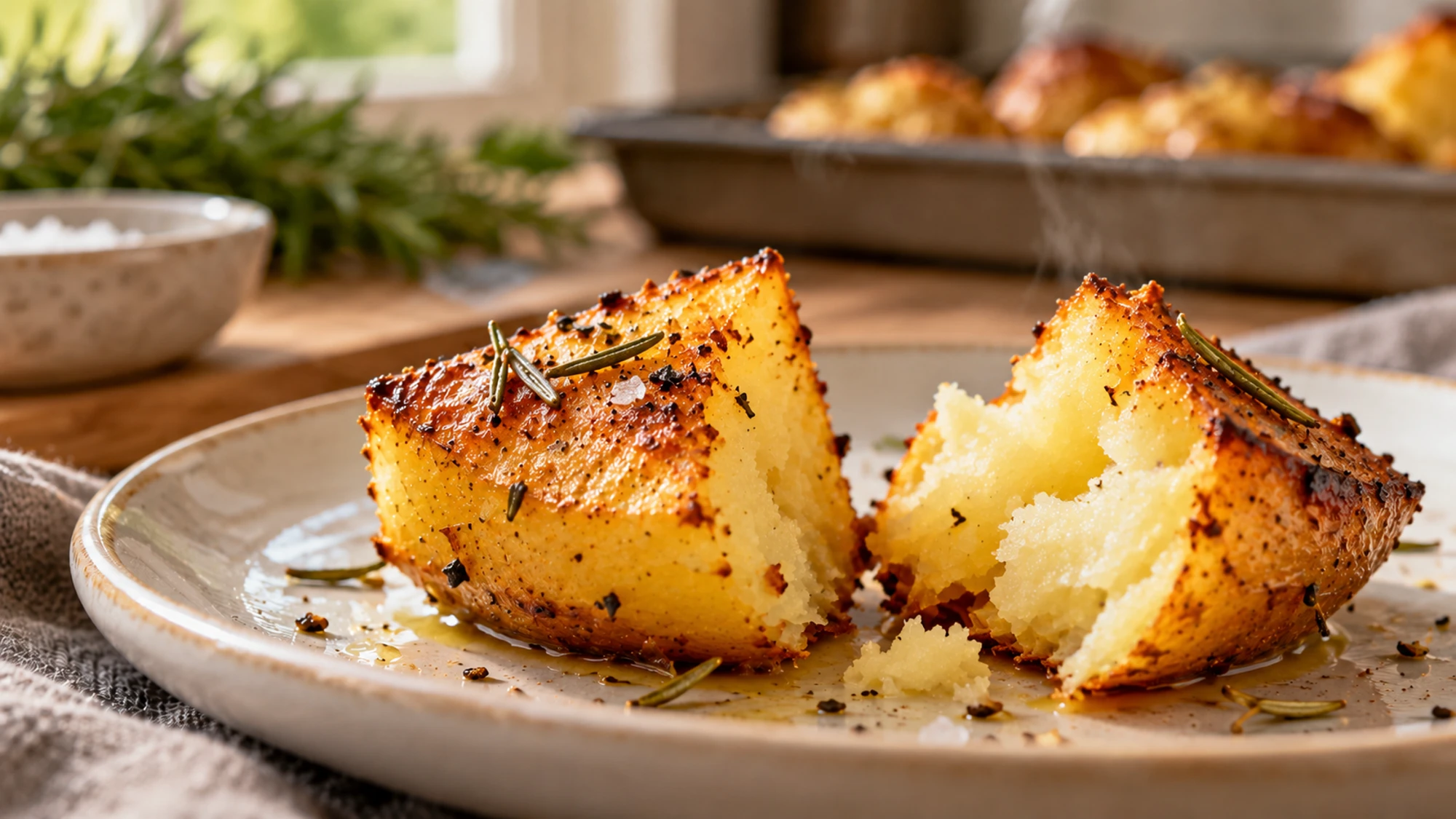
Crispness is best on the first serving, but safely chilled potatoes can still make a useful next-day side. Reheat only the amount you plan to eat.
Bottom Line
Parboil, drain well and give each potato chunk room on the pan. Those small choices do more for crispy roasted potatoes than a crowded spice cupboard, leaving golden edges and tender centers ready for dinner.
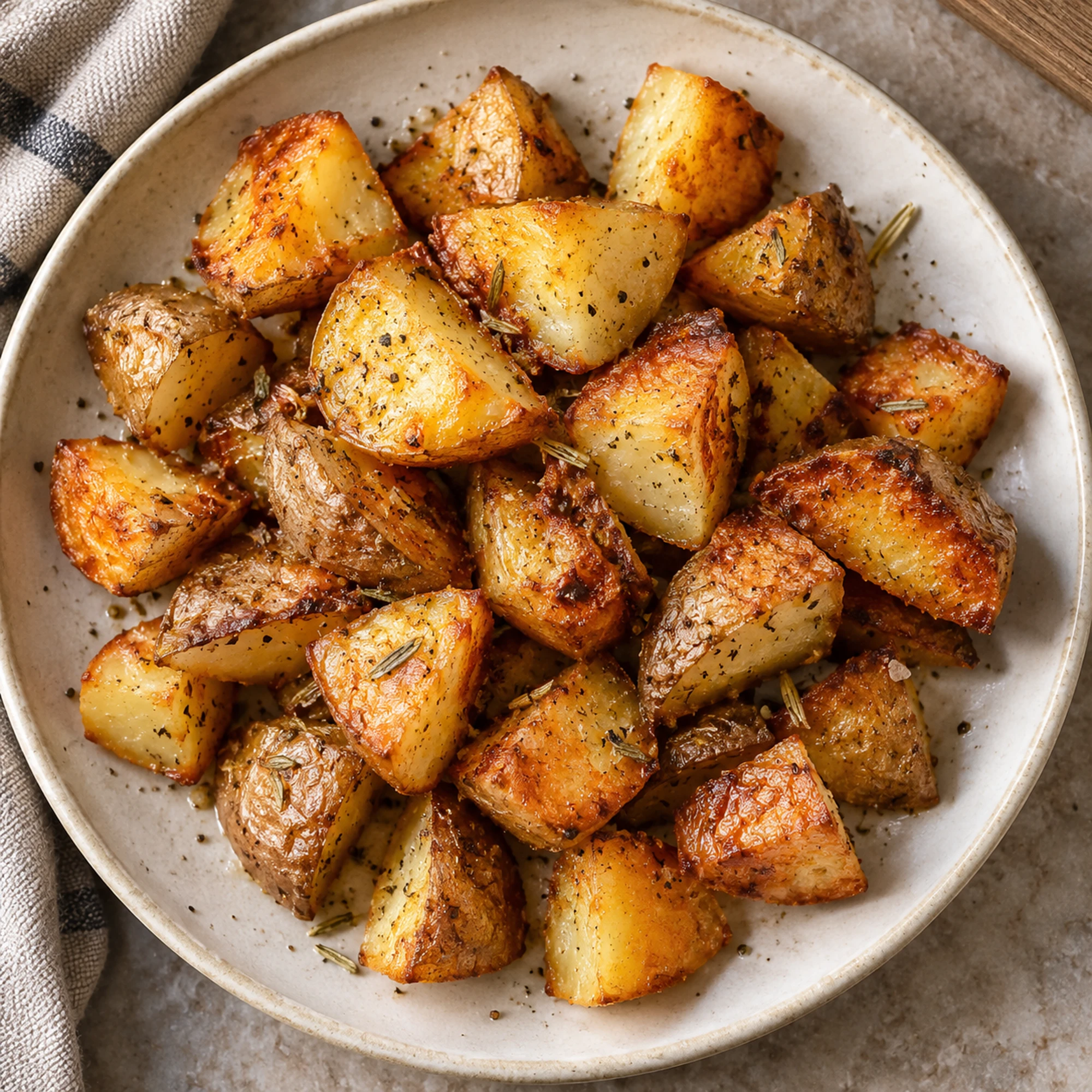

Crispy Roasted Potatoes Recipe
Ingredients
Equipment
Method
- Heat oven to 425°F (220°C). Scrub potatoes and cut into similar 1.5-inch chunks, keeping the skins. Put in a large pot and cover with cold unsalted water by 1 inch.
- Bring to a boil, then reduce to a gentle simmer for 7–9 minutes, until edges soften but centers still offer resistance. Drain well and let steam escape for 3 minutes. Shake gently to roughen cut surfaces without breaking the chunks.
- Toss with olive oil, crushed rosemary, salt and pepper. Arrange on a large rimmed metal sheet pan in one layer, flat cut sides down, leaving space. Use two pans if needed.
- Roast 25 minutes without moving, then turn with a thin spatula. Roast 15–20 minutes more until golden and crisp outside and fork-tender inside. If a piece sticks, give it a few more minutes before trying again.
- Serve promptly. Refrigerate leftovers within 2 hours, or 1 hour above 90°F, at 40°F or below; use within 3–4 days and reheat to 165°F.