
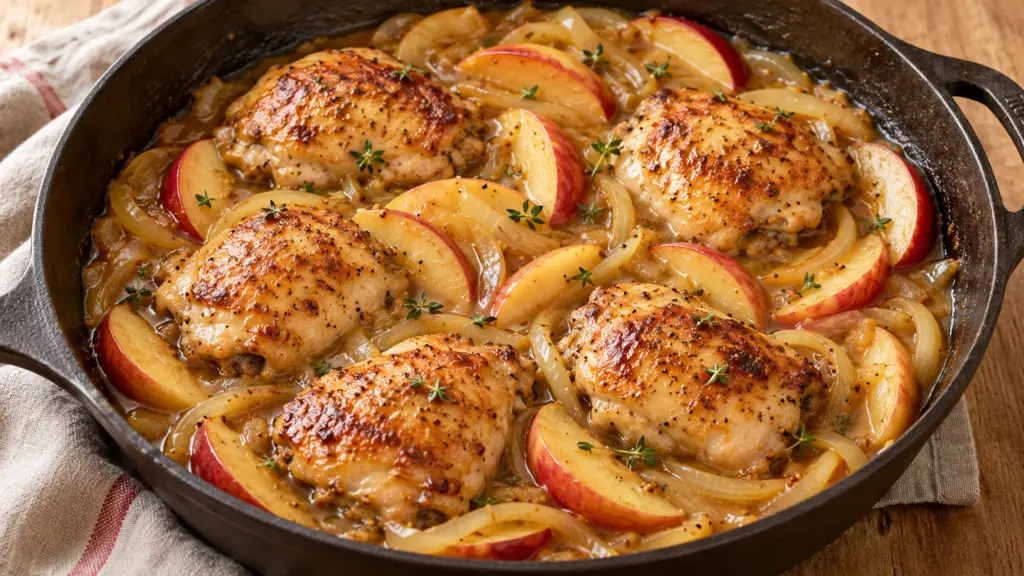
Apple cider chicken brings the orchard into a savory skillet dinner. Golden chicken thighs sit above a shallow pan sauce with soft onions and red-skinned apple wedges. Dijon and a small splash of vinegar keep the fruit from tasting like dessert, while thyme adds a woodsy note that suits a cool evening.
Use plain, nonalcoholic apple cider, not spiced cider or a cup of cider vinegar. Brown the chicken first, then let it finish gently in the sauce. Add the apples later so they become tender without disappearing into the pan.
I would choose firm apples and leave their skins on for color and texture. The sauce is intentionally spoonable rather than thick like gravy. This is a relaxed fall supper, not a rushed ten-minute chicken recipe: bone-in thighs need enough time for their centers to cook safely.
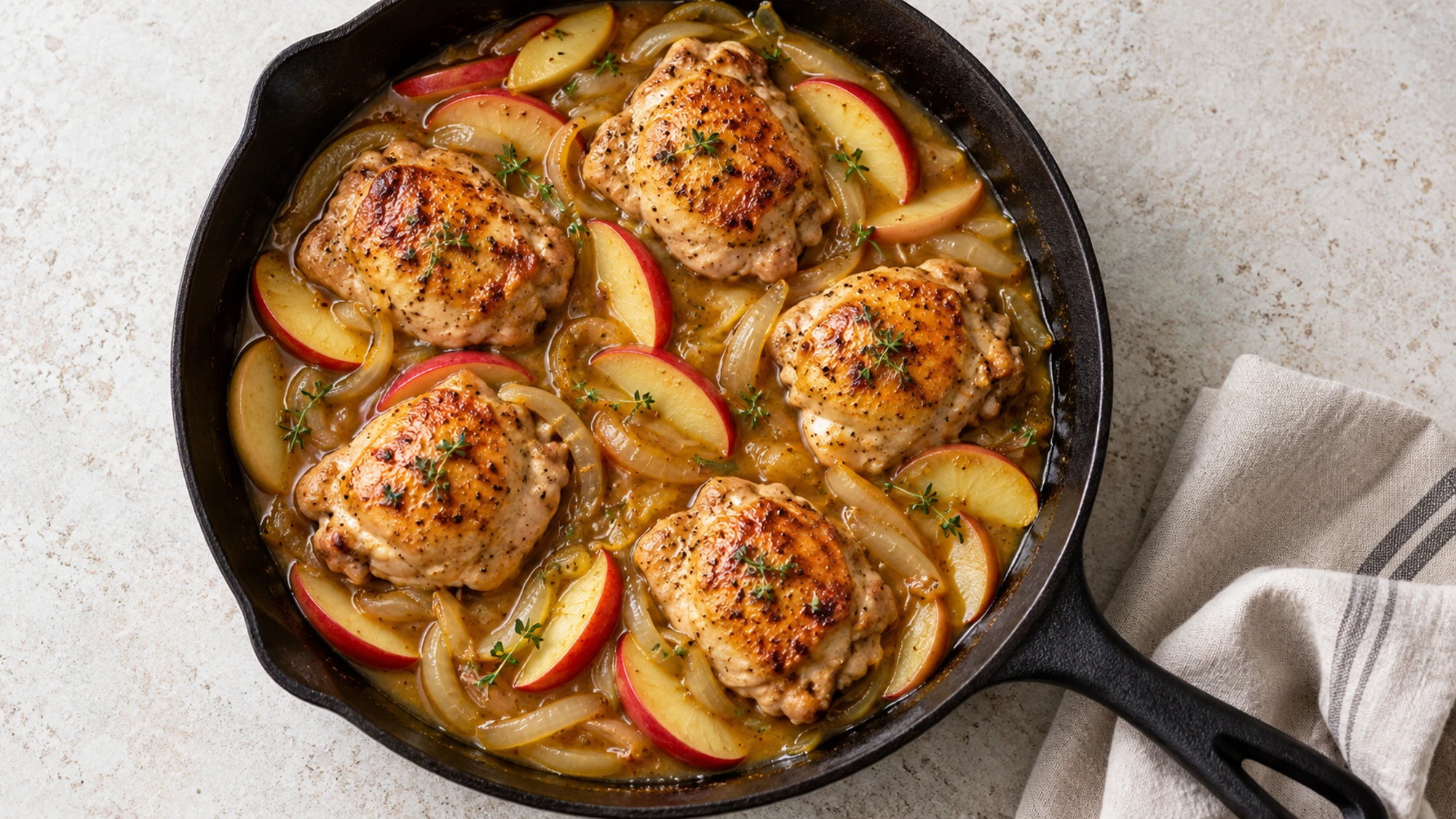
Serving Suggestions for Apple Cider Chicken
Mashed potatoes are a natural partner for the sweet-tart pan juices. Brown rice or a slice of crusty bread also works, especially if you want something that does not require another oven dish. Add green beans, cabbage, or a simple leafy salad to bring a different texture to the table.
- For a cozy supper, spoon onions and apples beside the chicken and serve with potatoes.
- For a smaller holiday gathering, use this skillet as an alternative main course with two vegetable sides.
- For lunch the next day, remove the chicken from the bones and pack the sauce separately from any crisp salad.
Browse the side dish collection for another pairing, but keep the seasoning of the sides fairly simple. The cider sauce already has sweetness, acidity, and mustard. A second sweet glaze on the same plate can make the meal feel less balanced in flavor.
Choose one side to catch the sauce and one vegetable for contrast. The apples belong beside the chicken, not hidden under a pile of toppings.
Apple Cider Chicken Variations
The apple variety makes a noticeable difference. Gala gives a gentle sweetness, while a firmer, more tart apple brings sharper contrast. Either way, cut fairly thick wedges. Thin slices can soften before the chicken reaches its safe temperature, especially in a vigorous simmer.
| If you want | Try | Watch for |
|---|---|---|
| More tartness | Use a tart apple variety | Taste before adding extra vinegar |
| A different herb | Replace thyme with a little chopped sage | Sage has a stronger flavor |
| A thinner sauce | Add a tablespoon of water at a time | Keep the sauce simmering gently |
Boneless thighs are not a straight timing swap. They cook faster, so the apples and sauce need a different schedule. Stay with the bone-in version for this card. If your cider is especially sweet, the measured vinegar provides contrast; add any extra only after tasting the finished sauce.
Change the apple or herb before changing the chicken cut. Keep the simmer gentle so the sauce reduces without scorching its natural sugars.
Health Benefits and Everyday Balance
- Chicken contributes protein, while the apples and onions add some fiber. The skin and olive oil also contribute fat, and cider brings sugars even when no sugar is added to the bottle. This is a savory meal with fruit, not a sugar-free dish or a substitute for a varied plate.
Nutrition is estimated for one-quarter of the chicken, apples, and sauce. Actual edible yield varies because bone sizes differ. The estimate includes all listed oil and chicken fat, even though some may be left in the pan. Serve according to appetite rather than assuming every thigh has the same size.
Cook chicken to at least 165°F in the thickest meat, with the thermometer away from bone. Keep raw poultry separate from the apples and other ready-to-eat foods, and wash utensils after contact with raw chicken.
Enjoy the fruit for flavor and texture, then round out the meal with vegetables. Use a thermometer, not the browned surface, to judge safe doneness.
Bottom Line
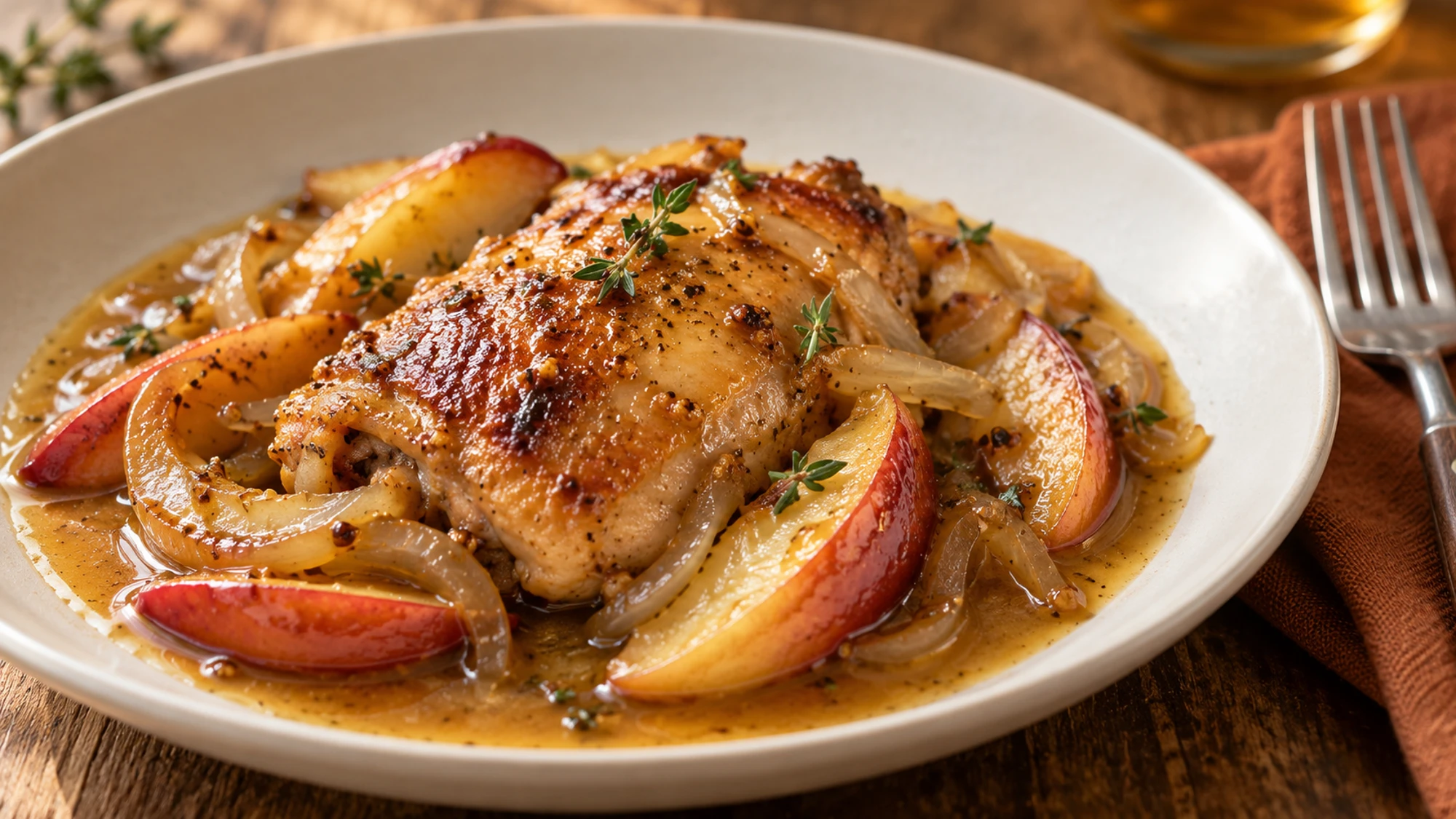
Apple cider chicken makes a warm, fragrant fall dinner with a short ingredient list and a useful pan sauce. Refrigerate leftovers in shallow containers within two hours, or one hour above 90°F. Follow the three-to-four-day refrigerator limit for cooked poultry, and reheat to 165°F.
Brown first, simmer gently, and add the apples late. That sequence keeps the chicken savory, the fruit recognizable, and the sauce worth spooning over your side dish.
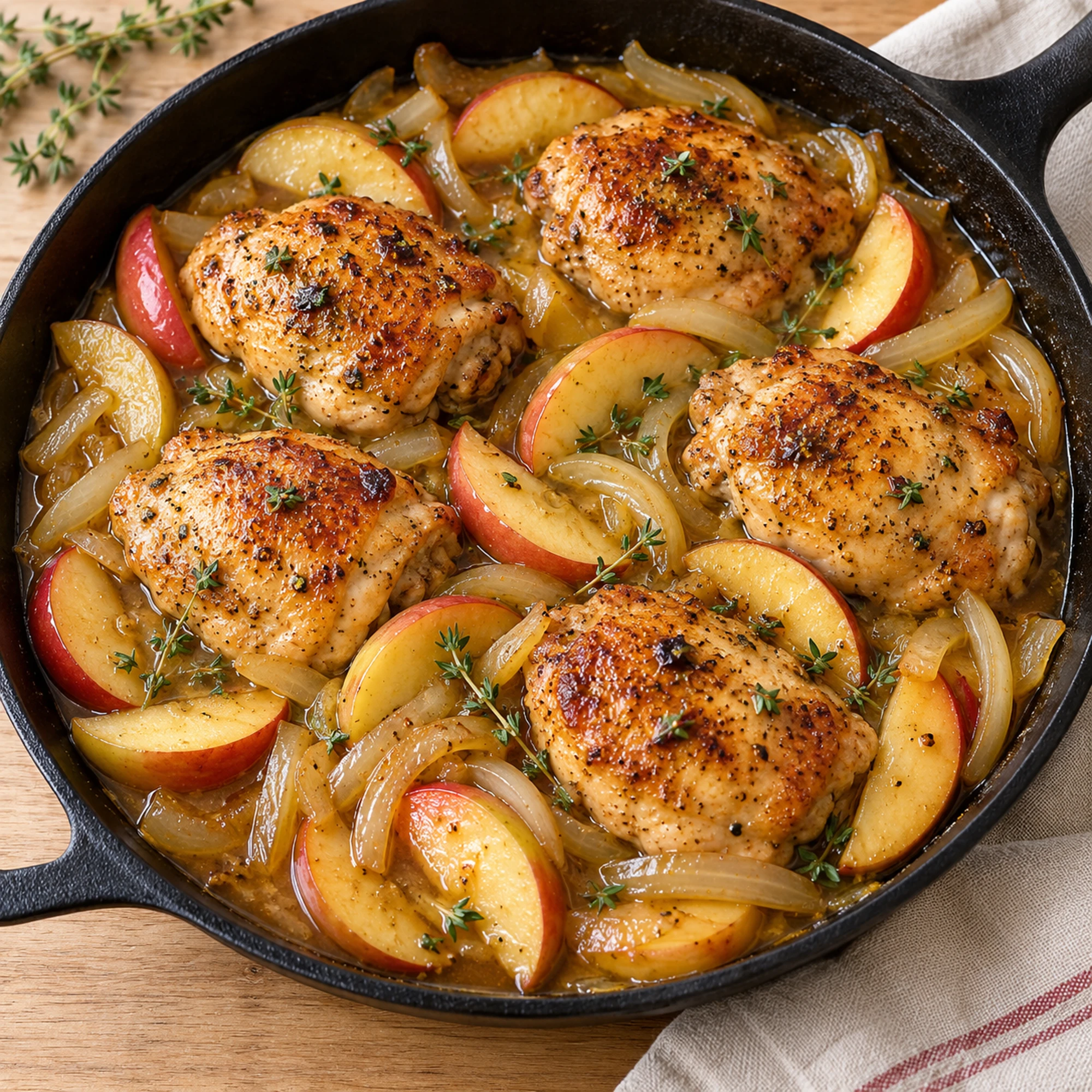

Apple Cider Chicken Recipe
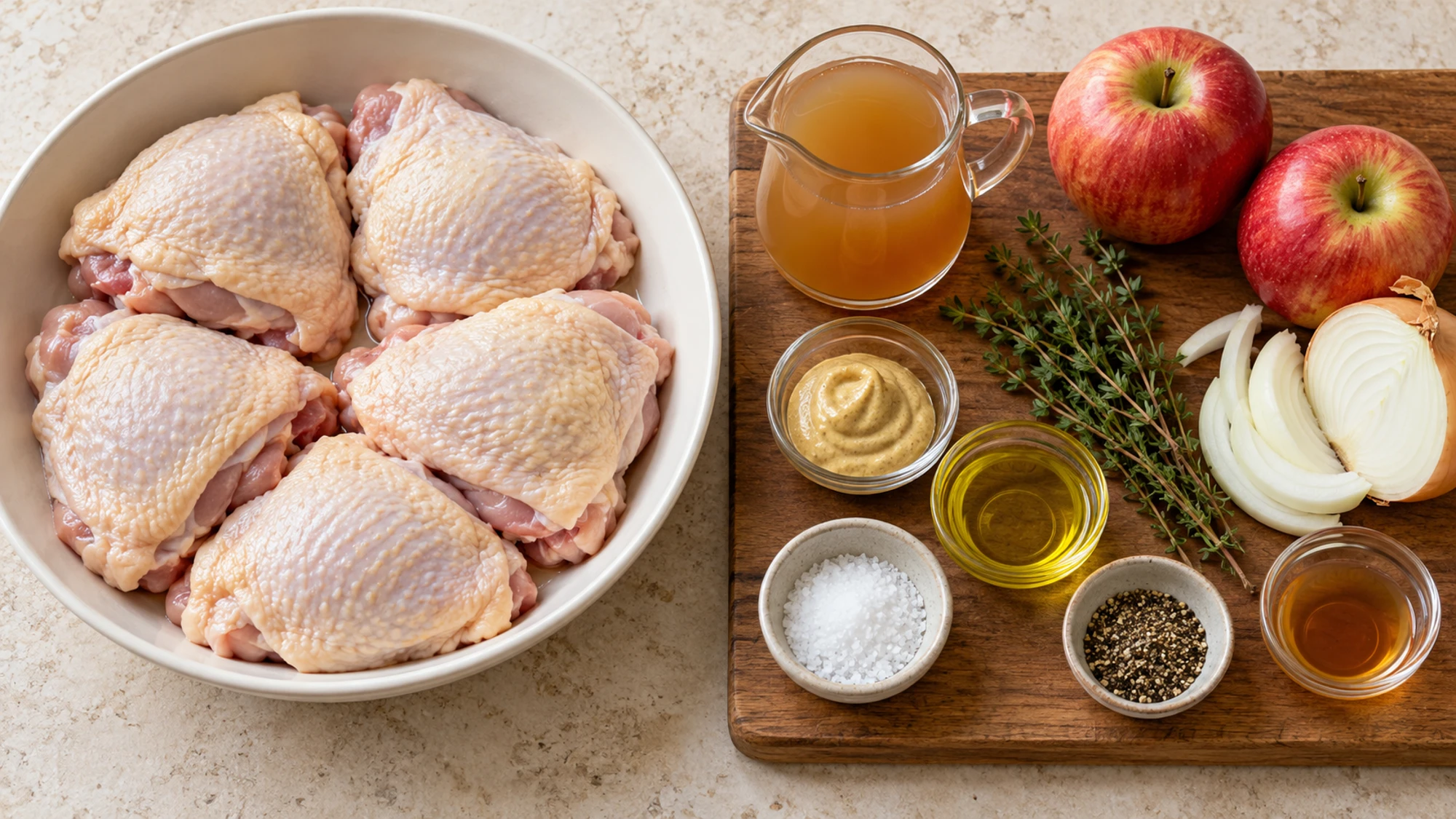
Ingredients
Equipment
Method
- Pat chicken dry without washing it. Season with salt and pepper. Heat olive oil in a wide, deep 12-inch skillet over medium heat.
- Set chicken skin-side down in the skillet, working in batches if needed. Cook about 7–9 minutes until golden and the skin releases, then turn and cook 2 minutes. Transfer to a plate; it is not cooked through yet.
- Add the onion to the skillet and cook 4–5 minutes, stirring, until softened. Reduce the heat if the browned bits begin to burn.
- Whisk together the cider, Dijon, vinegar, and thyme. Pour into the skillet and scrape up the browned bits. Bring to a gentle simmer, then return chicken and any juices skin-side up. Keep the skin above the liquid.
- Cover and simmer gently for 15 minutes. Add the apple wedges around the chicken, uncover, and continue simmering 10–15 minutes or as needed until several thighs reach at least 165°F in the thickest meat away from bone. The apples should be tender but retain their shape.
- If the chicken is done before the sauce reduces, move it to a clean plate and simmer the sauce a few minutes more. If the sauce becomes too concentrated, add water one tablespoon at a time. Rest chicken 5 minutes, then serve with apples, onions, sauce, and the small finishing pinch of thyme.