
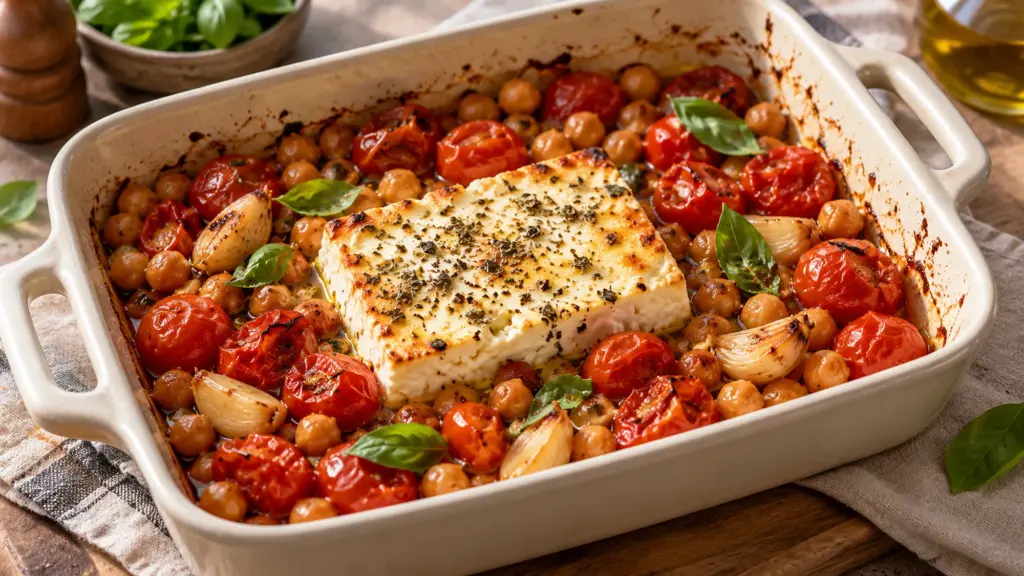
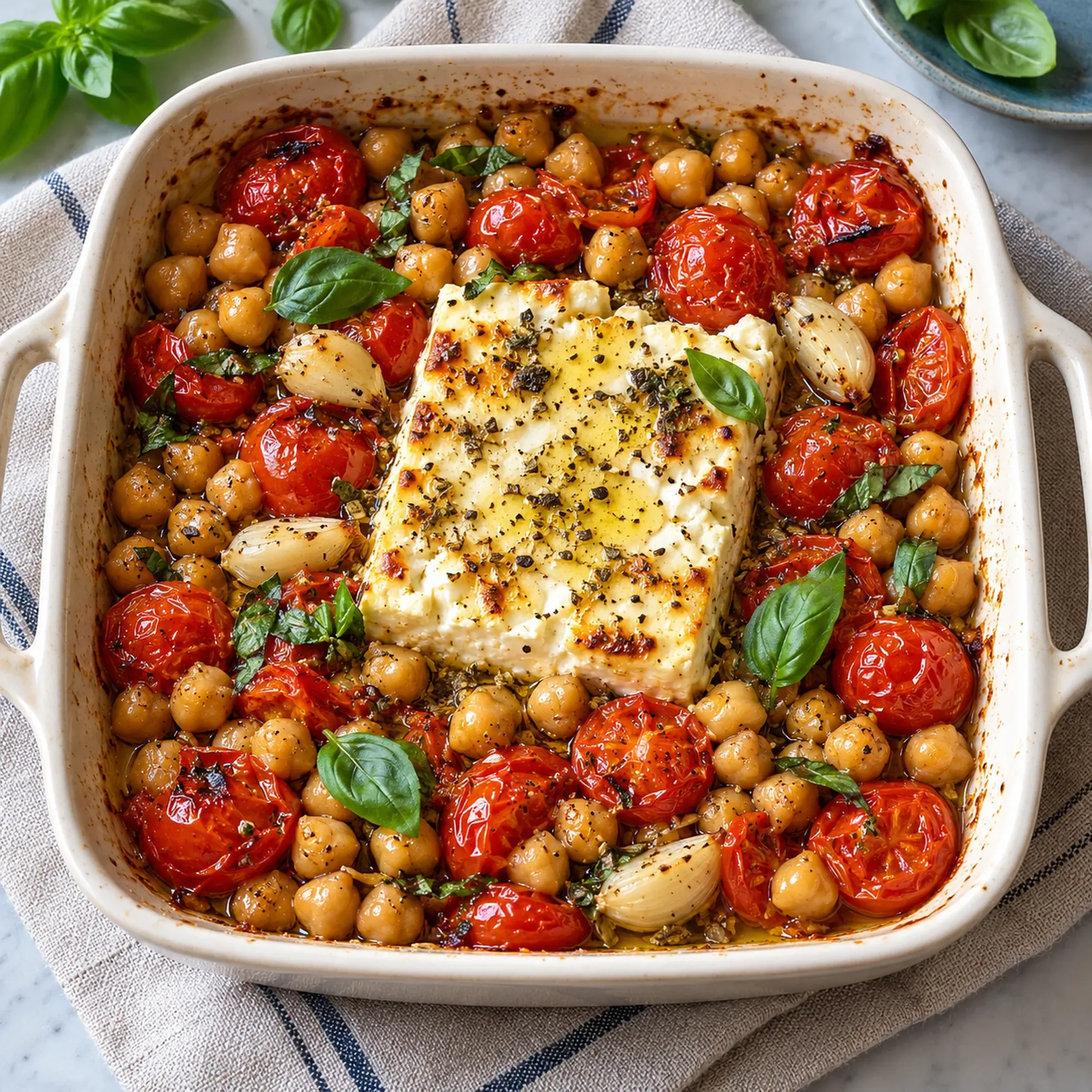
A block of feta, a couple of cans of chickpeas and a dish full of cherry tomatoes can do most of the dinner work in the oven. These baked feta chickpeas turn into something saucy and scoopable as the tomatoes burst and the warm cheese softens. There is no separate dressing to whisk or pot of sauce to watch.
The important detail is the baking dish: give the tomatoes and chickpeas enough room to roast rather than stacking them deeply around the cheese. After baking, a short rest and a few turns of a spoon bring the juices and feta together. Fresh basil goes in last.
Serving Suggestions for Baked Feta Chickpeas
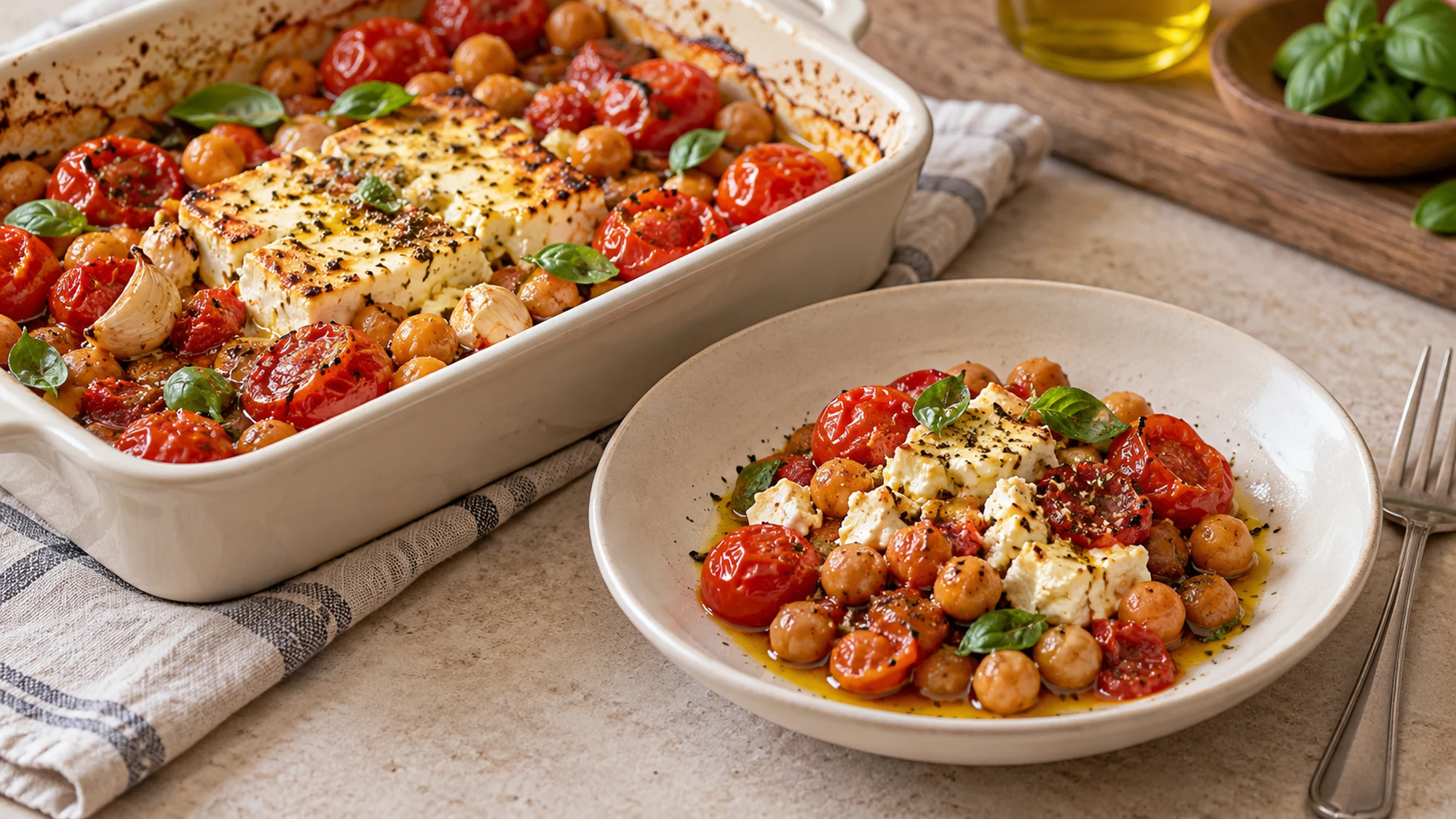
Four bowls make a practical main-dish portion. Crusty bread, warm pita or a cooked grain can catch the sauce, but none is required for the baking method. A crisp cucumber salad alongside offers a cool contrast without competing with the tangy cheese and sweet tomatoes.
- Transfer leftovers into shallow containers and refrigerate within two hours, or within one hour when the temperature is above 90°F. Keep at 40°F or below and use within three to four days.
- Reheat to 165°F, stirring carefully so the middle warms as well as the edges.
- The chickpeas continue to absorb liquid in the refrigerator. Add a small splash of water when reheating if the mixture looks tight, then finish with fresh basil if you have some.
- Keep any bread separate until serving. The reheated feta may be a little grainier, which is normal for this style of dish.
For a separate side, consider garlic bread; its ingredients are outside this recipe’s estimate.
I prefer a simple piece of bread or a cool salad here, giving the warm tomato juices somewhere useful to go.
Variations
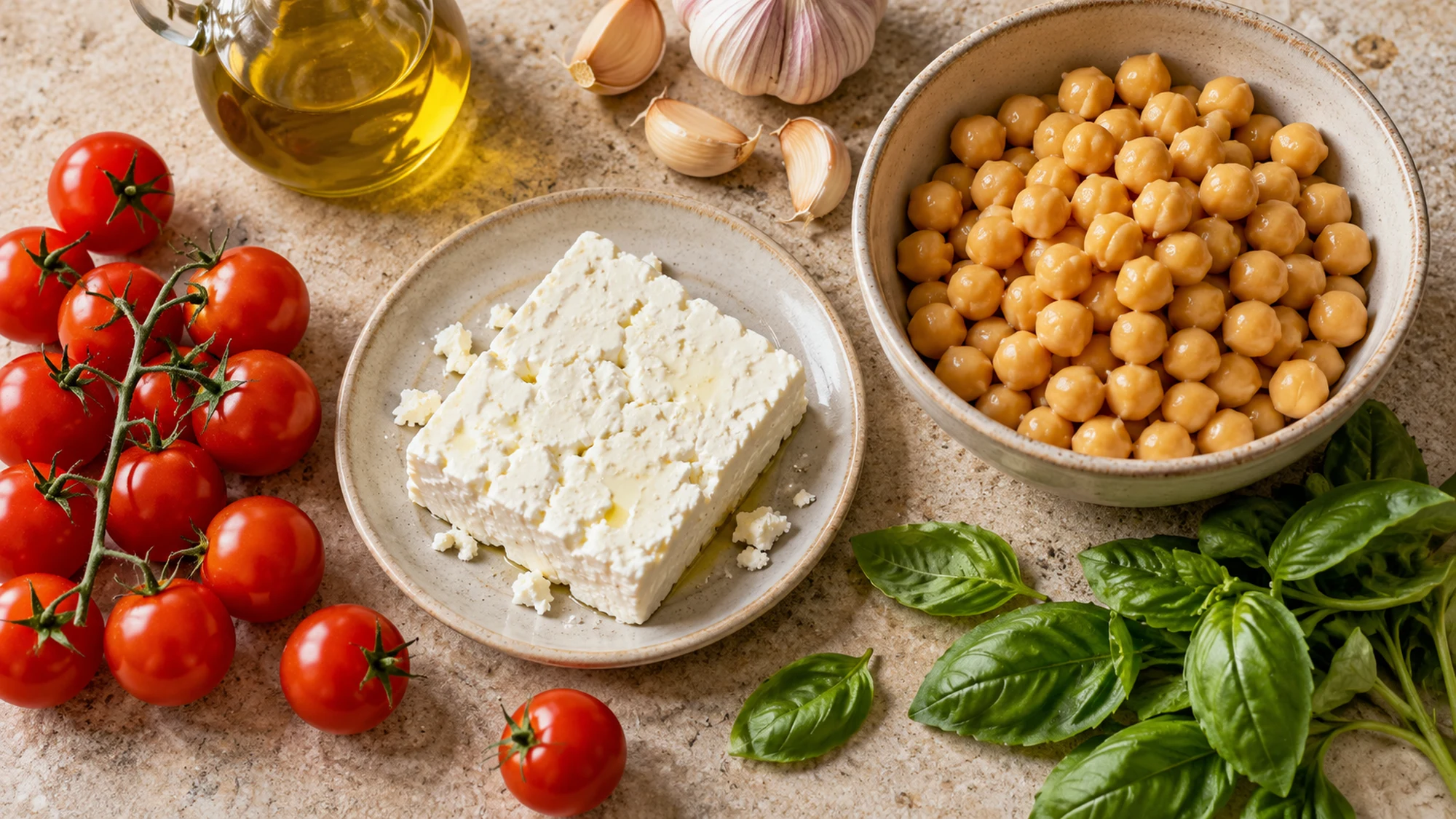
Choose a drained block of feta rather than a tub of dry crumbles. The block stays in the center while the tomatoes cook, then breaks into the warm juices when you stir. It will soften, but it does not melt into a stretchy cheese sauce, so do not wait for that transformation.
- Cherry tomatoes are useful here because their skins hold them together until the oven heat releases their juices. Leave them whole, and halve only any unusually large garlic cloves so they soften in the same cooking window.
- The oregano and black pepper can go in before baking; save the delicate basil for afterward.
- Do not add salt automatically. Feta and canned chickpeas already contribute it, and brands vary considerably.
- Taste after stirring, when the cheese has reached the rest of the dish. If you prefer less sodium, compare feta labels and choose no-salt-added chickpeas rather than hoping a different garnish will balance it.
- The Andy Hay video in the card is a related baked chickpea, tomato and feta demonstration. His sequence roasts the chickpeas and tomatoes before adding feta; this version puts everything into the oven together.
Follow one complete method rather than mixing the timings. Choose vegetarian-rennet feta if that distinction matters to your household.
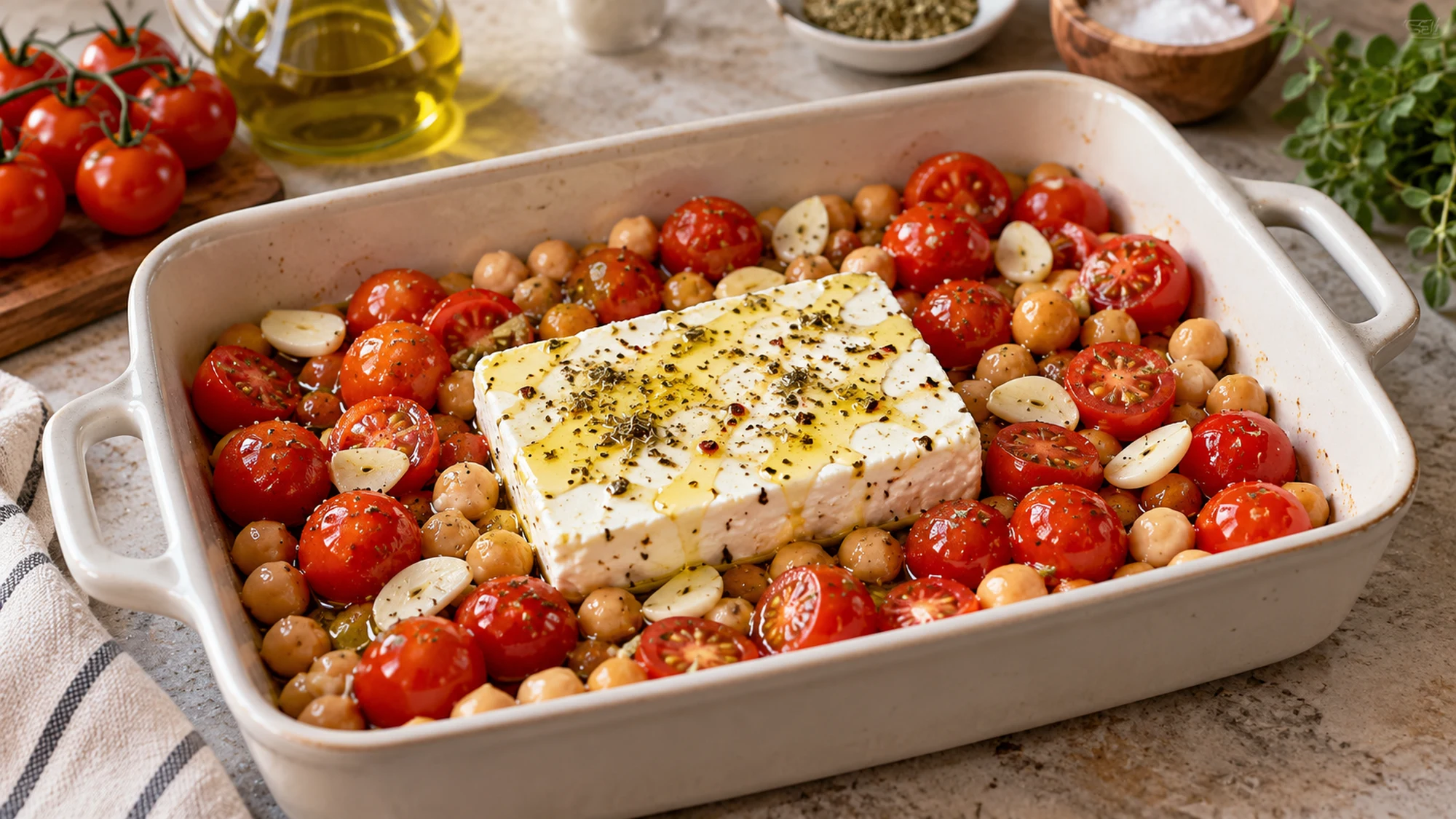
| Before baking | After baking |
|---|---|
| Tomatoes whole and glossy | Several tomatoes collapsed and releasing juice. |
| Feta in one block | Feta softened enough to break into the sauce. |
| Garlic firm | Garlic tender when pressed with a fork. |
I would change one ingredient at a time and keep the written method intact, so the result is easier to judge.
Health Benefits
Chickpeas contribute protein and fiber, while feta and olive oil supply much of the fat. This can be a practical meatless main, but meatless does not mean low in sodium or automatically suitable for every dietary need. I would judge the portion alongside the rest of dinner rather than attach a special health promise to the tomatoes.
- Feta contains milk. Check the product’s ingredients and rennet information if those details matter to your household.
- The nutrition notes retain a fat range where ingredient measurements have laboratory limits; omitting an exact field is more honest than treating an uncertain value as zero.
The card estimates 431 calories and 17.8 grams of protein per one of 4 portions. Its carbohydrate convention is available carbohydrate, excluding fiber. The source notes explain ingredient proxies and missing values; optional accompaniments are not included.
Use the estimate as context for the stated portion, not as a promise about a particular brand or a health outcome.
Bottom Line
Let the tomatoes burst, give the feta a brief rest and stir gently. Those simple details turn a dish of separate ingredients into a warm, tangy chickpea dinner while keeping the oven, rather than your stirring arm, responsible for most of the work.
References: recipe technique; ingredient nutrition.

Baked Feta Chickpeas Recipe
Ingredients
Equipment
Method
- Heat the oven to 400°F. Drain and rinse chickpeas, then let excess water drip off. Wash tomatoes and peel garlic.
- Put chickpeas, tomatoes and garlic in a 9-by-13-inch baking dish. Toss with olive oil, oregano and pepper. Nestle the feta block in the center and spoon a little oil from the dish over it.
- Bake uncovered 30–35 minutes, until tomatoes burst, garlic is tender and feta softens. Stir the chickpea-tomato edges once midway without breaking the feta. If edges look dry, add 1–2 tablespoons water.
- Let stand 5 minutes. Gently press some tomatoes with the back of a spoon to release their juices, then fold in softened feta or leave it partly intact for serving.
- Scatter basil over the dish and divide into four portions. Taste before adding salt; feta and canned chickpeas can supply plenty. Bread or rice is optional and not included in the estimate.