
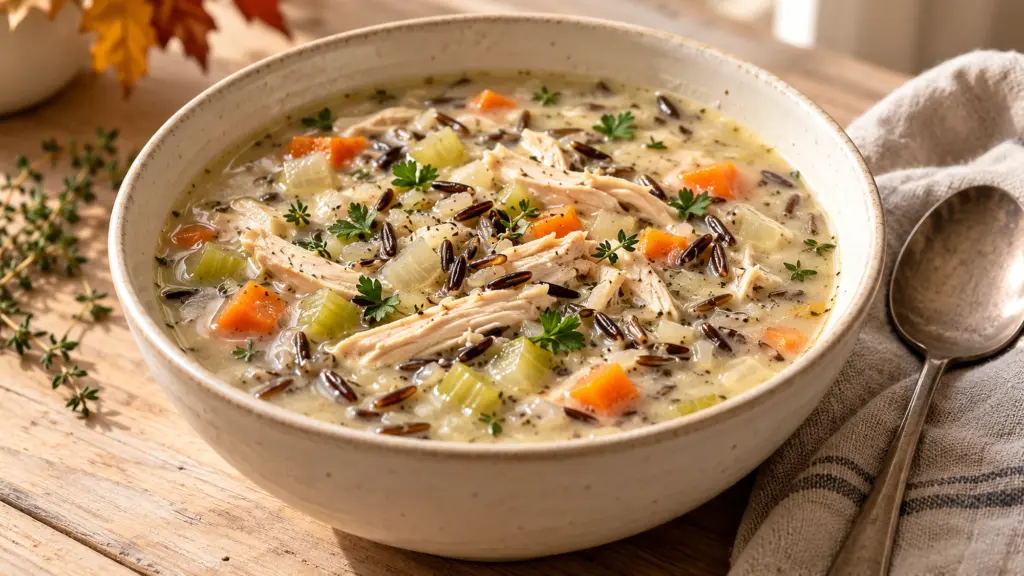
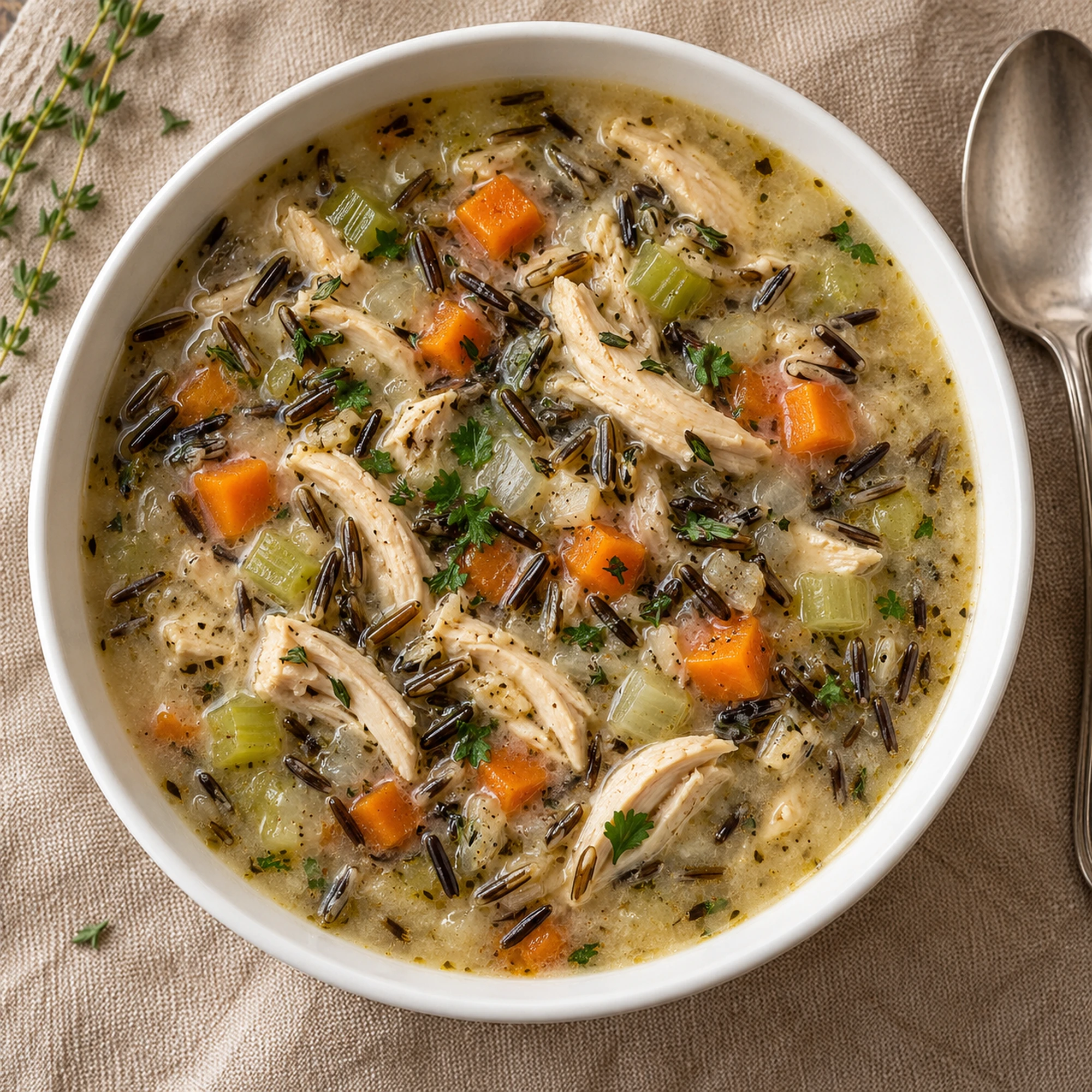
Chicken and wild rice soup is the sort of dinner that makes a cold evening feel less hurried. Shredded chicken, carrots, celery, and nutty wild rice sit in a lightly creamy broth scented with thyme. The grains keep their character instead of disappearing into the soup, and a little milk softens the savory edges.
Use pure wild rice rather than a quick-cooking blend, and give it time to become tender. Add the chicken partway through cooking, then finish with a small butter-and-flour sauce for body without heavy cream.
I would choose this for an evening when the soup can simmer while the table gets set, not for a race against a twenty-minute timer. The main work is chopping vegetables. After that, checking the rice and measuring the chicken temperature matter more than constant stirring.
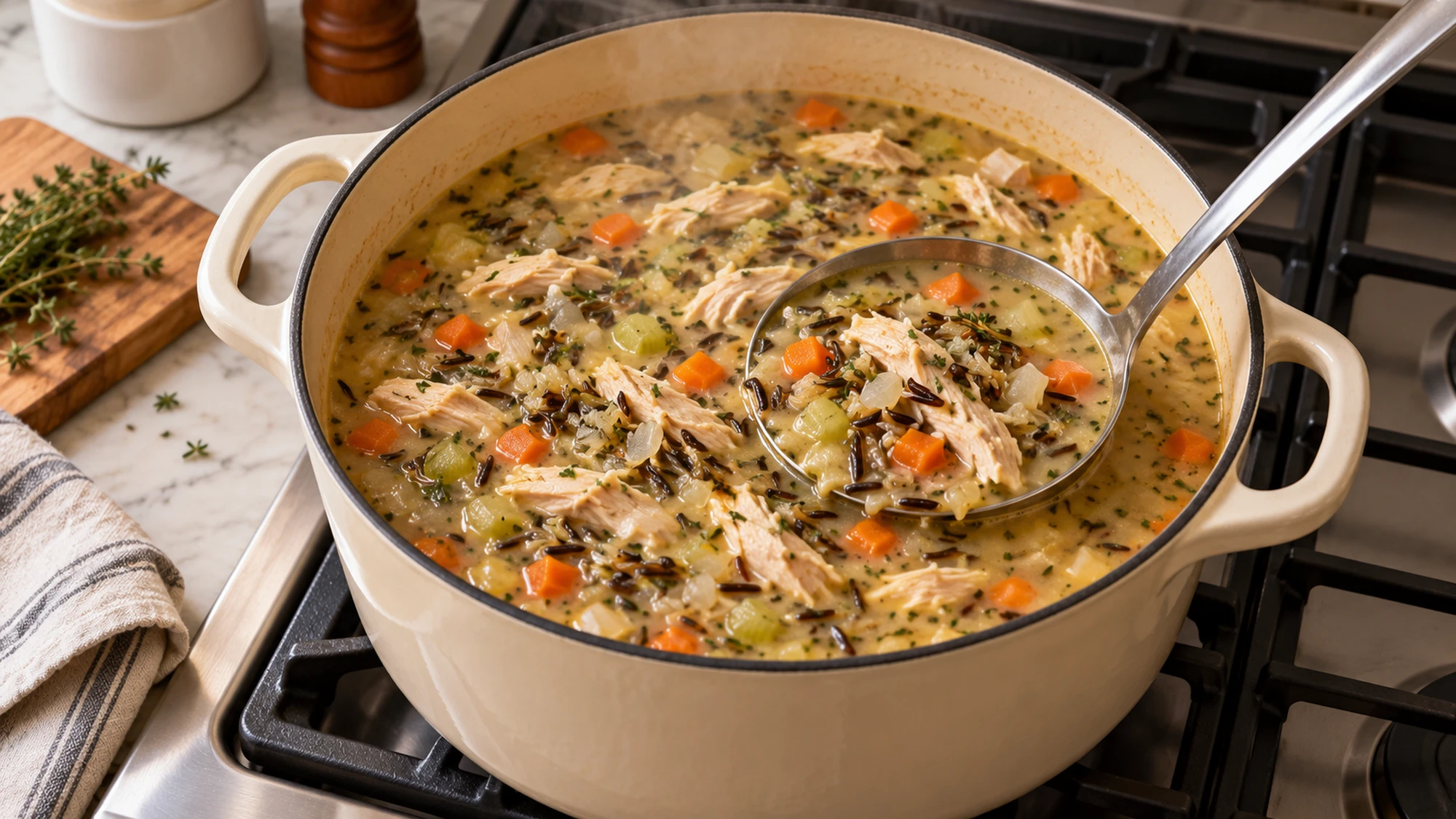
Serving Suggestions for Chicken and Wild Rice Soup
Ladle into deep bowls and scatter the measured parsley over the top. A crisp apple-and-green salad makes a refreshing partner, while toast is useful for catching the last spoonfuls of broth. Browse the side dish collection for something crunchy or roasted rather than another creamy dish.
- Stir the pot before portioning so each bowl gets chicken, vegetables, and rice.
- Keep extra salt at the table instead of automatically adding it to every bowl.
- If serving a smaller cup before a holiday dinner, divide the pot into more portions and adjust the nutrition estimate accordingly.
This soup thickens as it waits because the rice continues to absorb liquid. I prefer it loose enough that the broth flows around the spoon, so a small splash of hot water is useful before serving. Add it gradually; a little dilution is easier to correct than a pot that suddenly tastes watery.
Let the soup be the warm, substantial part of the meal. A fresh side and a restrained garnish provide plenty of contrast.
Chicken and Wild Rice Soup Variations
Wild rice blends may contain brown rice, white rice, or seasoning packets, all of which change the timing and flavor. The Lundberg wild rice instructions give a useful reminder that pure wild rice needs a substantial simmer. Check your own package and taste for tenderness rather than relying on color alone.
| Change | How to adapt | What changes |
|---|---|---|
| Cooked chicken | Add shredded meat near the end | Heat it throughout to 165°F |
| Rice blend | Follow its package timing | Texture and liquid needs differ |
| Whole milk | Replace the 2% milk equally | Richer flavor and different nutrition |
Mushroom lovers can saute a handful of chopped mushrooms with the vegetables, allowing their released water to cook away before adding broth. That variation is not included in the base recipe or nutrition estimate. For the smoothest finish, whisk milk slowly into the cooked flour mixture; tipping it in all at once invites lumps.
Keep the rice timing and final soup texture in view when making swaps. A different grain is not automatically a minute-for-minute replacement.
Health Benefits and Practical Balance
Chicken supplies much of the protein, while wild rice and vegetables contribute carbohydrates and fiber. Milk adds some protein and calcium. Butter and oil provide richness, so this is not a fat-free soup, and its nutritional value does not depend on pretending that it is.
- The estimate covers one-sixth of the pot, without bread or other sides.
- Unsalted broth still contains naturally occurring sodium; check labels when comparing brands.
- The flour and milk mean the written version contains wheat and dairy.
Using unsalted broth gives more control over seasoning than beginning with a heavily salted base. The measured salt is included in the estimate, but extra seasoning and different chicken products can change the sodium. A chicken breast injected with a seasoned solution will not have the same profile as plain raw chicken.
Think of the bowl as chicken, grain, vegetables, and a modest creamy finish working together. Choose sides and portions that suit the rest of your meal.
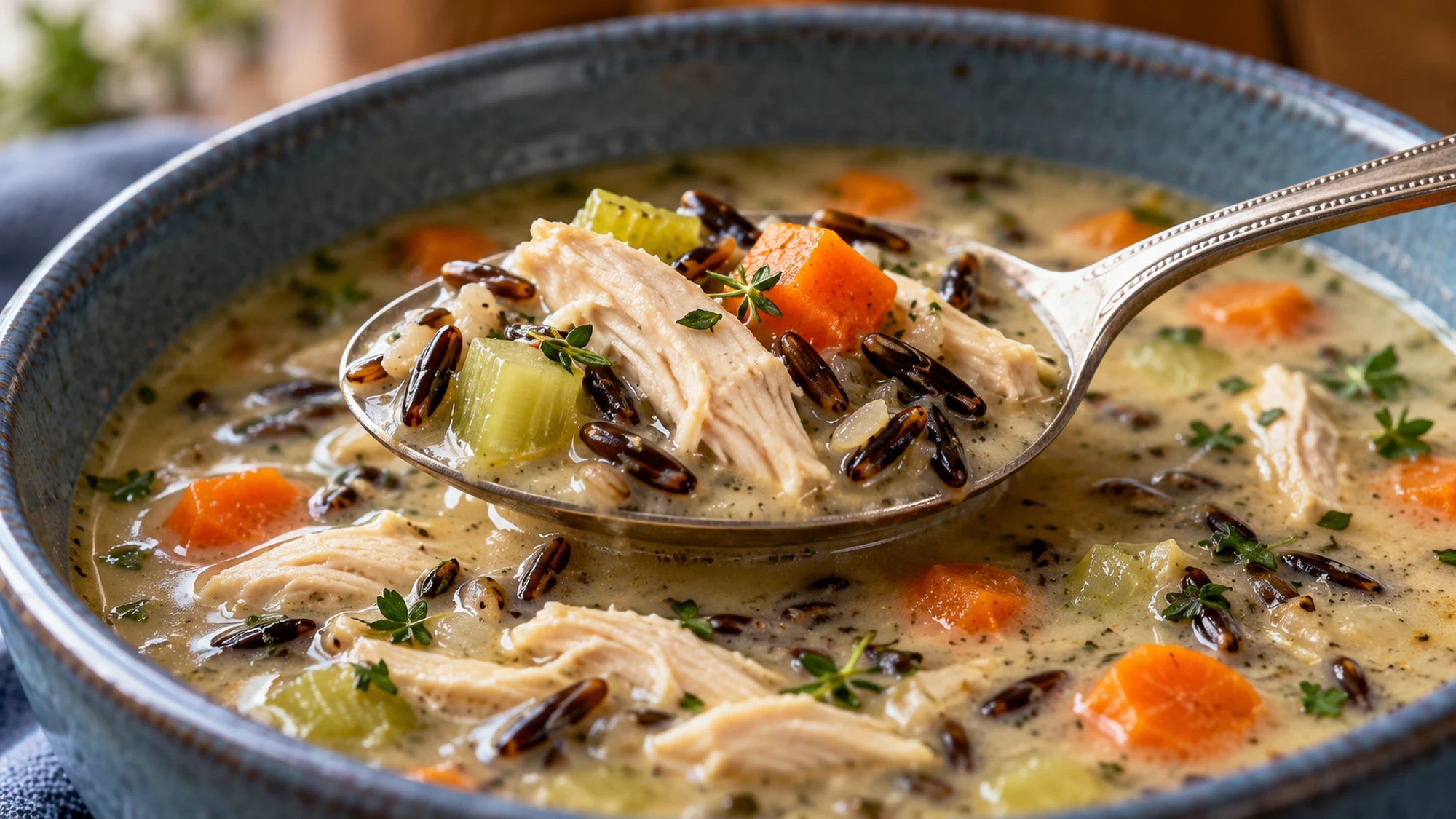
Bottom Line
Check the thickest part of each chicken breast for 165°F before shredding. Refrigerate leftovers promptly in shallow containers, use within three to four days, and reheat to 165°F throughout, stirring to eliminate cool pockets. A splash of water can restore the broth, but it cannot replace thorough reheating.
Tender wild rice, safely cooked chicken, and a gently thickened broth are the essentials. Keep the simmer steady and let the spoon tell you when the texture is right.

Chicken and Wild Rice Soup Recipe
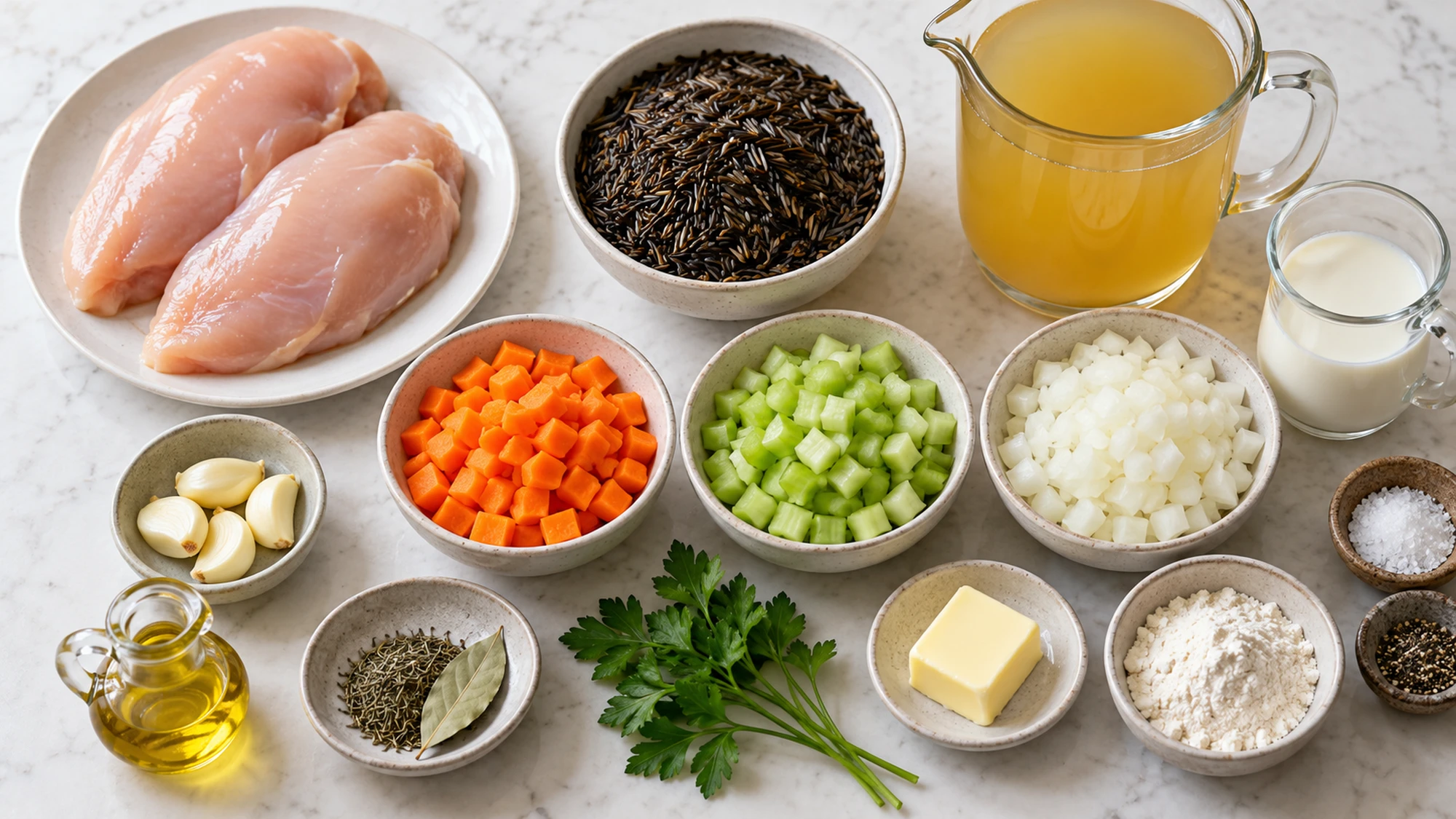
Ingredients
Equipment
Method
- Heat oil in a 5- to 6-quart heavy pot over medium heat. Cook onion, carrots, and celery for 7–8 minutes, stirring, until starting to soften. Add garlic and thyme and cook 30 seconds.
- Add rinsed wild rice, broth, bay leaf, salt, and pepper. Bring to a boil, then reduce to a steady gentle simmer. Cover partly and simmer for 25 minutes, stirring occasionally.
- Add whole chicken breasts, submerging them in the broth. Return to a gentle simmer and cook 18–25 minutes, until each breast reaches 165°F in the thickest part. Remove cooked chicken to a clean plate. Continue simmering rice if needed until tender with a pleasant chew and many grains split, usually 45–55 minutes total rice cooking. Add a little hot water if evaporation leaves too little broth.
- Meanwhile melt butter in a small saucepan over medium-low heat. Whisk in flour and cook for 1 minute. Gradually whisk in milk until smooth, then cook 3–5 minutes, stirring, until lightly thickened. Do not scorch.
- Shred cooked chicken with two forks. Remove bay leaf from soup. Stir the milk mixture and shredded chicken into the tender rice soup and simmer gently 3–5 minutes, stirring, until evenly hot. Thin with a little hot water if needed. Divide into six servings and top with parsley.
- Refrigerate in shallow containers within 2 hours, or 1 hour above 90°F. Keep at 40°F or below and use within 3–4 days. Reheat with a little water, stirring until the entire portion reaches 165°F.