
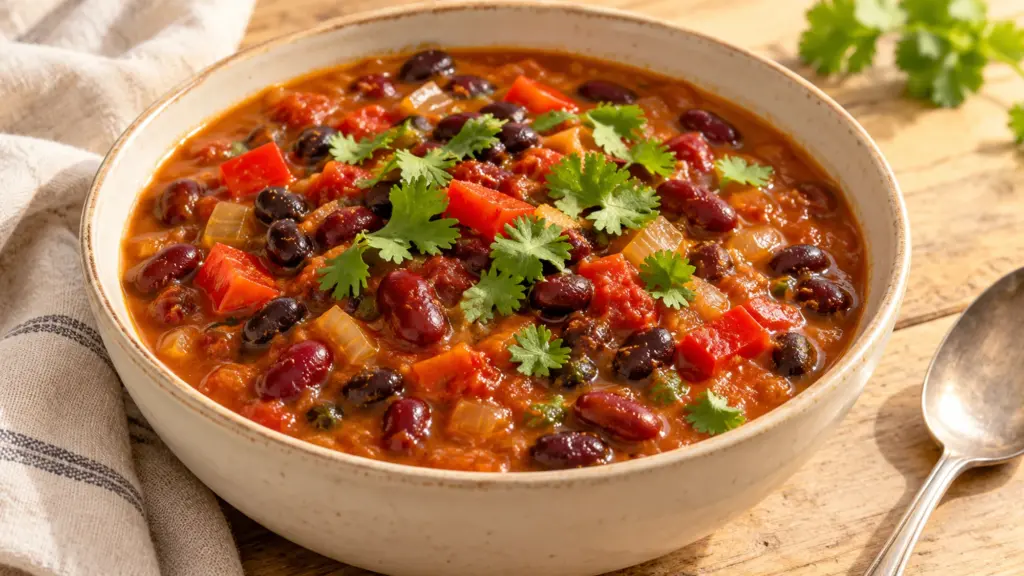
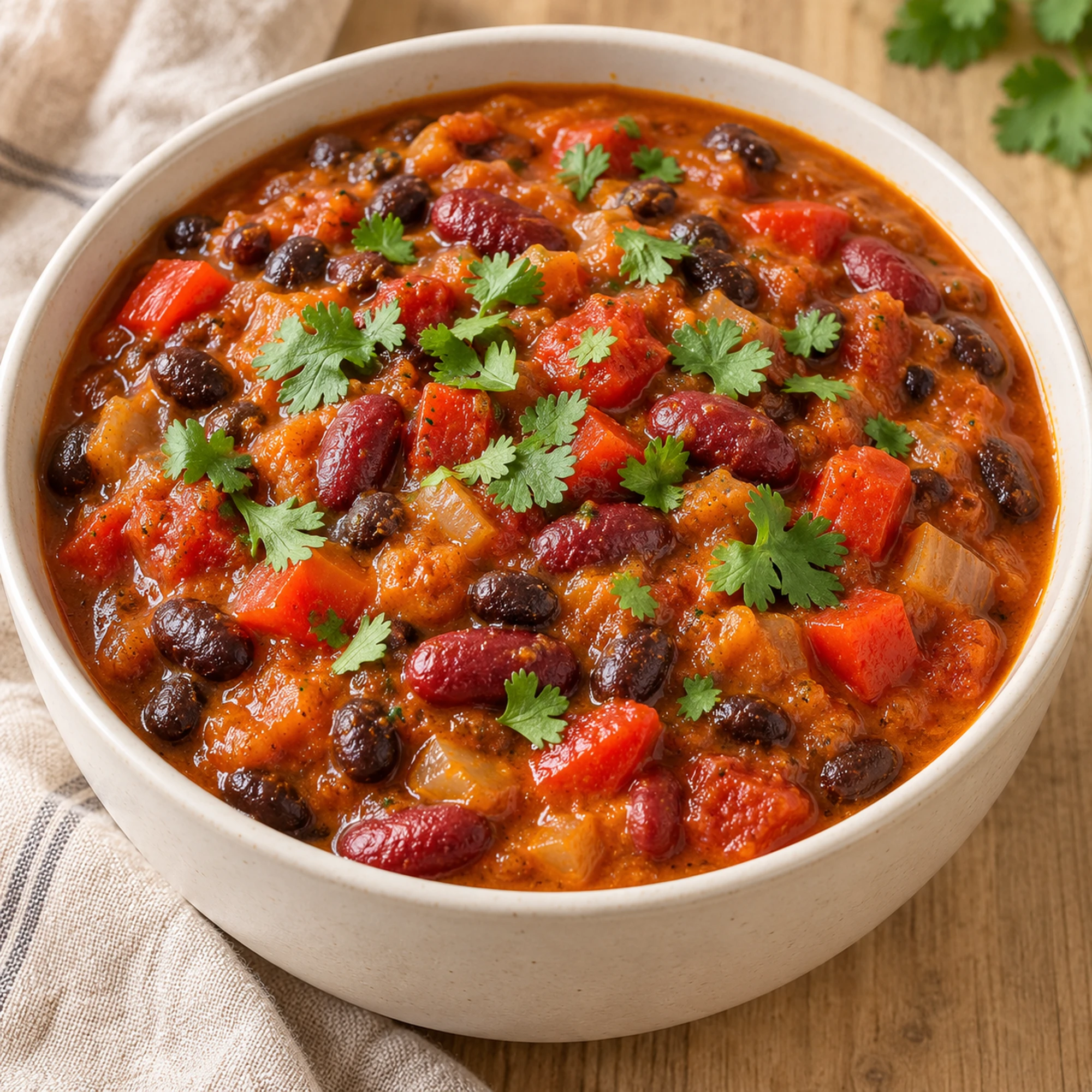
Pumpkin chili is a savory way to use the can that usually heads straight for the pie cupboard. Here, smooth pumpkin thickens a pot of black beans, kidney beans, tomatoes, and red pepper. It gives the broth a rounded texture without making the chili taste like pumpkin spice dessert.
Check the can before you begin: you want plain pumpkin puree, not sweetened pumpkin pie filling. Soften the vegetables, briefly warm the spices, and stir the pumpkin thoroughly into the liquid so the finished chili is evenly seasoned rather than streaked with puree.
This is the sort of warm bowl that fits an October evening without requiring a special occasion. I would keep the base moderately seasoned and offer extra heat at the table. A pot makes six portions, leaving room for a simple side or a few lunches if you are feeding fewer people.
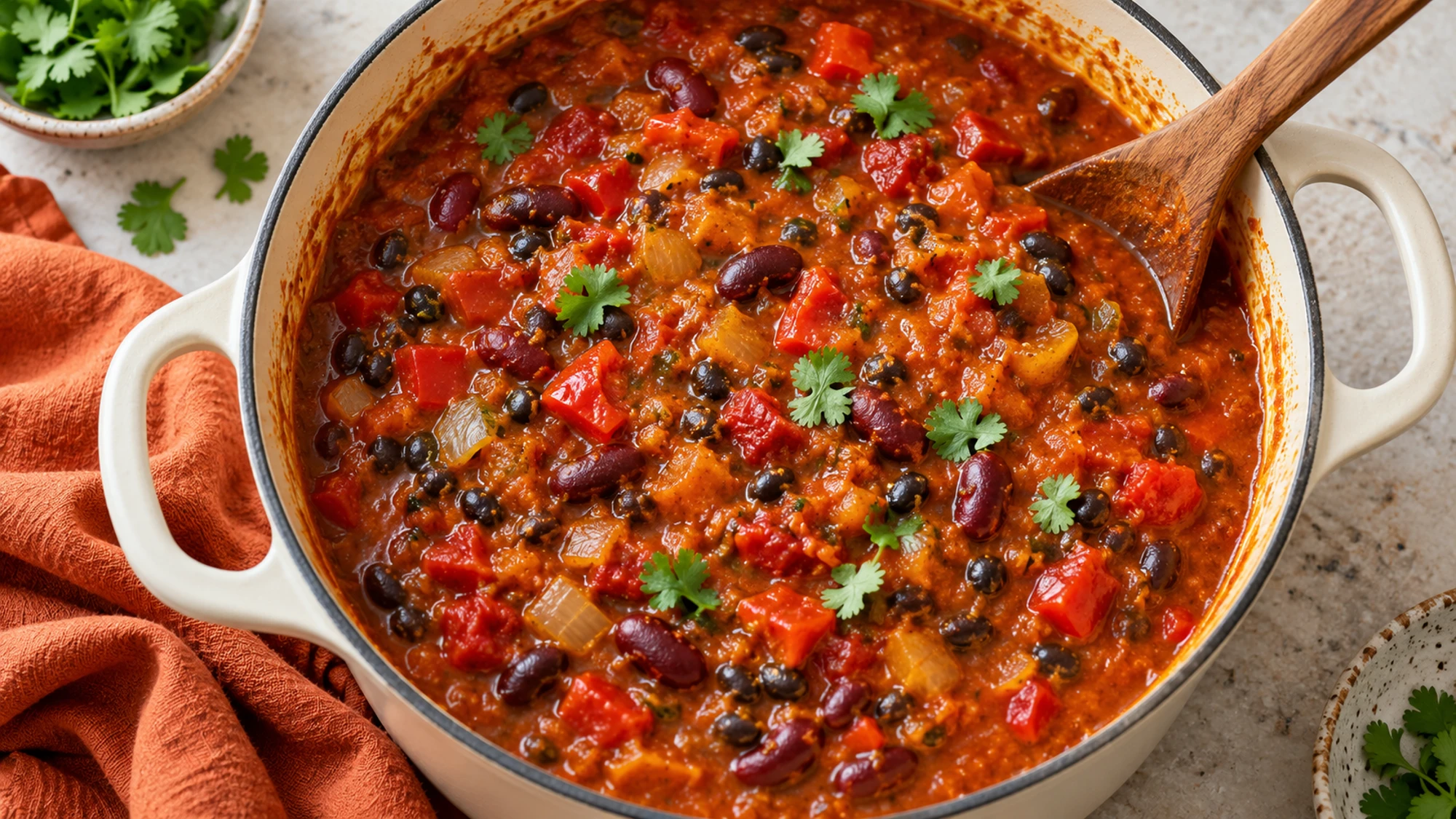
Serving Suggestions for Pumpkin Chili
Serve the chili in wide bowls with a little fresh cilantro. Cornbread, a baked potato, or brown rice can turn a bowl into a more substantial meal. A crisp cabbage salad is another useful companion because it offers a refreshing contrast to the soft beans and thick broth.
- For a casual dinner, set out bowls and a small selection of toppings rather than adding everything to the pot.
- For a Halloween meal, cook ahead and reheat thoroughly before serving; do not leave the pot sitting out while everyone is away.
- For lunch, pack the chili separately from bread or crunchy toppings so they do not become soggy.
Choose something simple from the side dish collection if you want another dish. The chili already contains two kinds of beans and vegetables, so a complicated second recipe is not essential. Diced avocado or a spoonful of plain yogurt can be offered separately; use a dairy-free topping to keep the meal vegan. Toppings are not included in the nutrition estimate.
Keep toppings optional and the sides straightforward. The pumpkin gives the bowl body, so you do not need a creamy topping to make it feel substantial.
Pumpkin Chili Variations
Chili powder varies considerably between brands. Use an American-style seasoning blend, not an equal amount of straight cayenne. Start with the measured amount and taste after the simmer. The pumpkin softens the edges of the tomato flavor, but it cannot undo an overwhelming dose of hot pepper.
| Change | How to adjust | Result |
|---|---|---|
| Different beans | Use drained canned pinto beans | A softer, creamier bite |
| More heat | Add a small pinch of cayenne | Sharper heat without extra liquid |
| Thinner chili | Stir in water, 1/4 cup at a time | A more spoonable broth |
For a chunkier variation, add a cup of frozen corn during the final ten minutes of simmering. Stir in more water if the pot becomes crowded. This changes the yield and nutrition slightly. Do not substitute dry beans directly; they need their own complete cooking process before joining this quick chili.
Adjust heat gradually and use fully cooked beans. Texture is easy to change with a splash of water; an overly spicy pot is harder to fix.
Health Benefits and Everyday Balance
- Black beans and kidney beans contribute plant protein and fiber, while pumpkin and peppers add vegetables to the bowl. The Food Literacy Center’s pumpkin chili offers another practical example of using plain pumpkin in a savory, bean-based dinner.
No-salt-added tomatoes and beans let you control more of the seasoning yourself. They are not necessarily sodium-free, and packaged chili powders can contain salt. Read labels if sodium matters to your meal planning. The estimate here excludes optional toppings and varies with the canned products and drained bean weights you use.
Use canned kidney beans here, which are already cooked, rather than raw dried beans. Stir the thick chili from the bottom so it heats evenly without scorching. When reheating leftovers, check for 165°F with a food thermometer after stirring, rather than judging only by steam at the surface.
The useful features are the combination of protein, fiber, and vegetables, not a promise attached to one ingredient. Portion size and toppings still shape the meal.
Bottom Line
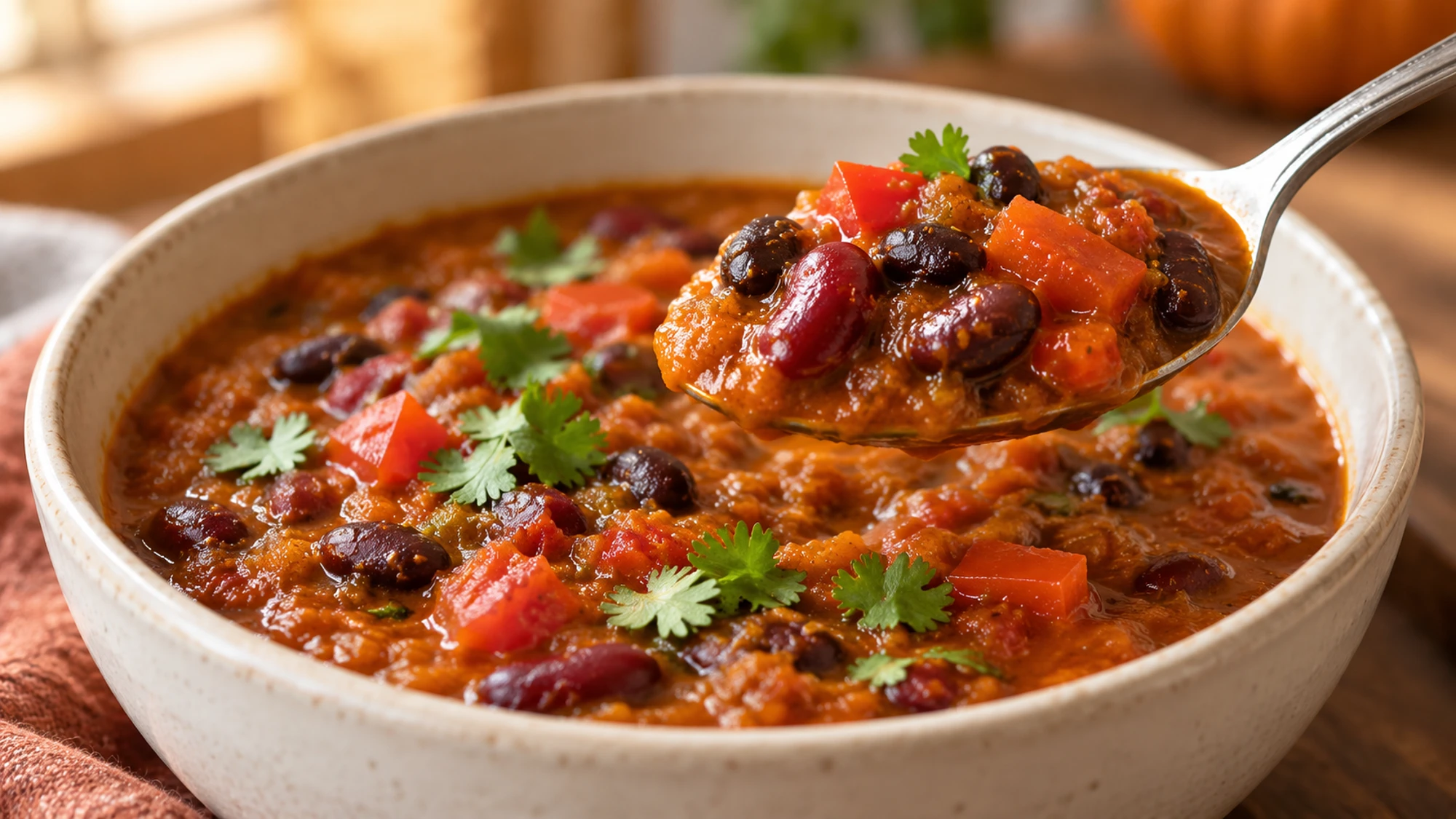
Pumpkin chili is a cozy alternative when you want something savory from a familiar fall ingredient. Refrigerate leftovers promptly in shallow containers instead of cooling the whole pot on the counter. Follow the three-to-four-day refrigerated storage guidance for soups and stews, and reheat to 165°F.
Use plain pumpkin, keep the simmer gentle, and stir from the bottom. The result is a thick, satisfying chili with no need for a long ingredient list or a dessert-like spice blend.

Pumpkin Chili Recipe
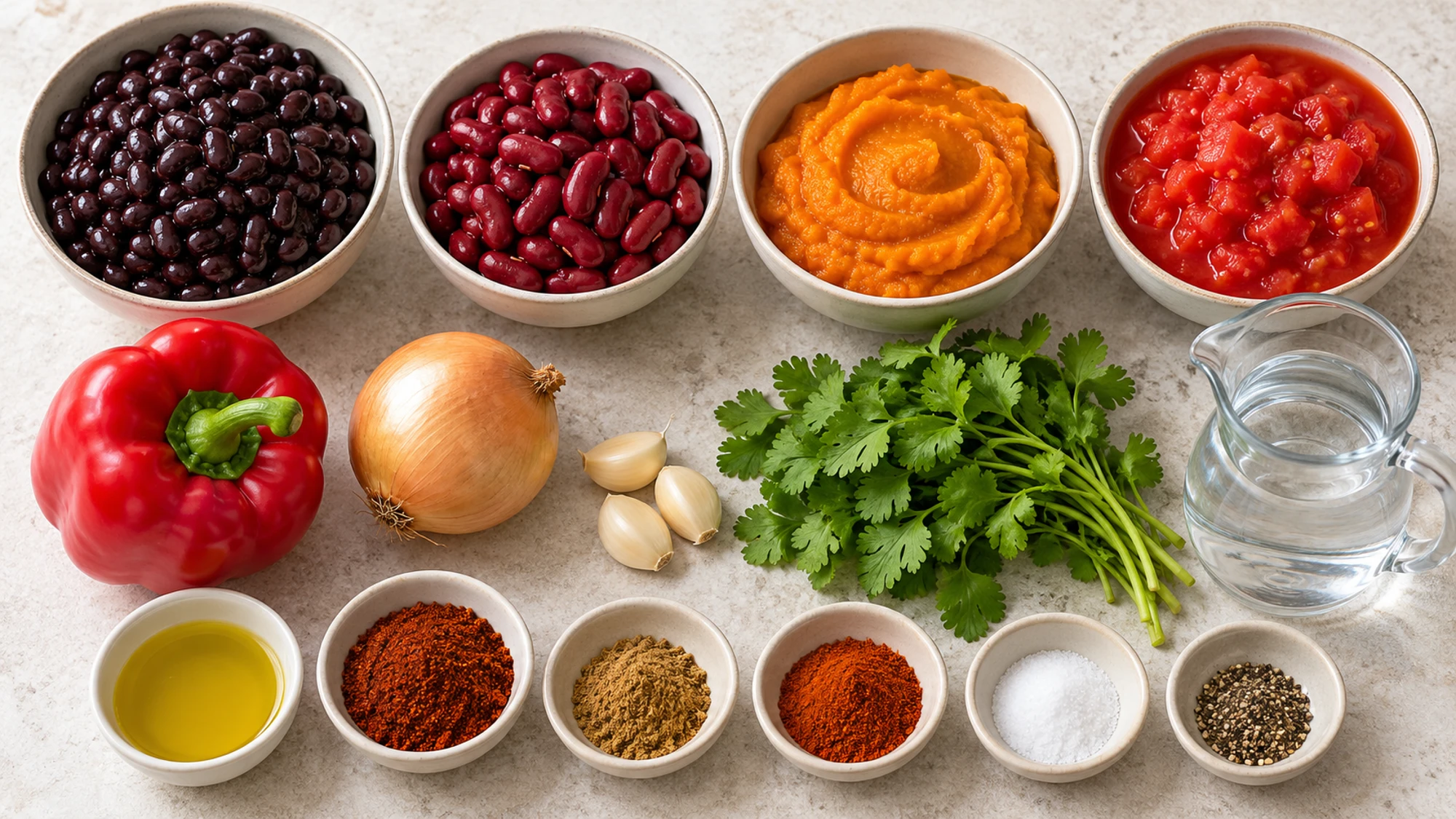
Ingredients
Equipment
Method
- Heat the oil in a large Dutch oven over medium heat. Add onion and bell pepper; cook 5–6 minutes, stirring, until softened.
- Add garlic, chili powder, cumin, paprika, salt, and pepper. Stir for 30 seconds, lowering the heat if the spices begin to scorch.
- Stir in pumpkin puree, tomatoes with their juices, drained beans, and water until no pumpkin streaks remain. Bring to a simmer.
- Simmer uncovered over low heat for 20–25 minutes, stirring from the bottom every few minutes, until the vegetables are tender and the chili is thick. Add more water 1/4 cup at a time if it becomes too thick.
- Taste and adjust heat if desired, then divide into six portions and add cilantro. Refrigerate leftovers in shallow containers within 2 hours, or 1 hour above 90°F. Use within 3–4 days and reheat to 165°F.