
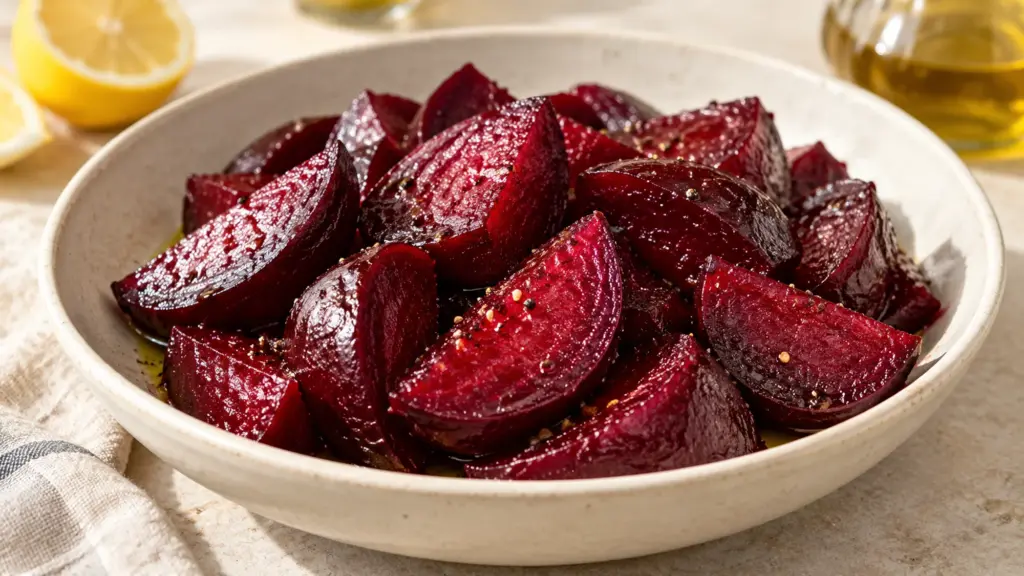
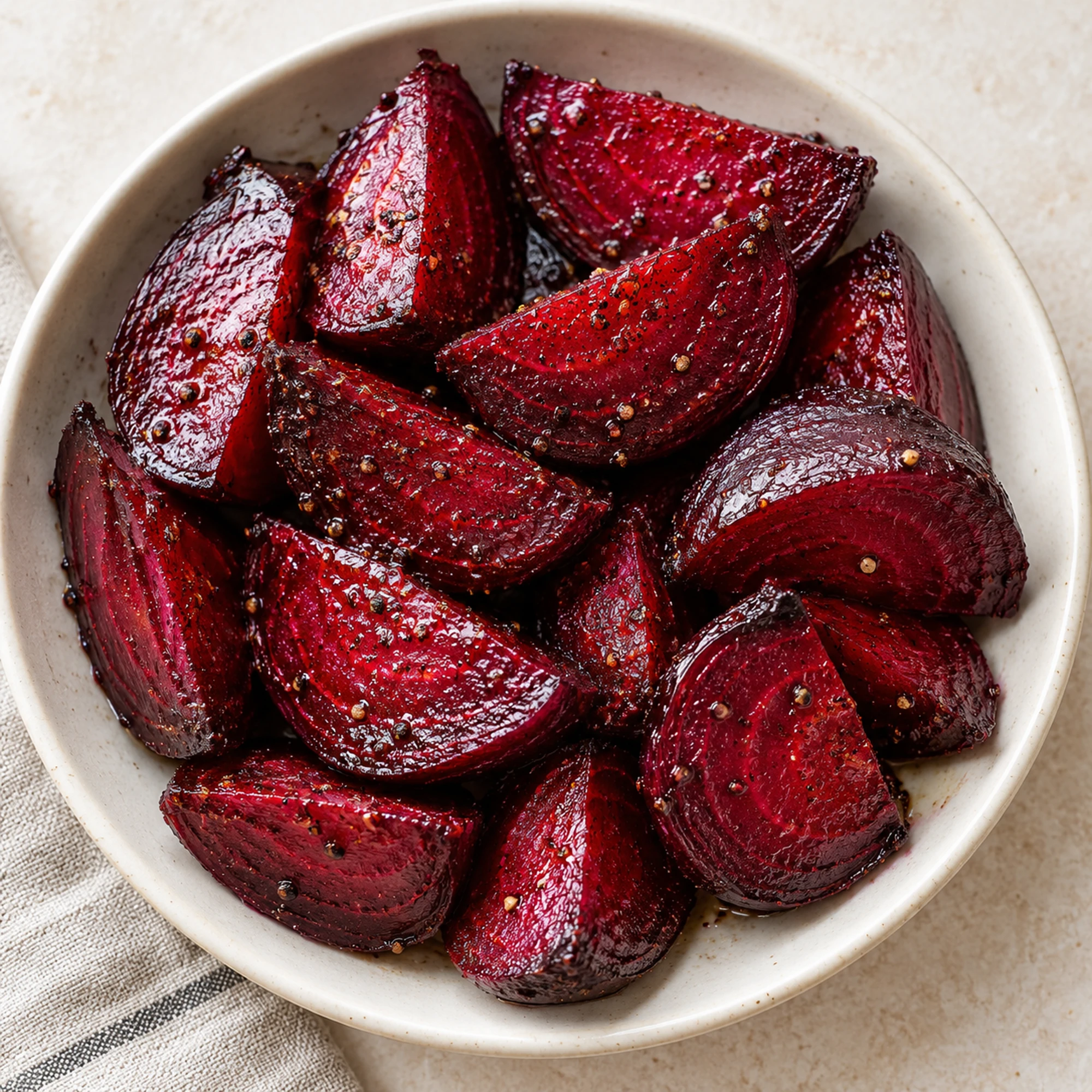
Roasted beets are easier to enjoy when you stop treating the skins as a problem to solve before cooking. Roast the roots whole, let them cool enough to handle, and the skins become much simpler to rub away. What remains is sweet, earthy beet flesh ready for a little olive oil and lemon.
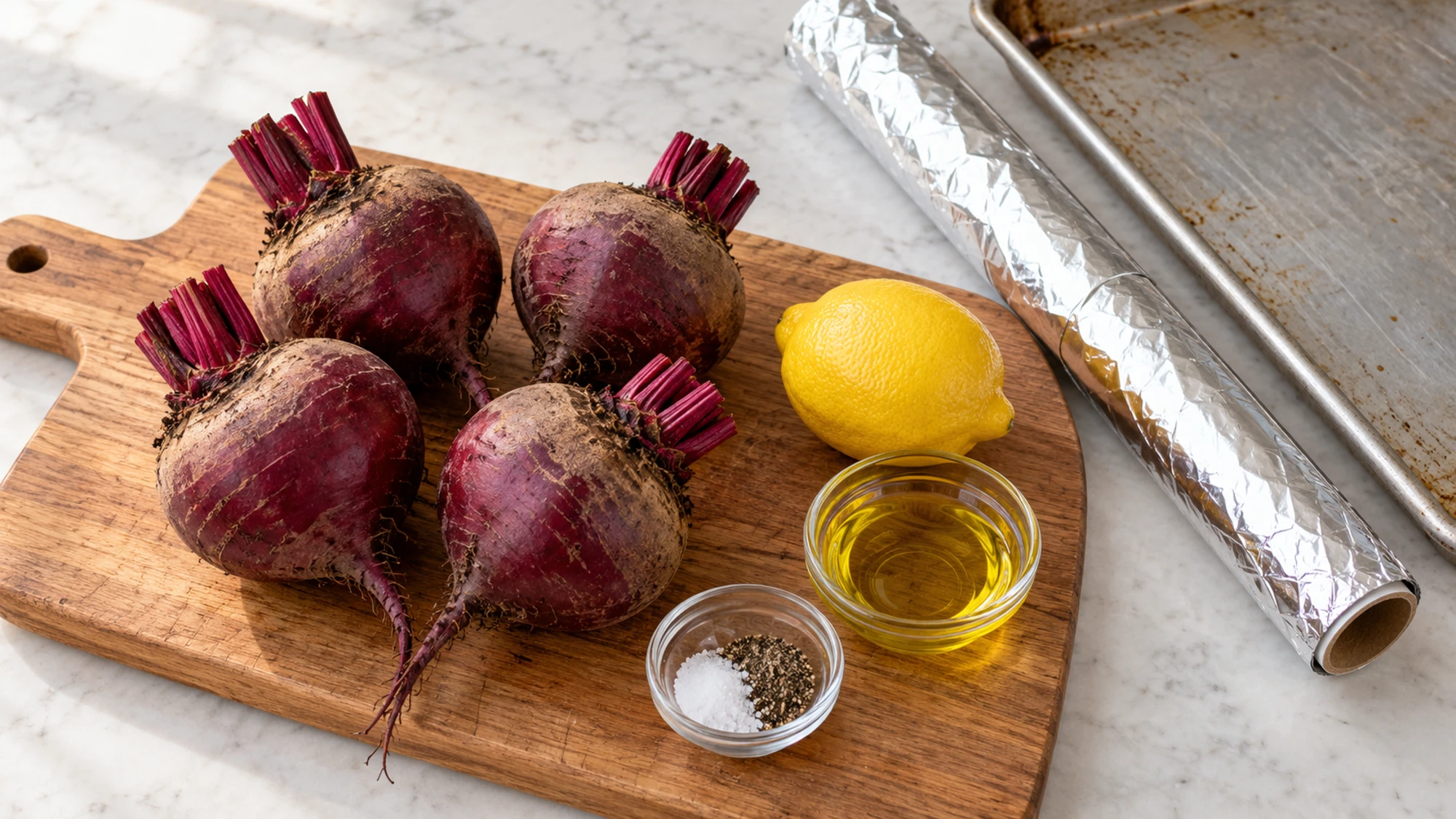
For tender roasted beets, choose roots of similar size, wrap them in foil, and roast until a knife slides easily into the center. Peel after cooking, not before. Finish the warm wedges with lemon juice, olive oil, salt, and pepper for a simple side with a bright edge.
I prefer that lemony finish to a thick sweet glaze. Beets already have a clear sweetness, and a little acidity gives it some contrast. This is a soft, juicy vegetable side rather than a tray of crisp-edged roast potatoes, so judge success by tenderness, not crunch.
Serving Suggestions for Roasted Beets
Divide the recipe into four side portions alongside chicken, fish, beans, or a grain-based main. The deep red wedges also look striking beside pale potatoes or a green salad. Add them at the last moment if you want to keep their color from spreading through everything else.
- For a salad, cool the beets before combining them with tender leaves so the greens do not wilt from residual heat.
- For a grain bowl, serve the wedges with lentils and something crisp, such as sliced cucumber.
- If serving cheese separately, a tangy goat cheese can complement the earthy flavor, but it is not included in this recipe or its nutrition estimate.
My preference is to give beets their own small serving bowl rather than mixing them into a large pale-colored dish. Their juices are enthusiastic travelers. The side dish collection has more options for building a balanced fall dinner around them.
Keep the seasoning light enough to taste the beet itself. Lemon supplies contrast, and a separate serving bowl keeps the ruby juices where you want them.
Variations and Tips for Roasted Beets
Whole roots need time for heat to reach their centers. Oregon State’s roasted beet guidance uses a foil packet to retain moisture and recommends checking the center with a knife. Open the packet away from your face because steam can escape suddenly.
| Cooking decision | Useful cue |
|---|---|
| Choosing roots | Similar diameters help them finish together. |
| Checking doneness | A knife should enter the center with little resistance. |
| Removing skins | Wait until safe to handle, then rub gently. |
| Uneven cooking | Remove tender beets and return firm ones to the oven. |
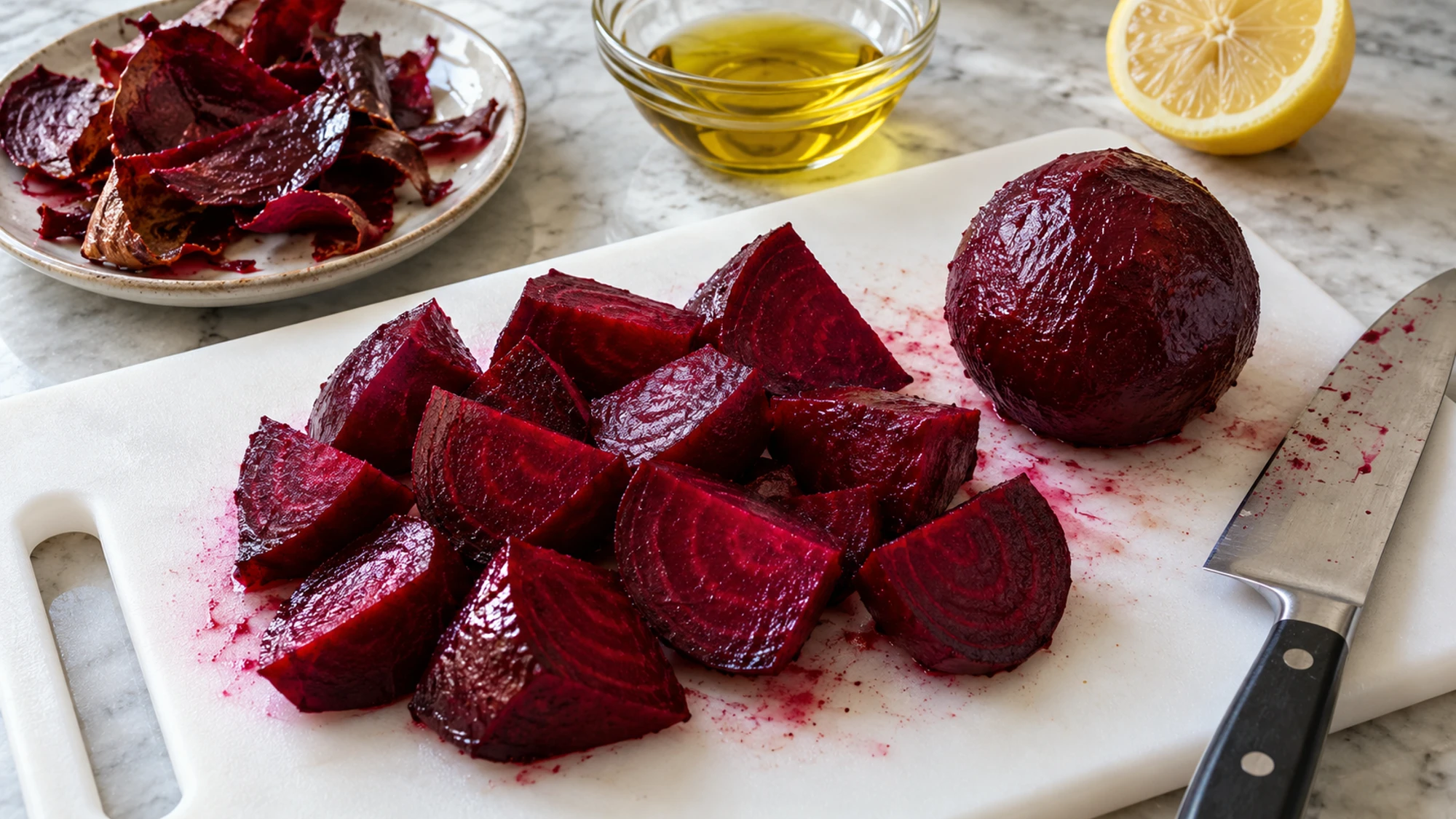
Use a washable board and a paper towel or a cloth you do not mind staining when peeling. Trim only what is necessary before roasting, leaving short stems and root tails. After cooking, remove those ends and any stubborn skin with a small knife instead of rubbing so hard that you crush the beet.
- Golden beets work with this method, although their color and flavor differ. Roast them separately from red beets if you want to preserve the contrast.
- Replace the lemon with a little cider vinegar for a different tang. Start modestly and taste before adding more.
- Very large roots can take longer than the listed hour. Keep testing for tenderness rather than turning up the oven to rush the center.
The best timing guide is the beet in front of you. Similar sizes help, but a gentle knife test is more reliable than assuming every root needs exactly the same minutes.
Health Benefits and Nutrition of Roasted Beets
Beets contribute fiber along with several vitamins and minerals. Illinois Extension’s beet overview also notes their naturally occurring sodium. There is no need to turn this ordinary vegetable side into a claim about detoxing, athletic performance, or treating a health condition.
- The nutrition estimate includes all the measured olive oil, even though a little may remain in the foil or bowl. Peeling and roasting also change the final weight.
- Choose firm roots and scrub them under running water before cooking. Keep produce preparation separate from raw meat and its utensils.
- Follow FoodSafety.gov chilling guidance: refrigerate leftovers within two hours, or one hour above 90°F (32°C). Use within three to four days; reheat to 165°F (74°C) when serving hot.
Enjoy beets as one vegetable in a varied meal. Their color and sweetness make them useful on the plate without needing an exaggerated health promise.
Bottom Line
Roasted beets reward a little patience and a simple finish. Cook them whole until tender, peel when safe to handle, and add lemon and olive oil after cutting. The result is a juicy, earthy side that can move easily from a warm dinner plate to a chilled salad.

Roasted Beets Recipe
Ingredients
Equipment
Method
- Heat oven to 400°F (204°C). Scrub beets under running water. Trim leaves, leaving about 1 inch of stem and root tail. Place whole beets on a large sheet of foil on a rimmed baking sheet. Rub with 1 teaspoon of the olive oil and seal the foil into a packet.
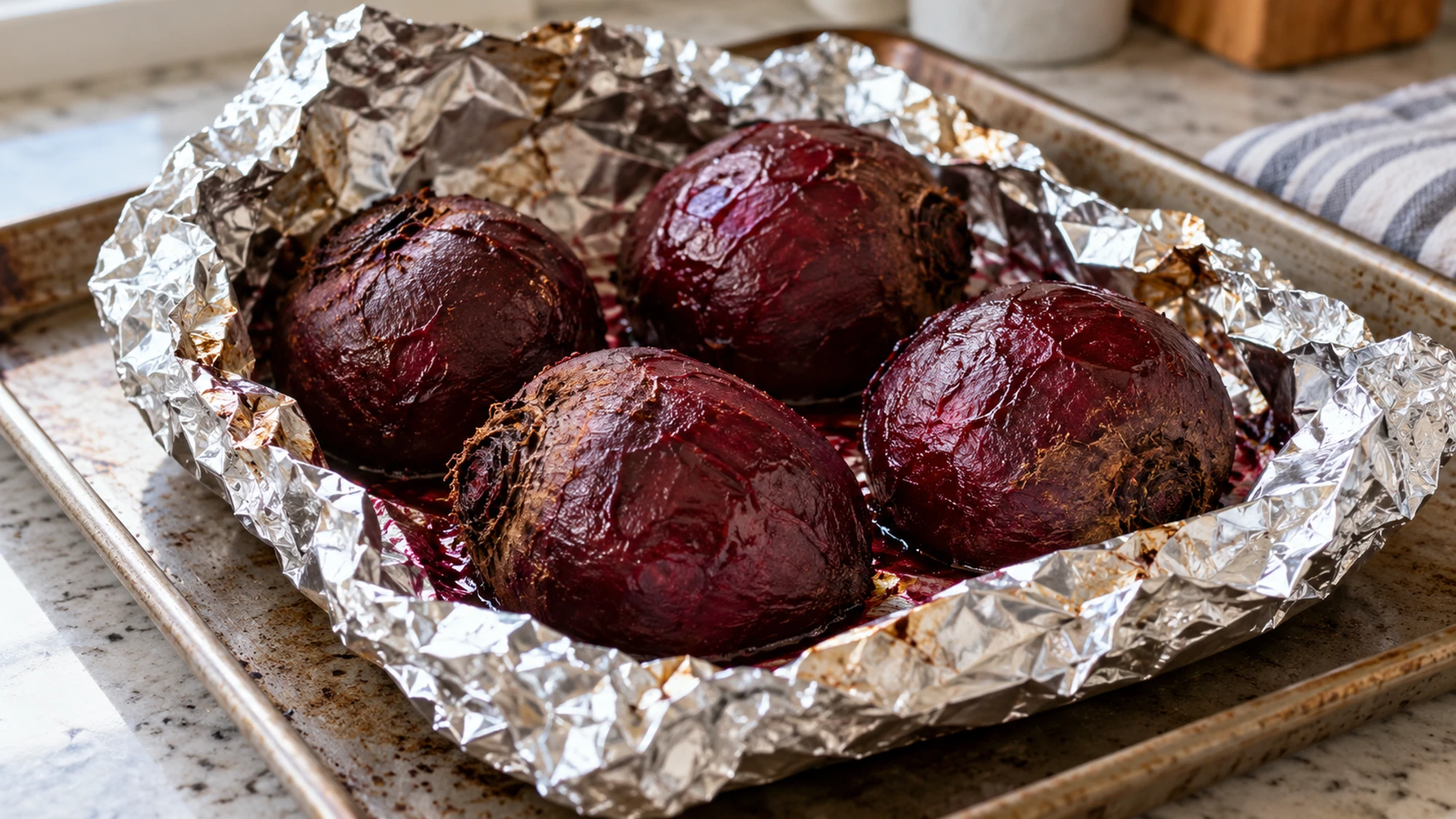
- Roast 45–60 minutes, until a knife enters the center easily. Open foil cautiously to avoid steam. Large beets may need longer; remove smaller ones as they become tender.
- Open the packet and cool about 10 minutes, or until safe to handle. Rub off skins with a paper towel or dedicated cloth, trim ends, and cut into wedges. Use a small knife for stubborn patches.
- Toss the warm wedges with the remaining 3 teaspoons olive oil, lemon juice, salt, and pepper. Divide into four side portions.
- Refrigerate leftovers within two hours, or one hour above 90°F (32°C). Use within 3–4 days. Serve chilled, or reheat to 165°F (74°C) for hot service.