
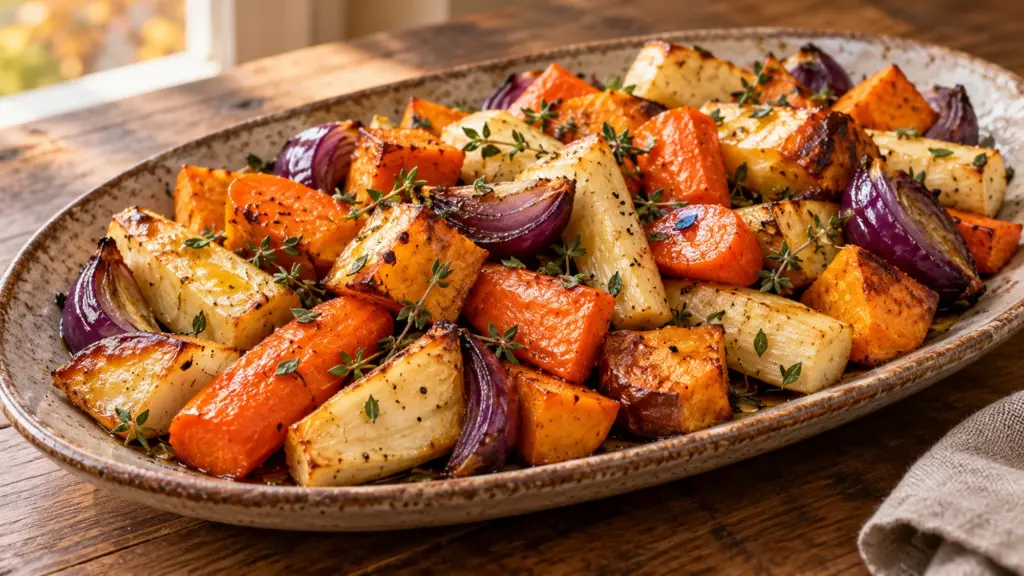
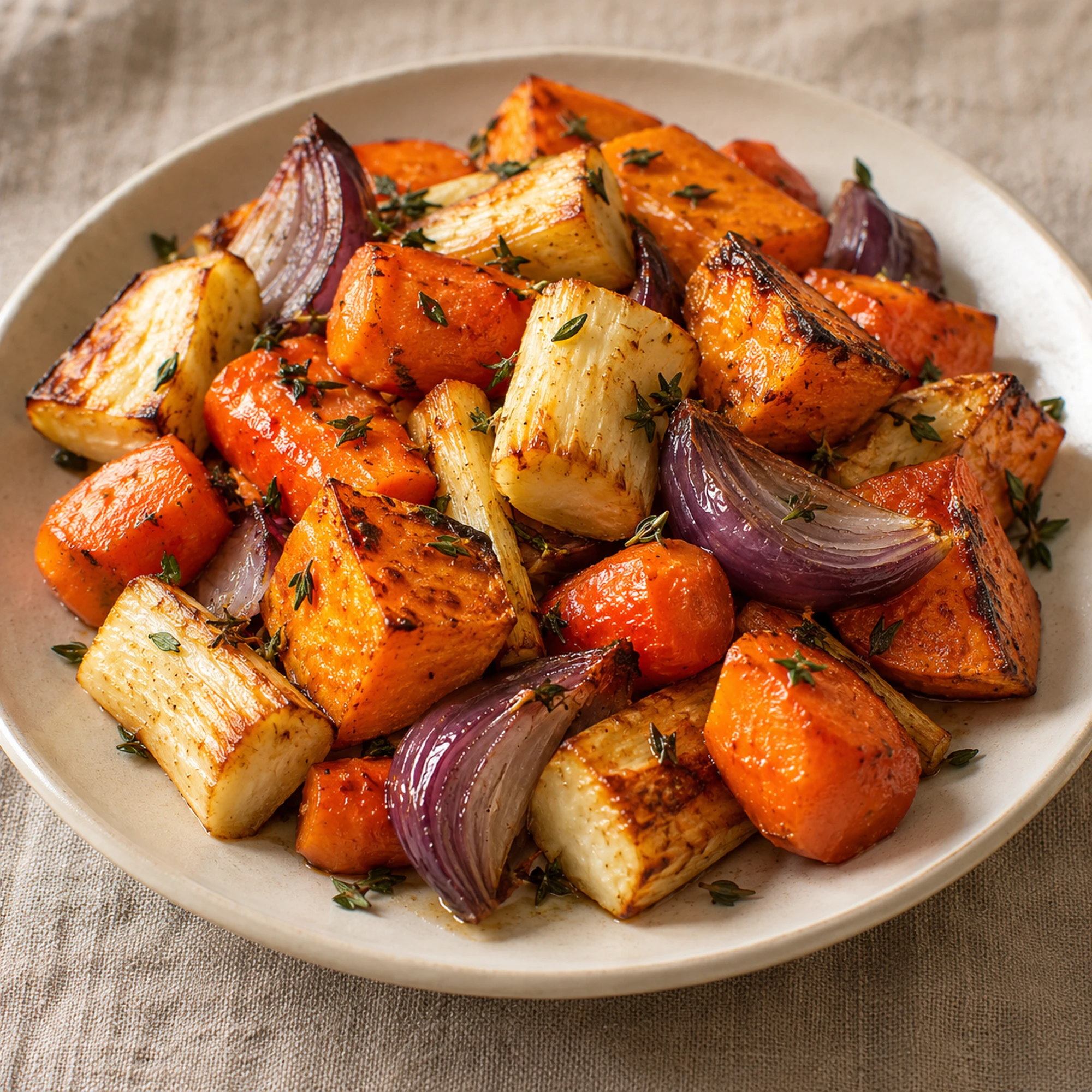
Roasted root vegetables do not need a sugary glaze to earn a place at a fall dinner. Carrots, parsnips, and sweet potatoes bring their own sweetness, while red onion adds a savory contrast. A hot oven, a little olive oil, and enough room on the pans turn those sturdy ingredients into tender, browned bites.
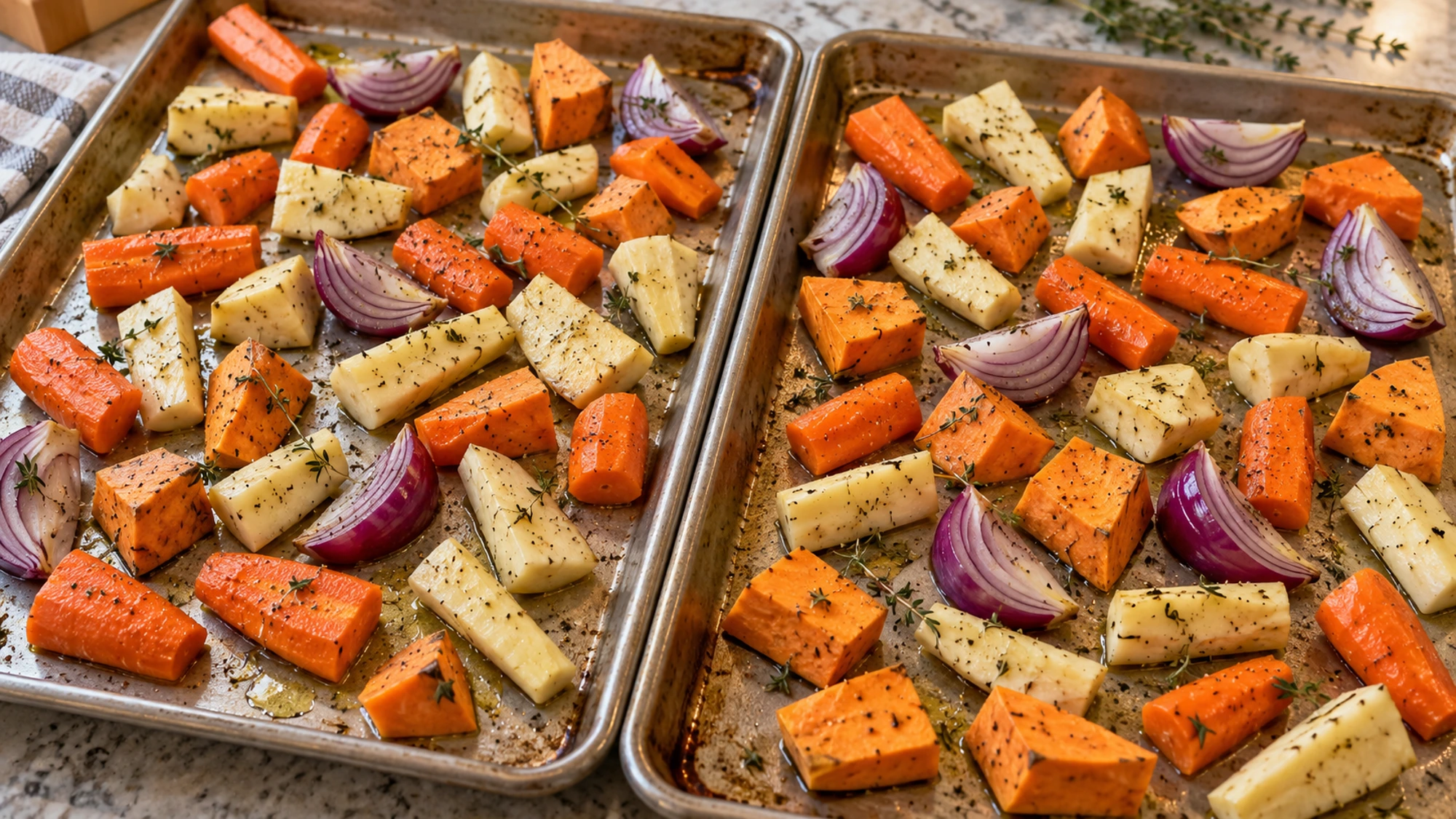
For evenly roasted root vegetables, cut the dense vegetables into similar three-quarter-inch pieces, keep the onion in thick wedges, and divide everything between two rimmed baking sheets. Roast at 425°F, turning and rotating the pans halfway through, until the centers are tender and several sides are golden brown.
I prefer this mix with just thyme, salt, and pepper because each vegetable still tastes distinct. The parsnips are earthy, the carrots stay gently sweet, and the sweet potatoes soften into a creamy middle. The most important ingredient is not another seasoning; it is space between the pieces.
Serving Suggestions for Roasted Root Vegetables
These vegetables fit beside roast chicken, turkey, pork, or a lentil loaf. They also make a useful base for a simple grain bowl: add cooked beans and a tart dressing after roasting. Keep the dressing separate until serving if you want the browned edges to remain noticeable.
- For a holiday plate, serve a moderate scoop alongside the main and a fresh green vegetable.
- For a vegetarian dinner, pair with lentils or chickpeas rather than relying on the vegetables alone for protein.
- For a smaller meal, halve the recipe and use one large baking sheet, still leaving space between the pieces.
My choice would be a wide platter instead of a deep covered bowl, which can trap steam and soften the surface. More meal companions are in the side dish collection. Bring the vegetables to the table soon after roasting for the best contrast between edges and centers.
Serve the vegetables while their edges are at their best, and add a clear protein source to make the plate more complete. Keep wet sauces on the side.
Variations and Tips for Roasted Root Vegetables
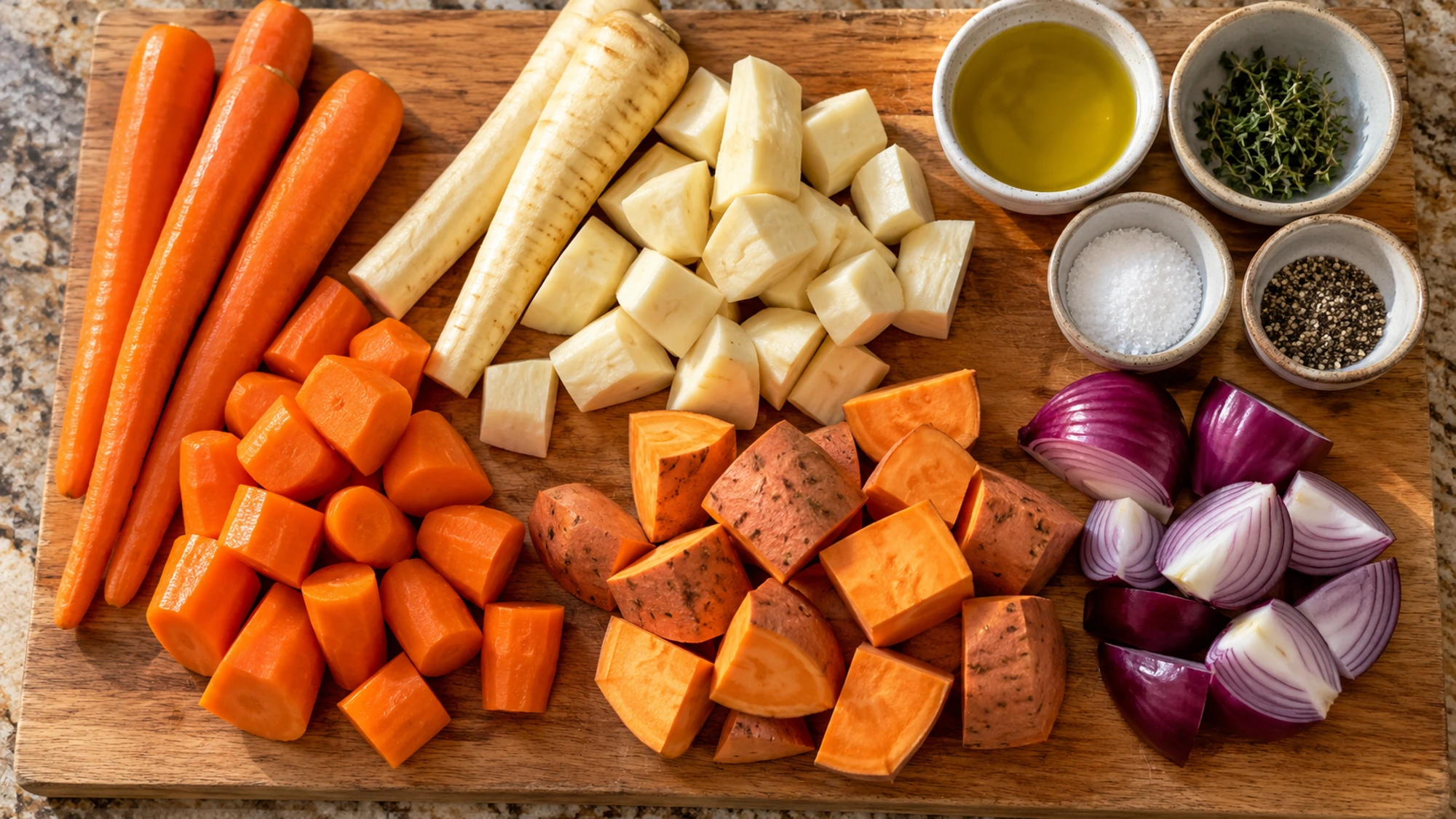
Wash and dry the vegetables before cutting, and remove any woody core from very large parsnips. Keep the sweet potato skin if it is sound and well scrubbed. The onion wedges can be thicker than the dense roots so their thin layers do not burn before everything else becomes tender.
| Problem | Practical fix |
|---|---|
| Pale, soft vegetables | Spread them farther apart; use both pans. |
| Dark outside, hard center | Cut smaller, more even pieces next time; lower heat slightly to finish. |
| One pan browns faster | Swap rack positions and rotate the pans halfway through. |
| Onion finishes early | Remove tender browned wedges while the roots finish. |
The South Dakota State University roasting guide emphasizes uniform pieces and uncovered cooking at 425°F. Timing still depends on the vegetables and their size. Test a thick carrot or parsnip with a fork rather than judging the whole pan by the softest sweet potato.
- Replace the parsnips with the same weight of carrots if that is what you have; the flavor and nutrition will change.
- For a different herb note, use a teaspoon of chopped fresh rosemary instead of thyme.
- Avoid adding zucchini or other watery vegetables at the start; they need a different cooking schedule.
Consistent cuts and uncrowded pans matter more than a rigid timer. Pull out individual pieces as they become tender and browned rather than letting them burn.
Health Benefits and Nutrition of Roasted Root Vegetables
This mix contributes fiber and a range of plant nutrients, with olive oil adding most of the fat. Carrots and orange sweet potatoes contain beta-carotene, but no single tray of vegetables guarantees a health outcome. Enjoy the variety as part of an overall eating pattern rather than treating it as a remedy.
The estimate uses six equal portions and includes all measured oil and salt. Some oil may remain on the pan, so actual intake varies. Adding a glaze, cheese, or dressing changes the numbers; the base recipe needs none of those to develop a sweet, savory finish.
- Following FoodSafety.gov’s chilling guidance, refrigerate leftovers in shallow containers within two hours, or one hour above 90°F. Use within three to four days and reheat to 165°F. A hot oven can restore some surface texture, though leftovers will be softer than the freshly roasted batch.
Let the vegetables provide the flavor and variety, measure the oil, and chill leftovers promptly. A simple preparation can be satisfying without exaggerated nutrition promises.
Bottom Line
Roasted root vegetables are a dependable fall side when the pieces are evenly cut and the pans are not crowded. Choose a few complementary vegetables, season lightly, and check tenderness as well as color. The payoff is a platter with browned edges, soft centers, and plenty of room for the rest of dinner.

Roasted Root Vegetables Recipe
Ingredients
Equipment
Method
- Heat the oven to 425°F with racks in the upper and lower thirds. Set out two 18-by-13-inch rimmed baking sheets. Wash and dry the vegetables well. Prepare the carrots, parsnips, sweet potatoes, and onion as listed.
- Toss the vegetables in a large bowl with the olive oil, thyme, salt, and pepper until lightly coated. Divide between the two sheets in single layers with space between pieces. Keep onion wedges thick and together where possible.
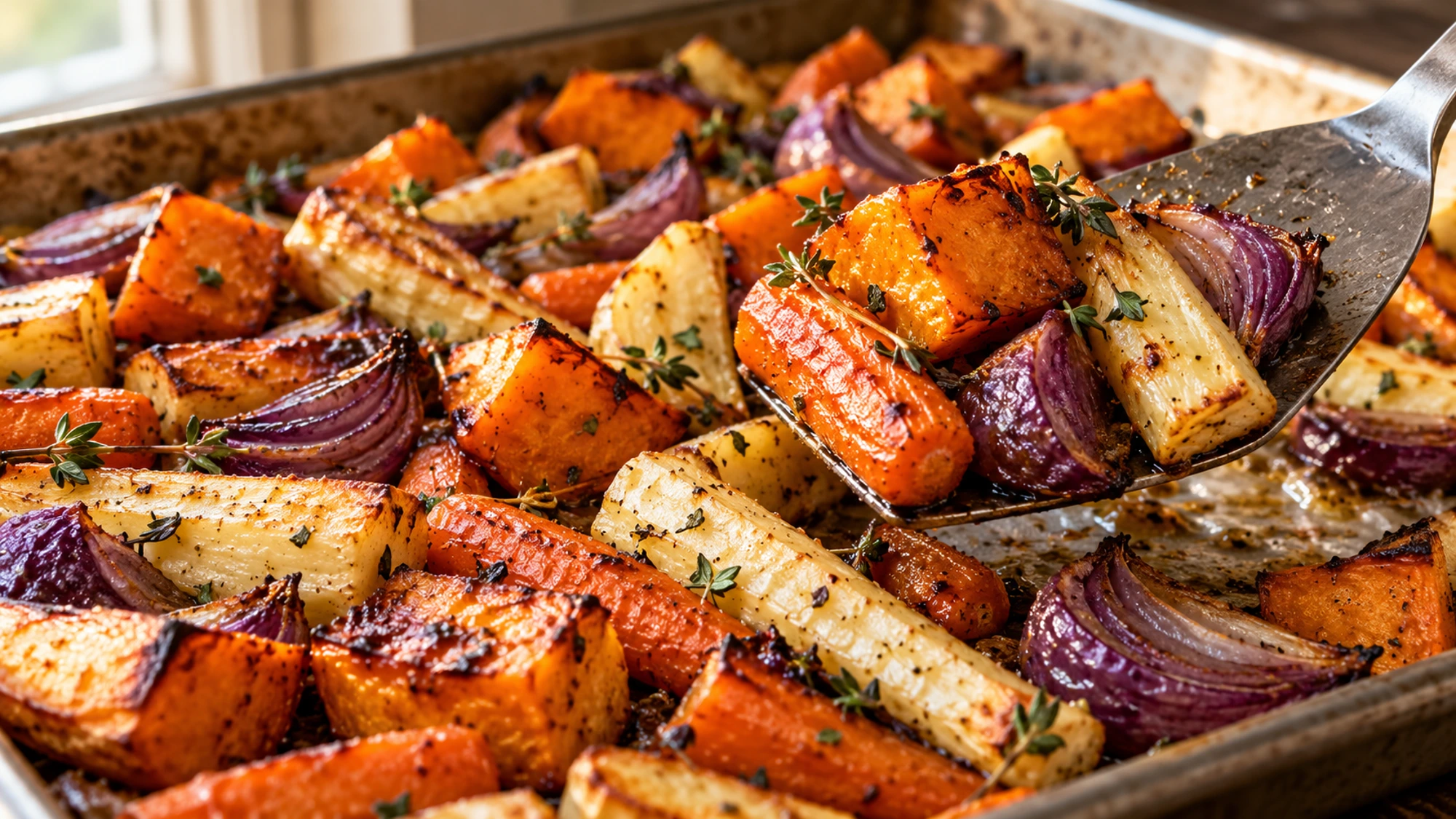
- Roast for 20 minutes. Turn the vegetables with a spatula, rotate the pans, and swap their rack positions. Roast for another 15–25 minutes, until a fork enters the thickest carrot and parsnip pieces easily and edges are browned. Remove onion or smaller pieces earlier if needed.
- Transfer to a wide serving platter and serve hot, divided into six portions. Refrigerate leftovers in shallow containers within two hours, or one hour above 90°F. Use within 3–4 days and reheat to 165°F.