
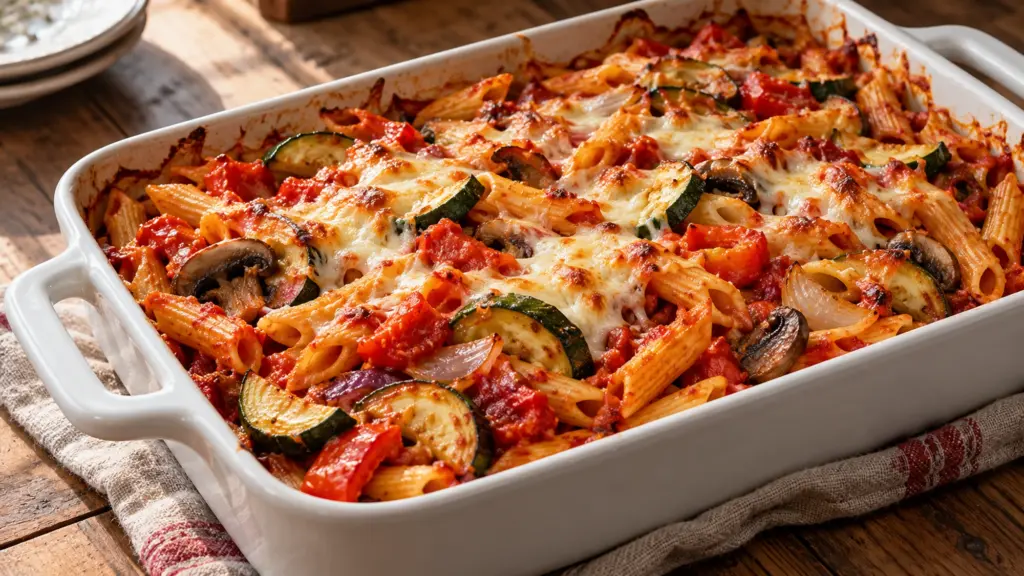
Baked pasta can be more interesting than noodles under a blanket of cheese. Roasted peppers bring sweetness, mushrooms add savory depth and zucchini keeps its shape when cut into generous pieces. A hot oven gives the vegetables browned edges before they ever meet the tomato sauce.
This roasted vegetable baked pasta combines penne, four vegetables, marinara and a modest mozzarella topping. Roast the vegetables on two pans while the pasta boils, then bring everything together for a bubbling final bake. The recipe makes six servings for a cozy dinner.
I prefer vegetables you can actually see in a pasta bake. Keep the pieces roughly bite-sized rather than finely diced, and stop boiling the penne before it is fully tender. It still has time in the oven, where it will take up some of the sauce.
Serving Suggestions for Roasted Vegetable Baked Pasta
Serve the pasta after a short rest, when the sauce is still hot but no longer racing across the plate. A simple salad with a sharp vinaigrette makes a useful companion. The pasta, vegetables and cheese already give you several textures, so the side does not need to be elaborate.
For a family-style meal, put the baking dish on a heat-safe trivet and offer a large serving spoon. I would skip an extra cheese-heavy side here. Our side dishes can help you choose something crisp, green or lightly dressed instead.
| Dinner setting | Pairing | Helpful detail |
|---|---|---|
| Weeknight meal | Green salad | Dress just before serving |
| Shared table | Simple roasted vegetables | Keep seasoning lighter |
| Next-day lunch | Fresh fruit alongside | Reheat only the pasta portion |
A small rest makes serving easier, but it is not a cooling step for storage. Put leftovers away promptly rather than leaving the full dish on the table all evening.
Variations and Keeping the Pasta Tender
The roasting step is worth keeping even when you change vegetables. Raw zucchini and mushrooms release water; roasting lets some of that moisture escape before it can thin the sauce. Spread the pieces across two rimmed pans instead of piling everything onto one crowded tray.
- Use another sturdy short pasta, such as rigatoni, at the same dry weight. Follow its package timing and drain about two minutes before the stated al dente time.
- Yellow summer squash can replace zucchini. Do not replace it directly with dense winter squash unless you adjust the roasting time and check that the pieces are tender first.
- Choose a marinara you enjoy on its own. Sodium varies widely by brand, and the cheese adds more, so taste the assembled mixture before deciding whether it needs any extra seasoning.
- For a vegetarian version, check that the cheeses use vegetarian-suitable enzymes. Meatless ingredients do not automatically settle every cheese-related dietary preference.
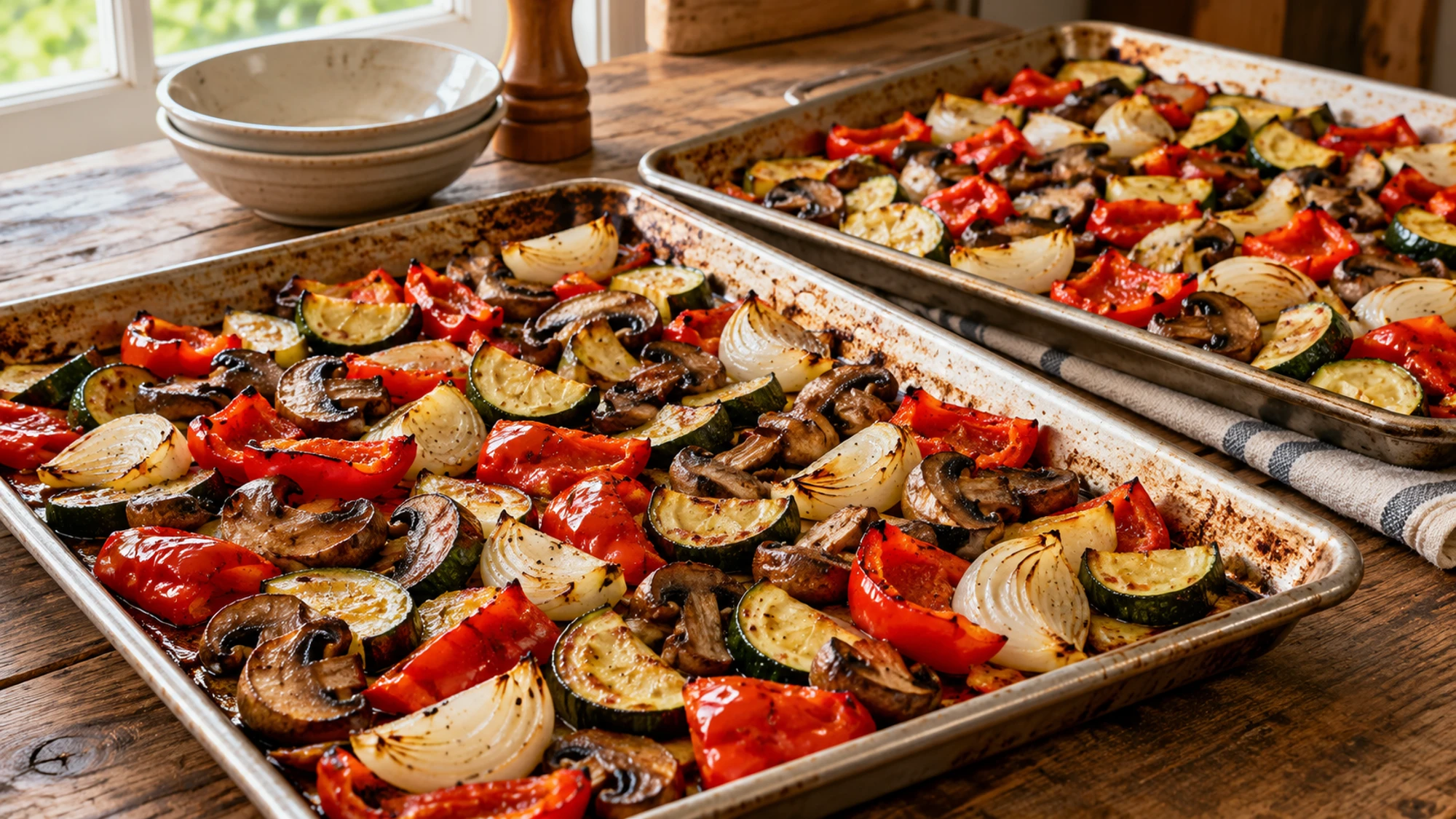
The vegetables should be tender with browned edges before assembly, and the pasta should still have a firm center. Those two different starting points help everything finish together.
Health Benefits and Safe Make-Ahead Planning
This dish includes a substantial amount of vegetables, while pasta and cheese contribute energy and protein. It is not a low-sodium meal with the products used in the estimate. The FDA’s label guidance is helpful when comparing sauces and cheeses rather than assuming similar packages have identical nutrition.
- The recipe contains wheat and milk. Gluten-free pasta is an option, but check every packaged ingredient and expect its texture to differ after baking.
- If roasting vegetables ahead, refrigerate them promptly in shallow containers. Assemble with safely chilled ingredients and allow extra baking time for a cold center.
- Bake the casserole to 165°F in the center. Refrigerate leftovers within two hours, or one hour above 90°F, at 40°F or below; use within 3–4 days and reheat throughout to 165°F.
The FDA’s safe handling guidance recommends a thermometer for casseroles. Melted cheese and bubbling edges are useful cooking cues, but they do not prove the middle is hot enough.
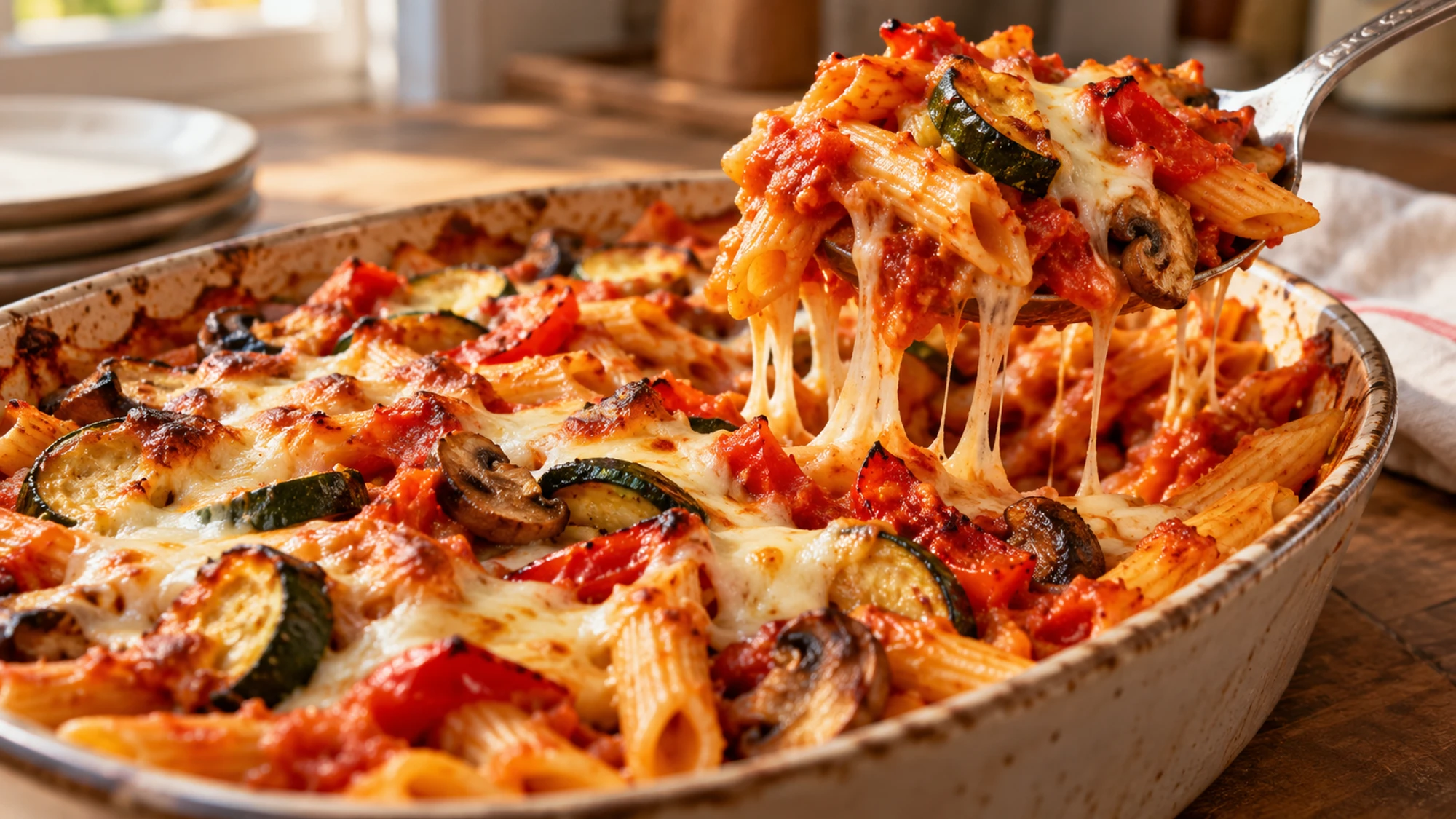
Keep the vegetables generous and the serving plan flexible. A warm pasta bake can be a satisfying part of varied meals without needing a special health label.
Bottom Line
Roasted vegetable baked pasta gets its character from the first trip through the oven. Give the vegetables room to brown, slightly undercook the penne and finish with enough sauce to keep the center tender. The cheese is a topping, not the whole story.
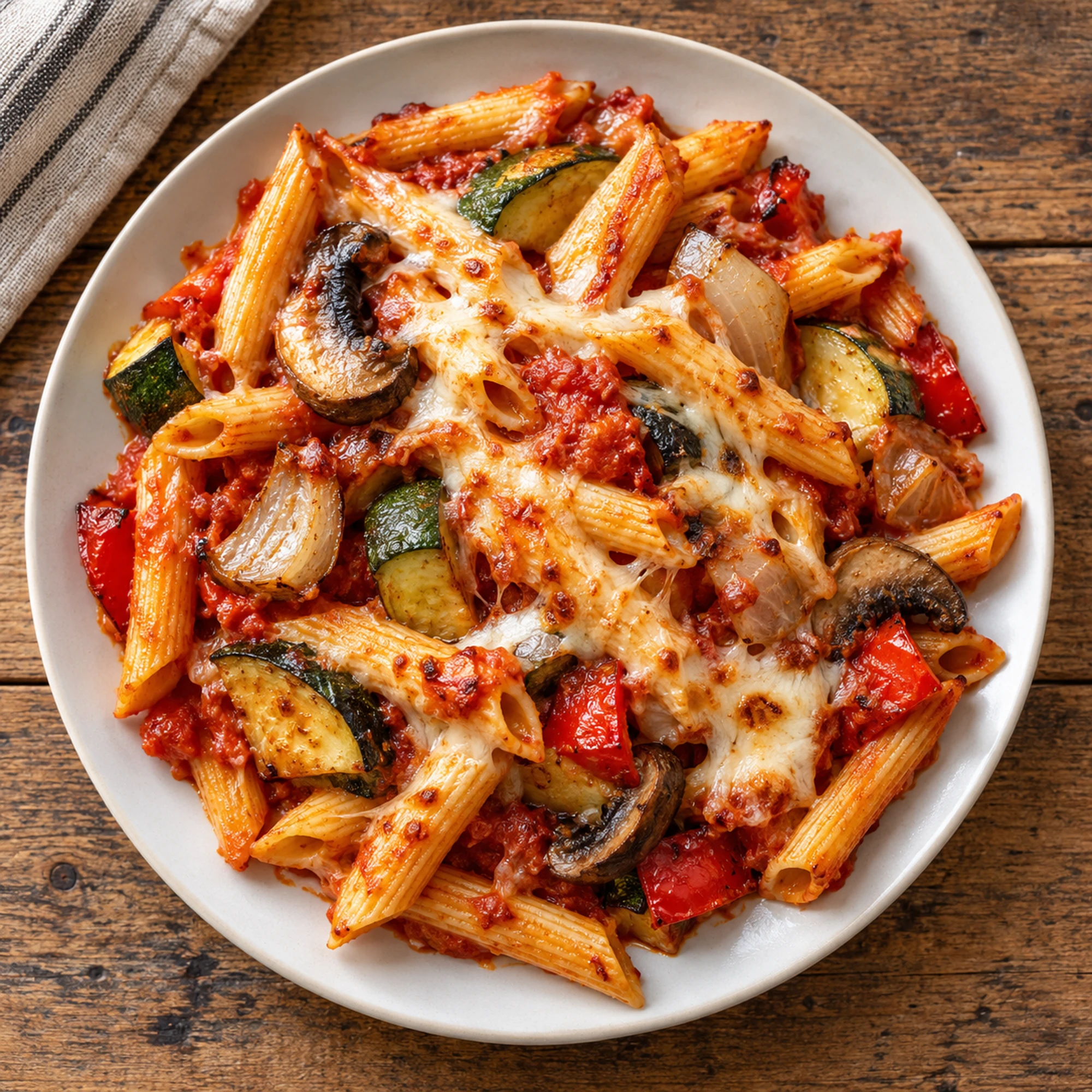

Roasted Vegetable Baked Pasta Recipe
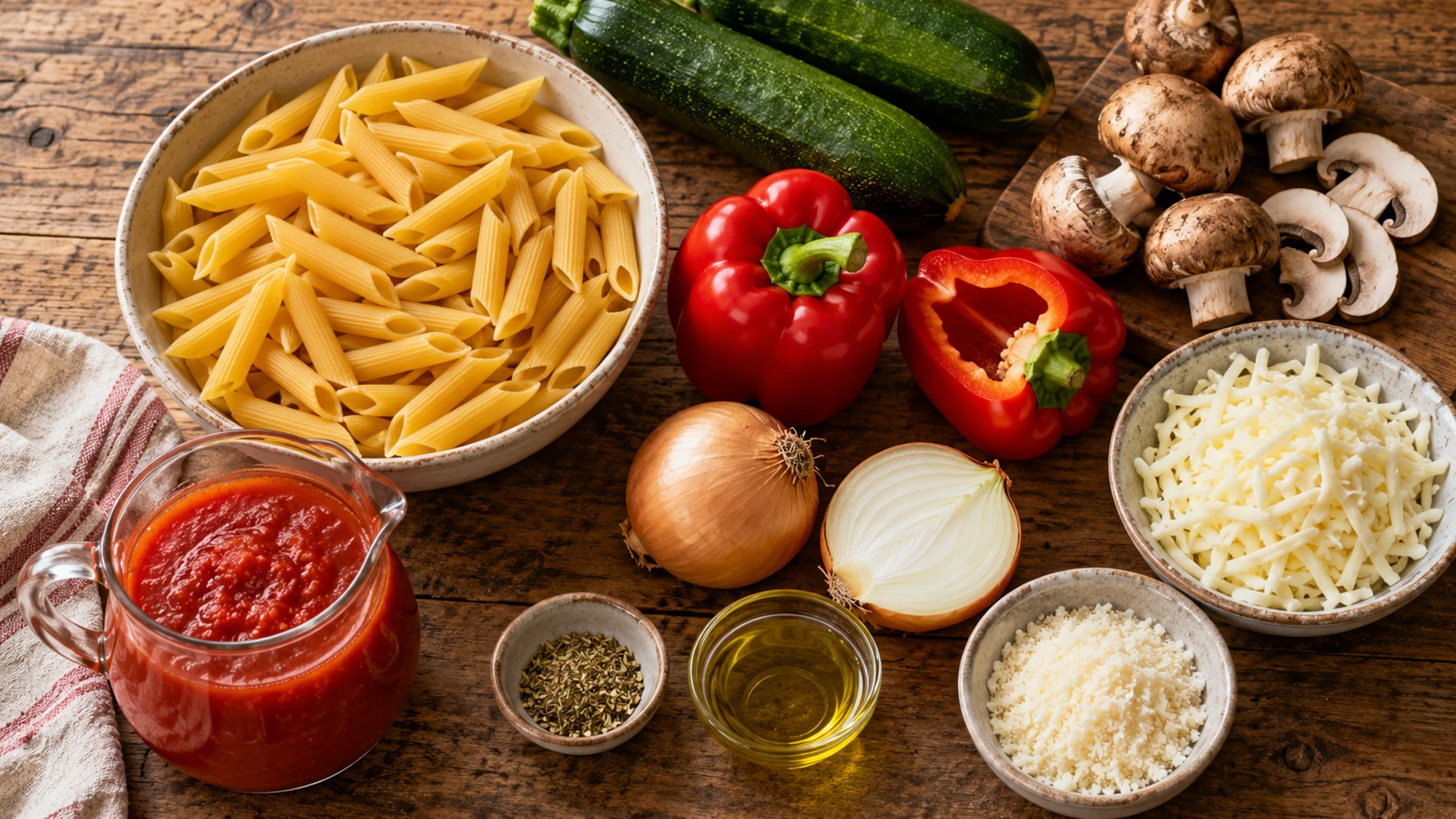
Ingredients
Equipment
Method
- Heat oven to 425°F. Toss zucchini, peppers, mushrooms and onion with olive oil, oregano, salt and pepper. Divide between two rimmed sheet pans in a single layer. Roast for 25–30 minutes, stirring and rotating pans halfway through, until tender with browned edges.
- Meanwhile boil penne in unsalted water, draining about 2 minutes before the package al dente time. Reserve 1/2 cup pasta water. Set out a 9-by-13-inch baking dish.
- Reduce oven to 375°F. Toss drained pasta, roasted vegetables, marinara and half the mozzarella in a large bowl or the pasta pot. If the mixture looks dry, add reserved pasta water a tablespoon at a time, up to 1/2 cup.
- Transfer to the baking dish and scatter remaining mozzarella and Parmesan over the top. Bake uncovered for 20–25 minutes, or longer as needed, until the center reaches 165°F and cheese melts with golden spots. Let stand 5 minutes before serving.
- Refrigerate leftovers in shallow containers within 2 hours, or 1 hour above 90°F. Keep at 40°F or below, use within 3–4 days and reheat throughout to 165°F. If starting with previously cooked vegetables, keep their original storage timeline in mind.