
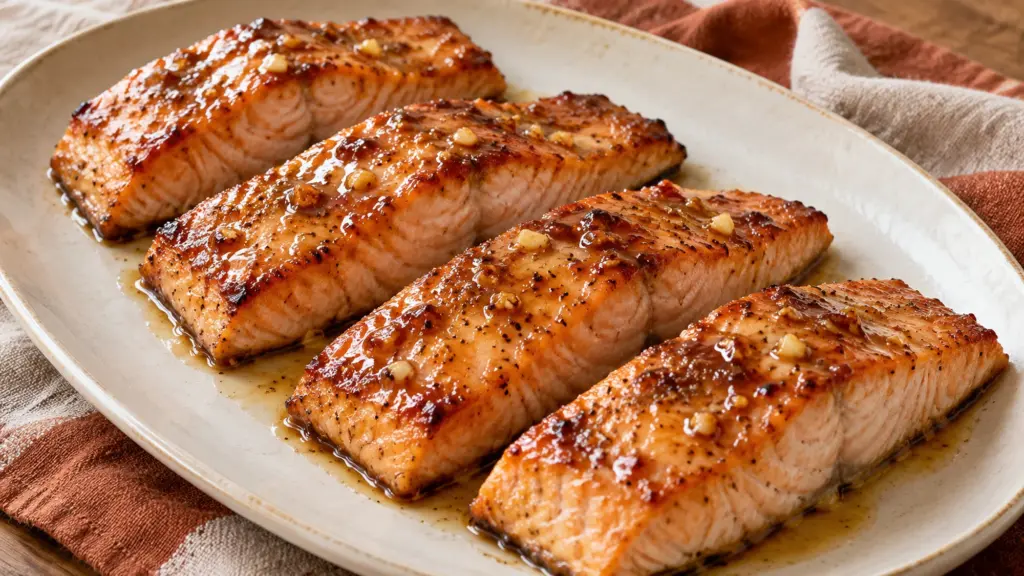
A bottle of maple syrup can do more than sweeten breakfast. Brushed over salmon with soy sauce, lemon and garlic, it makes a savory glaze that turns glossy in the oven. The edges pick up a little color while the center separates into tender flakes.
This maple glazed salmon uses four fillets and a quick, whisk-together glaze. There is no long marinade and no skillet to watch. Allow about 30 minutes, then serve it with a grain and something green for an easy fall dinner.
I prefer a thin coating here rather than a heavy sauce. You can still taste the salmon, and the lemon keeps the maple from taking over. Choose similarly thick portions so that one piece is not finished while another still needs several minutes.
Serving Suggestions for Maple Glazed Salmon
Put your sides in motion before the fish goes into the oven. Rice can rest with the lid on, while broccoli or green beans need only a short steam. A simple cabbage slaw gives the plate a crisp contrast without adding another hot pan.
For a more autumnal meal, pair the salmon with roasted squash and brown rice. Start dense vegetables well ahead of the fish rather than expecting everything to cook on the same schedule. Browse our side dishes for another direction, keeping the seasoning gentle enough for the glaze to stand out.
| What you want | Pair it with | Plan ahead |
|---|---|---|
| A simple dinner | Rice and steamed broccoli | Start rice first |
| An autumn plate | Roasted squash and greens | Give squash a head start |
| A crisp contrast | Cabbage slaw and bread | Dress slaw before baking fish |
Serve the fillets while warm, lifting them with a broad spatula. I would skip another sweet sauce on the side; the maple already brings enough sweetness to the plate.
Variations That Keep the Glaze Balanced
Use pure maple syrup for its distinct flavor. Pancake syrup has a different taste and can behave differently as it heats. Reduced-sodium soy sauce supplies salt as well as savory depth, so this recipe does not need a separate pinch of salt.
- For a gluten-free version, choose a specifically labeled gluten-free tamari and check every packaged ingredient. A little grated fresh ginger can replace one garlic clove if you want a warmer aroma. Keep extra sweeteners out unless you deliberately want a sweeter result.
- Skin-on portions are easy to handle, but skinless salmon also works. Either way, check the thickest part with a thermometer. Thin tail pieces will finish earlier than center-cut portions; remove individual pieces as they reach the safe endpoint rather than waiting for the entire pan.
Frozen fillets are useful too, provided they are fully thawed before baking. Follow the package thawing instructions, especially for vacuum-packed fish, and pat away surface moisture. A wet surface dilutes the coating and makes the glaze more likely to slide into the pan.
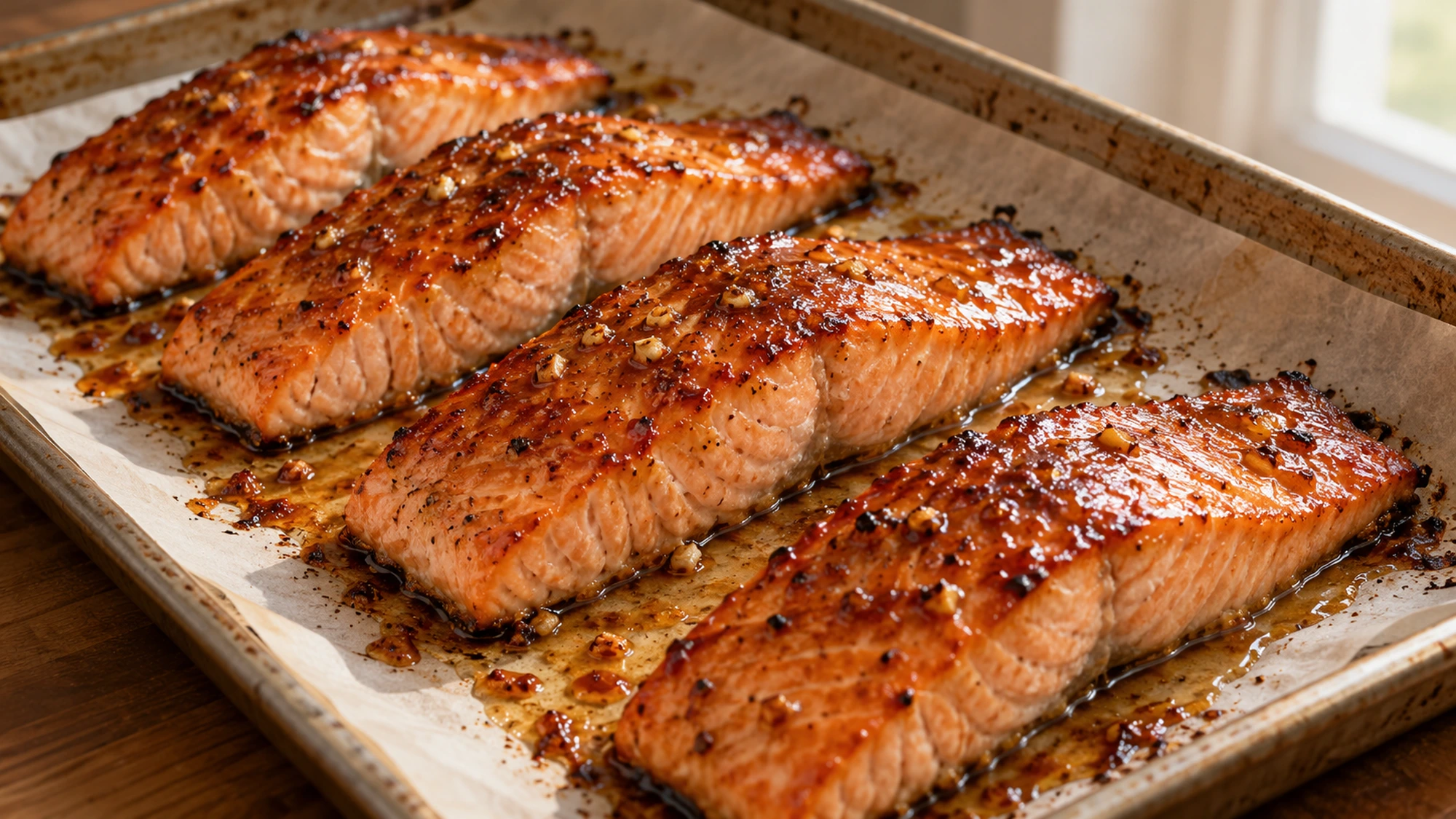
The glaze should look shiny, not blackened. If the edges darken before the salmon is ready, loosely cover the pan with foil and continue checking the center. There is no need to chase a deeply charred finish.
Health Benefits and Practical Nutrition Notes
Salmon supplies protein and omega-3 fats. The American Heart Association discusses fish and omega-3s as part of an overall eating pattern, not as a promise that one dinner will protect your health.
- Maple syrup is still a sweetener, and reduced-sodium soy sauce still contains sodium. The amount of glaze matters more than a wholesome-sounding ingredient name. The card estimates the salmon and all the glaze only; sides and substitutions change the meal’s total.
For food safety, follow the FDA’s handling and cooking guidance: keep raw fish separate from ready-to-eat food and cook finfish to 145°F. Reserve finishing glaze before a brush touches raw salmon, rather than saving a contaminated mixture for the table.
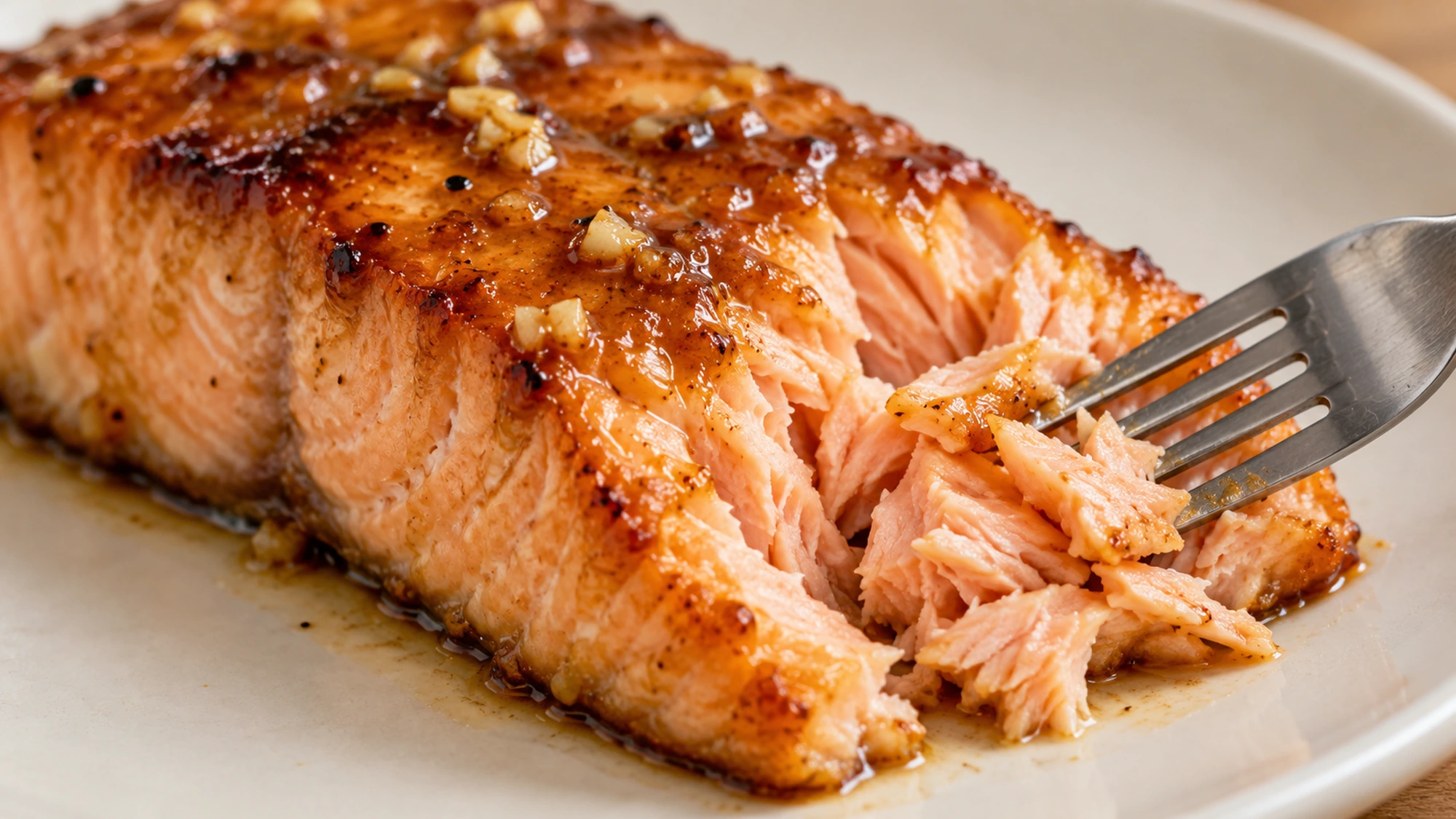
A satisfying plate does not need a health halo. Add vegetables and a grain you enjoy, measure the glaze, and let the fish remain the main attraction.
Bottom Line
Maple glazed salmon is a useful bridge between a quick weeknight dinner and a meal that feels a little more considered. Similar-size fillets, a thin glaze and a thermometer make the method easier to manage. Keep the sides simple and serve it as soon as the fish is ready.
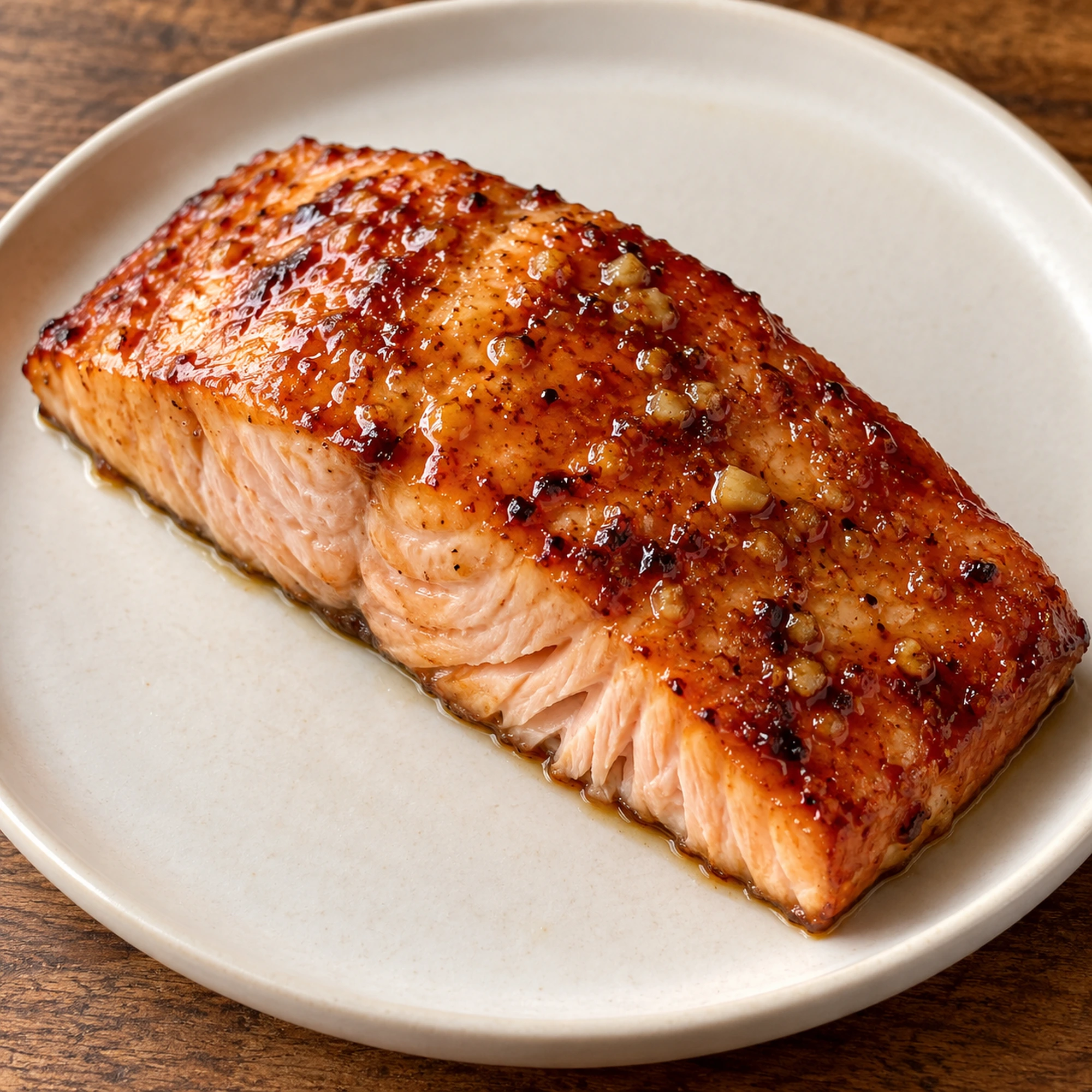

Maple Glazed Salmon Recipe
Ingredients
Equipment
Method
- Heat oven to 400°F. Line a rimmed baking sheet with parchment rated for this temperature. Pat salmon dry and set on the sheet, skin-side down if using skin-on portions.
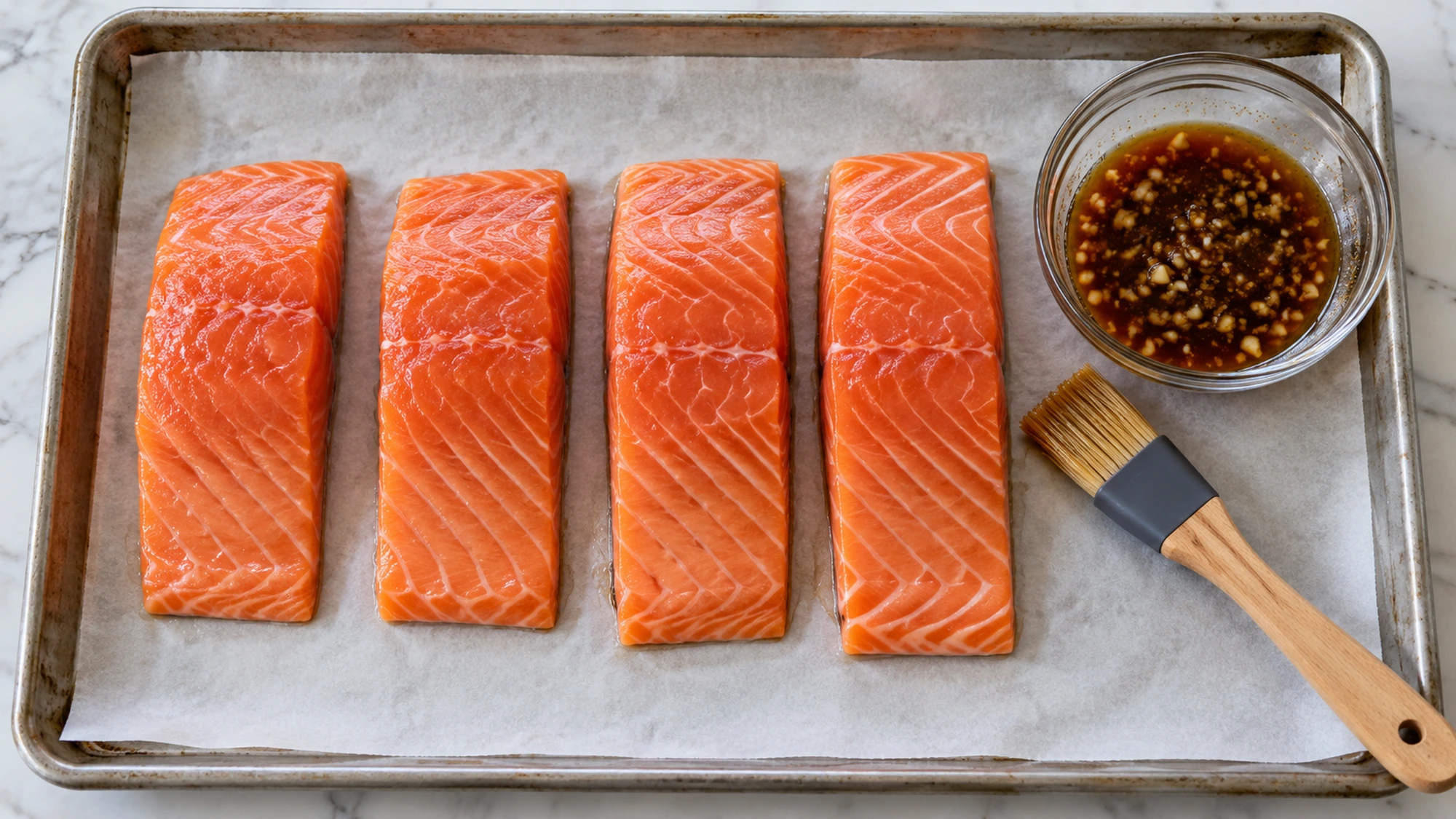
- Whisk maple syrup, soy sauce, lemon juice, garlic, olive oil and pepper. Set aside 1 tablespoon in a clean bowl for finishing before any utensil touches raw fish. Brush remaining glaze over salmon.
- Bake 12–18 minutes, checking earlier for thin pieces and allowing longer for thick portions. Verify 145°F in the thickest part with a food thermometer. If glaze darkens too quickly, loosely cover with foil; do not broil parchment.
- Use a clean utensil to brush the reserved glaze over cooked salmon. Serve one fillet per person. Refrigerate leftovers within 2 hours, or 1 hour above 90°F, in a shallow covered container at 40°F or below. Use within 3–4 days and reheat leftovers to 165°F.