
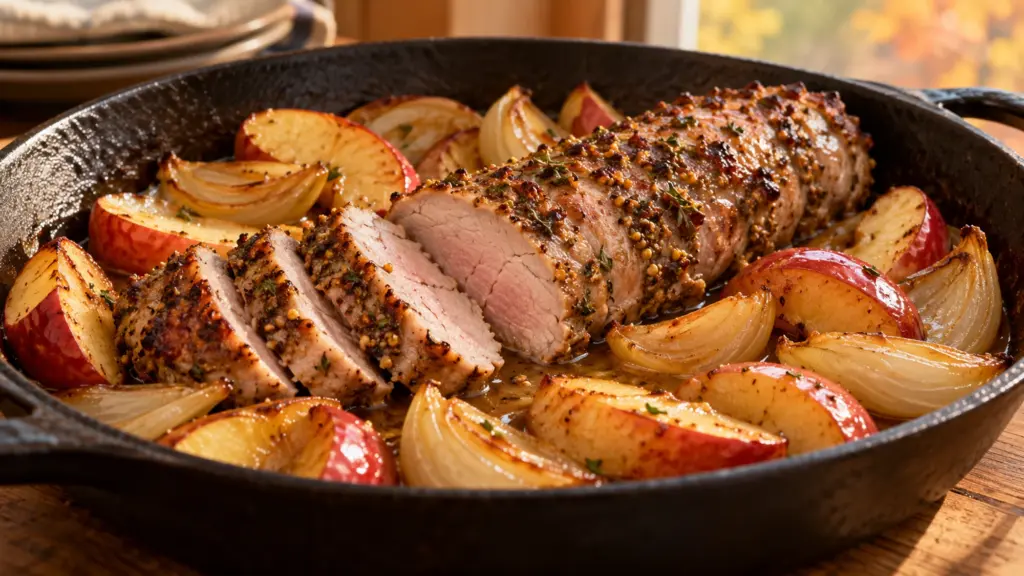
Apple pork tenderloin pairs a browned, mustard-brushed roast with tender apple wedges and onions. The pan sauce is light rather than sticky, with a small splash of cider vinegar to balance the fruit. It is a fall dinner built around a relatively quick-cooking cut, not a roast that needs hours in the oven.
Sear the tenderloin first, add the mustard after browning, and roast only until the thickest part reaches 145°F. Rest it for at least three minutes before slicing; this recipe allows five while you finish the sauce.
I like the apples left in substantial wedges so they stay part of the meal instead of disappearing into applesauce. Their sweetness is enough without brown sugar or honey. A little mustard and thyme give the pork a savory edge, and the onions soften into the juices beneath it.
Serving Suggestions for Apple Pork Tenderloin
Slice the rested pork crosswise and divide it among four plates with the apples, onions, and pan sauce. Add a green vegetable and, if wanted, a small serving of potatoes or cooked grains. The side dish collection offers choices that can round out the meal without competing with the fruit and mustard.
- Spoon the sauce over the sliced meat just before serving.
- Use a wide serving spoon for the apples so the tender wedges do not break apart.
- Keep the hot skillet handle covered with a dry oven mitt while finishing the sauce.
I would avoid a second sweet side here. Plain green beans, sautéed cabbage, or a peppery salad gives the plate more contrast than another fruit glaze. If you serve potatoes, keep them simple enough to catch a little pan sauce. The apples already provide the autumn character; the whole dinner does not need to taste like dessert.
Let the pork and apples share the spotlight. One green vegetable and an optional plain starch are enough to make the skillet into a complete dinner.
Apple Pork Tenderloin Variations and Cooking Cues
Check the package carefully: tenderloin and pork loin are different cuts. The National Pork Board’s tenderloin guide describes a small, lean cut that cooks quickly. A larger loin roast cannot use this timing simply because its name sounds similar.
| Choice | What it does | Practical note |
|---|---|---|
| Firm sweet-tart apples | Keep recognizable wedges | Try Pink Lady or Honeycrisp |
| Very soft apples | Break down more readily | Lift out early if already tender |
| Dried thyme | Provides concentrated herb flavor | Use one teaspoon instead of one tablespoon fresh |
Brush mustard onto the seared meat rather than putting it in the hot pan at the start. This keeps the coating from scorching before the pork develops color. If the apples finish before the meat, move them to a warm plate and return them when making the sauce. Different apple varieties and wedge sizes will not soften at precisely the same rate.
Use temperature for the pork and tenderness for the apples. The timer is a reminder to check, not a substitute for either cue.
Health Benefits and Portion Balance
Pork tenderloin contributes protein, thiamin, vitamin B6, and other nutrients. Apples and onions add some fiber, particularly when the apple skins stay on. This is still a meat-centered main dish, so a vegetable side adds something useful rather than serving only as decoration.
- Choose plain, unseasoned tenderloin rather than a pre-marinated product for closer control of sodium.
- All measured cooking oil and butter are included in the estimate.
- Mustard and broth labels vary, even when the portions look small.
A thermometer also helps keep this lean cut from drying out. Follow the 145°F minimum and three-minute rest for whole pork cuts. A slight blush can remain, but color alone cannot establish safety. Insert the probe into the thickest section without touching the skillet.
The useful approach is simple: a measured portion of pork, apples and onions, and enough vegetables elsewhere on the plate. Avoid turning one lean ingredient into a claim about the entire meal.
Bottom Line
Refrigerate leftovers in shallow containers within two hours and use within three to four days. Reheat covered with a little broth until the pork reaches 165°F. Thin leftover slices heat quickly, so check them rather than simmering the whole portion until the apples collapse.
Brown the pork, protect the mustard coating, and trust the thermometer. Firm apples and a light pan sauce make this a savory fall dinner with just enough sweetness.
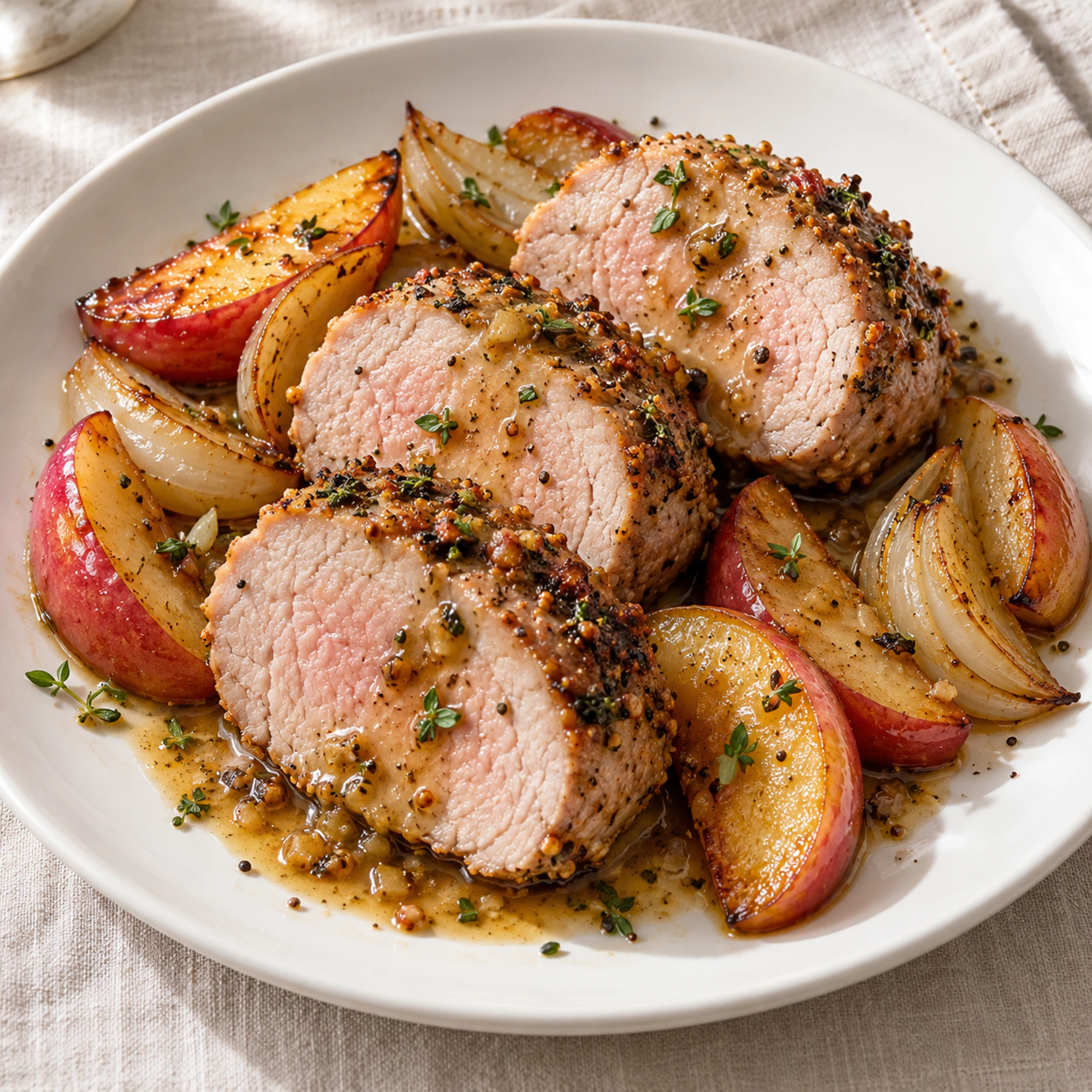

Apple Pork Tenderloin Recipe
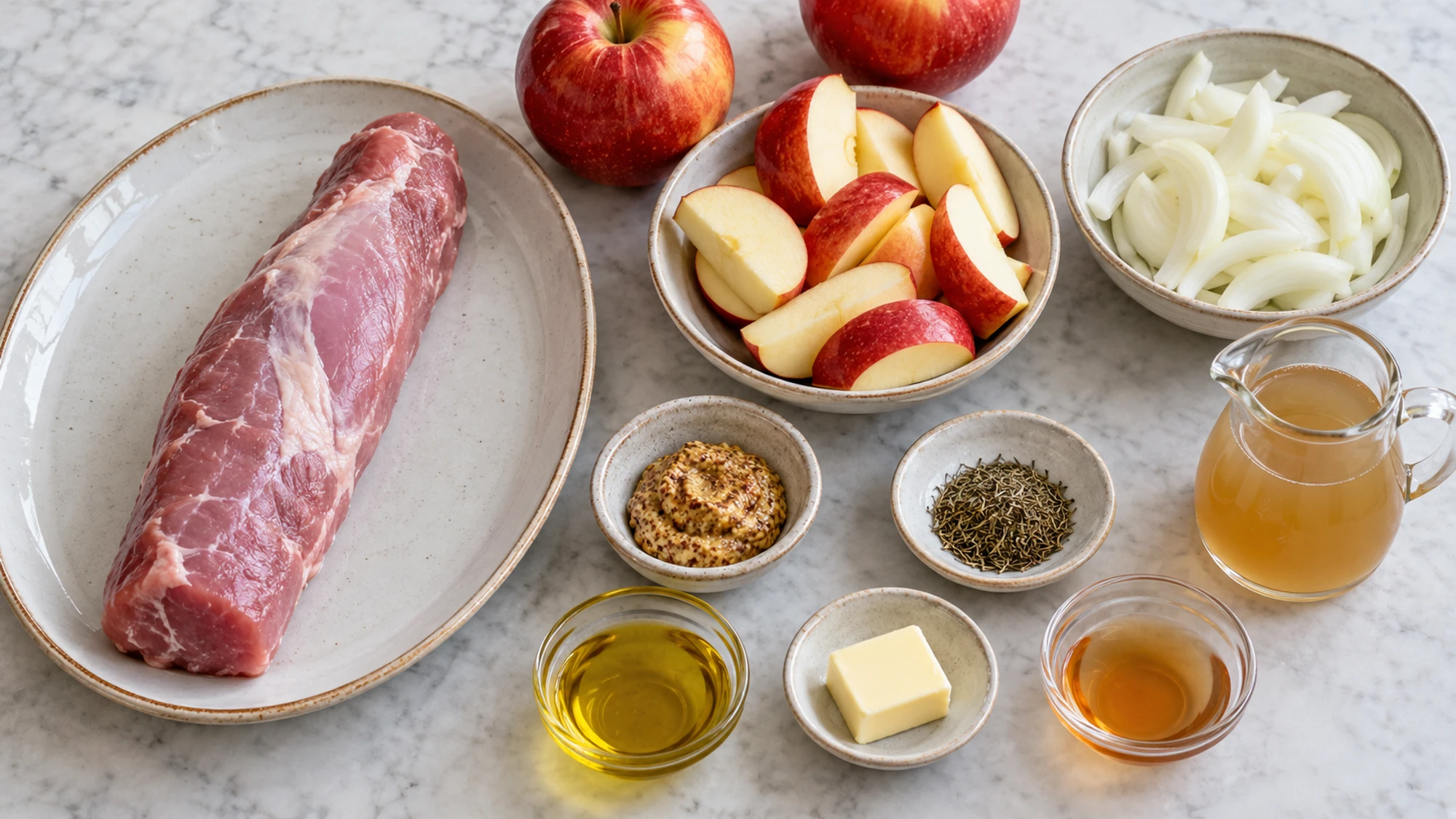
Ingredients
Equipment
Method
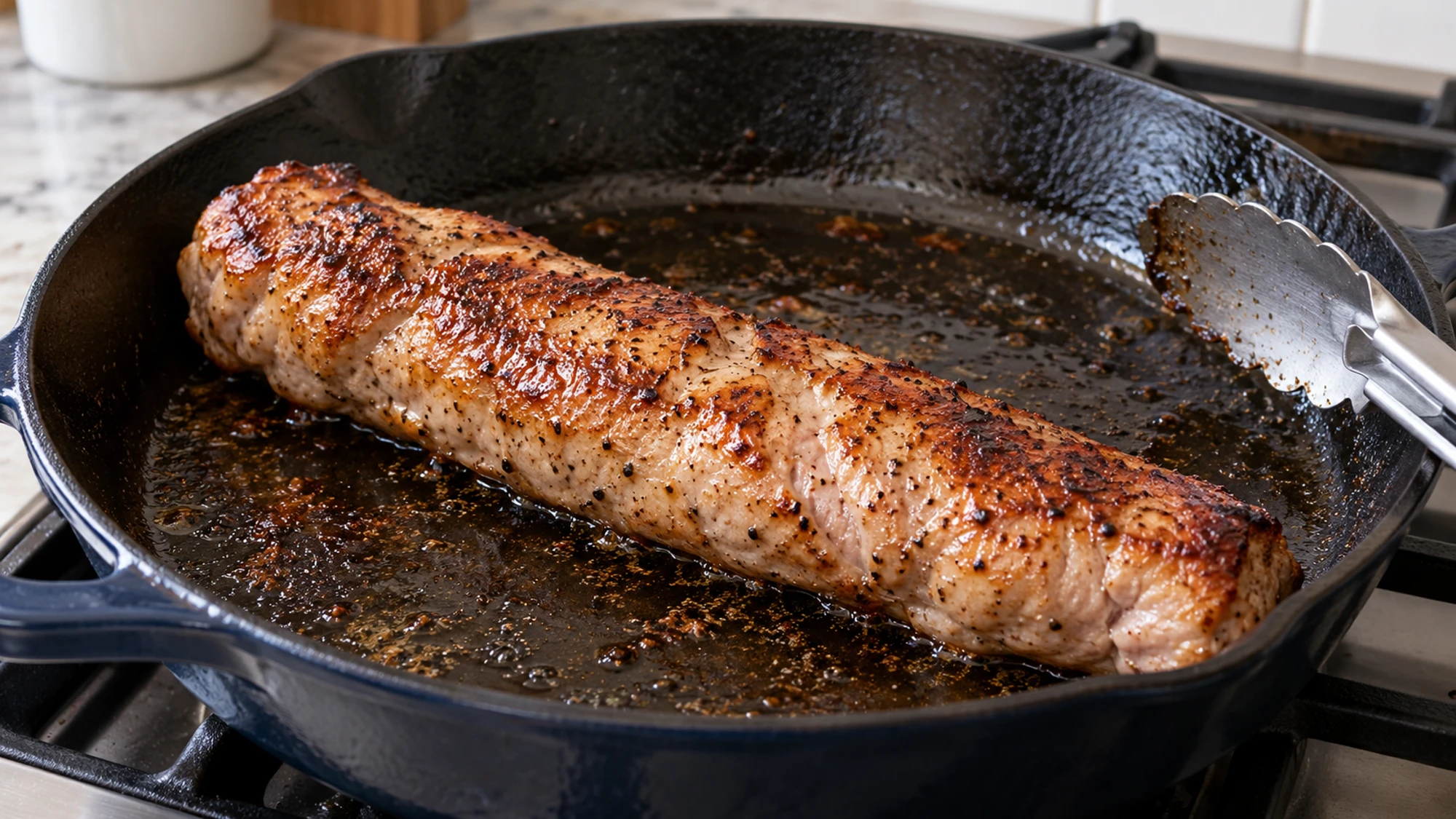
- Heat oven to 425°F. Trim silver skin from pork without removing large pieces of meat. Pat dry and season with salt and pepper. Heat oil in a 12-inch ovenproof skillet over medium-high heat. Sear pork on all sides, turning with tongs, 6–8 minutes total. Transfer to a clean plate; it is not cooked through yet.
- Reduce heat to medium. Add apples and onion to the same skillet and cook 5 minutes, turning gently, until starting to soften and brown. If the pan is very dry, add 1 tablespoon of the measured broth rather than extra oil.
- Brush seared pork with mustard and sprinkle with thyme, reserving a pinch of fresh leaves for serving if desired. Set it on the apples and onions. Roast 12–20 minutes, checking early, until an instant-read thermometer in the thickest part reads at least 145°F. If apples are already tender, lift them out while pork finishes.
- Transfer pork to a clean cutting board and rest loosely covered for 5 minutes, never less than 3 minutes. Protect your hand from the hot skillet handle. Place skillet over medium heat, add remaining broth and vinegar, and scrape up browned bits. Simmer 3–5 minutes to reduce slightly and finish softening the apples and onions if needed. Stir in butter.
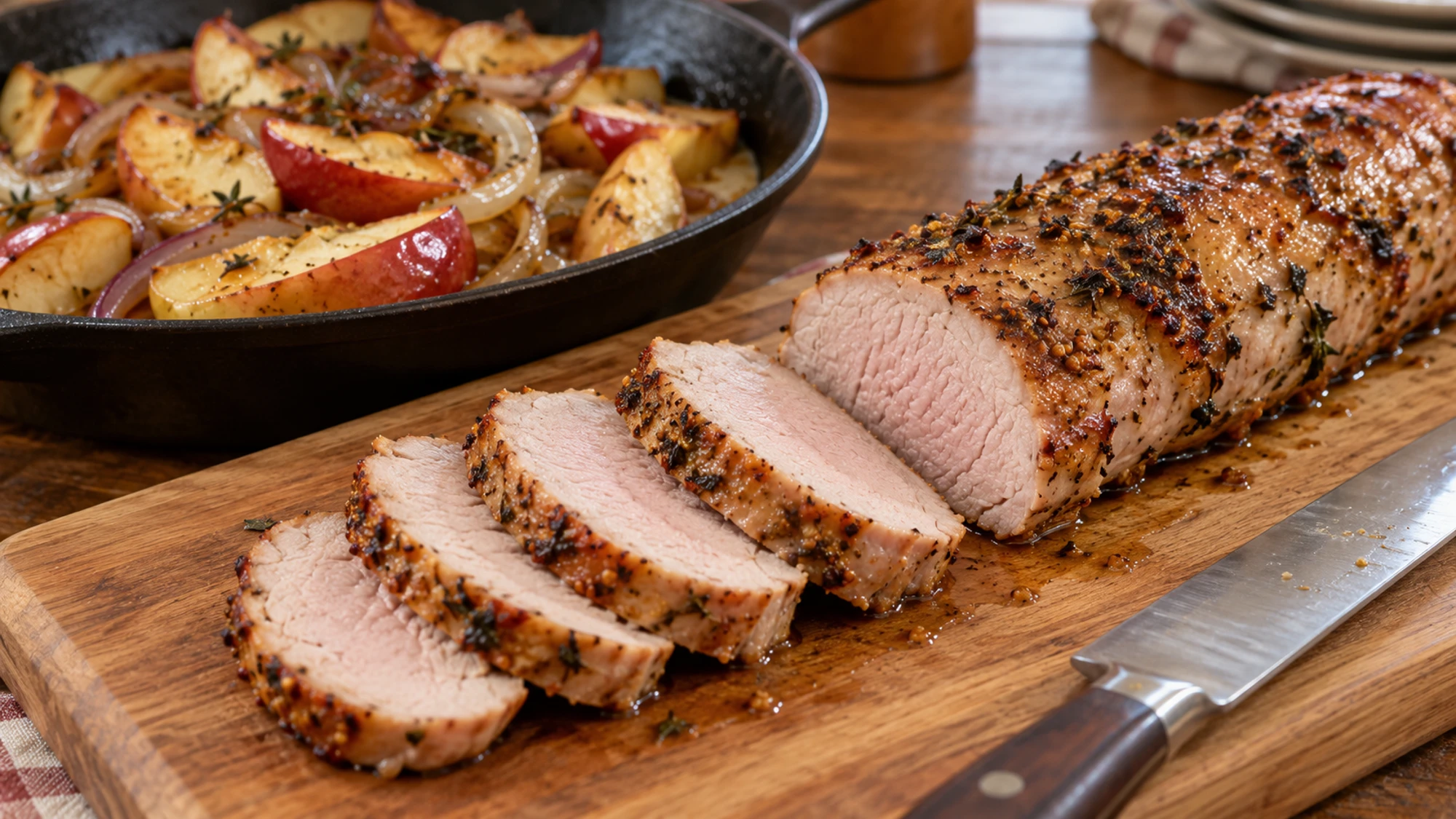
- Slice rested pork crosswise into 3/4-inch medallions. Divide among four plates with apples, onions, and sauce. Add the reserved pinch of fresh thyme, if using.
- Refrigerate leftovers in shallow containers within 2 hours, or 1 hour above 90°F. Use within 3–4 days. Reheat covered with a splash of broth until pork reaches 165°F.