
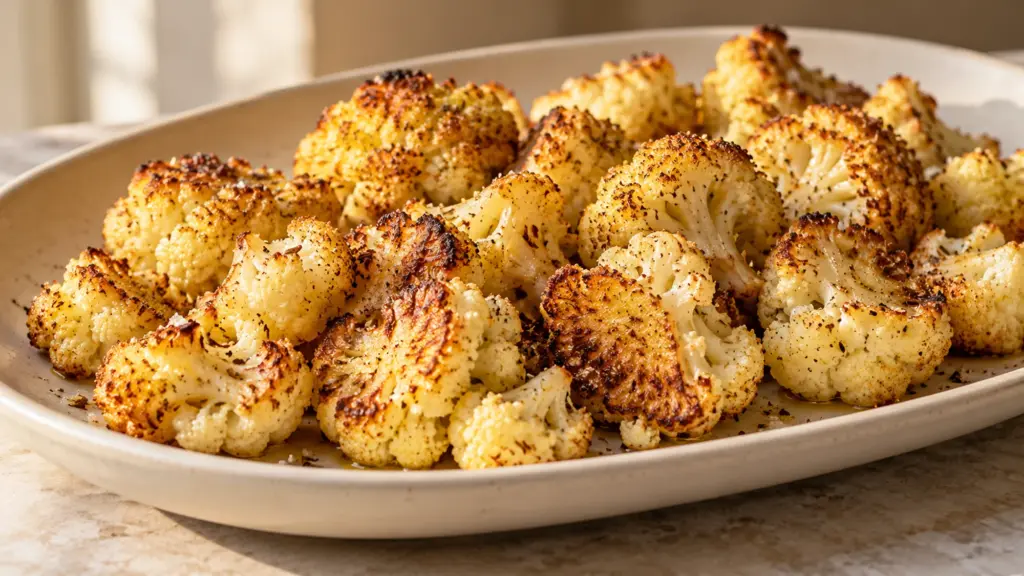
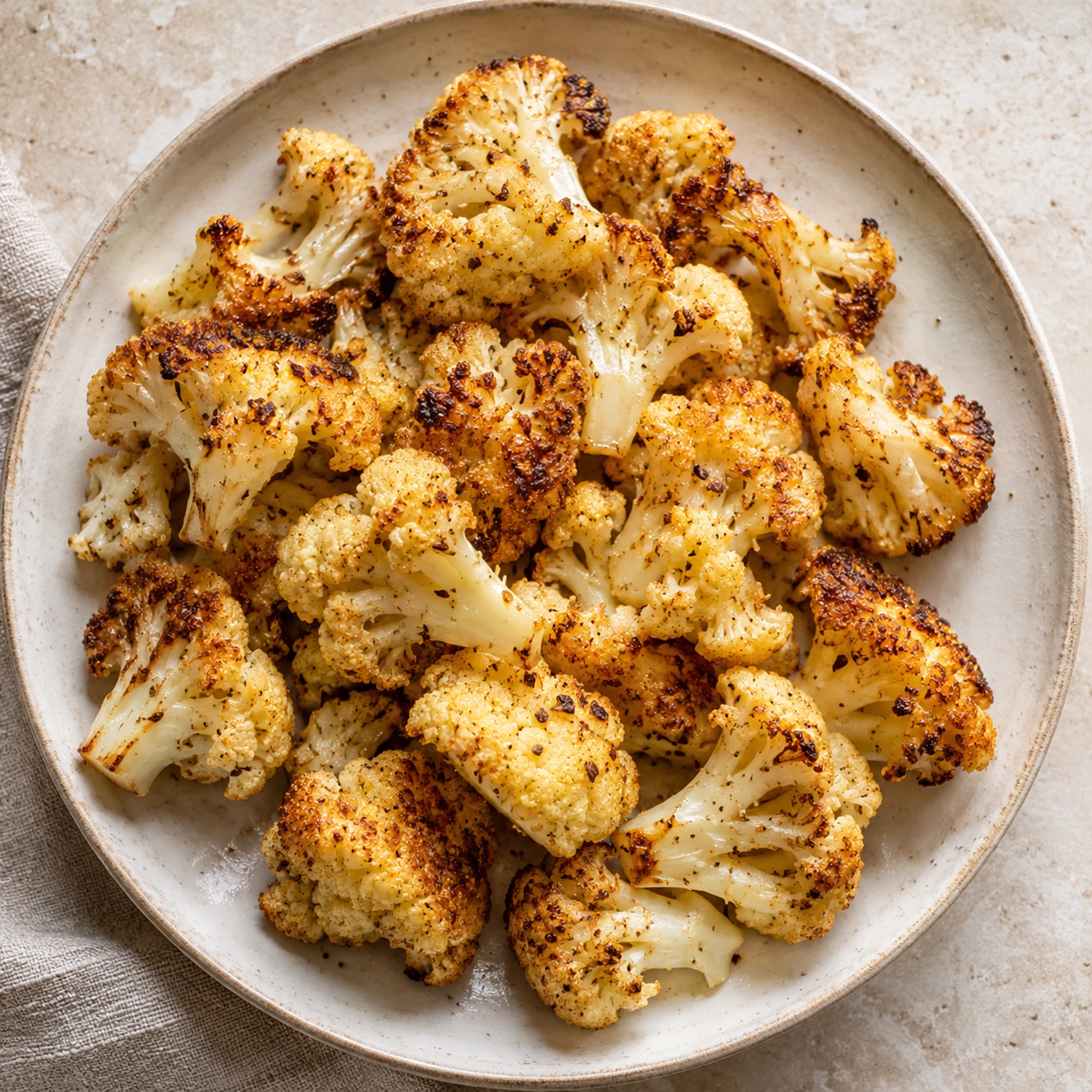
A pale cauliflower floret can seem unremarkable until its flat side turns golden against a hot pan. The flavor becomes nuttier, the stem softens and the branching edges pick up a little crunch. Cutting the florets to create those flat surfaces is a small preparation choice with a noticeable payoff.
This roasted cauliflower gets a warm cumin coating and a squeeze of lemon after it leaves the oven. The method is straightforward: dry the florets, coat them evenly and place cut sides against the pan rather than balancing every piece on its stem.
I prefer this as a vegetable in its own right, not a stand-in pretending to be something else. The browned edges and lemony finish give it plenty of personality. A simple tray can be more appealing than another vegetable hidden under a thick sauce.
Serving Suggestions for Roasted Cauliflower
The cumin makes this a natural partner for chickpeas, lentils, chicken or a grain bowl. Spoon it alongside the main rather than burying it underneath, where moisture can soften the toasted surfaces. Add the lemon just before serving so its flavor stays lively.
A yogurt sauce or tahini dressing can be served separately if you want a creamy contrast. I would start with a small amount and let the cauliflower remain visible. Those extras change the allergens and nutrition, and are not included in this plain roasted version.
| Meal idea | Pair it with | Keep the texture |
|---|---|---|
| Grain bowl | Lentils and cooked grains | Add cauliflower last |
| Roast dinner | Chicken or a bean main | Serve on a separate platter |
| Simple lunch | Chickpeas and a small dressing | Dress only before eating |
Browse our main dishes for something to serve beside the tray. A protein food and a starch can turn this side into part of a more substantial dinner.
Variations and Choosing the Right Floret Size
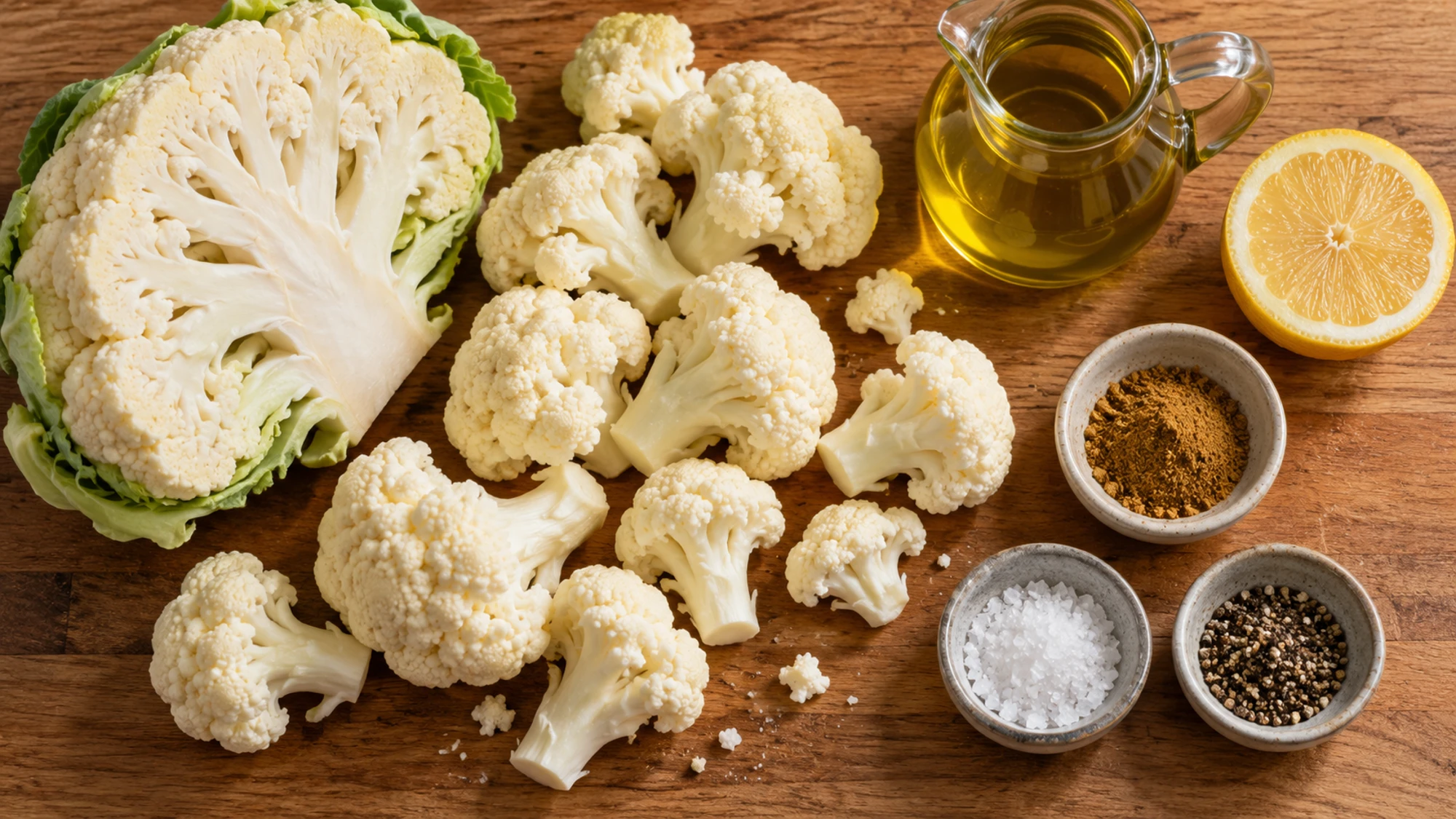
Look for a compact head with fresh-looking leaves and no extensive brown patches. Purdue Extension’s cauliflower guide describes several colors and preparation options. White cauliflower is used here, but orange or purple varieties can make the same basic tray look different.
- Cut through the larger stems first, then separate the florets by hand. This creates fewer tiny crumbs than sawing directly through the delicate tops. Halve large florets to expose a broad cut side.
- Keep the pieces around 1.5–2 inches across. Very small bits brown quickly, while oversized stems can stay firm after the tips look finished. Put unusually small pieces near the center of the tray.
- Coat the florets in a bowl so oil reaches the uneven surfaces. A puddle of oil in one corner of the pan does not help the dry pieces at the other end.
- Replace cumin with a little smoked paprika for a different flavor, or keep only salt and pepper. Avoid adding several strong spices at once if you want to notice the cauliflower itself.
- If adding grated Parmesan, sprinkle it near the end rather than at the beginning. Cheese adds milk and changes the nutrition; this base recipe does not contain it.
Frozen cauliflower is an alternative, but it releases more moisture and may need a different cooking time. The directions and texture cues here are for fresh florets, not a promise that every bag of frozen pieces will behave identically.
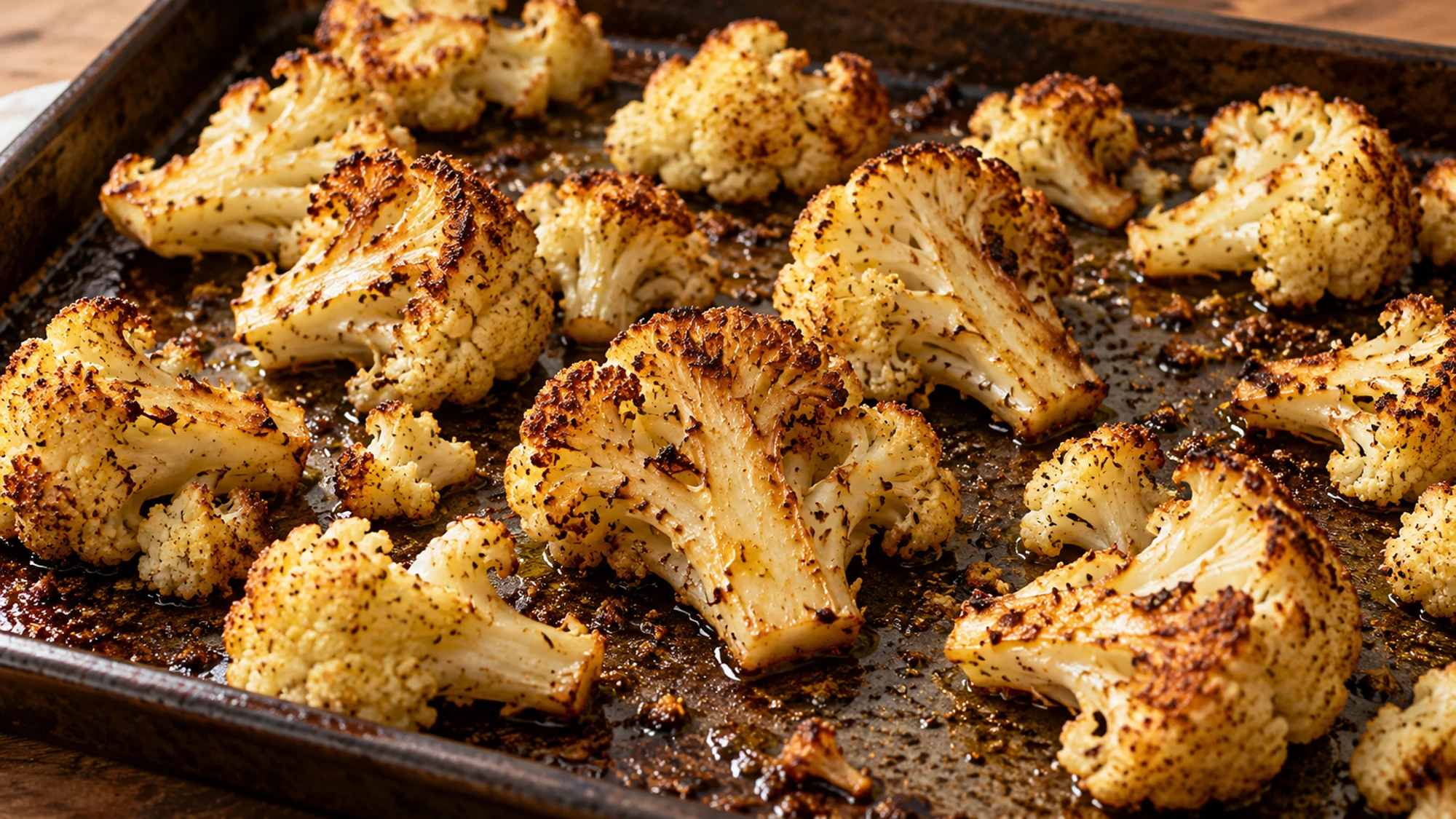
Aim for a browned face and a tender stem. When the tray is pale, first check crowding and surface moisture rather than adding more seasoning.
Health Benefits and Keeping Leftovers Useful
Cauliflower contributes fiber, and this recipe includes measured oil rather than a cream sauce. It is not nutritionally interchangeable with rice, meat or another food simply because it can be cut into a similar shape. Here, its role is a flavorful vegetable side.
- The estimate includes all olive oil, salt and lemon juice. It uses the raw edible cauliflower weight, because roasting removes water and changes the weight of the finished portion.
- Refrigerate leftovers in shallow containers within two hours, or one hour above 90°F. Keep at 40°F or below, use within 3–4 days and reheat to 165°F.
- An oven or skillet can improve the texture when reheating. Leftovers will usually be softer, so they can also work folded into a warm grain-and-bean meal.
The FDA’s safe food handling guidance is a useful reference for chilling cooked vegetables promptly. Keep sauces separate when storing if you want more options for the next meal.
A little planning preserves both usefulness and safety: make a manageable batch, chill what remains promptly and give leftovers a realistic place in tomorrow’s meal.
Bottom Line
Give roasted cauliflower a flat side, enough space and a bright lemon finish. Cumin adds warmth, but the most important flavor comes from letting the vegetable brown properly before it reaches the plate.

Roasted Cauliflower Recipe
Ingredients
Equipment
Method
- Heat oven to 425°F (220°C). Remove leaves and tough core from cauliflower. Cut into similarly sized florets, halving larger ones through the stem to create flat surfaces. Wash and dry thoroughly.
- Toss cauliflower with olive oil, cumin, salt and pepper in a large bowl. Spread on a large rimmed sheet pan in one layer, with cut sides down and space between pieces. Use a second pan if needed.
- Roast 25–30 minutes, turning once around halfway, until flat surfaces are golden and the stems are fork-tender. Check small florets early to prevent burning.
- Transfer to a serving platter and toss with lemon juice. Serve promptly. Refrigerate leftovers within 2 hours, or 1 hour above 90°F, at 40°F or below; use within 3–4 days and reheat to 165°F.