
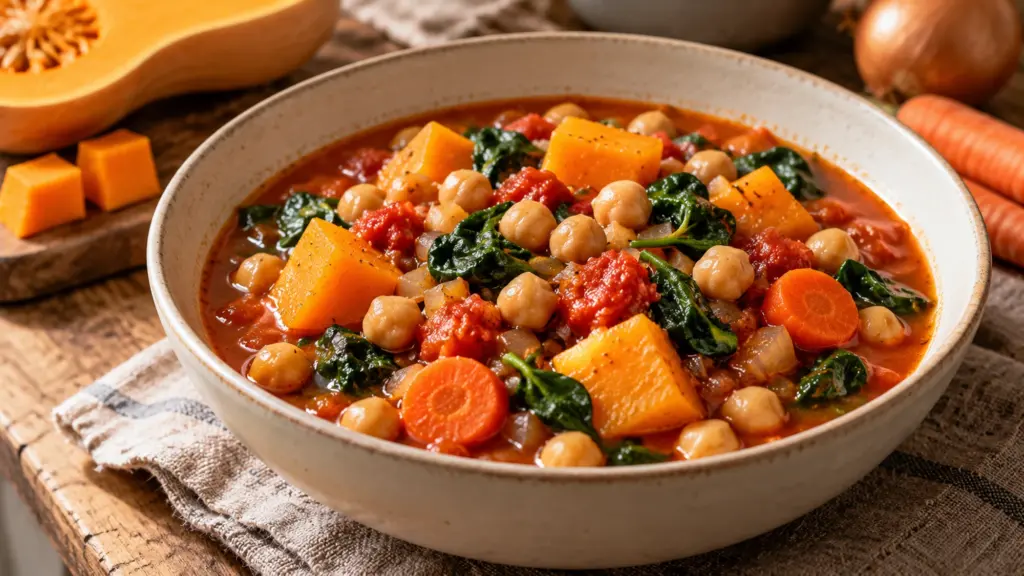
A pot of stew is a good place for the sweet, earthy flavors of fall. Butternut squash softens around the edges, chickpeas stay pleasantly firm and tomato gives the broth a little brightness. A handful of spinach at the end adds green without disappearing into a long simmer.
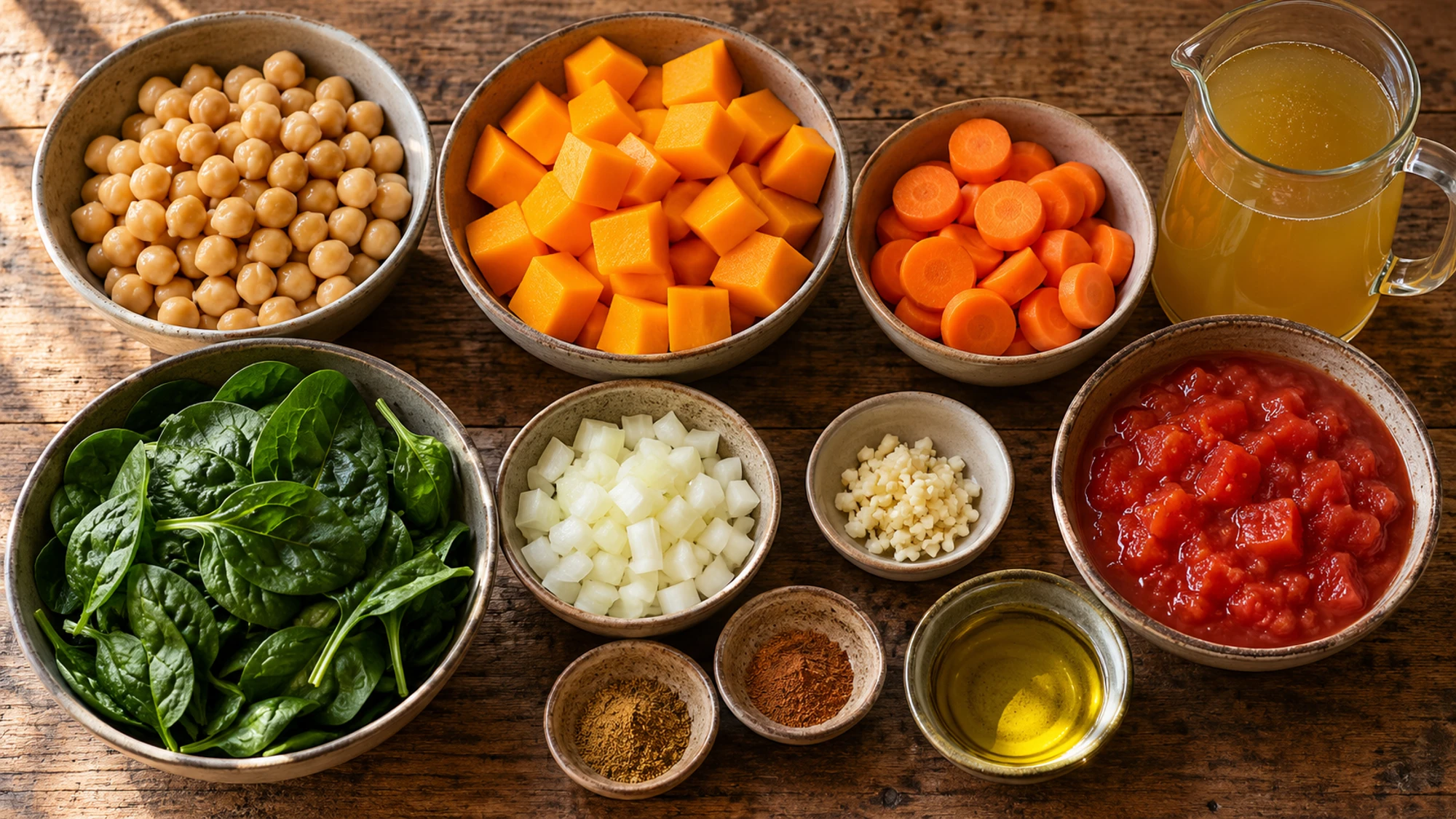
This autumn chickpea stew combines cooked chickpeas, butternut squash, carrots and tomatoes with cumin and a small pinch of cinnamon. It is a one-pot main with no cream or meat, and the squash cooks directly in the broth rather than needing a separate roasting step.
I prefer the squash in small, even cubes so it becomes tender before the carrots turn too soft. The cinnamon should sit quietly in the background, not announce dessert. Start with the measured amount and let the savory ingredients do most of the talking.
Serving Suggestions for Autumn Chickpea Stew
Ladle the stew into deep bowls, reaching down for chickpeas and squash as well as broth. Six servings make a useful pot for dinner and another meal. A piece of crusty bread is welcome for dipping, or you can serve a smaller bowl beside a simple grain dish.
I would keep any topping modest, because the stew already has several flavors and textures. It does not need cheese to feel complete. For a cool contrast, choose a crisp salad from our side dishes rather than adding another soft, saucy element.
| How to serve | Useful addition | Keep in mind |
|---|---|---|
| A full bowl | Crusty bread | Good for dipping |
| A grain bowl | Cooked brown rice | Use less stew per bowl |
| Lunch portion | Crunchy salad | Keep dressing separate |
The broth should surround the vegetables without making them swim. If it becomes thicker than you like after resting, loosen an individual serving with a little water when reheating.
Variations and Getting the Squash Tender
Use fully cooked chickpeas, not dried ones straight from the bag. Dried chickpeas need their own soaking and cooking plan and will not reliably soften during this stew’s simmer. The nutrition estimate uses unsalted cooked chickpeas; drained, rinsed canned chickpeas are convenient but may change the sodium.
- Peel and seed the butternut squash before weighing it. Cut roughly 3/4-inch cubes; very large chunks can remain firm while the smaller pieces break down.
- Precut fresh squash saves knife work. Check the pieces and trim any unusually large ones so their cooking times stay close together.
- Kale can replace spinach, but remove tough stems, chop the leaves and add them earlier so they have time to soften. This changes both texture and nutrition.
- For a thicker stew, press a few cooked squash cubes and chickpeas against the side of the pot. Keep most pieces whole rather than blending the entire batch.
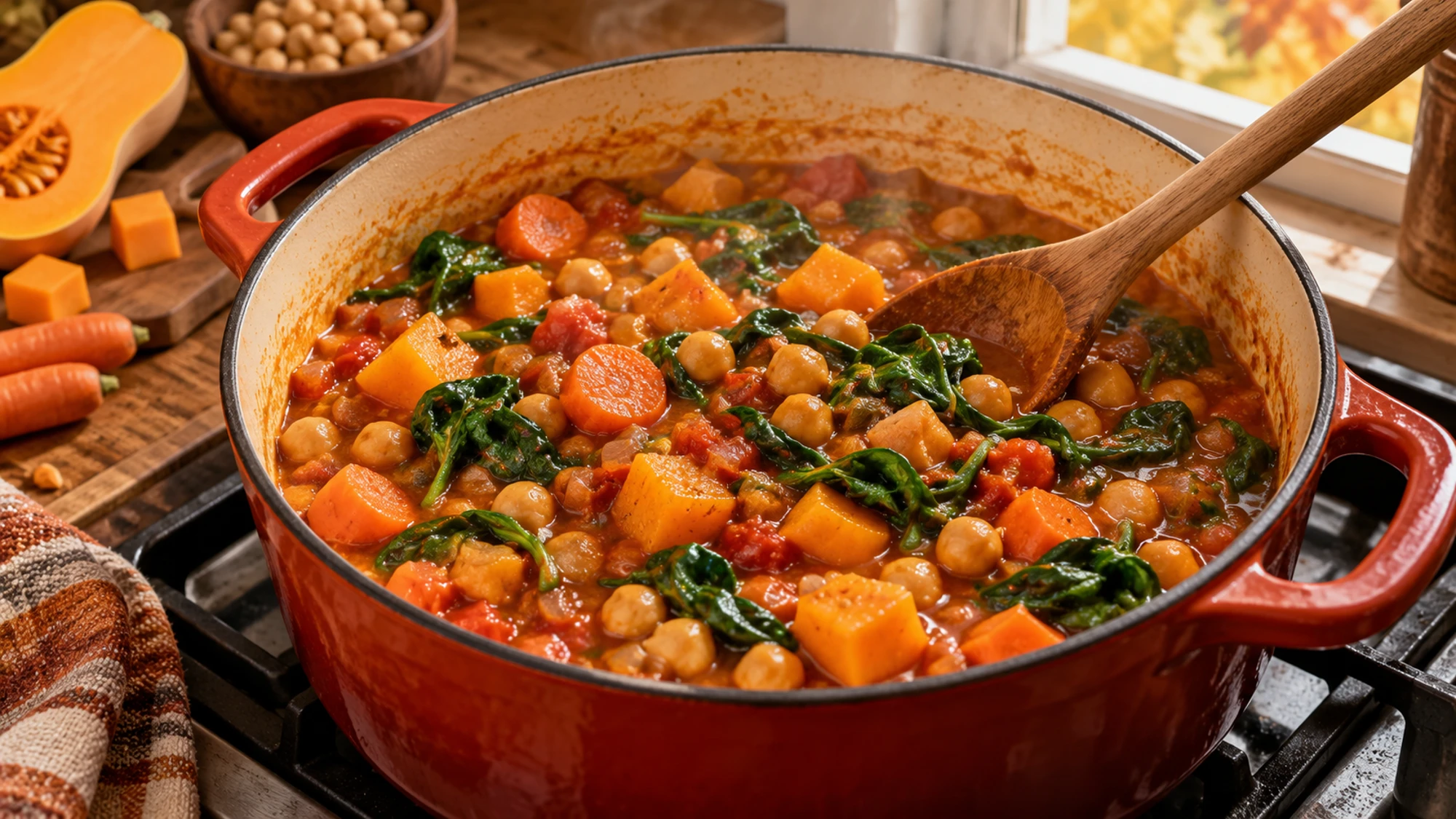
Check the squash with a fork instead of relying only on the timer. It should yield easily, while the chickpeas still hold their shape and the broth remains spoonable.
Health Benefits and Safe Leftovers
Chickpeas contribute protein and fiber, and the vegetables add more variety to the bowl. MedlinePlus explains the nutritional role of beans and legumes, including their protein and fiber. That does not make this stew a treatment or a substitute for an overall varied eating pattern.
- This recipe has no meat or dairy ingredients. Check the vegetable broth and other packages if you need a particular dietary or allergen standard.
- Refrigerate leftovers in shallow containers within two hours, or one hour above 90°F. Keep at 40°F or below and use within 3–4 days.
- Reheat to 165°F throughout, stirring so dense pockets of chickpeas and squash heat evenly. If the chickpeas were cooked ahead, track their original refrigerated storage time too.
The FDA recommends prompt chilling and shallow containers for leftovers. A large pot of meatless stew still needs careful handling; leaving it on the counter until completely cold is not the goal.
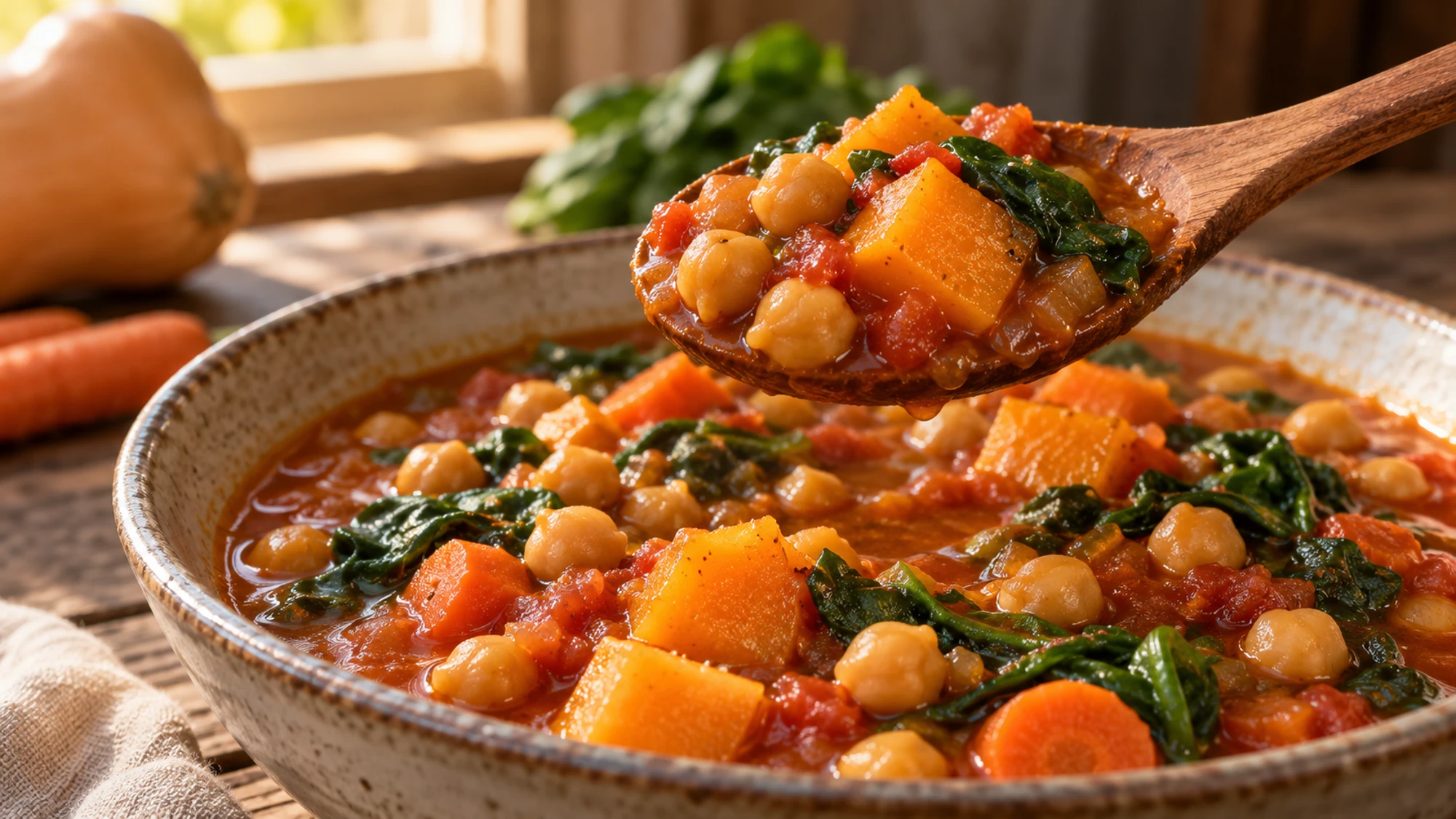
A useful meal-prep dish is one you can portion and chill safely. Keep the vegetables colorful, the seasoning balanced and the storage dates easy to remember.
Bottom Line
Autumn chickpea stew brings butternut squash and pantry chickpeas together in one warm pot. Even-sized cubes, already-cooked beans and a late addition of spinach keep the method straightforward while preserving the textures that make each spoonful interesting.
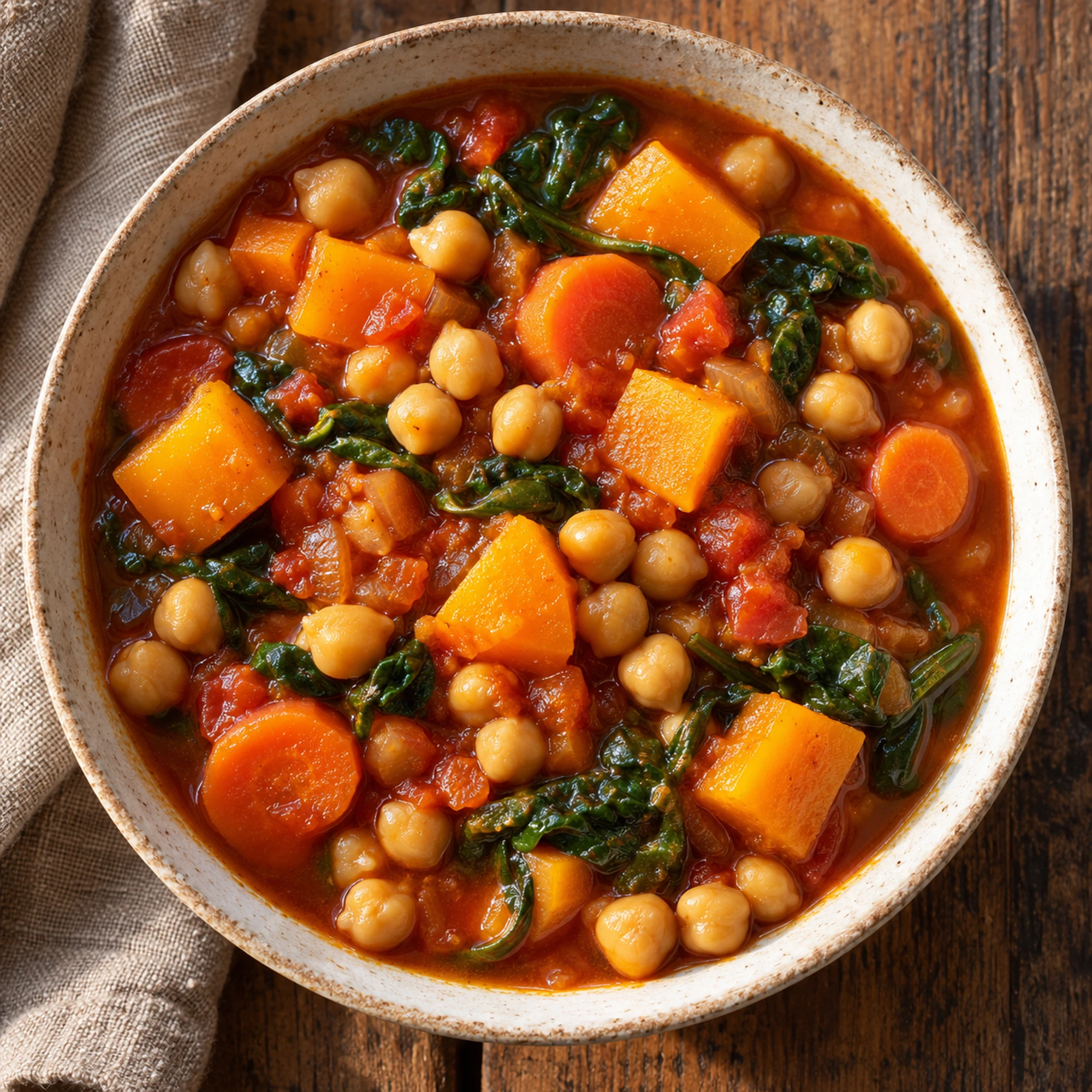

Autumn Chickpea Stew Recipe
Ingredients
Equipment
Method
- Heat oil in a large Dutch oven over medium heat. Add onion and carrots and cook for 5–7 minutes, stirring, until onion softens. Add garlic, cumin and cinnamon and stir for 30 seconds.
- Add squash, fully cooked chickpeas, tomatoes with their juices, broth, salt and pepper. Bring to a simmer. Partially cover and cook gently for 25–30 minutes, stirring occasionally, until squash and carrots are fork-tender. If the pot becomes too thick before squash softens, add water a little at a time.
- Stir in spinach and simmer for 2–3 minutes until wilted. For a thicker texture, mash a few chickpeas and squash cubes against the pot and stir them back in. Divide into six bowls.
- Refrigerate leftovers in shallow containers within 2 hours, or 1 hour above 90°F. Store at 40°F or below for 3–4 days, considering the original cooking date of any previously cooked chickpeas. Reheat throughout to 165°F, stirring and adding a splash of water if needed.