
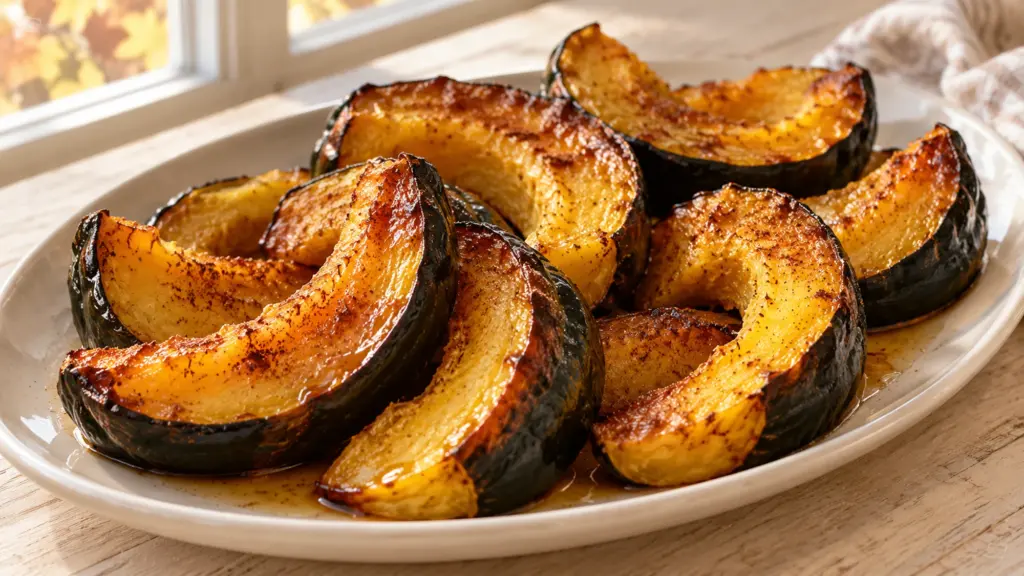
Maple roasted acorn squash looks like a holiday side before you add a single garnish. Its scalloped green edges frame golden flesh, and a light maple glaze turns glossy in the oven. Cutting it into wedges gives more surface for browning than leaving it in halves, while keeping the portions easy to share.
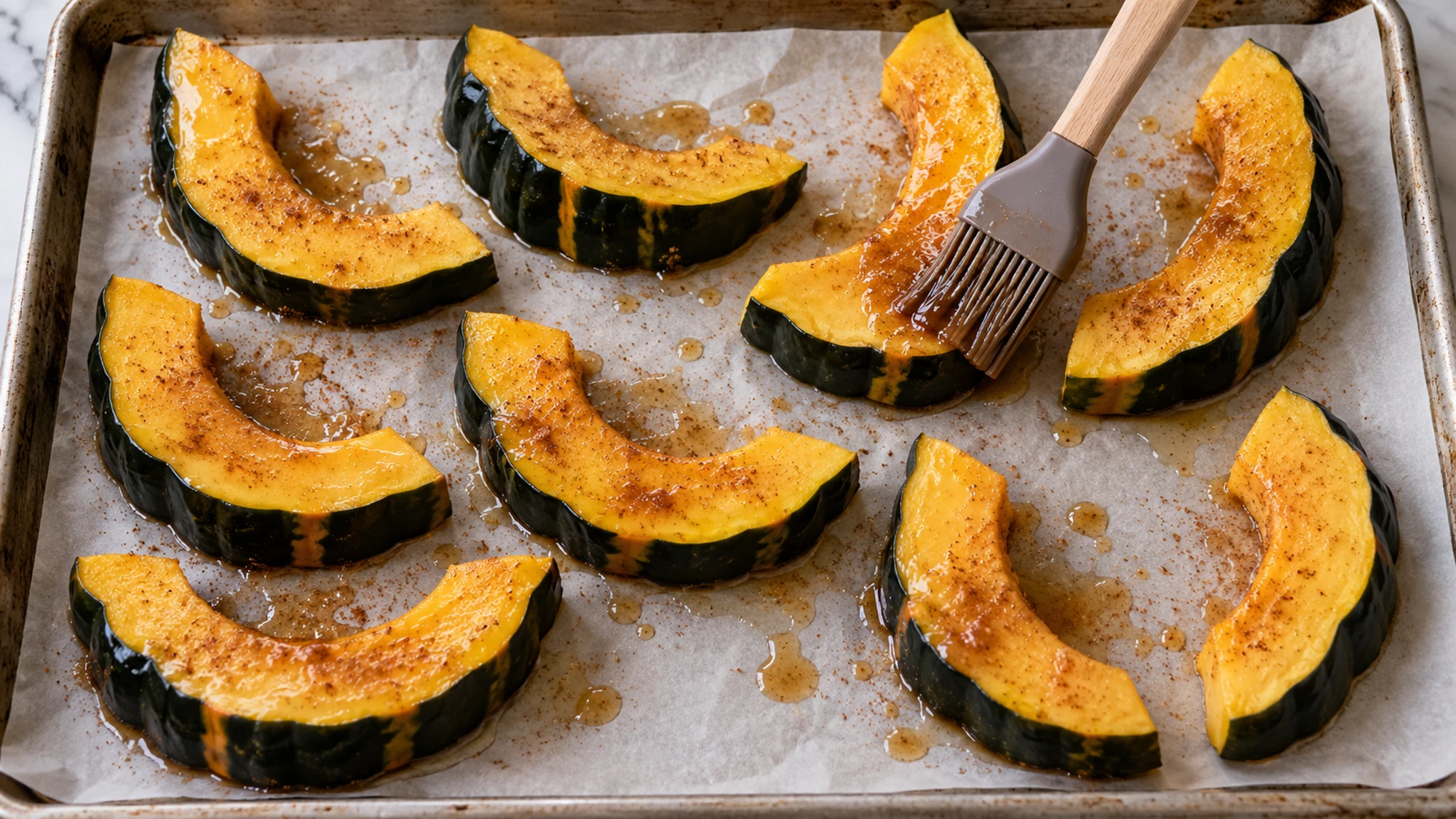
For maple roasted acorn squash with tender centers and browned edges, cut even wedges, brush both sides lightly with maple butter, and leave space on the pan. Turn once during roasting. The squash is ready when a fork enters the thickest flesh easily, not merely when the glaze looks dark.
I prefer just enough cinnamon to notice its warmth without covering the squash. This is a sweet-leaning side, but it should still belong beside dinner rather than taste like pie filling. A little salt and pepper help keep that balance.
Serving Suggestions for Maple Roasted Acorn Squash
Serve four side portions with roast turkey, chicken, pork, or a savory lentil dish. The maple flavor also works beside bitter greens or a tart cabbage salad. If another side already has a sweet glaze, consider choosing something plainer so every dish does not land on the same note.
- Arrange the wedges in a single loose layer on a platter rather than stacking them deeply, which traps steam.
- Let guests cut the flesh away from the rind if they find the skin too firm. There is no need to struggle through a tough edge.
- For a grain bowl, remove the rind and cut the cooked flesh into smaller pieces, then add beans or another protein source.
My ideal pairing would be a savory main and a green vegetable with some acidity. That combination lets the maple stand out without becoming the whole story. Look through the side dish collection for a companion that brings a different texture or flavor.
Treat the squash as the gently sweet part of the plate. Pair it with something savory and something fresh or tart for a more varied meal.
Variations and Tips for Maple Roasted Acorn Squash
The first job is a stable cut. Scrub the squash, dry it, and work on a board that does not slide. Use a sturdy sharp knife to halve it, keeping fingers out of the blade’s path. After scooping out the seeds, set each half cut-side down before slicing the wedges.
| What needs attention | Practical adjustment |
|---|---|
| Wedges vary in thickness | Check thin pieces first and remove them when tender. |
| Glaze darkens too quickly | Lower the oven slightly and finish cooking gently. |
| Pan is crowded | Use a second sheet rather than overlapping wedges. |
| Rind stays firm | Serve the flesh away from the rind. |
The Illinois Extension squash recipe demonstrates the same useful idea of brushing sliced squash and turning it during roasting. This version uses thicker wedges and its own maple-butter proportions. Parchment makes sticky cleanup easier; check that the paper is rated for the oven temperature.
- Use pure maple syrup for the intended flavor. Pancake syrup is a different product and may give a different sweetness and texture.
- Olive oil can replace the butter for a dairy-free variation, but the flavor and nutrition will change.
- Leave out the cinnamon if you prefer a simpler maple flavor, or add a small pinch of smoked paprika for a savory direction.
Even cuts and a thin coating are more useful than extra syrup. Watch both tenderness and color, especially during the last few minutes when the glaze can darken quickly.
Health Benefits and Nutrition of Maple Roasted Acorn Squash
Acorn squash supplies carbohydrates and fiber; butter and maple syrup add richness and sweetness. The FDA’s added-sugars explanation includes sugars from syrups. Maple syrup is flavorful, but using it does not make this an unsweetened dish.
- The nutrition estimate divides the recipe into four portions and counts all measured butter and syrup, even if some glaze stays on the pan.
- Total sugar is not listed because the acorn squash source lacks that value. That absence should not be interpreted as zero sugar.
- Follow FoodSafety.gov cooling guidance: refrigerate within two hours, or one hour above 90°F (32°C). Use within three to four days and reheat to 165°F (74°C).
Enjoy the maple flavor for what it contributes to the meal. Measuring the glaze keeps the recipe consistent without attaching a special health claim to the sweetener.
Bottom Line
Maple roasted acorn squash needs a steady cutting board, even wedges, and a light hand with the glaze. Roast until the flesh is tender, turn for color on both sides, and serve with savory foods that let the squash’s sweetness shine.
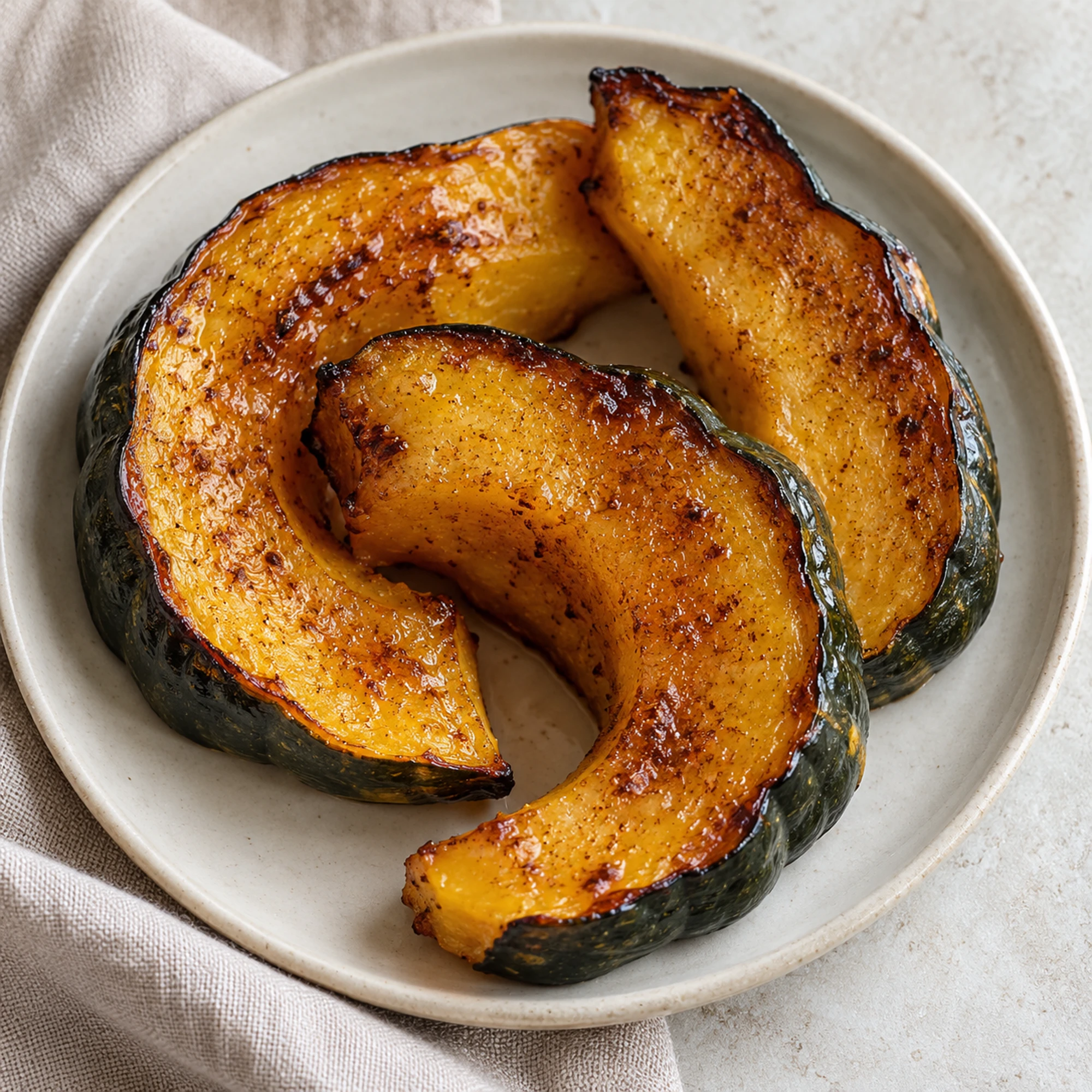

Maple Roasted Acorn Squash Recipe
Ingredients
Equipment
Method
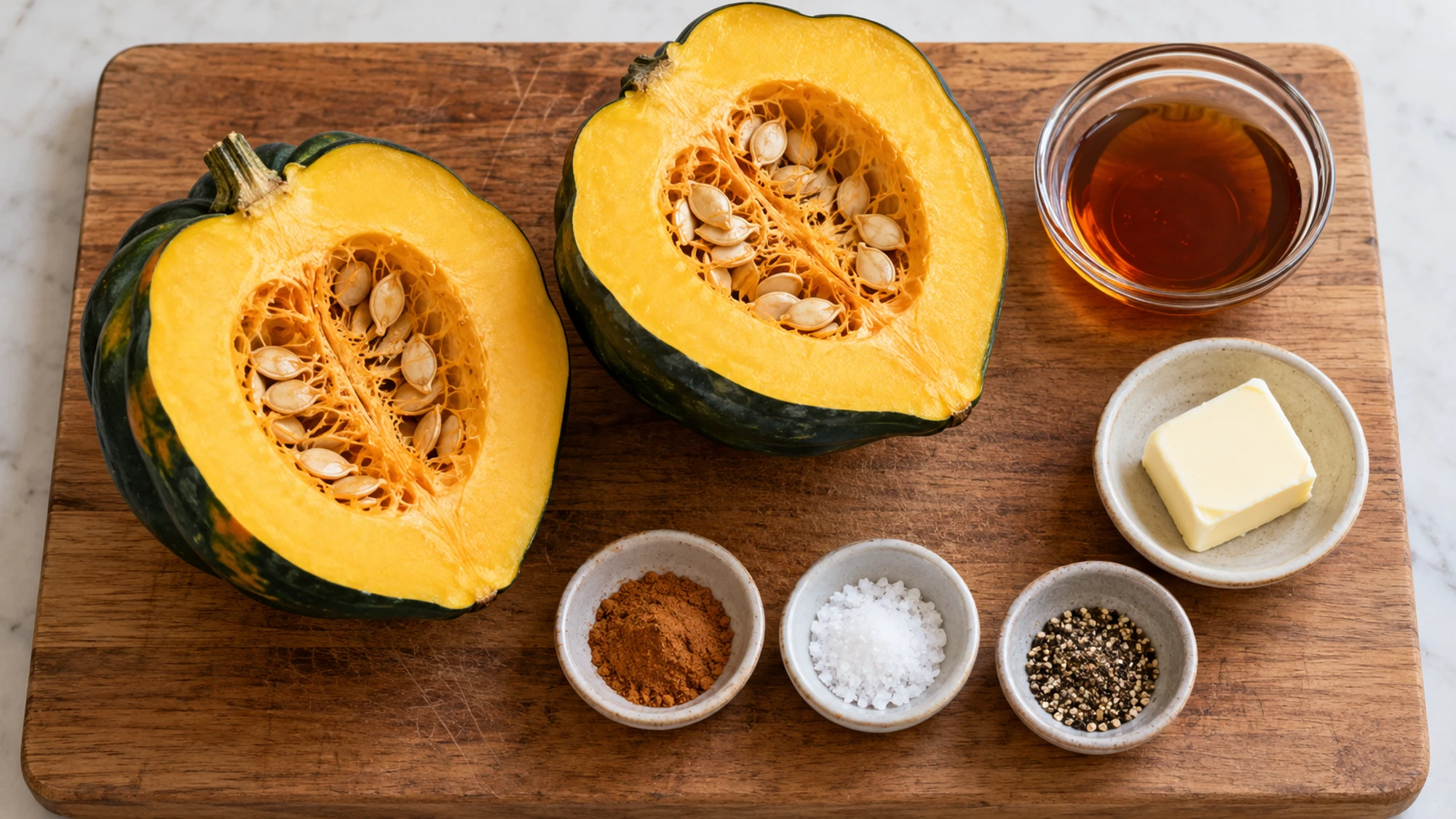
- Heat oven to 400°F (204°C). Line a rimmed baking sheet with parchment rated for this temperature. Scrub and dry the squash. On a stable cutting board, carefully halve with a sturdy sharp knife, scoop out seeds, and place halves cut-side down. Cut into approximately 3/4-inch wedges.
- Mix melted butter, maple syrup, cinnamon, salt, and pepper. Brush both cut sides of the wedges lightly with the mixture. Arrange in a single layer with space between pieces.
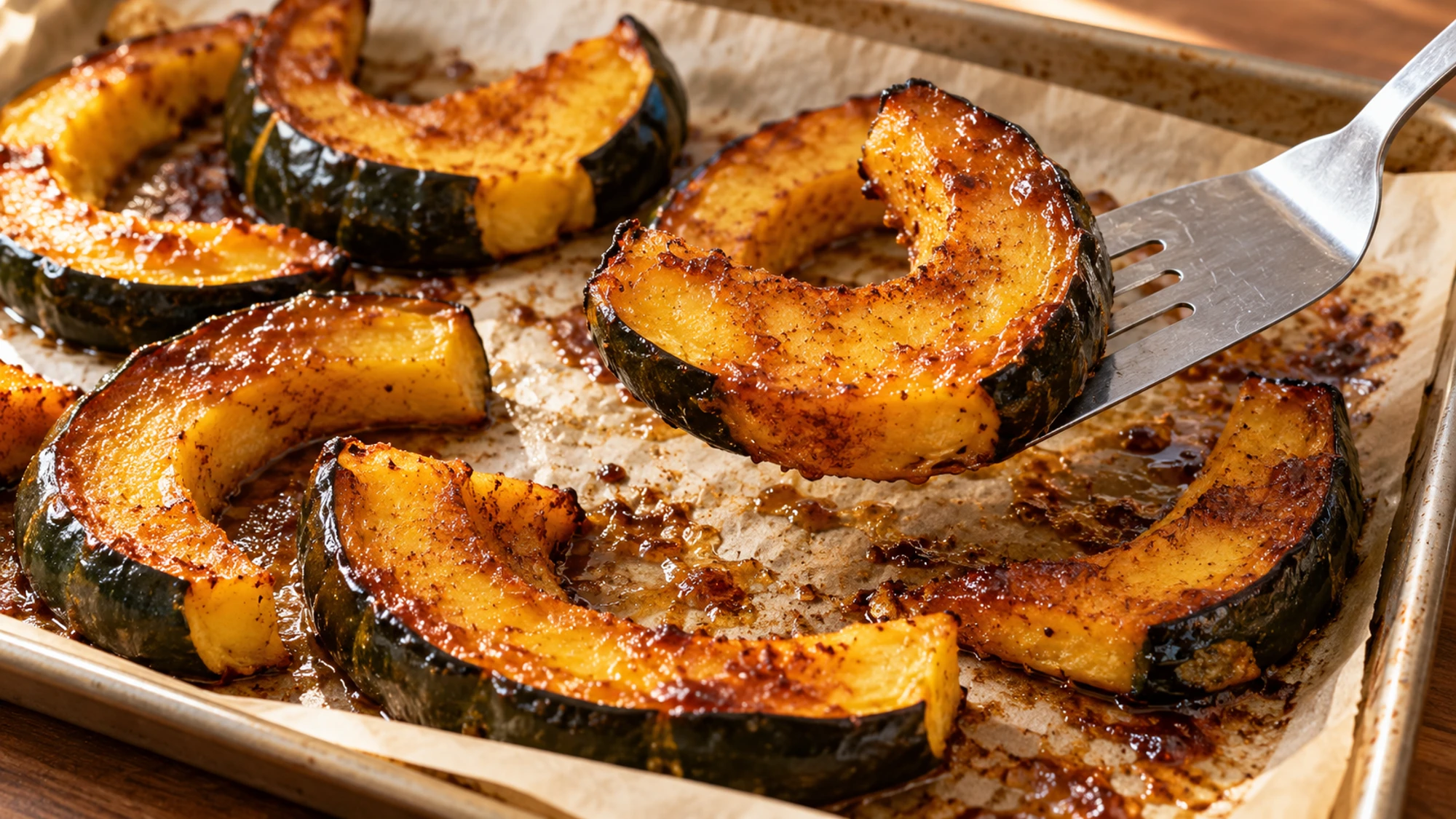
- Roast 20 minutes. Turn carefully with a spatula and roast another 15–20 minutes, until the thickest flesh is fork-tender and edges are golden. Watch the glaze near the end; reduce heat slightly if it darkens before the squash softens.
- Divide into four side portions. Leave any tough rind on the plate rather than forcing yourself to eat it.
- Refrigerate leftovers within two hours, or one hour above 90°F (32°C). Use within 3–4 days and reheat to 165°F (74°C).