
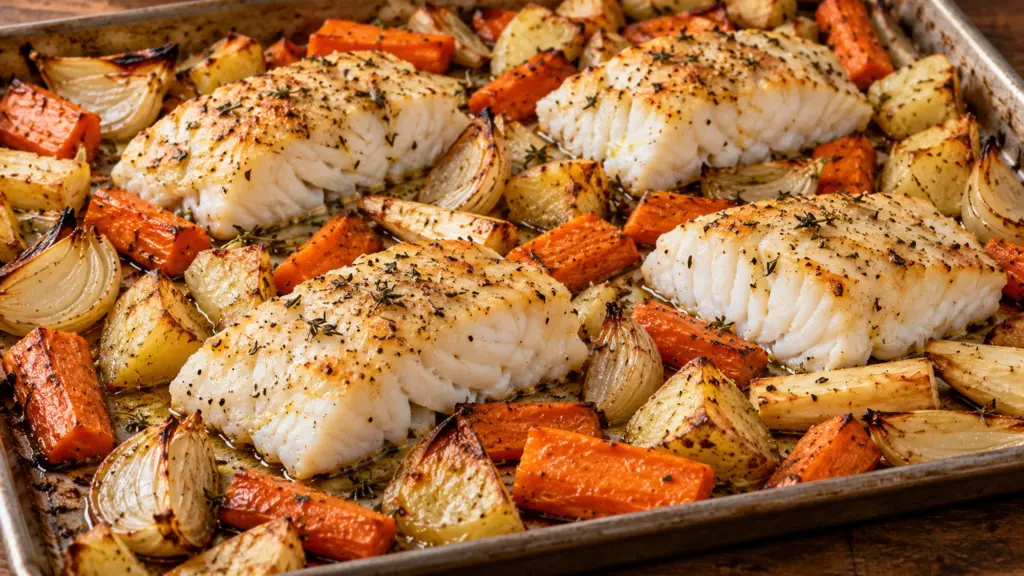
A sheet-pan fish dinner works best when the vegetables get a head start. Carrots, parsnips and potatoes need time to soften and brown, while cod cooks much more quickly. Giving each ingredient the time it needs avoids the familiar choice between underdone roots and overcooked fish.
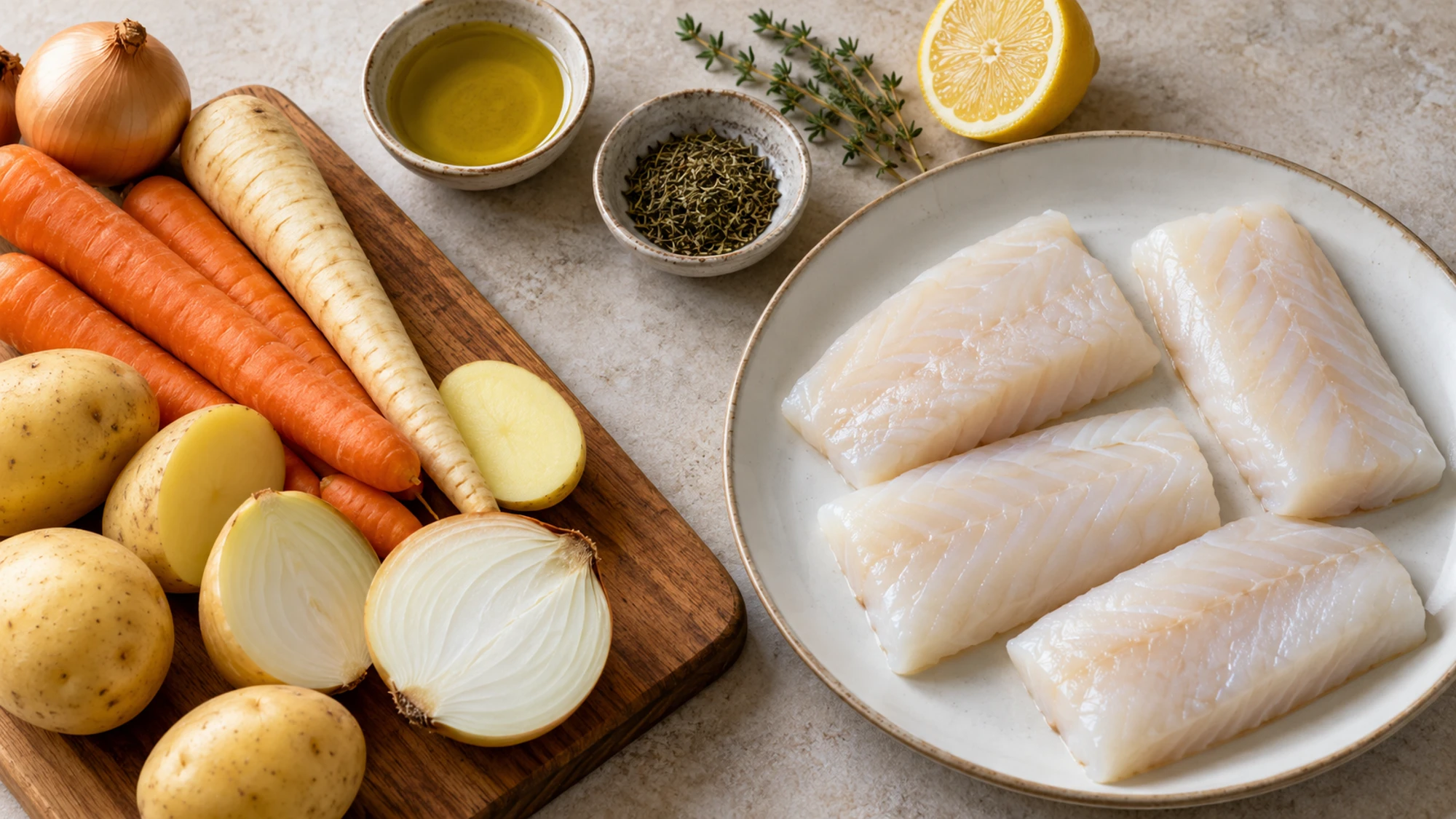
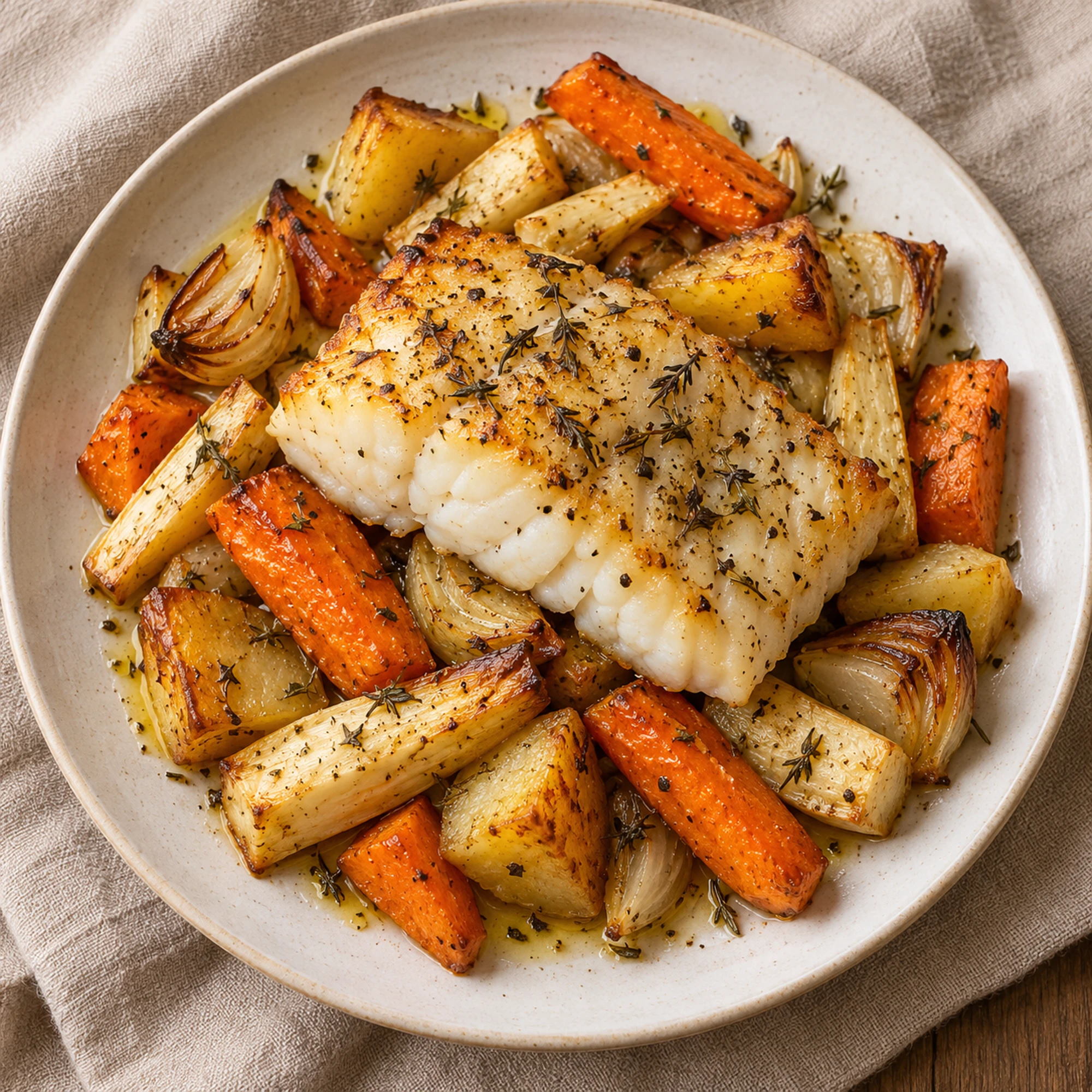
This baked cod with root vegetables pairs four cod fillets with carrots, parsnips, potatoes and onion. Roast the vegetables first, add the fish near the end and finish with lemon juice. Allow about an hour, with a thermometer ready to check the thickest part of each fillet.
I like the mild sweetness of parsnips alongside cod. They bring a different flavor from potatoes without needing another sauce, and their pale color looks lovely beside the carrots. Keep the seasoning simple so those differences are still noticeable on the plate.
Serving Suggestions for Baked Cod With Root Vegetables
Serve one fillet with a quarter of the vegetables and spoon any pan juices over the top. The potatoes provide the starch, so an extra rice or pasta side is not necessary. A crisp green salad is a useful addition if you want something cool alongside the warm tray.
Add the lemon juice after cooking rather than soaking the fish in it for a long time beforehand. That gives a bright finish without making the surface mushy. Taste a vegetable before adding extra seasoning, because the measured salt is already divided between the roots and fish.
| Ingredient | Preparation | Timing cue |
|---|---|---|
| Carrots and parsnips | Pieces about 1/2 inch thick | Nearly tender before adding fish |
| Potatoes | Small 3/4-inch cubes | Knife enters with little resistance |
| Cod fillets | Similar thickness, patted dry | 145°F in the thickest part |
I would bring the tray straight to the table and keep the accompaniments modest. For another vegetable option, browse our side dishes rather than adding a second elaborate main.
Variations and Timing Adjustments
Use fully thawed cod for this method. Frozen fish added directly to the tray releases more water and changes the timing, which can leave the vegetables steaming instead of roasting. If the fillets vary greatly in thickness, check the thinner pieces earlier and remove them as they finish.
- Swap part of the parsnip for extra carrot if that is what you have. Keep the cut size similar and test the vegetables before adding the fish, rather than assuming a substitution needs exactly the same time.
- A large rimmed sheet pan gives the vegetables space. If they are stacked or tightly packed, divide them between two pans; rotate the pans as needed for even cooking.
- If the fish reaches its safe temperature before the vegetables are ready, move it to a clean plate and loosely cover it. Return only the vegetables to the oven until tender.
- Dried thyme keeps the seasoning straightforward. Avoid adding several strong herbs at once, which can overwhelm a mild fish like cod.
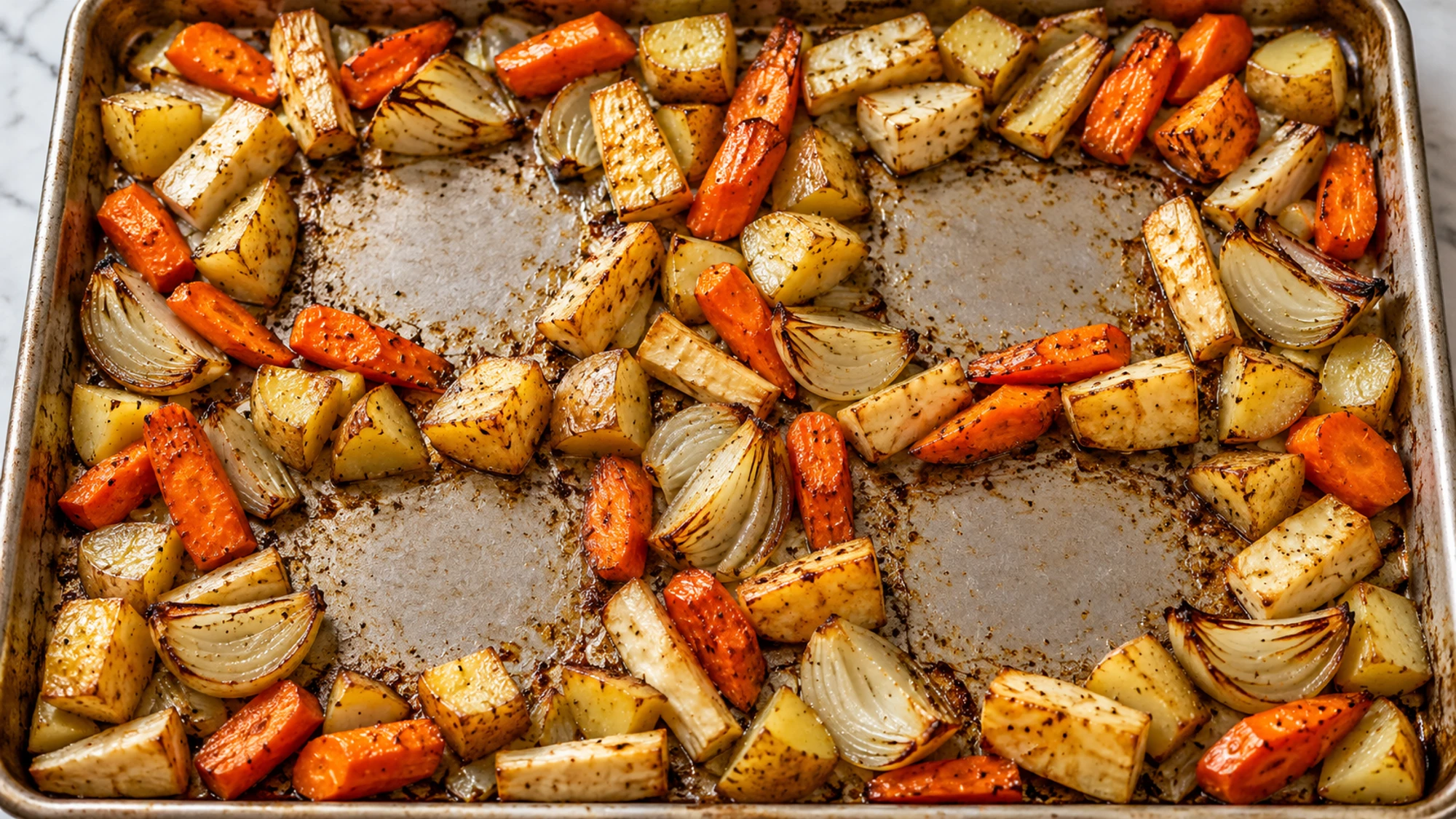
Let tenderness guide the first stage and temperature guide the second. The timer is useful for reminding you to check, not for overruling what is happening in the pan.
Health Benefits and Seafood Safety
Cod supplies protein and is naturally lean, while the vegetables contribute fiber and carbohydrate. This recipe does not need breading or a cream sauce to feel complete. The card estimates nutrition from the raw ingredient amounts, including all of the olive oil and salt.
- Cod is a fish allergen. Check frozen-fish labels for added ingredients, and keep raw fish and its juices separate from ready-to-eat foods.
- Thaw in the refrigerator, following the package instructions. For vacuum-packed fish, follow any direction to remove it from the packaging before thawing.
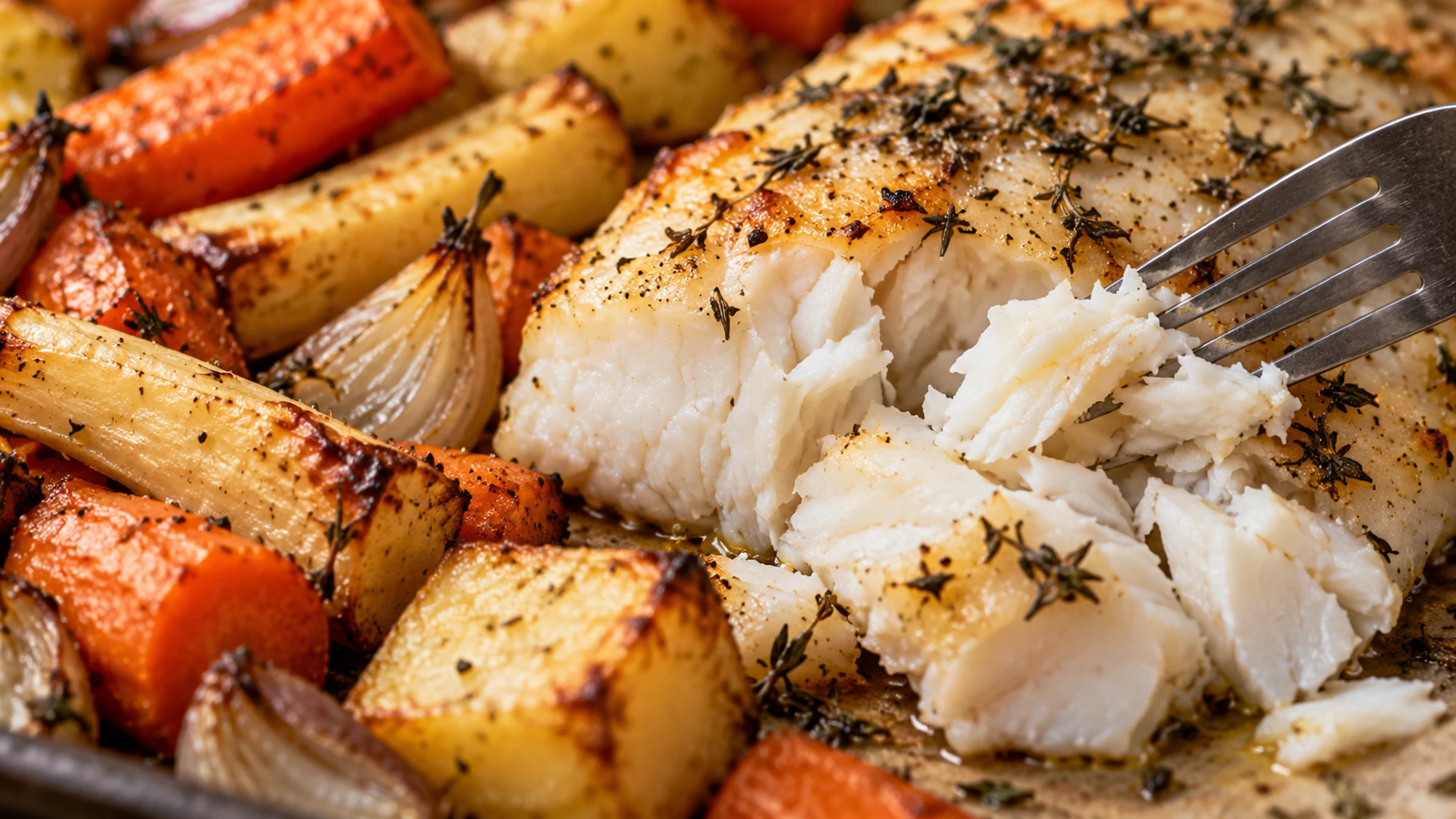
- Use a thermometer to check for 145°F. The FDA’s seafood guidance also describes opaque flesh that separates easily, but temperature is the clearest check for these fillets.
Refrigerate leftovers promptly in shallow containers within two hours, or one hour above 90°F. Keep them at 40°F or below, use within 3–4 days and reheat throughout to 165°F, the leftover endpoint in FoodSafety.gov’s temperature chart.
The best seafood dinner starts with safe storage and ends with careful cooking. Do not extend the bake simply to make every vegetable darker once the cod is ready.
Bottom Line
Baked cod with root vegetables is a practical autumn dinner when the cooking happens in stages. Give the roots enough time, add the fish late and finish with lemon. That simple order keeps the vegetables tender and the cod from spending too long in the oven.

Baked Cod With Root Vegetables Recipe
Ingredients
Equipment
Method
- Heat oven to 425°F. Toss carrots, parsnips, potatoes and onion with 2 tablespoons oil, half the thyme, half the salt and half the pepper. Spread in a single layer on a large rimmed baking sheet; use two sheets if crowded.
- Roast 25–30 minutes, turning once, until the roots are nearly tender and lightly browned. If still firm, give them more time before adding fish.
- Pat thawed cod dry and check for bones. Rub with remaining oil, thyme, salt and pepper. Make spaces among the vegetables and add fillets without overlapping. Bake 12–15 minutes, checking earlier for thin pieces, until each fillet reaches 145°F in the thickest part and the vegetables are tender.
- Remove cooked fish to a clean plate if vegetables need longer. Finish fish and vegetables with lemon juice and divide into four servings. Refrigerate leftovers in shallow containers within 2 hours, or 1 hour above 90°F; keep at 40°F or below, use within 3–4 days and reheat throughout to 165°F.