
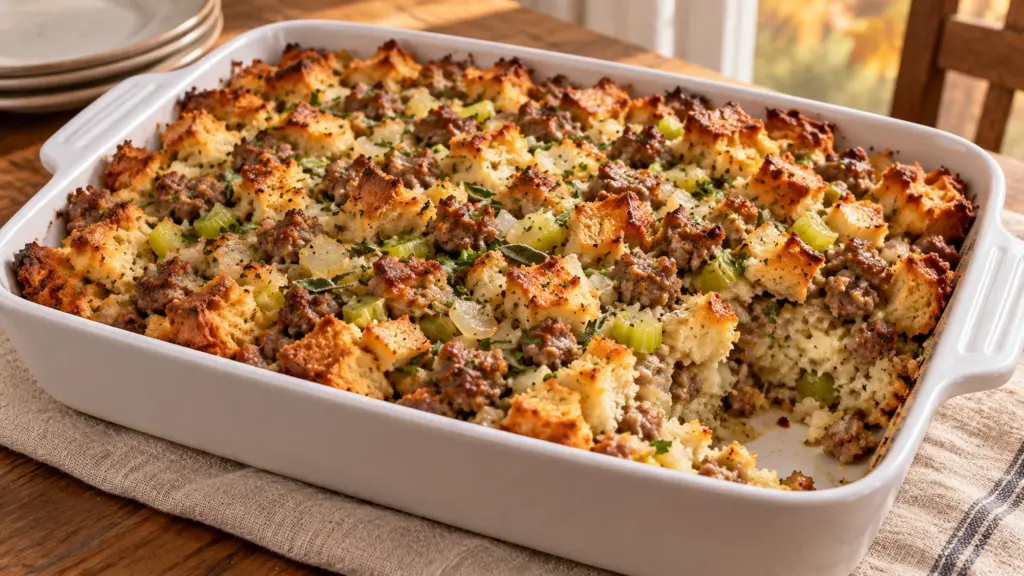
Sage sausage stuffing should have two textures worth reaching for: toasted bread at the edges and a tender, savory middle. Too little liquid leaves dry pockets; too much turns the bread into paste. This version uses oven-dried bread cubes, browned pork sausage, and a measured broth-and-egg mixture to bring the pieces together.
For sage sausage stuffing with a crisp top and moist center, dry the bread first, soften the vegetables, and bake the mixture in its own dish. Start covered to heat it through, then uncover for browning. Check the center reaches 165°F (74°C), not just that the surface looks golden.
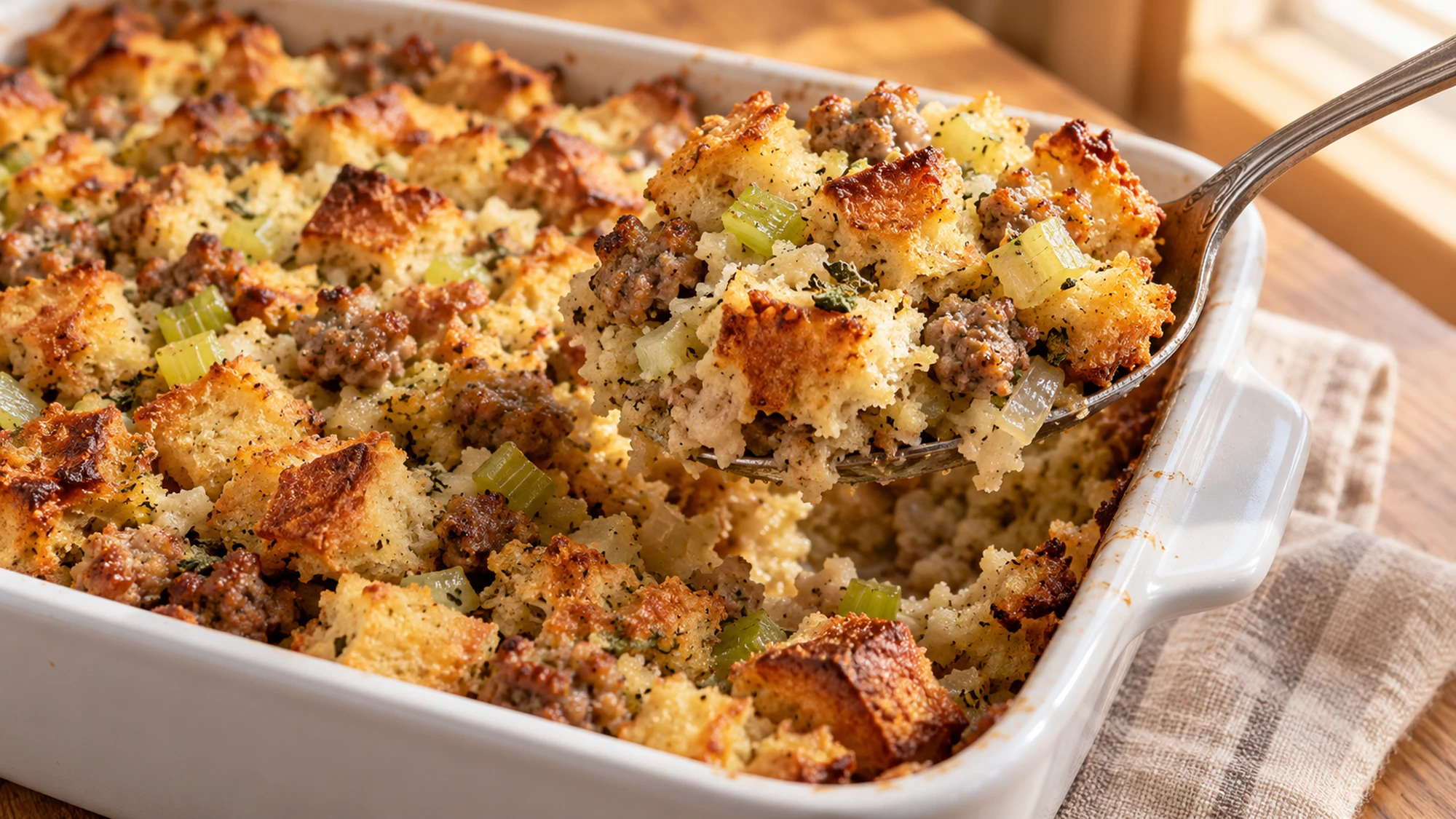
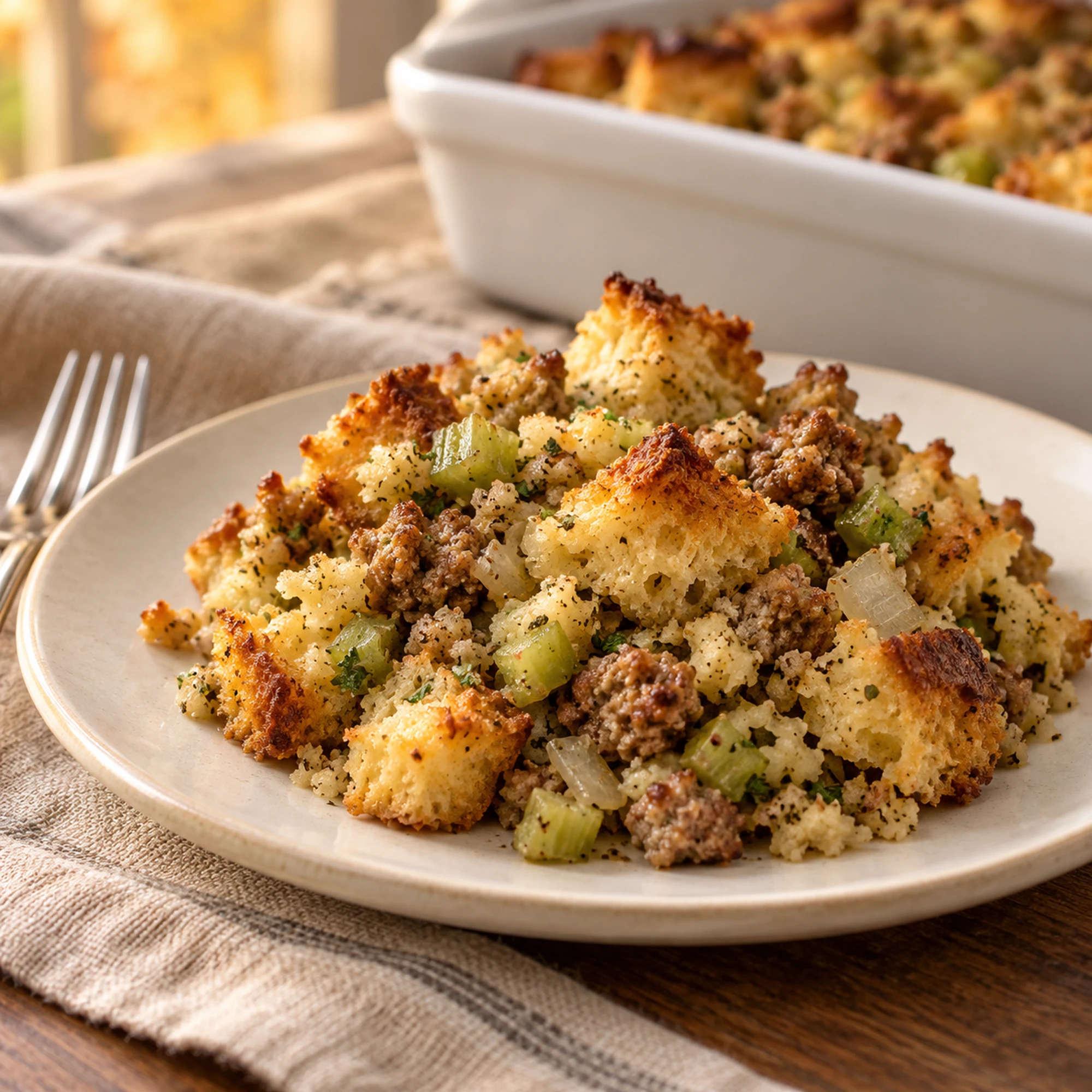
I prefer a separate baking dish because more bread gets a chance to become crisp. It also frees the stuffing from the turkey’s cooking schedule. The sage, onion, celery, and sausage supply plenty of savory flavor without needing a long list of extras.
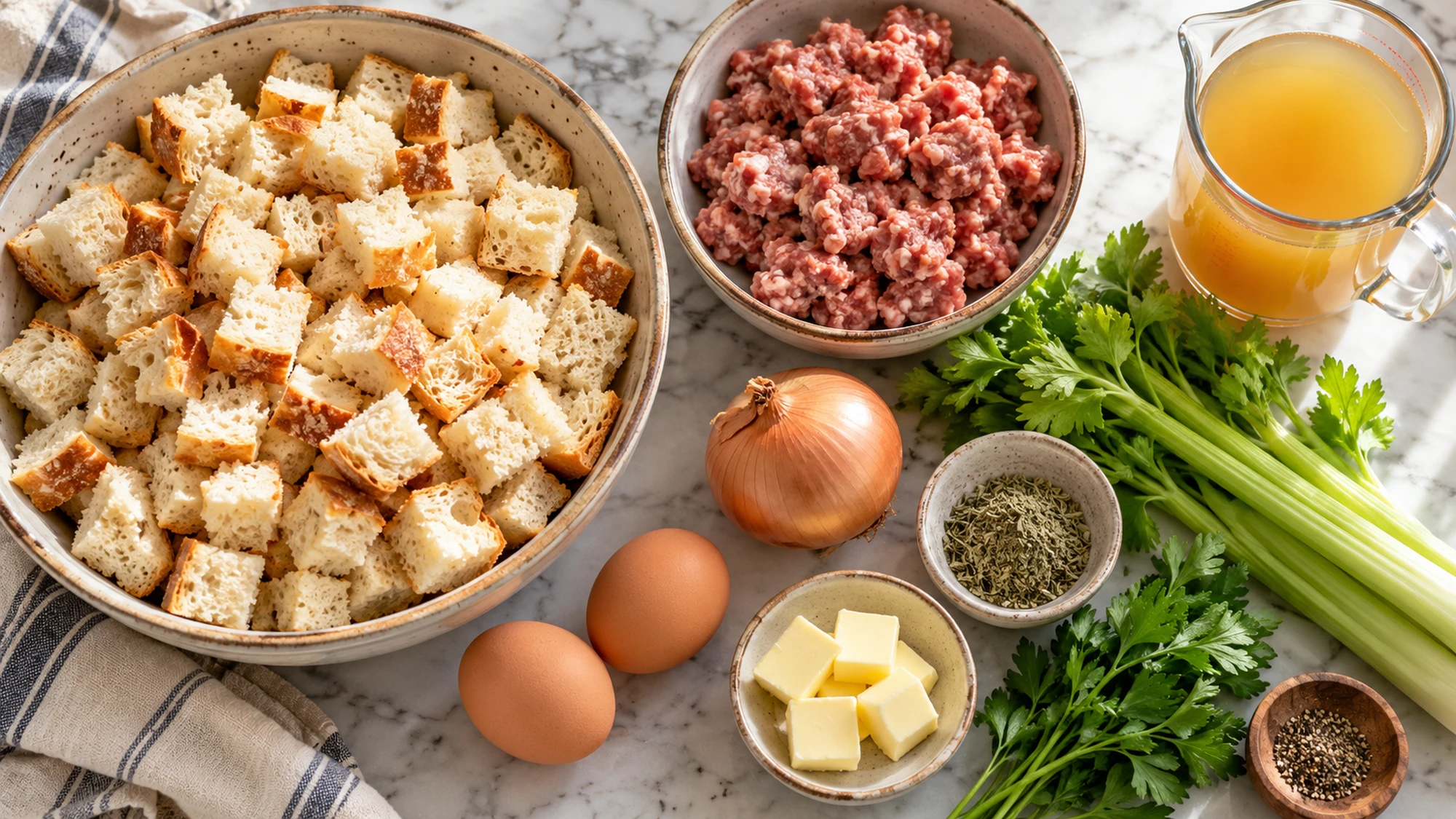
Serving Suggestions for Sage Sausage Stuffing
Serve this as eight side portions with roast turkey, chicken, or a vegetarian main for guests who also eat pork. Make the pork content clear rather than assuming a bread-based side is meat-free. A tart cranberry accompaniment or a simply dressed green vegetable gives the rich stuffing a useful contrast.
- Scoop from the edge toward the center so each serving includes some crisp bread and softer filling.
- Offer gravy separately; a small amount can be welcome, but soaking the whole dish hides the browned top.
- Let the casserole rest ten minutes before serving so the hot filling settles and is easier to portion.
My choice would be a smaller scoop beside several vegetable sides rather than a plate dominated by bread. For more options, visit the side dish collection. The recipe is generous enough to share without pretending that every holiday plate needs identical portions.
Serve the stuffing as a rich, savory side and keep sauces optional. A mix of crisp edges, soft bread, and vegetables makes each scoop more interesting.
Variations and Tips for Sage Sausage Stuffing
Use bread with enough structure to hold a cube, and weigh it before drying. The oven step removes moisture so the bread can take up the seasoned liquid more predictably. Very soft sandwich bread and dense artisan loaves behave differently, so watch the texture as you combine the mixture.
| Checkpoint | What you want |
|---|---|
| Dried bread | Dry surfaces and firm cubes, not deeply browned croutons. |
| Cooked vegetables | Soft onion and celery without burned edges. |
| Mixed stuffing | Moistened bread with no large pool of liquid. |
| Finished center | At least 165°F (74°C) on a food thermometer. |
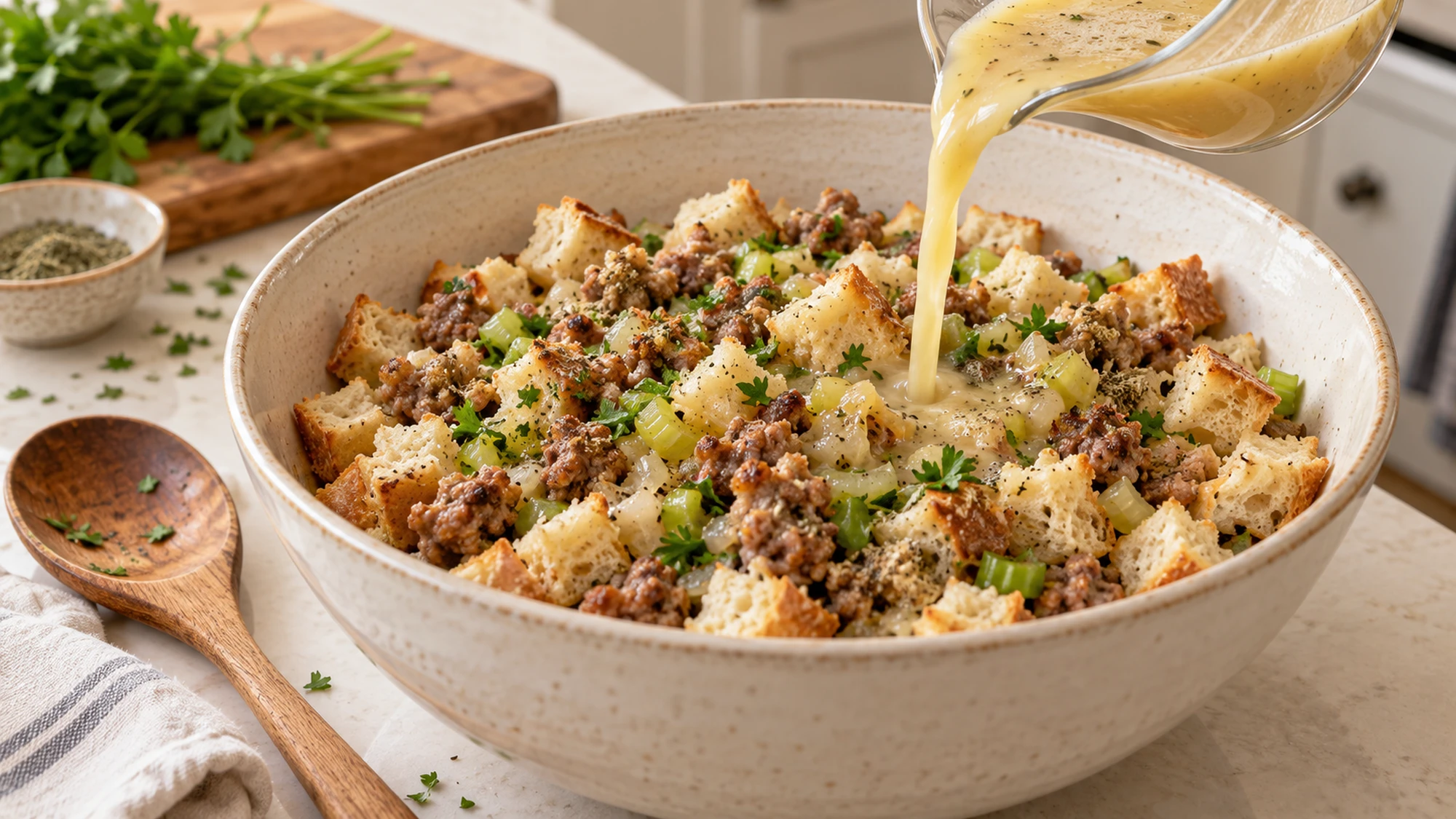
The sausage is cooked and drained before it joins the bread; the measured butter then softens the vegetables. Let the skillet mixture cool until warm before adding the eggs. This helps the egg mixture spread through the bread rather than setting immediately against a very hot pan.
- Ground sage is concentrated, so measure it rather than adding a freehand heap. Optional fresh leaves add a different herbal note.
- If using a different sausage, check its seasoning and label. A spicy or strongly fennel-flavored version changes the character of the dish.
- For advance preparation, keep the dried bread and cooked, chilled sausage-vegetable mixture separate. Combine with the egg mixture just before baking.
Moisture and temperature are the key checks. Keep the bread recognizable, avoid packing the dish tightly, and use the thermometer before calling the stuffing done.
Health Benefits and Nutrition of Sage Sausage Stuffing
The eggs and sausage contribute protein, while the bread provides most of the carbohydrate. This is also a source of saturated fat and sodium. Choosing unsalted broth helps control one ingredient, but it does not make the finished dish low in sodium because bread and sausage already contain salt.
- Compare sausage and bread labels using the FDA Nutrition Facts guidance; brands can change the estimate substantially.
- Contains wheat, egg, and milk from butter; check sausage, broth, and bread for additional allergens.
- Follow FoodSafety.gov temperature guidance: cook pork sausage to 160°F (71°C), then the assembled stuffing to 165°F (74°C). Chill leftovers within two hours, use within three to four days, and reheat to 165°F (74°C).
Enjoy the stuffing for its flavor and texture, with an honest view of portions and seasoning. Safe cooking and timely refrigeration remain important even when the top looks beautifully browned.
Bottom Line
Sage sausage stuffing is most satisfying when the bread stays tender inside and crisp on top. Dry the cubes, brown the sausage, and add liquid thoughtfully. Baking separately makes the texture easier to manage while a thermometer confirms the center is ready.

Sage Sausage Stuffing Recipe
Ingredients
Equipment
Method
- Heat oven to 300°F (149°C). Spread bread cubes on a rimmed baking sheet and dry for 20–25 minutes, stirring once, until firm and dry but not deeply browned. Transfer to a large mixing bowl. Increase oven to 350°F (177°C). Grease a 9-by-13-inch baking dish with 1 teaspoon of the measured butter.
- While the bread dries, cook the sausage in a large skillet over medium heat, breaking it into crumbles, until browned and cooked to 160°F (71°C), about 8–10 minutes. Drain off rendered fat and transfer sausage to a plate.
- Melt the remaining butter in the skillet. Cook onion and celery for 8–10 minutes, until soft. Stir in ground sage and pepper. Remove from heat, add sausage, and cool until warm rather than hot.
- Whisk the eggs and cool broth together. Add the sausage-vegetable mixture and parsley to the bread, plus optional chopped fresh sage. Pour the egg-broth mixture over gradually, folding gently. Let stand 5 minutes so the bread absorbs liquid; it should be moist without a large puddle. Do not taste the uncooked egg mixture.
- Transfer loosely to the baking dish. Cover with foil and bake 25 minutes. Uncover and bake 20–25 minutes more, until golden and the center reaches 165°F (74°C). Rest 10 minutes before serving eight portions. Refrigerate leftovers within two hours, use within 3–4 days, and reheat to 165°F (74°C).