
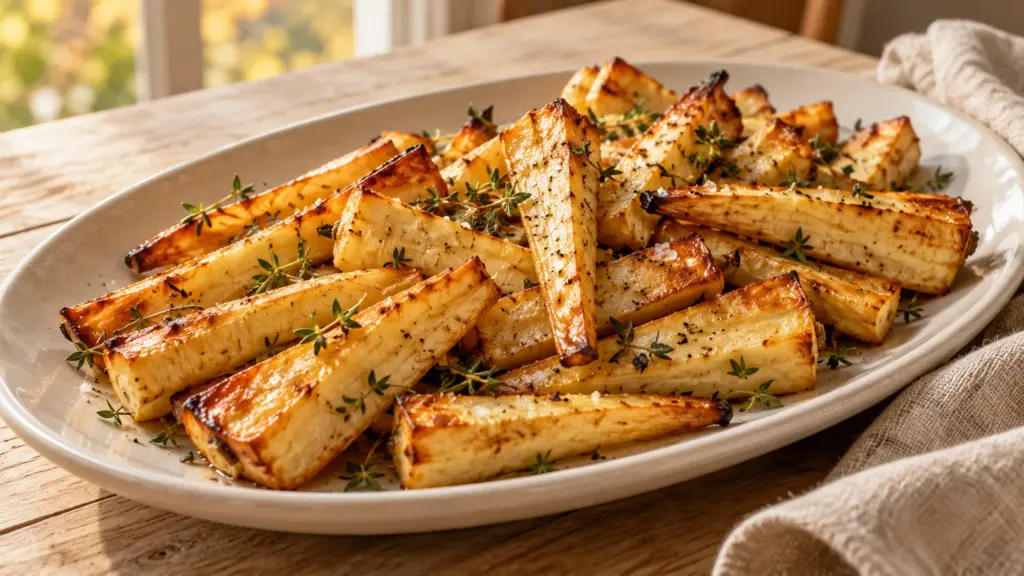
Roasted parsnips deserve more attention than a last-minute spot beside the potatoes. Their pale flesh turns tender and sweet in a hot oven, while the cut sides develop golden edges. The tricky part is their shape: a thick shoulder and a narrow tip do not cook at the same speed unless you give them a little help.
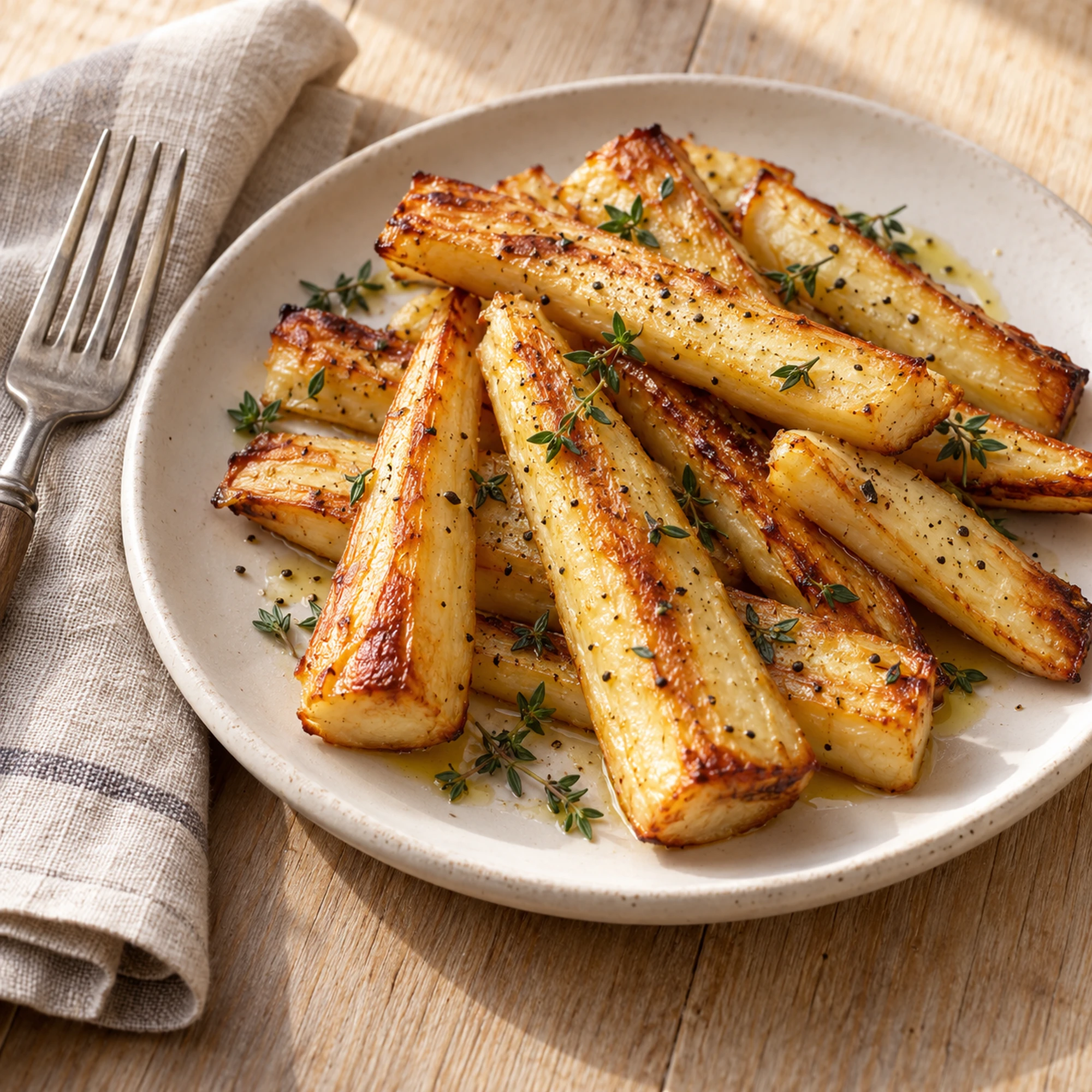
For evenly roasted parsnips, cut the thick ends into narrower batons, remove any woody core, and spread the pieces in one uncrowded layer. Olive oil, thyme, salt, and pepper are enough. Roast at 425°F (218°C), turning once, until the centers are tender and the cut sides are golden.
I prefer to skip a sweet glaze here because the parsnips already bring plenty of sweetness. Thyme adds a savory note without covering it up. The aim is not to make imitation fries; it is to let this root vegetable taste like itself, with better edges.
Serving Suggestions for Roasted Parsnips
Serve four side portions with roast chicken, turkey, pork, or a lentil-based main. Their sweet, earthy flavor also works beside bitter greens or a tart salad. If your meal already includes sweet potato casserole, consider whether another sweet root vegetable adds something useful or simply repeats the same note.
- Use a shallow platter so steam can escape rather than softening the browned surfaces in a covered bowl.
- Keep gravy or other wet sauces beside the parsnips until each person serves their plate.
- For a grain bowl, cut the cooked batons into shorter pieces and add beans or another protein source.
My choice for a simple dinner would be roasted parsnips, a savory main, and a green vegetable with a little acidity. That contrast keeps the plate lively without another complicated recipe. The side dish collection offers more companions for a fall or holiday menu.
Give the parsnips room on the serving plate as well as the baking sheet. Their browned edges are most noticeable when they are served soon after roasting.
Variations and Tips for Roasted Parsnips
Choose firm roots without soft spots. Illinois Extension’s parsnip guide notes that smaller roots may be more tender and that large ones can have a woody core. Cut a thick root lengthwise and trim away any hard central strip before making the batons.
| Parsnip shape | How to cut it |
|---|---|
| Thin lower end | Leave thicker sections intact or split once. |
| Broad upper end | Divide into narrower batons of similar thickness. |
| Large woody center | Remove the tough strip before roasting. |
| Very long root | Cut crosswise first for manageable pieces. |
The half-inch thickness is more important than making every piece the same length. Dry the cut surfaces well before adding oil, and place a flat side against the metal pan. If a few thin tips finish first, remove them rather than waiting for the thickest piece to catch up.
- Replace fresh thyme with a smaller amount of dried thyme if needed; dried herbs are more concentrated.
- A little chopped rosemary can take the flavor in a different direction, but avoid a heavy layer of woody stems.
- If doubling the recipe, use two pans instead of piling everything onto one. Rotate their positions as needed for even browning.
Uniform thickness solves more problems than extra seasoning. Adjust the cuts to the root in front of you, and use tenderness as well as color to judge doneness.
Health Benefits and Nutrition of Roasted Parsnips
Parsnips contribute fiber and several vitamins and minerals. UMass Extension’s produce guide identifies fiber, folate, and vitamins C and K among their nutrients. Roasting changes moisture and some nutrient levels, so avoid treating a raw-food number as an exact measurement of the cooked portion.
- The card estimate divides the full recipe into four portions and includes all measured oil and salt. Some oil may remain on the pan.
- This preparation does not require butter, cheese, or honey. Adding any of those changes the nutrition and, in some cases, allergen considerations.
- Following FoodSafety.gov guidance, chill leftovers within two hours, or one hour above 90°F (32°C). Use within three to four days and reheat to 165°F (74°C).
Enjoy parsnips as one vegetable in a varied meal, not as a shortcut to a promised health result. Measuring the oil and seasoning keeps this simple side straightforward.
Bottom Line
Roasted parsnips need thoughtful cuts, a hot oven, and enough pan space. Remove tough cores when necessary, turn the pieces once, and watch the narrow tips. The result is a tender, naturally sweet side with golden edges and a quiet hint of thyme.

Roasted Parsnips Recipe
Ingredients
Equipment
Method
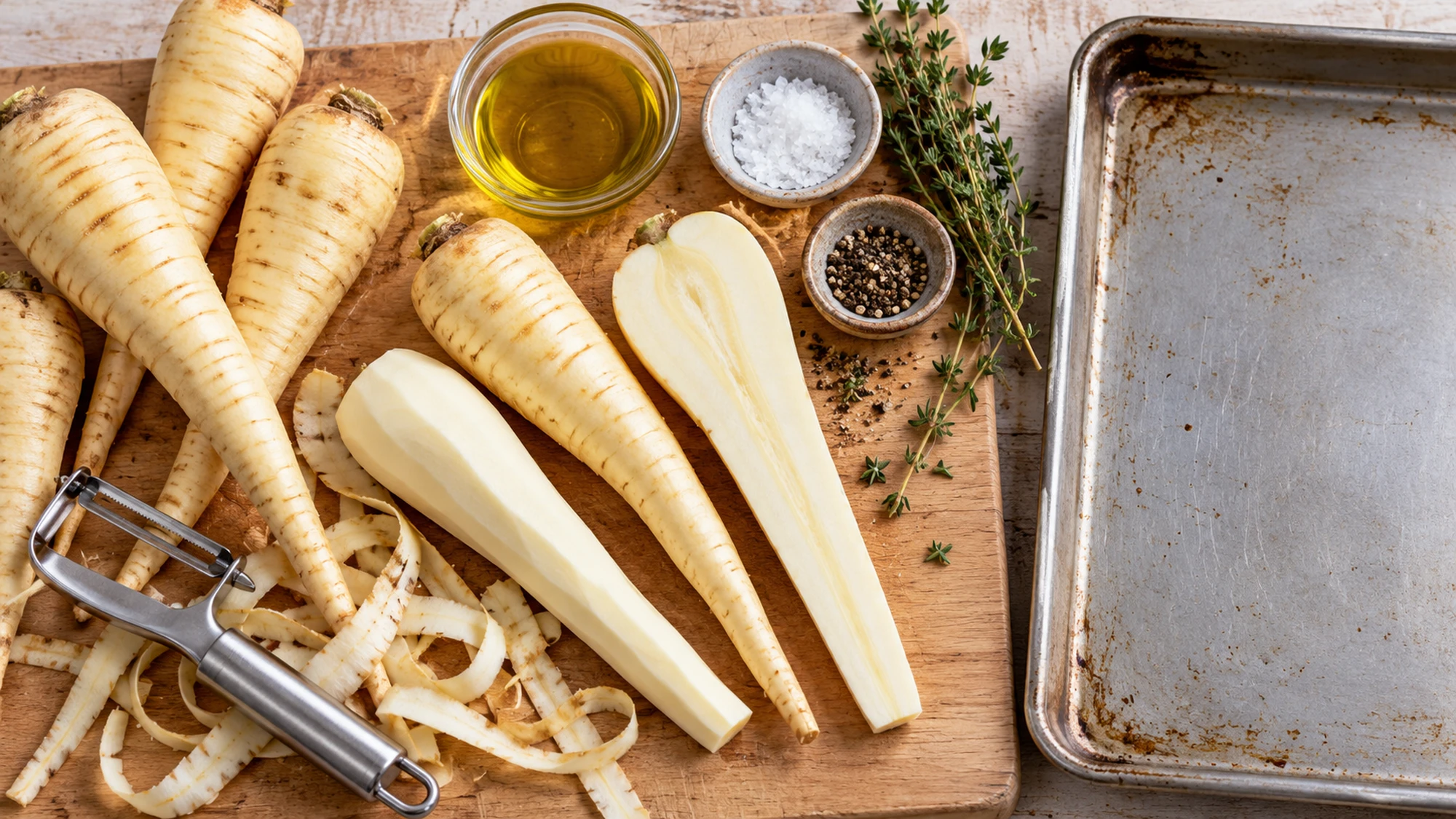
- Heat oven to 425°F (218°C). Scrub and peel the parsnips, trim the ends, and remove any tough woody core from large roots. Cut into 3–4-inch batons about 1/2 inch thick, dividing the thick shoulders more than the narrow tips. Dry well.
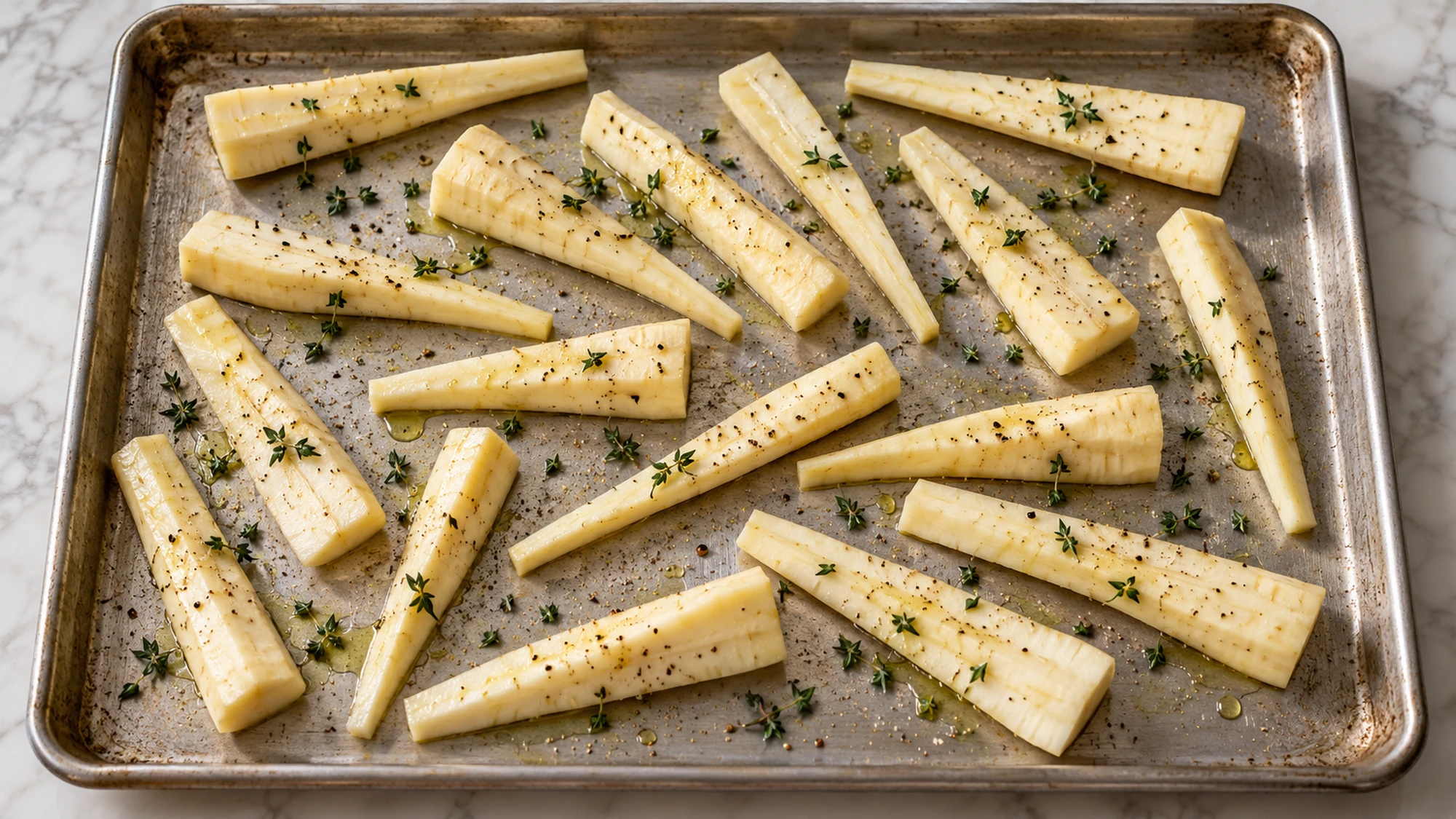
- Toss with olive oil, thyme, salt, and pepper. Spread on an 18-by-13-inch rimmed baking sheet in a single layer with space between pieces, placing flat cut sides against the pan.
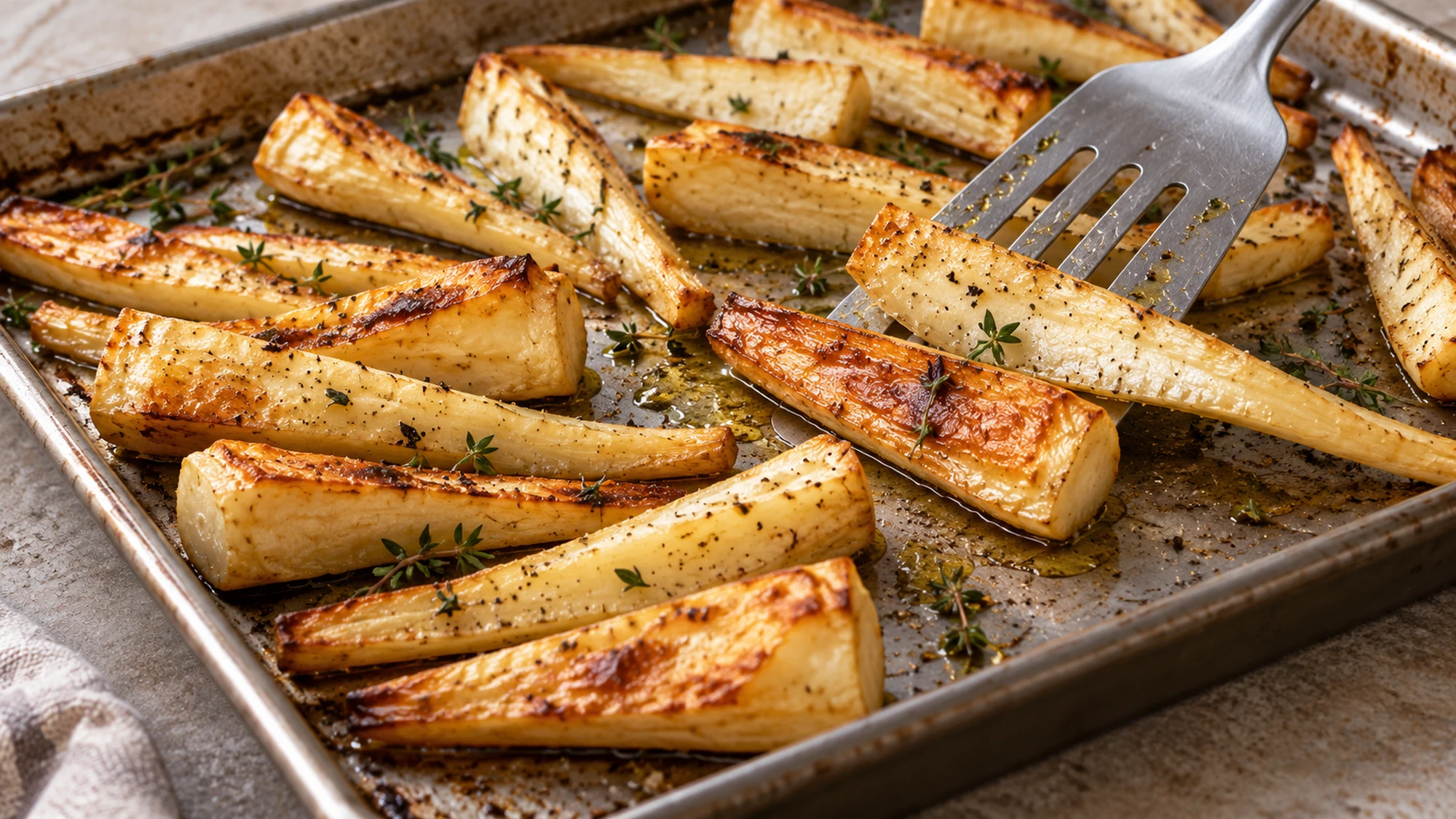
- Roast 15 minutes, then turn with a spatula. Roast another 10–15 minutes, until golden on several sides and a fork enters the thickest pieces easily. Remove thin pieces earlier if needed. Serve hot, divided into four portions; remove any woody thyme stems.
- Refrigerate leftovers within two hours, or one hour above 90°F (32°C). Use within 3–4 days and reheat to 165°F (74°C).