
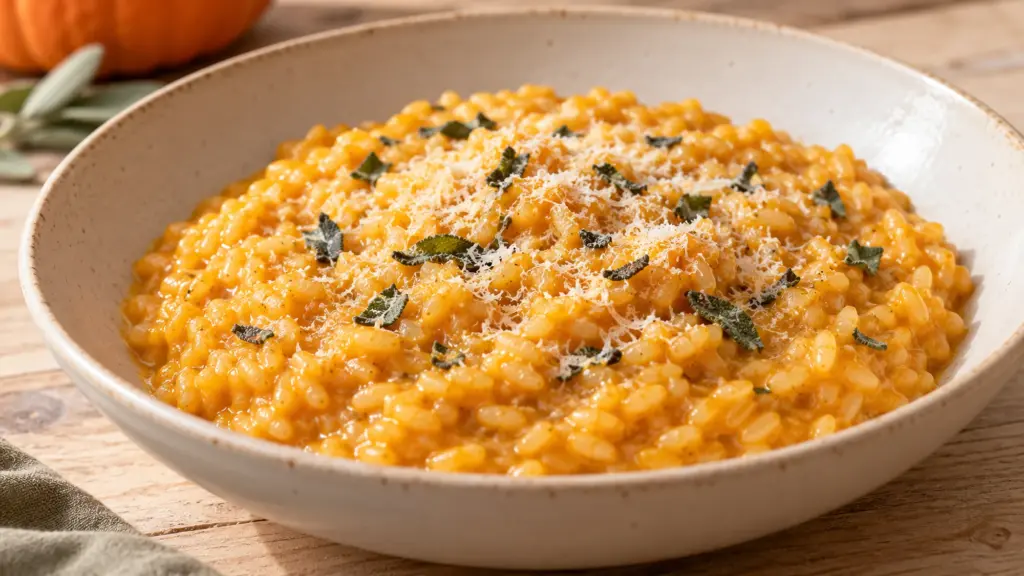
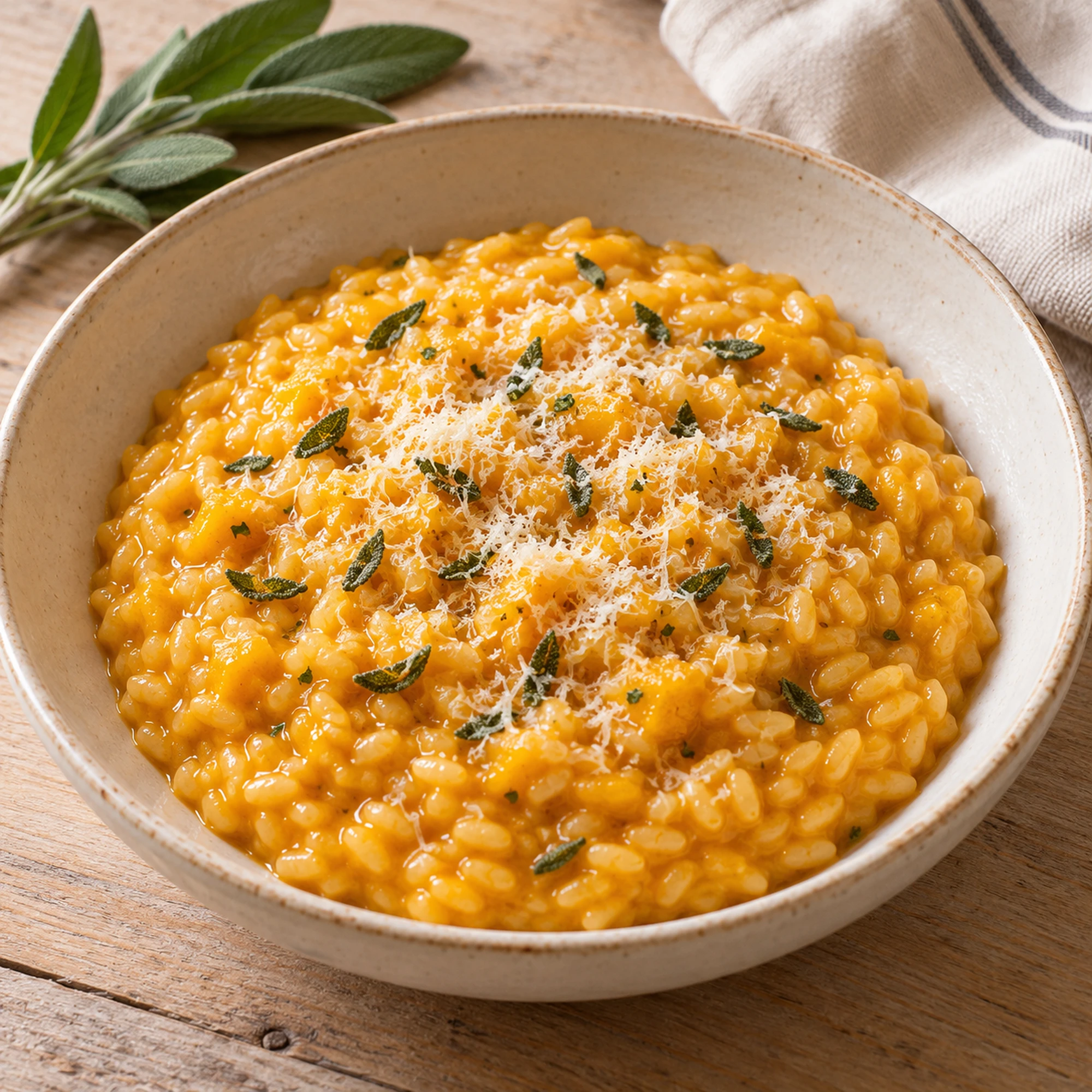
Pumpkin risotto gives a can of plain pumpkin a savory job: coating tender Arborio rice with a smooth, golden sauce. Onion, garlic, sage, and Parmesan keep it firmly in dinner territory. There is no pie spice, sweetener, or cream, just a warm bowl with a little bite left in the grains.
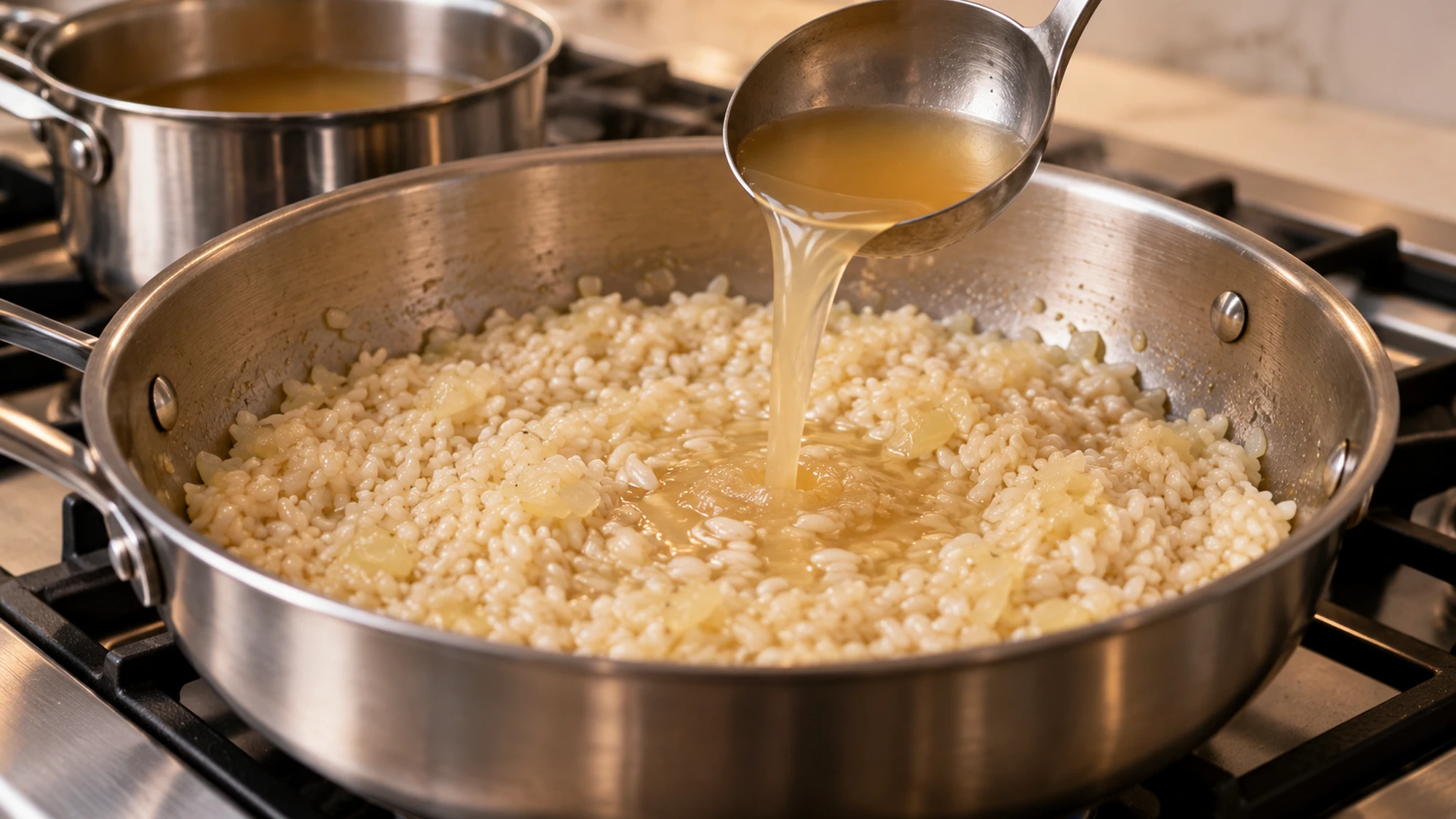
Keep the cooking liquid warm and add it gradually, stirring often. Taste the rice before deciding it is done; the grains should be tender with a slight bite, not chalky in the middle or soft all the way through.
I would make this when dinner can come straight from the stove to the table. Risotto thickens as it stands, so it is less forgiving than a casserole waiting in the oven. Measure the pumpkin and grate the cheese before starting, then give the pan your attention while the rice cooks.
Serving Suggestions for Pumpkin Risotto
Spoon the risotto into shallow bowls while it is still loose enough to spread gently. A crisp green salad or roasted green vegetables adds contrast to the soft rice. The side dish collection is a useful place to look for something fresh or lightly browned rather than another creamy side.
- For a main course, serve four portions with a vegetable and a protein-containing accompaniment if desired.
- For a smaller holiday course, divide the pot into more bowls and keep the garnish modest.
- Have bowls ready before the last addition of cheese so the risotto does not sit thickening in the pan.
A little of the measured Parmesan can be reserved for the top, along with finely chopped sage. I would skip sweet dried fruit here because the pumpkin already brings gentle sweetness. The recipe uses half broth and half water, which lets the pumpkin remain noticeable without making the reduced liquid overwhelmingly salty.
Serve promptly and keep the plate simple. Crisp vegetables and a light garnish make the creamy rice feel complete without hiding its flavor.
Pumpkin Risotto Variations
Arborio rice is not an arbitrary choice: its starch helps create the sauce as the grains cook. The RiceSelect Arborio guide explains the gradual-liquid method and the tender-but-firm endpoint. Long-grain rice will give a different result and should not be substituted with the same expectations.
| Preference | Adjustment | Useful caution |
|---|---|---|
| Different squash | Use smooth cooked butternut puree | Thickness may change liquid needs |
| Milder herb | Replace sage with thyme | Start with a small amount |
| Less sodium | Choose a lower-sodium broth | Taste after adding Parmesan |
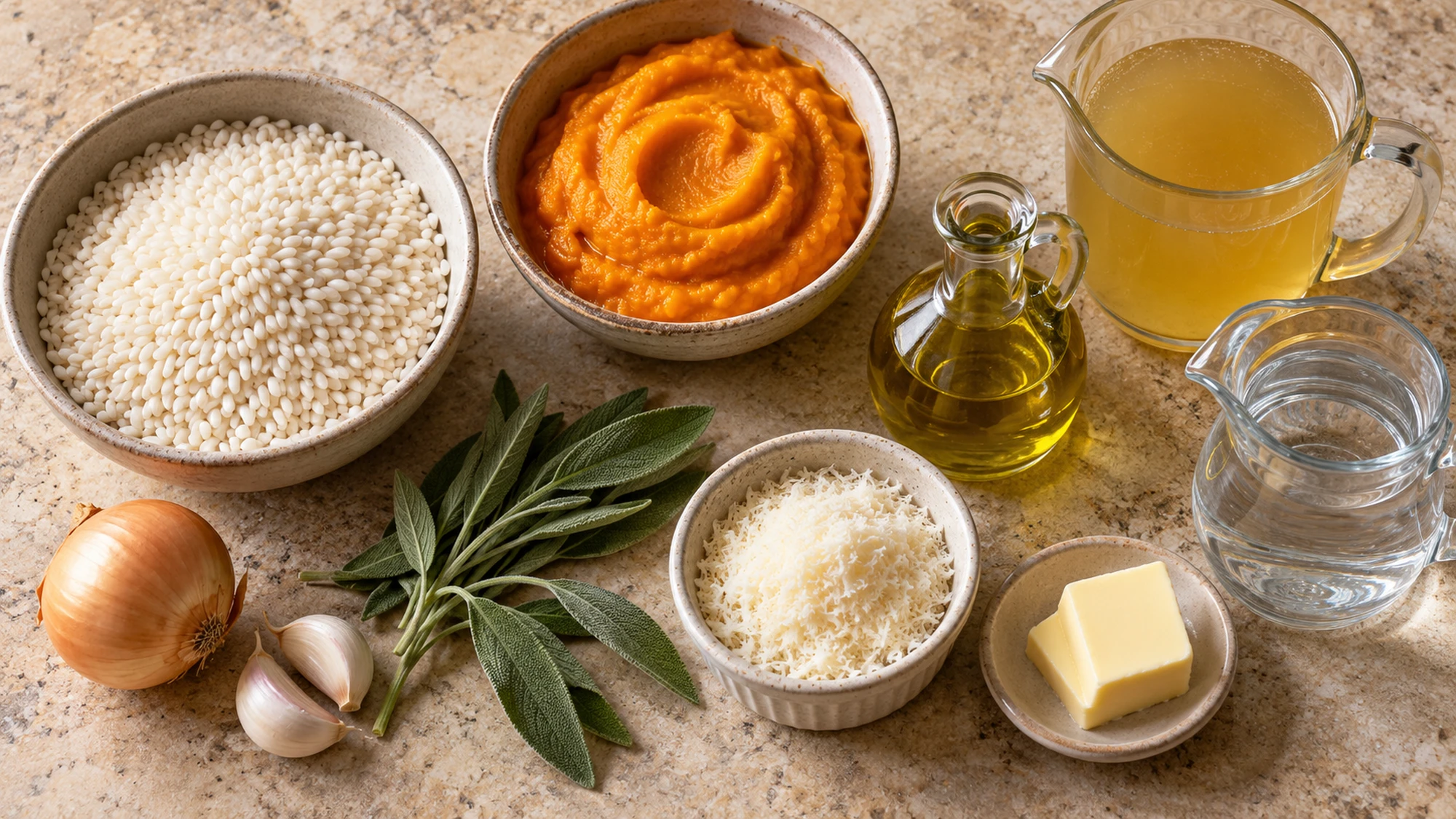
Use plain pumpkin puree, not pumpkin pie filling. Homemade puree can work if it is smooth and not watery; unusually wet puree may loosen the rice more than canned pumpkin. Add the pumpkin near the end, then adjust the final texture with warm water instead of insisting that every batch use exactly the same volume.
Let the rice tell you how much liquid it needs. The listed amount is a starting point, while tenderness and a gently flowing texture are the real finish line.
Health Benefits and Everyday Balance
Pumpkin adds some fiber and vegetable content, while rice supplies most of the carbohydrates in this dish. Parmesan contributes protein, calcium, and sodium, and butter adds richness along with saturated fat. Calling the texture creamy does not mean cream is required, but it does not make the finished bowl fat-free either.
- Use the recipe’s measured cheese and butter if you want the nutrition estimate to remain relevant.
- For a strictly vegetarian meal, choose a Parmesan-style cheese made with vegetarian rennet and check the broth label.
The estimate assumes four servings and includes all the broth, cheese, butter, and oil. It does not include a side salad, chicken, beans, or extra cheese at the table. A smaller risotto portion can sit beside other foods; a larger bowl changes the amount of rice and seasoning in that serving.
Enjoy this as a satisfying rice dish with pumpkin, then build the rest of the meal around it. No single ingredient needs to carry the entire nutritional story.
Bottom Line
Pumpkin risotto is best fresh, but leftovers still need careful handling. Refrigerate promptly in shallow containers and use within three to four days. Add a little water when reheating and stir until the whole portion reaches 165°F, the safe endpoint for leftovers; looseness alone does not prove it is hot enough.
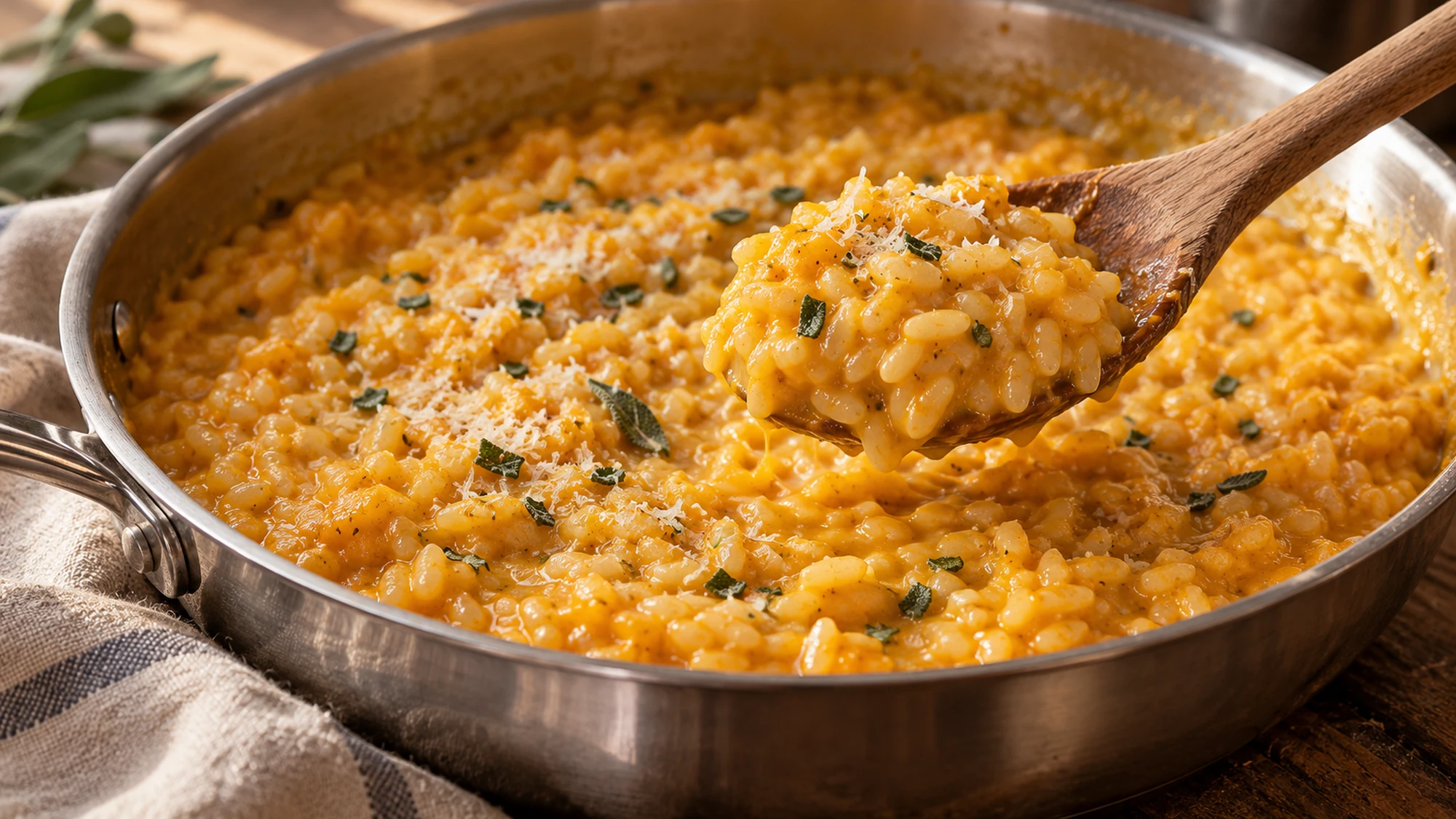
Warm liquid, frequent stirring, and a final taste of the rice matter more than a rigid timer. Finish with cheese, adjust the texture, and bring the bowls to the table.

Pumpkin Risotto Recipe
Ingredients
Equipment
Method
- Warm the broth and water together in a saucepan over low heat and keep hot, not rapidly boiling. Have extra hot water available. Measure pumpkin and grate cheese before starting the rice.
- Heat olive oil in a wide heavy 3- to 4-quart saute pan over medium heat. Cook onion 4–5 minutes until translucent. Add garlic for 30 seconds, then add dry Arborio rice and stir for 2 minutes to coat the grains.
- Add about 1/2 cup hot broth mixture and cook at a steady gentle simmer, stirring often, until mostly absorbed. Continue adding liquid about 1/2 cup at a time. Stir across the bottom to prevent sticking, but do not let the rice scorch dry between additions.
- After about 18 minutes of adding liquid, begin tasting the rice. When nearly tender with a slight bite, stir in pumpkin and sage. Continue cooking with small additions of hot liquid for another 3–5 minutes, until the rice is tender but not mushy. Total rice cooking is usually 22–28 minutes; add extra hot water if needed.
- Remove from heat and stir in butter, Parmesan, and pepper. Add a splash of hot water if needed so the risotto spreads gently rather than standing in a stiff mound. Taste before adding any optional extra salt, since broth and cheese already contain salt. Serve immediately in four portions with reserved cheese and a pinch of chopped sage.
- Refrigerate leftovers in shallow containers within 2 hours, or 1 hour above 90°F. Use within 3–4 days. Reheat with a little water, stirring until all of the portion reaches 165°F.